




New Found Gold: Queensway Timeline Holds Firm


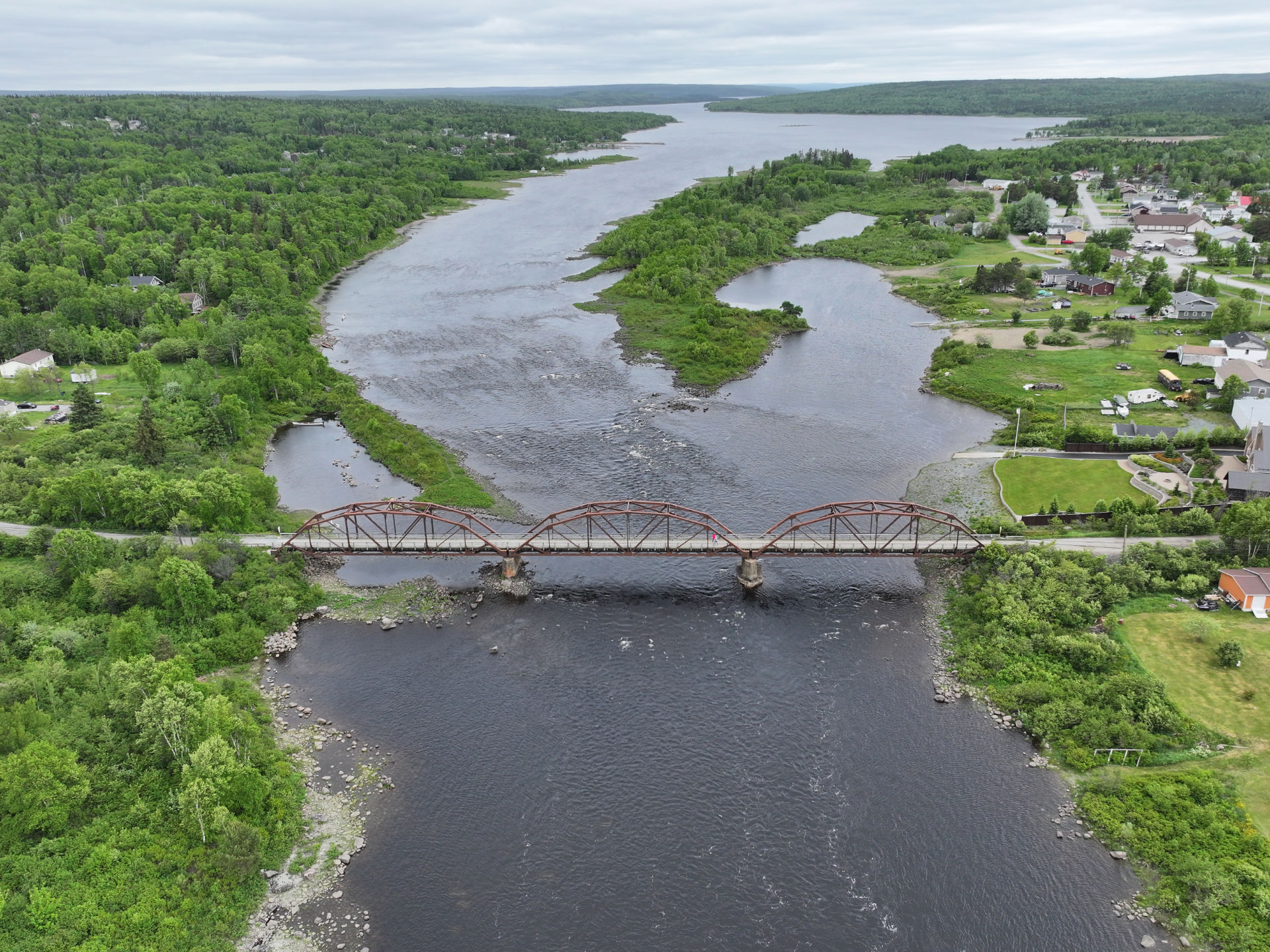
New Found Gold's Queensway Gold Project faces an environmental review, but CEO Keith Boyle says construction and the Q4 2027 production timeline are unaffected.
- New Found Gold Corp received a decision letter dated July 3, 2026, from Newfoundland and Labrador's Minister of Environment, Conservation and Climate Change requiring an Environmental Preview Report for the proposed Queensway Phase 1 project.
- CEO Keith Boyle described the requirement as an expected outcome for a greenfield mine near the communities of Appleton and Gander, and said the company is working collaboratively with the provincial government throughout the process.
- The company confirmed that none of the current engineering, procurement, or construction work at Pine Cove has been affected by the environmental review, and that it still expects to send first Queensway Phase 1 material to the mill in the fourth quarter of 2027.
- New Found Gold has received the permit amendment needed to convert its Pine Cove mill from a 700 tonne-per-day flotation circuit to a 1,400 tonne-per-day gravity-carbon-in-leach circuit, with construction already underway.
- Boyle pointed to the ongoing ramp-up at the Hammerdown Gold Project as a practical rehearsal for Queensway, with lessons on drilling, blasting, and mine start-up expected to transfer directly across.
Regulatory Review Meets Construction Progress
New Found Gold Corp (TSX: NFG | NYSE American: NFGC) has confirmed that its flagship Queensway Gold Project in Newfoundland and Labrador will undergo an additional environmental review step before construction can begin, while simultaneously advancing permitted work at its Pine Cove mill. CEO Keith Boyle addressed two threads investors have been watching closely: the regulatory path for Queensway Phase 1, and the physical construction progress needed to hit the company's stated production targets. For a company positioning itself as an emerging Canadian gold producer, the way these two workstreams interact - regulatory review on one hand, uninterrupted construction on the other - is central to the investment case.
Interview with Chief Executive Officer, Keith Boyle
Environmental Review Process & Community Engagement
The centrepiece of the update is a decision by the Honourable Chris Tibbs, Minister of Environment, Conservation and Climate Change for Newfoundland and Labrador, requiring New Found Gold to complete an Environmental Preview Report for Queensway Phase 1. The requirement follows the company's April 30, 2026 submission of its environmental registration, which entered the formal environmental assessment process on May 7, 2026. Under the province's legislated timeline, New Found Gold will first receive guidelines for completing the EPR within 60 days of the Minister's letter. Once the EPR is submitted, a 35-day public review runs concurrently with the Minister's 45-day decision period, which itself carries a possible two-week extension - a provision the Minister has already exercised once during this project's review to date.
Boyle framed the request as a predictable part of advancing a greenfield project close to populated areas, noting:
"It was not unexpected that the government would want a company advancing a greenfield site near the community of Appleton and then Gander, to ask for more details and questions around certain impacts."
He added that the company has experienced a level of government cooperation he had not seen previously in the sector, and the July 6 release echoed that framing, with Boyle stating the company remains focused on unlocking the project's full potential for all stakeholders while working through the review.
Community engagement extends beyond the regulatory process itself. New Found Gold has committed to updating its Gender, Equity, and Diversity Plan and continues to provide financial and volunteer support for events in Appleton, Glenwood, and Gander. As of December 2025, the company reported 97 direct employees and 105 contractors tied to ongoing exploration activity at Queensway, with 88% of those working at New Found Gold sites resident in Newfoundland and Labrador and 61% from Central Newfoundland specifically, figures the company points to as evidence of a workforce embedded in the communities most affected by the project.
Project Timeline & Production Goals
Investors' central question is whether the added review step pushes back New Found Gold's production timeline. On this point, Boyle was direct: engineering, procurement, and construction work at Pine Cove has not been slowed. Asked plainly whether any part of the build-out was being held up, he replied simply, "None. Zero."
The company's plan splits into two parallel tracks. The first is the advancement of Queensway itself, the greenfield mine, which remains subject to the EPR process outlined above. The second is the conversion and expansion of the Pine Cove mill, acquired as a strategic asset specifically to give New Found Gold a processing path independent of third-party toll milling. The permit amendment needed to convert Pine Cove's circuit has been received, and the company has already broken ground and begun pouring concrete for the associated construction.
Working back from the Minister's decision letter, the regulatory decision itself, from EPR submission through to the Minister's final ruling, allowing for the possible two-week extension, spans roughly three-and-a-half to four months. On top of that sits however long it takes New Found Gold to prepare and submit the EPR once it receives the guidelines, a period the company is not yet in a position to firmly estimate. Taken together, that points to a realistic overall timeline of six to nine months to a final decision, a range that already accounts for the kind of short extension the process has seen once before. Either way, that leaves the current construction and milling schedule untouched, and the company has reiterated its plan to send first Queensway Phase 1 material to the mill in the fourth quarter of 2027, with Phase 1 commercial production targeted for the second half of 2028. As Boyle put it:
"We expect to send first Queensway Phase 1 material to the mill as planned in Q4 2027."
Phase 1 itself is built around four open pits, a waste rock storage facility, an overburden storage facility, stockpiles, a modular crushing and sorting plant, and supporting infrastructure including haul roads, water management facilities, and maintenance shops. According to the Queensway Preliminary Economic Assessment, Phase 1 carries an initial capital cost of US$155 million, targeting average annual production of 69,300 ounces of gold at an all-in sustaining cost of US$1,282 per ounce, drawn from 1.15 million tonnes mined at an average grade of 9.64 grams of gold per tonne. The build-out is expected to generate more than 200 full-time equivalent positions during construction, rising to a peak of more than 230 full-time equivalent roles during operations.
Technical Aspects & Future Developments
Central to the production plan is the transformation of Pine Cove from its current 700 tonne-per-day flotation–leach–Merrill-Crowe circuit into a 1,400 tonne-per-day gravity-carbon-in-leach circuit, a configuration the company has identified as the preferred method for processing the coarse, high-grade gold expected from Queensway Phase 1. The permit amendment for the circuit conversion has been secured, with the additional permit needed for the throughput expansion to 1,400 tonnes per day to be applied for in due course. Based on recent test work, the company expects the converted circuit to lift recoveries on Hammerdown deposit feed from a design criterion of 87% to approximately 92%.
New Found Gold is drawing directly on its ongoing ramp-up at the Hammerdown Gold Project as a proving ground for Queensway. Boyle described Hammerdown's value in practical terms, noting the company is able to point to "the experience around the methods, the drilling, blasting" and use it to demonstrate to stakeholders what Queensway construction and operations will look like. He said the knowledge gained from starting up a mine at Hammerdown will carry over directly to Queensway, supporting a more efficient ramp-up once construction there begins.
Looking ahead, New Found Gold expects to file an updated NI 43-101 Technical Report in the second half of 2026, incorporating an updated mineral resource estimate along with Phase 1, 2, and 3 designs, and updated capital and operating cost estimates. Other near-term technical workstreams include ongoing metallurgical test work, infrastructure and water management planning, and initial engagement with the owners of hydro-electric transmission lines that cross the Queensway property, all of which the company describes as progressing on schedule. Boyle identified the EPR decision and the achievement of commercial production at Hammerdown as the two most significant catalysts likely to move the stock over the balance of the year.
The Investment Thesis for New Found Gold
- A 100%-owned, district-scale land package at Queensway spanning more than 110 kilometres of strike length across two prospective fault zones, held alongside a fully permitted, wholly-owned mill at Pine Cove that removes reliance on third-party toll processing.
- A near-term production pathway through Hammerdown, targeted for commercial production in the second half of 2026, which management frames as a direct operational rehearsal for the larger Queensway build-out.
- A defined Phase 1 economic case at Queensway, with initial capital costs of US$155 million supporting average annual production of 69,300 ounces of gold at an all-in sustaining cost of US$1,282 per ounce.
- Management's stated position that the newly required Environmental Preview Report has not affected construction, procurement, or the targeted Q4 2027 first-ore timeline at Pine Cove.
- A strengthening capital markets profile, underscored by cornerstone shareholder Eric Sprott and conditional approval, received in June 2026, to graduate the company's listing to the Toronto Stock Exchange.
- An upcoming technical report in the second half of 2026 that should give investors updated resource, design, and cost figures across all three planned phases of Queensway.
New Found Gold's investment case rests on the idea that two workstreams - regulatory review and physical construction - can proceed on separate but parallel tracks without one delaying the other. Management has been explicit that the Environmental Preview Report requirement, while an additional step, is a standard feature of advancing a greenfield mine near populated communities in Newfoundland and Labrador, and one the company says it anticipated. The more consequential development for near-term investors may be the progress at Pine Cove, where a received permit amendment and active construction point to a mill conversion that stays on schedule regardless of how long the EPR process runs. With Hammerdown positioned to reach commercial production this year and serve as a testing ground for Queensway's eventual ramp-up, New Found Gold is attempting to de-risk its flagship project by proving out its methods on a smaller scale first. In the coming months, an EPR guideline response, Hammerdown's move to commercial output, and an updated technical report, should give investors a clearer read on whether the company's stated Q4 2027 and H2 2028 targets remain intact.
Macro Thematic Analysis
New Found Gold's update lands against a backdrop of sustained investor appetite for gold and silver exposure, a theme Boyle has noted directly, pointing to strong shareholder traffic and renewed interest in the sector. For emerging producers, that appetite has shifted scrutiny toward execution risk rather than commodity conviction. Investors appear less focused on whether gold prices justify new production and more focused on whether companies can actually deliver mines on schedule and on budget. New Found Gold's decision to acquire and convert its own mill, rather than depend on third-party toll processing, reflects a broader trend among junior and emerging producers seeking to control their own cost structure and processing timeline rather than compete for capacity at facilities they do not own.
The regulatory dimension of this update is also broadly instructive. Environmental assessment processes for greenfield mines sited near populated communities have become a standard checkpoint across Canadian jurisdictions, and how a company communicates through that process has become a meaningful differentiator for investor confidence. New Found Gold's emphasis on collaboration with regulators, paired with concrete evidence that construction has continued uninterrupted, is a template increasingly used by companies trying to reassure markets that permitting timelines and production timelines are not the same thing.
The best summary of the opportunity comes directly from Boyle's own framing of the moment: the government's request for more detail was "not unexpected" for a greenfield project near two communities, and the company's response has been to treat regulatory diligence and construction progress as two separate, simultaneously advancing tracks rather than a single sequential bottleneck.
TL;DR
New Found Gold has been asked by Newfoundland and Labrador's Department of Environment and Climate Change to complete an Environmental Preview Report for Queensway Phase 1, a standard step for a greenfield project near the communities of Appleton and Gander. CEO Keith Boyle says the request was expected, the company is working collaboratively with regulators, and none of the engineering, procurement, or construction work already underway has been affected. In parallel, New Found Gold has received a permit amendment to convert its 100%-owned Pine Cove mill to a 1,400 tonne-per-day gravity-carbon-in-leach circuit, with construction already breaking ground. The company still expects first Queensway ore at the mill in the fourth quarter of 2027, with Hammerdown providing an operational dress rehearsal ahead of that ramp-up.
FAQ's (AI-Generated)
Analyst's Notes





Subscribe to Our Channel





Stay Informed






















