




Radisson’s O’Brien Gold Project Grows Resource Base by 80%, Drilling Targets to Unlock 4 Moz Gold


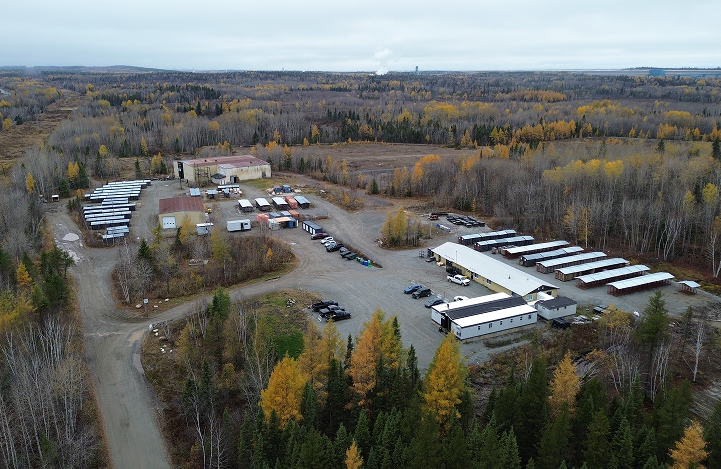
Radisson's O'Brien Gold Project grows to 2.3M oz; 8-rig drill programme targets 3-4M+ oz; C$50M+ treasury; weighing stand-alone mine vs. regional infrastructure integration.
- Radisson's O'Brien Gold Project resource has grown from 1.5 million ounces in late 2025 to 2.3 million ounces across all categories with an 82%+ increase in inferred ounces. Management targets an exploration range of 3–4 million ounces.
- An eight-rig, 140,000-metre drill programme is testing both deeper extensions of known mineralised trends and untested gaps between with a reported 80% hit rate in the core resource area.
- A C$25 million flow-through financing completed in May 2026 extends the company's exploration depth target from 2 km to 2.5 km and leaves it with a pro forma treasury of over C$50 million, sufficient to fund work into late 2027.
- The project sits adjacent to Agnico’s LaRonde and IAMGOLD's Westwood-Doyon Complex which gives Radisson optionality between building a stand-alone mine and using existing regional mills, tailings facilities, or shafts with one neighbouring reaching 3 km depth.
Radisson Mining Resources is a Canadian junior mining company advancing the O'Brien Gold Project in Quebec's Abitibi region, one of the most established gold mining camps in the world. In a recent interview, President and CEO Matt Manson provided an update on the company's ongoing 140,000-metre drill program, its evolving geological model, and the strategic considerations shaping the project's path toward potential development.
A Rapidly Expanding Resource
Radisson's resource base has expanded quickly. The company reported 900,000 ounces in 2023, which grew to 1.5 million ounces prior to an interim update, and then to approximately 2.3 million ounces across all resource categories as of March 2026 - an increase of more than 80% in the inferred category. Manson described this as making O'Brien as one of the fastest growing gold deposits, certainly in Eastern Canada.
The growth is being driven by a 140,000-metre drill programme that began in October 2025, with roughly 72,000 metres budgeted for this year and the remainder carrying into the first half of 2027. Eight drill rigs are running continuously, which Manson also characterised as one of the largest gold-focused drill programs in Eastern Canada. Since the March update, the company has issued four additional press releases with drill results, and management indicated further results are expected on a regular, ongoing basis.
Management's stated exploration target, based on the deposit continuing to a 2-kilometre depth floor on a similar fill-in basis to date, is a range of 3 to 4 million ounces, with potential to exceed 4 million ounces. This would represent a materially larger deposit by both Quebec and international standards.
Pushing the Depth Target Deeper
The C$25 million financing completed in May 2026 was tied to a specific technical decision: extending the company's exploration depth target from 2 km to 2.5 km. Manson explained the rationale by pointing to the presence of extensive third-party mining infrastructure directly adjacent to O'Brien, including Agnico’s LaRonde and Iamgold's Westwood-Doyon Complex, which together include multiple mills, tailings facilities, and shafts. One neighbouring shaft extends to a depth of 3 km.
As Manson put it, "anything down to that depth on the O'Brien project is potentially feasible in that particular scenario where you've got infrastructure that deep already." This proximity to deep, existing infrastructure is central to management's argument that deeper mineralisation at O'Brien is not merely academic but potentially economically relevant.
Rethinking the Geological Model
A significant portion of the interview addressed how Radisson interprets its resource model. The company has identified several plunging, linear mineralised zones it calls "trends" (including main west, main east, and trend zero through trend four), reflecting a structural pattern also observed in the historic O'Brien mine. Because junior mining drill programs are typically constrained by budget, historical drilling tended to follow directly below previous successful holes, which built up these trends but left untested "gaps" in between.
Management is now explicitly targeting these gaps to determine whether they reflect genuine absence of mineralisation or simply areas that have not yet been drilled. Results discussed targeting the "trend 1–trend 2 gap" as evidence supporting the latter interpretation. Manson noted the practical significance of this for mine planning:
"It's a very consequential thing to the economics of a mine design if a gap that previously existed isn't there anymore and you can fill it in with mining stubs."
The largest identified gap, trend zero, has not yet been drilled due to its location beneath the town of Cadillac; the company plans to test it via directional drilling from the north side of a geological fault.
Interview with Matt Manson, President & CEO of Radisson Mining Resources
Success Rates Confirm Continuity
Manson reported an approximate 80% success rate across the core resource area, defined as a drill intercept showing the project's characteristic quartz-sulphide vein style with grades above 3 grams per tonne over core length - a threshold expected to convert to above the project's 2 g/t mining cut-off once diluted. He contrasted this with the area west of the old O'Brien mine, around the historic Thompson-Cadillac workings, which the company considers non-core and where the success rate has been closer to 25%. Excluding that peripheral zone, the core-area success rate rises to roughly 85%.
A specific example cited was drill hole 378 wedge 3 which intersected five separate mineralised zones at approximately 1,700 metres vertical depth, roughly 150 metres below the existing resource model. Manson used this hole to illustrate ongoing geological continuity at depth:
"Continuity is something that we've got an eye into with every drill hole. We're always looking for that in any narrow vein quartz sulfide vein deposit like this. We're getting increasingly confident that this thing is holding together very well."
The Economics of Discovery
The May 2026 financing was structured as a flow-through share issuance to institutional investors, which Manson described as more capital-efficient than using hard dollars for exploration, preserving cash for project development activities. On a pro forma basis, the company had over C$50 million in treasury following the raise, which management said funds planned work at least until the end of 2027.
Management also discussed unit economics, citing a discovery cost of approximately C$20–25 per ounce and an all-in drilling cost (including assays) of roughly C$270–280 per metre, despite the program's use of deep, directional drilling. Manson attributed the relatively low cost to the project's location, which allows drill crews to return home rather than requiring fly-in camps or helicopter support.
Charting the Development Pathway
Manson repeatedly emphasised that Radisson's board is composed of individuals with direct mine-building experience - citing nine mines built by current directors, plus the recent addition of Michel Leclerc, a mining engineer with more than 35 years of experience in the mining industry, including nearly 20 years with Agnico Eagle Mines. He described the company's orientation as follows: "We're not an exploration board. We're a mining board."
According to Manson, this shapes an ongoing internal decision about whether O'Brien will ultimately be developed as a stand-alone mine or integrated into existing regional milling and tailings infrastructure - a decision that in turn influences drilling priorities, environmental baseline work, community and First Nations engagement, and permitting strategy. Manson noted that as the resource grows, the stand-alone option becomes increasingly viable in its own right.
Valuation in a Volatile Market
Manson addressed valuation cautiously, noting that gold equities broadly, including Radisson, have declined 20–30% over the six weeks preceding the interview alongside a pullback in the gold price. He estimated Radisson's implied valuation had moved from roughly US$150 per ounce to approximately US$110–120 per ounce. For comparison, he referenced two recent regional M&A transactions - one at roughly US$500 per ounce and a second, G Mining's acquisition of G2, at roughly US$600 per ounce - as reference points for how ounces near existing infrastructure have recently been valued in transactions, while stressing that current market volatility affects near-term comparability.
The Investment Thesis for Radisson Mining Resources
- Rapid resource growth: Resource base has grown from 900,000 oz (2023) to 2.3 million oz (March 2026), with a stated exploration target of 3–4 million-plus ounces.
- Large, fully funded drill program: Eight rigs actively drilling as part of a 140,000-metre programme running into H1 2027, funded by a pro forma treasury of over C$50 million.
- Low-cost discovery: Reported discovery costs of roughly C$20–25/oz and drilling costs of approximately C$270–280/metre, attributed to the project's accessible, non-remote location.
- High reported drilling success rate: Approximately 80–85% hit rate in the core resource area, exceeding typical infill conversion assumptions of 50–75%.
- Demonstrated depth continuity: Deep intercepts (e.g., hole 378 wedge 3 at ~1,700m) show multiple mineralised zones consistent with the existing resource model.
- Experienced, mine-building board: Directors collectively credited with building nine mines, reinforcing a "mining board" rather than pure exploration orientation.
- Valuation gap versus precedent transactions: Implied valuation of roughly US$110–120/oz compares to recent regional M&A precedents of roughly US$500–600/oz.
Junior gold developers located within established mining camps are increasingly differentiated from remote greenfield projects by their access to existing infrastructure - mills, tailings facilities, and shafts - which can materially reduce capital intensity, permitting risk, and development timelines. The Abitibi region exemplifies this dynamic, with multiple producers operating adjacent processing and shaft infrastructure. Amid a broader pullback in gold equities following a run-up in the gold price, some companies with growing, infrastructure-proximate resources have seen their implied per-ounce valuations diverge from recent M&A pricing for comparable regional assets, a gap management highlighted directly:
"Based on what we've already done and put out into the market and based upon what we're telegraphing is happening, there's a huge gap between how we are valued currently. There's a lot of room still to go."
TL;DR
Radisson Mining Resources' O'Brien Gold Project has grown from 900,000 to 2.3 million ounces since 2023, with an eight-rig, 140,000-metre programme targeting 3–4 million-plus ounces. A fully funded treasury (approximately at C$50 million+), low discovery costs, and adjacency to existing regional mill and shaft infrastructure underpin the investment case. Management is now weighing a stand-alone mine versus integration with neighbouring infrastructure, while the company's implied per-ounce valuation currently sits well below recent regional M&A precedents.
FAQs (AI-Generated)
Analyst's Notes





Subscribe to Our Channel




Stay Informed






















