Newfoundland Targets Predictable Approvals & a Larger Workforce for Mine Developers


Newfoundland and Labrador's mining agenda targets predictable approvals, workforce, and port and energy access; a gold build at Queensway shows how each applies.
- The Newfoundland and Labrador government is targeting predictable approval timelines, and Premier Tony Wakeham said that means cutting unnecessary delays.
- A new co-op Bachelor of Engineering in mining and mineral processing at Memorial University is targeting its first students as early as the fall of 2027, in a program of about $9 million that includes $3.9 million from Vale Base Metals.
- Mining contributes nearly 9% of provincial gross domestic product and supports more than 9,000 jobs, the government says.
- Provincial exploration expenditures are projected to exceed $283 million this year, the highest level on record.
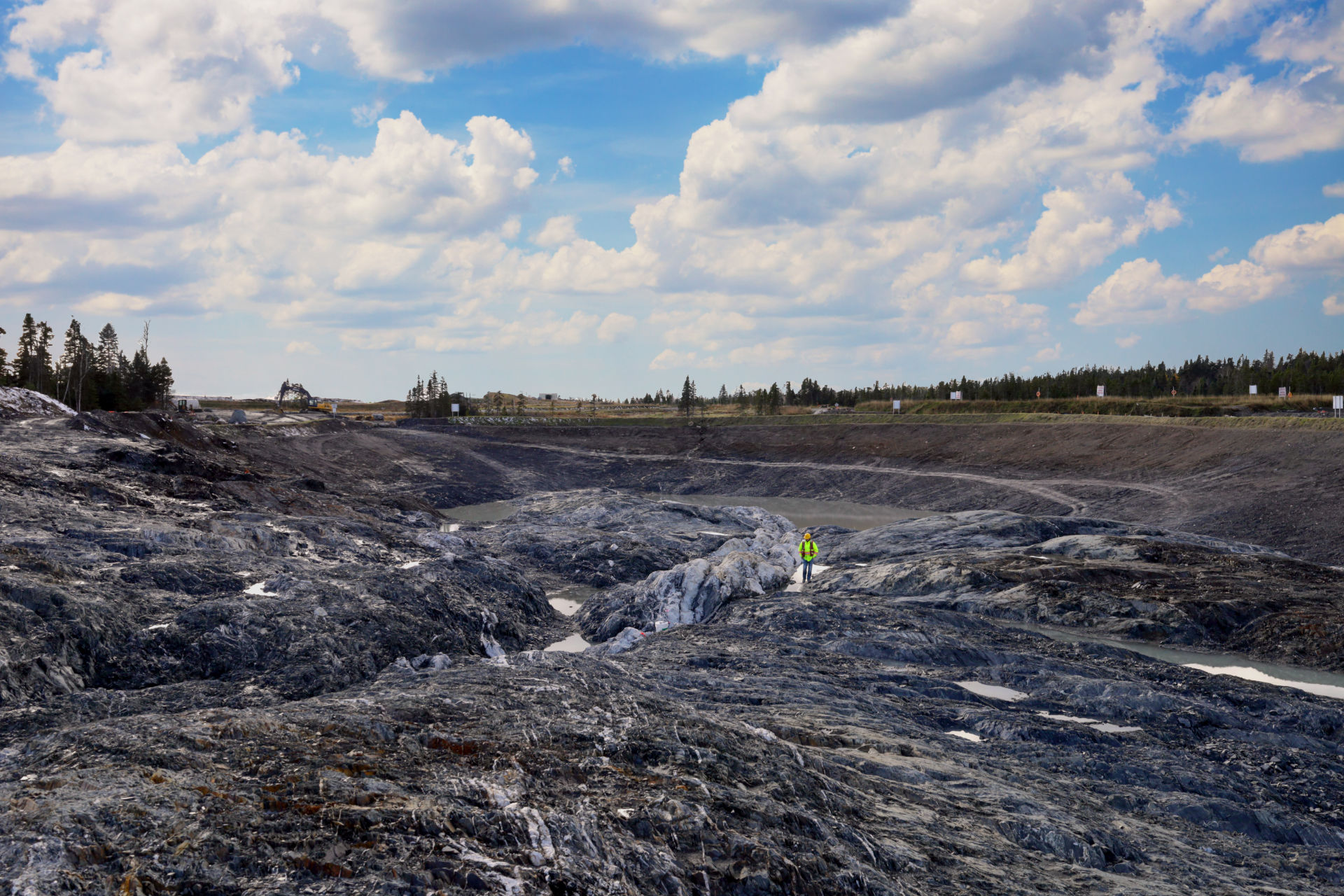
- In central Newfoundland, New Found Gold's Queensway Gold Project is moving through the provincial approvals process, with its Environmental Preview Report submitted in the fourth quarter of 2026 and the site about 15 kilometers from Gander on the Trans-Canada Highway.
Newfoundland and Labrador (NL) is making a specific case to mining investors: a jurisdiction earns projects by supplying predictable approvals, trained people and ready access to ports and energy. At the Mineral Resources Review 2026 conference in St. John's on November 4, 2026, Premier Tony Wakeham cited deep-water, ice-free ports and an abundance of energy and described the government's role as creating the conditions for success.
The case comes with figures. Mining contributes nearly 9% of provincial gross domestic product and supports more than 9,000 jobs, according to the government, and projected exploration expenditures of more than $283 million this year would be the highest level on record.
New Found Gold Corp. (TSX: NFGC | NYSE American: NFGC) is advancing one such project. Its 100%-owned Queensway Gold Project in central Newfoundland is moving through the provincial environmental assessment (EA) process, is close to existing infrastructure, and plans 530 new jobs.
Industry Context
The government says it supports projects in the province moving from exploration to development to production, and it intends to strengthen that reputation. It also points to 34 potential critical minerals and some of the most prospective ground in North America.
The government points to a pipeline across commodities. Equinox Gold's Valentine operation is moving ahead with a phase 2 expansion, Firefly Metals is advancing the Green Bay copper-gold project, and Atlas Salt is advancing the Great Atlantic Salt project. The government also names projects such as Queensway and Kami. Every producing mine starts as a drill program, and exploration feeds that pipeline.
Emerging Practices & Industry Progress
On approvals, the government is committed to aggressively reducing red tape and is examining every opportunity to modernize processes, improve service standards and make government easier to work with. The stated aim is for proponents to spend their time advancing projects, not navigating paperwork.
Wakeham tied the commitment to investor expectations on timing:
"Investors need to know that projects can move through the regulatory process in a reasonable and predictable time frame. That does not mean cutting corners. Rather, it means cutting unnecessary delays."
On workforce, labor availability is a challenge the industry consistently raises with the government. Wakeham described the size of the gap:
"Quite simply, the opportunities ahead of us are bigger than our current workforce."
The response is a new co-op Bachelor of Engineering in mining and mineral processing at Memorial University, announced at the conference. The program is under development and targeting its first students as early as the fall of 2027, and its cost of about $9 million is shared: Vale Base Metals is investing $3.9 million and providing future co-op placements, Memorial University is contributing approximately $2.8 million in-kind, and the province is providing the remaining $2.25 million. The government is also working to make labor mobility easier so skilled workers can follow opportunity.
Remaining Challenges
Approvals reform is still in progress. The government is examining every opportunity to modernize processes, improve service standards, and make government easier to work with.
The workforce pipeline is also still forming. The Memorial University program is working through Memorial's academic governance processes, and the government named heavy equipment operators, millwrights, electricians, and geological professionals among the roles needed.
Energy supply is a further operational constraint in Labrador, where the government says Hydro has little additional power available today for major new industrial development. The government has committed to securing the energy required for future growth.
Company or Project Examples
New Found Gold's Queensway shows how the 3 conditions apply to a project moving toward construction. Queensway is near the communities of Appleton, Glenwood and Gander, and Gander is the primary regional service center, with an international airport and a skilled labor force. The company plans to draw on the skilled workforce, contractors, and service providers available in central Newfoundland.
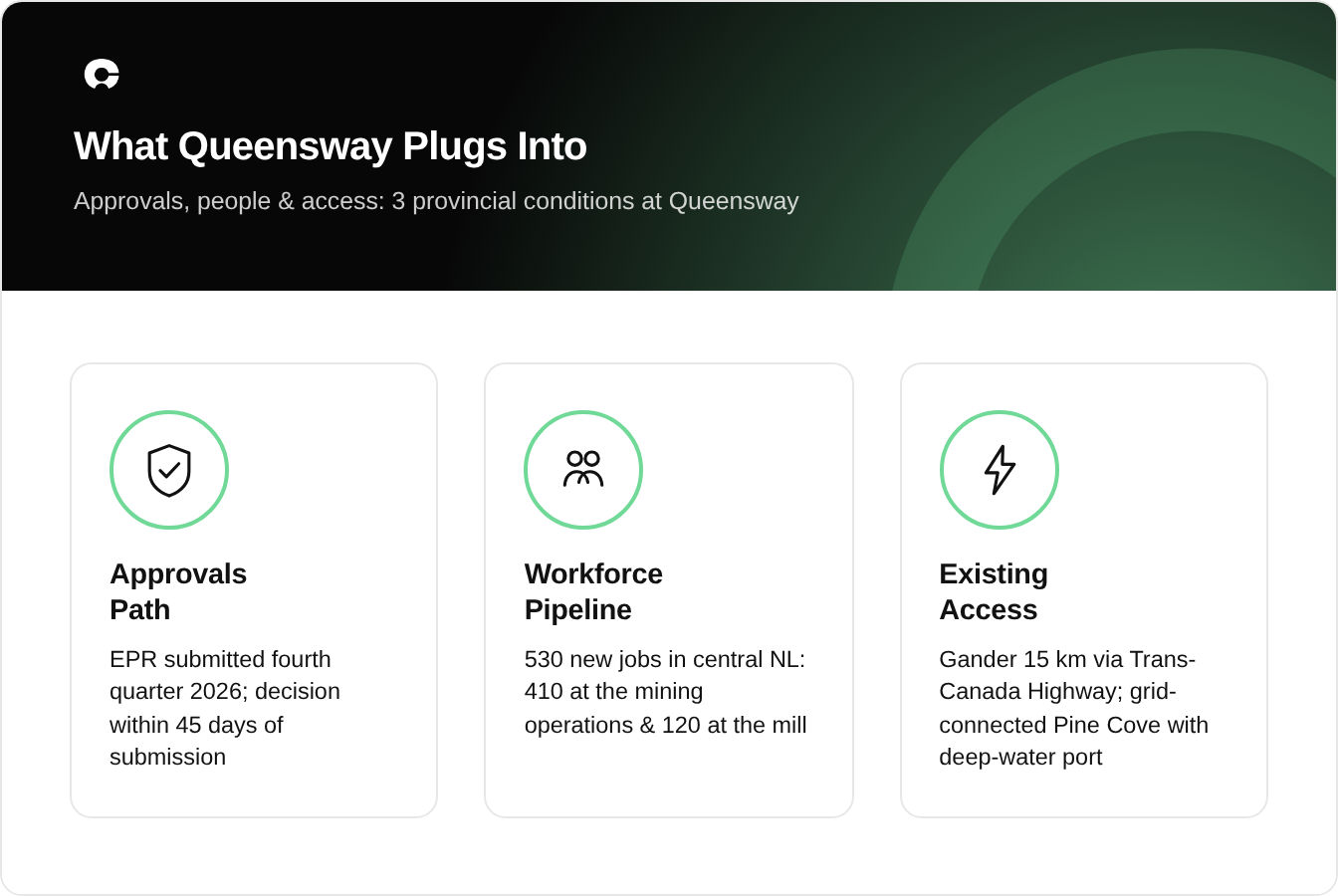
Phase 1 mill feed goes to the Pine Cove mill, a permitted mill and tailings facility connected to the provincial power grid that includes the Port Rousse deep-water port facility. Keith Boyle, Chief Executive Officer of New Found Gold, estimates that owning the permitted mill brought Queensway production forward by about 3 years once permitting, development, and production time at the site are counted. In its revised preliminary economic assessment, New Found Gold reports an after-tax net present value at a 5% discount rate of C$1.728 billion at a base case of US$3,600 per ounce of gold and an internal rate of return of 126%.
A July 3, 2026 decision letter required an Environmental Preview Report (EPR) for Phase 1, and the company received EPR guidelines on September 2, 2026. New Found Gold submitted their EPR in the fourth quarter of 2026. This is now being followed by a 35-day review and a decision within 45 days of submission, with a possible 14-day extension. After release from the EA process, the company plans to work with the province on a Surface and Mining Lease through mid-2027, with first delivery to Pine Cove targeted for the fourth quarter of 2027.
Boyle described the sequence that follows submission:
"We would expect a decision from the government early in the new year. After that, we'll get our early works permit, shovel in the ground, if you will, at Queensway in the second quarter."
Regional or Jurisdictional Perspective
In Labrador, the government's new deal on Churchill Falls power is intended to create the conditions for new mining projects in Labrador West and the Labrador Trough, and it cites $200 billion in critical minerals.
In central Newfoundland, Queensway draws on existing service centers and the region's workforce, and New Found Gold is targeting employment and procurement opportunities within NL while continuing to engage local communities, Indigenous groups, businesses and government agencies as the project advances.
Industry Outlook
Newfoundland and Labrador is building the 3 conditions in parallel: approval timelines the government is working to make predictable, a mining engineering program targeting its first students as early as the fall of 2027, and a commitment to securing the energy required for growth. Developers may need to plan environmental assessment filings, hiring and site logistics together, since each condition develops on its own timeline.
Three markers will indicate whether the conditions arrive as targeted: the pace of approval decisions as the government's modernization work continues, whether the first Memorial University intake arrives as targeted, and where exploration expenditures finish against the projection.
For the sector, a jurisdiction working to supply approvals, people, and energy gives developers a clearer basis for scheduling projects, and projects now in assessment, including Queensway, are working through those approval timelines today.
FAQs (AI-Generated)
Analyst's Notes





Subscribe to Our Channel






Stay Informed