Stepout Drilling Drives 82% Resource Growth at O’Brien Gold Project


Radisson Mining's O'Brien Gold Project hits 2.3Moz after 82% inferred resource increase, with a 140,000m drill program targeting a 3–4Moz deposit through mid-2027.
- Radisson Mining Resources reported an 82% increase in inferred resources at its O'Brien Gold Project in Quebec's Abitibi region, growing combined indicated and inferred resources from 1.5 million to 2.3 million ounces, with only 25% of the current 140,000-metre drill program complete.
- The company is executing a large-scale stepout drilling strategy targeting a 2-kilometre depth floor, achieving an 84% drill hole success rate that significantly exceeds the norm for infill programs and underpinning management's guidance toward a 3 to 4 million ounce deposit.
- Radisson's board brings nine combined mine builds across three directors, and management has stated the company is capable of standalone development while remaining deliberately open to other value outcomes including strategic transactions with larger regional operators.
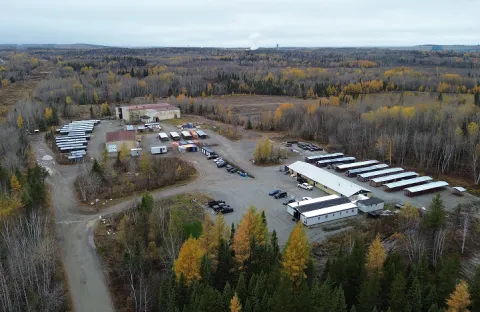
- The O'Brien project sits directly on Highway 117 in the Abitibi region surrounded by active mines with operating mills and scheduled excess capacity, positioning the project as a potential ore supplier to existing processors rather than requiring standalone mill construction.
- Management is communicating progress through sequential resource updates rather than waiting until program completion in mid-2027, with one further update expected before year-end 2026, each representing a potential value catalyst for investors.
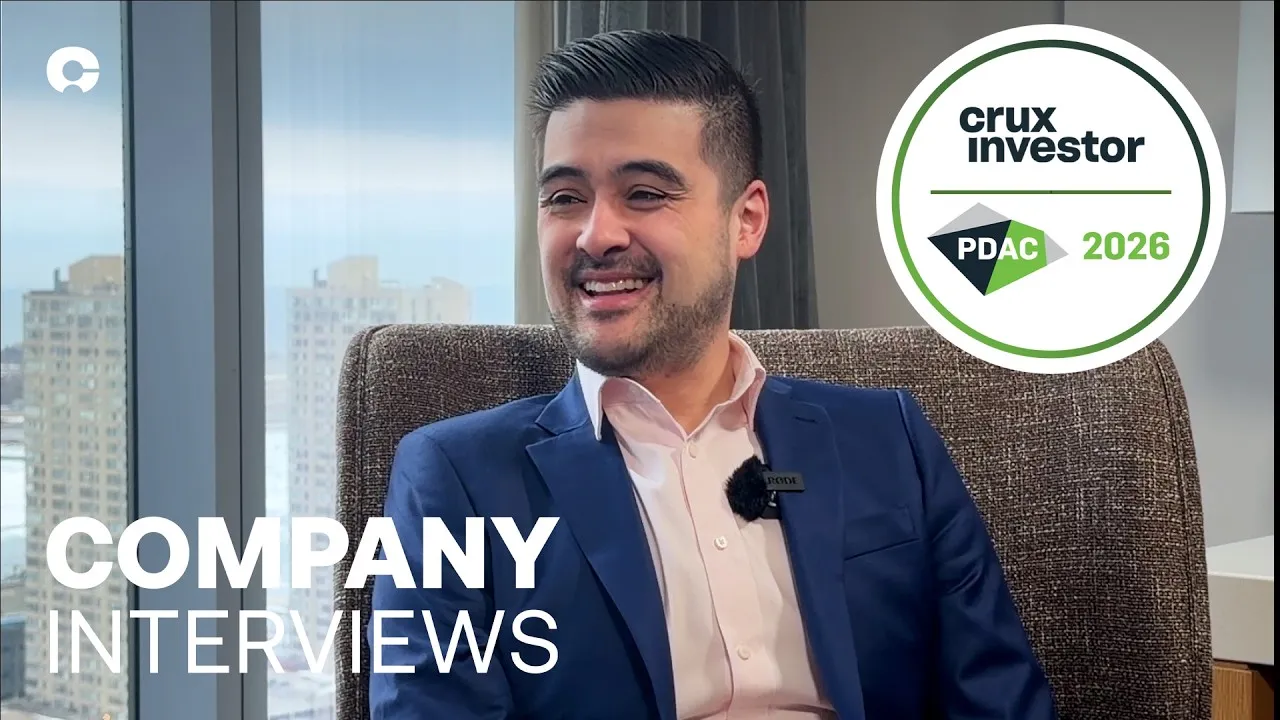
At PDAC 2026, Matt Manson, President and CEO of Radisson Mining Resources, sat down to discuss the company's strategic progress at its O'Brien Gold Project in the Abitibi region of Quebec. The company released a significant resource update, and Manson used the opportunity to outline the logic behind Radisson's exploration approach, the scale of its current drilling campaign, and how management is thinking about eventual mine development.
A Significant Resource Increase at O'Brien Gold Project
Radisson recently released a resource update that reported a combined indicated and inferred resource of 2.3 million ounces, up from 1.5 million ounces previously established. This represents an 82% increase in inferred resources and is notable not just for its size, but for the context in which it was achieved. Radisson has completed just 25% of its 140,000-metre drill program which was upsized following a $25 million raise in October 2025 and is scheduled to run through to mid-2027 with up to eight rigs operating simultaneously.
The company's strategy for the past 15 months has been built around large-scale stepout drilling rather than methodical infill work. Rather than incrementally converting existing inferred resources to indicated, management made a deliberate decision to test the lateral and depth extent of the system. Stepouts of hundreds of metres and drilling below the historic O'Brien mine for the first time are generating the bulk of new resources.
Manson provided guidance that the project is tracking toward a 3-4 million ounce deposit, a range management has reiterated consistently based on the geological model extending to a 2-kilometre depth floor.
Understanding the Geological System
The O'Brien mine operated until 1957 and was historically known for extremely high grades yet the old-timers averaged half an ounce per ton at a time when gold was priced at $35 per ounce. That legacy created a perception of O'Brien as a high-grade but limited-scale asset. Manson is working to reframe the narrative:
"The old-timers presented with this system were picking the eyes out. And for example, they had one main stope that was chasing one main vein that was giving them half an ounce average grade. But there were all these parallel structures that they drifted into and they drilled into and they were 6-8 grams, and that wasn't ore for them back in the day. So they left it."
What Radisson is now identifying is a broad system of quartz sulphide veins with significant lateral continuity and reliable depth extension. Below the old mine, all of those parallel structures are resource-grade for a modern mining operation. The central high-grade vein continues to deliver double-digit grades, but the investment case Manson is building is a volumetric one: millions of tonnes processed at modern mechanised mining scales, not a selective high-grade operation.
Infill programs on existing inferred resources typically budget for 50 to 75% success. Achieving 84% on large stepouts indicates a geologically predictable and extensive system, which underpins management's confidence in the 3 to 4 million ounce target.
Sequential Communication Strategy
One of the more deliberate aspects of Radisson's market approach is how it is communicating progress. Rather than accumulating drill results over the full 140,000-metre program and releasing a single updated resource at the end, the company has committed to a series of stepwise resource updates. The intent is to give investors a tangible measure of progress as the deposit grows.
Manson was equally clear that Radisson is not looking for a transaction at current valuations. With only 25% of the drill program complete and a deposit that is still growing materially, he stated the company is not fairly valued at today's share price
"We've only completed 25% of this 140,000 meter program and so that's delivering an 82% increase in the inferred resources. There's nothing better we can do for Radisson right now in the value of the company than what we're doing."
The implication is that the stepout program is as much about establishing the full value of the asset before any corporate conversation as it is about satisfying investor interest.
Interview with Matt Manson, President & CEO of Radisson Mining Resources Inc.
Mine Development: Optionality and Infrastructure
The O'Brien project does not lack for development options. The Abitibi region is one of the most mining-friendly jurisdictions in the world, and the project sits directly on Highway 117 surrounded by active mines with operating mills and scheduled excess capacity.
Manson was direct about what this means for capital requirements. Building a standalone mill and tailings facility in this environment would be unnecessary when third-party processing capacity already exists nearby. The economic question remains to be negotiated, but the structural advantage of operating in a densely mined corridor is clear.
There is also a potentially significant opportunity tied to the historic O'Brien shaft, which extends to one kilometre depth and sits within the broader property. The shaft is currently flooded and carries no formal liability for Radisson, but the company is conducting quiet engineering and environmental work to determine whether it could be rehabilitated. A working shaft would enable bottom-up mine construction, a more capital-efficient approach than top-down ramp access, and could support throughput rates of up to 2,000 tonnes per day by enabling multiple simultaneous development headings.
The Investment Thesis for Radisson Mining Resources
- Significant resource growth underway with most drilling still ahead. At 2.3 million ounces with only 25% of a 140,000-metre program complete, the trajectory toward 3 to 4 million ounces appears well-supported. Investors entering now are buying into a resource that is actively growing.
- High drill success rate validates geological model. An 84% stepout success rate is materially above industry norms and indicates a predictable, extensive system. This reduces geological risk and supports confidence in guidance.
- Favourable jurisdiction with world-class infrastructure access. Quebec's Abitibi region offers established processing infrastructure, a skilled local workforce, accessible transport corridors, and a stable regulatory environment. Standalone capex requirements may be lower than comparable projects elsewhere.
- Board experience significantly de-risks the development pathway. Nine mine builds across three directors including CEO Matt Manson and Chairman Pierre Beaudoin means the team has navigated the full mine development cycle multiple times. This experience is not common in junior exploration companies.
- Deliberate withholding of infill drilling preserves M&A optionality. By deferring infill work and focusing entirely on stepouts, Radisson is growing the resource and increasing headline ounces while maintaining control of timing and avoiding premature transaction discussions.
- Multiple development scenarios supported. The project can support standalone development, a toll-milling arrangement with a regional operator, or a strategic acquisition. Management's stated ambivalence to development pathway is a strength, not a weakness as shareholders are not locked into a single outcome.
- Investors should monitor upcoming resource updates and drill results. One further resource update is expected before year-end 2026, with a comprehensive update anticipated at the conclusion of the program in mid-2027. These are likely to be material value catalysts.
The Case for Advanced-Stage Junior Gold in a Consolidating Market
The junior gold sector is operating in a significantly changed environment compared to three years ago. Gold prices at multi-year highs, combined with an accelerating wave of M&A activity among mid-tier and senior producers, have created a structural demand for quality ounces in the ground. The advanced exploration and pre-development tier companies with resources measured in millions of ounces in proven jurisdictions has thinned considerably as transactions have removed many of the most obvious targets.
This supply-demand dynamic within the corporate M&A ecosystem is as important as the gold price itself for investors assessing junior miners. When a mid-tier producer loses a flagship asset to a senior buyer, it does not simply disappear from the market. It returns as an acquirer, now urgently seeking to replenish its reserve base. That creates genuine, time-sensitive demand for the next generation of quality assets which is precisely the category Radisson is working to occupy.
Radisson Mining's O'Brien gold project sits in this environment as Manson states:
"In a normal functioning universe, the law of the jungle is that big companies with mills tend to buy smaller companies with ore that tends to be how this works out."
Abitibi-specific dynamics amplify this trend. The region's existing infrastructure, mills, shafts, tailings facilities, and established workforces, means that acquiring an Abitibi resource is not simply buying ounces. It is buying ounces that can be put into production with lower incremental capital than almost anywhere else in the world. For a regional operator with a mill running below capacity, the arithmetic of acquiring a nearby high-grade deposit is often compelling.
At the same time, gold equities broadly have lagged the metal price in recent cycles, creating a potential re-rating opportunity as investors who chased the commodity price begin to rotate into the equities. Junior miners with genuine scale, credible management, and clear development paths are the primary beneficiaries of that rotation.
TL;DR
Radisson Mining is building a compelling case at O'Brien with only 25% of a 140,000-metre drill program complete and resources already up 82% to 2.3 million ounces, the company is on a clear trajectory toward the 3 to 4 million ounce range management has consistently guided. The Abitibi region's dense mill infrastructure reduces the capital burden of future development, and the board's nine combined mine builds means this is a team that knows how to take a deposit toward production. Management is deliberately managing both investor and corporate audiences — growing headline ounces, deferring infill, and staging resource updates — all of which point to a company that understands its own value and is not in a rush to realise it cheaply. With at least two more resource updates expected before the program concludes in mid-2027, the near-term news flow supports continued investor attention.
Frequently Asked Questions (FAQs) AI-Generated
Radisson's most recent resource update, released at PDAC 2026, reported combined indicated and inferred resources of 2.3 million ounces, up from 1.5 million ounces previously. The increase represents an 82% growth in inferred resources and was delivered with only 25% of the current 140,000-metre drill program complete.
Management has made a deliberate strategic choice to establish the scale of the deposit before investing in the more detailed infill drilling required to convert inferred resources to indicated. The logic is that growing headline ounces at this stage maximises the value of the asset for both investors and potential corporate acquirers before any development or transaction decisions are made. Infill drilling will be addressed once the full extent of the system is better understood.
Based on current thinking, standalone mill construction is considered an unlikely first choice. The O'Brien project sits on Highway 117 in the Abitibi region, surrounded by active mines with operating mills and scheduled excess capacity. The more capital-efficient path is expected to involve a toll-milling arrangement with an existing regional operator, though no formal agreements have been announced.
Management has acknowledged that the company is managing both a market audience and a corporate audience, and that Radisson is not fairly valued at its current share price. CEO Matt Manson has been explicit that a transaction at current valuations would not reflect the full value of what O'Brien is becoming. The implication is that M&A discussions, if they occur, are more likely once the deposit has grown further toward the 3 to 4 million ounce range.
Management has guided toward one further resource update before year-end 2026, with a more comprehensive update expected at or near program completion in mid-2027. Ongoing drill results will be released throughout the year as the company operates up to eight rigs simultaneously across its 140,000-metre program.
Analyst's Notes





Subscribe to Our Channel







.png)
Stay Informed