Cash Flow & Fixed-Rate Debt Reduce Gold Miners’ Financing Risks



Gold’s selloff may reveal value where share prices overstate financial risks. Funding gaps expose miners to dilution or construction delays.
- Spot gold fell 0.5% to US$3,995.89 per ounce on October 27, 2026, as a stronger dollar raised costs for overseas buyers ahead of the October 28 Fed decision.
- Brent near US$116 a barrel adds inflation pressure, while roughly 80% December hike odds on October 27 signal higher borrowing-cost risk for developers with floating-rate debt.
- A hawkish October 28 Fed decision or strong October 29 PCE inflation reading could pressure gold toward US$3,900; softer inflation could support a recovery.
- Newmont’s Q2 2026 results, released July 23, imply a US$2,375-per-ounce cushion at current spot prices if reported sustaining costs remain unchanged, supporting the case for cash-generating producers.
- December hike odds falling below 50% after the October 29 inflation release could improve financing prospects, but developer borrowing costs would still depend on benchmark rates, loan terms and project risk.
Stronger Dollar Pushes Gold Below US$4,000
Spot gold fell 0.5% to US$3,995.89 per ounce, while December futures declined 0.71% to US$4,009.60. The US dollar index rose 0.3% to a near two-week high, making gold more expensive for overseas buyers ahead of a Fed decision widely priced as a hold.
Gold’s 4.1% weekly decline left it 28.5% below its US$5,589.38 record, reducing revenue per ounce for producers. Higher borrowing rates can also increase developers’ floating-rate interest costs before production begins. The contrarian opportunity is in companies whose share prices overstate these financial pressures, supported by low production costs or secured financing.
Higher Rates Highlight Protection From Fixed-Rate Debt
Newmont’s second-quarter 2026 results, released July 23, reported sustaining costs of US$1,621 per ounce. At spot, that leaves US$2,375 before taxes, financing and growth spending, assuming unchanged costs. Its US$2.205 billion free cash flow reduces borrowing needs.
Osisko’s September 30 financing announcement confirmed US$600 million of fixed-rate 9.25% notes due 2031, replacing floating-rate debt. Its September 14 Cariboo update estimated a 34.7% after-tax internal rate of return at US$3,570 gold, assuming C$990 million in remaining capital and C$1.38 per US$1.
Secured fixed-rate funding limits interest-cost exposure, while funding gaps can force share issuance or construction delays.
Oil Inflation Raises Financing Risks for Unfunded Mines
Brent near US$116 a barrel adds inflation pressure, while annual US consumer inflation of 3.4% remains above the Fed’s 2% target. The Fed raised its policy range by 0.25 percentage point to 3.75%-4.00%, increasing borrowing-cost risk. Higher policy rates can lift SOFR, a benchmark for floating-rate project debt, while making interest-paying assets more competitive with gold.
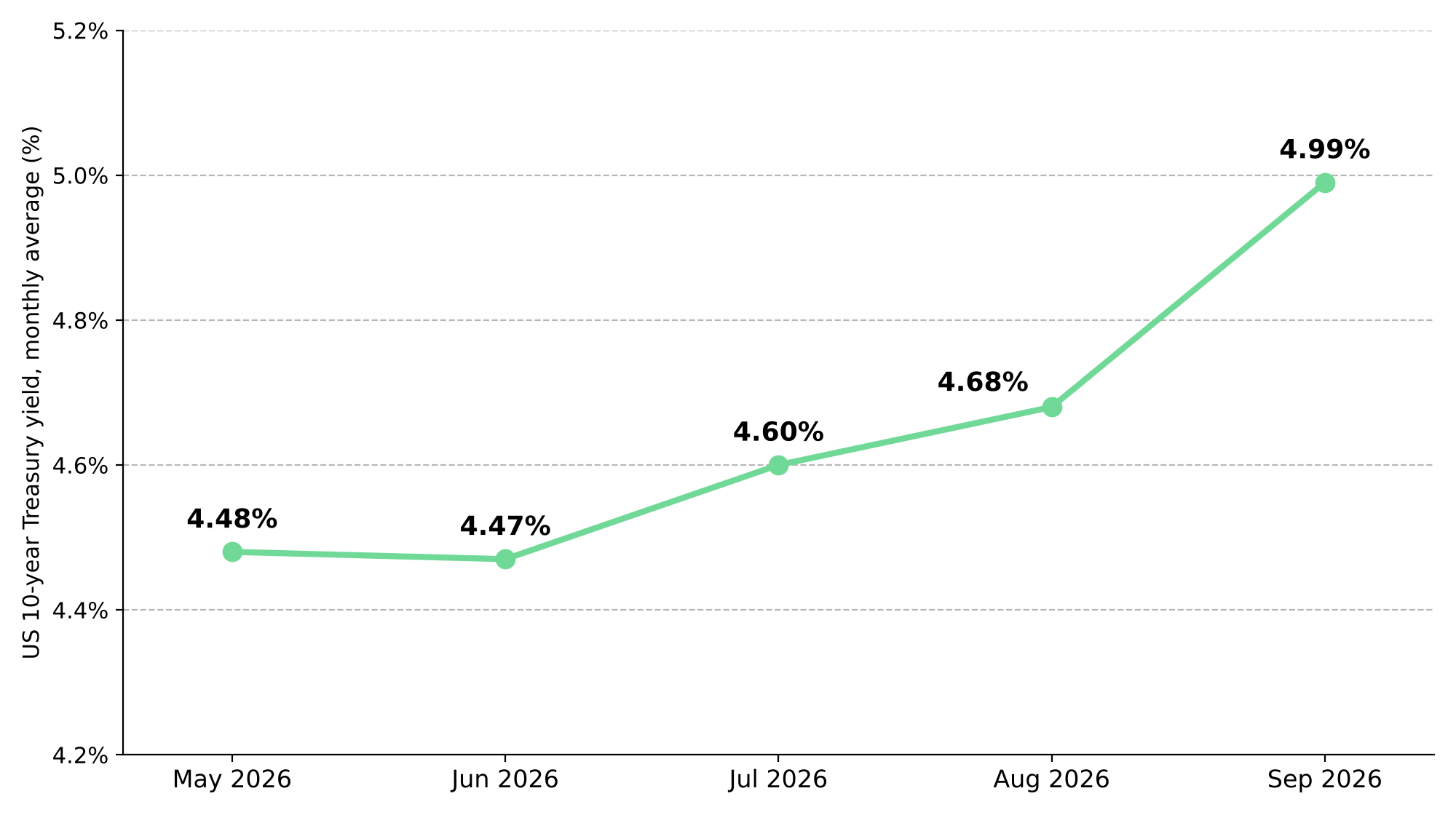
Rising Treasury yields reduce the market value of banks’ existing fixed-rate bonds and can increase long-term borrowing costs. If lenders tighten construction-loan terms, developers may need additional equity, reducing existing shareholders’ ownership. Developers with secured fixed-rate funding have less exposure to these financing pressures, providing a financial advantage to assess against their share prices.
Softer PCE Inflation Could Improve Developer Loan Terms
Osisko’s planned 30-month Cariboo build requires funding before gold sales begin. Sean Roosen, Chairman and Chief Executive Officer at Osisko Gold Group, said the company was targeting disciplined execution toward first gold in early 2029.
Developers seeking loans or carrying unhedged floating-rate debt face higher financing costs if rates rise. Ricardo Evangelista, Director and Chief Executive Officer at ActivTrades, said a hawkish Fed and strong inflation could push gold toward US$3,900, adding revenue pressure.
Softer inflation could support gold and improve financing prospects, while secured fixed-rate funding limits exposure to benchmark increases. December hike odds below 50% after the October 29 PCE release would signal lower rate expectations; actual borrowing costs still depend on loan terms and project risk.
Higher Rates Reprice Gold Development Risk
Gold near US$4,000 can still leave low-cost producers generating cash, while developers with secured fixed-rate funding face less exposure to rising interest costs. Construction debt costs must therefore sit alongside grade and capital spending in project valuations.
The contrarian opportunity arises when share prices fall below estimated business value after allowing for lower gold prices and higher financing costs. Higher borrowing costs could also delay new mines, limiting future supply and supporting projects already funded through construction.
Analyst's Notes





Subscribe to Our Channel





Stay Informed