




Atomic Eagle Aims Madaouela at 5 Million Pounds a Year With an Earlier Underground



Atomic Eagle intends to seek a Madaouela operation of up to 5 million pounds a year by bringing the underground forward, with a scoping study due in 2027.
- Atomic Eagle intends to seek a Madaouela operation capable of producing up to 5 million pounds (lb) of uranium oxide per year.
- Atomic Eagle plans to bring underground mining forward alongside a larger open pit.
- The 2022 feasibility study (FS) optimized the mine at a uranium price of US$55 per pound.
- Madaouela hosts a foreign estimate of 116.5 million lb at 1,282 parts per million (ppm).
- A JORC resource is targeted for the fourth quarter of 2026, ahead of a scoping study planned for the first quarter of 2027.
Madaouela After the Mining Convention
Atomic Eagle (ASX: AEU | OTCQX: AEUXF) controls the Madaouela Uranium Project in Niger through its 60%-owned subsidiary, Madaouela Mining Company SA, under a new legal framework. The subsidiary and the Republic of Niger formally executed the Mining Convention in Niamey on September 23, 2026, effective from signing, and execution triggers the agreed steps to discontinue the historical ICSID arbitration proceedings. Atomic Eagle keeps operational control and responsibility for managing mining operations, subject to the agreed governance framework. Niger owns the other 40% as a 15% free-carried interest and a 25% contributing interest.
The convention provides legal, fiscal, and regulatory stabilization, establishes the framework for future project financing and offtake arrangements, and runs for an initial 10-year term with renewal provisions. A new exploitation permit has been granted to the subsidiary. The initial US$5 million payment is due within 30 days of execution, a further US$5 million is payable at construction, and a US$40 million discount applies to Niger's contributions at construction.
Madaouela hosts a foreign estimate of 116.5 million pounds (lb) of uranium oxide at 1,282 parts per million (ppm), reported in accordance with NI 43-101 and not yet under the JORC Code. It comprises 30.1 million lb in the measured category at 1,000 ppm, 66.8 million lb in the indicated category at 1,460 ppm, and 19.6 million lb in the inferred category at 1,330 ppm. A competent person has not done sufficient work to classify the estimate under JORC, and it is uncertain that it can be reported that way. Behind it are a feasibility study (FS) completed in November 2022, about 600,000 meters of drilling, and about US$160 million of historical project expenditure, the technical base the company's new optimization work builds on.
The 2022 Plan & Its Price Assumption
The 2022 FS was undertaken by GoviEx Uranium Inc., a TSX-V-listed company that Atomic Eagle acquired before its own ASX listing in November 2025. Mine optimization for that study used a uranium price of US$55 per pound, and about 19.6 million lb of inferred resources were entirely excluded from the mine plan. The uranium contract price was US$96.50 per pound as of August 31, 2026, the average of UxC and TradeTech prices.
Atomic Eagle intends to reassess mine planning and production scheduling to include all inferred resources converted under JORC, using pricing closer to current market levels. The current price environment could add economically mineable ore, and any revised mine plan will be based on a JORC estimate. Additional mineralization not incorporated in the historical mine plan is also in scope.
Chief Executive Officer of Atomic Eagle, Phil Hoskins, traces the deferred underground to GoviEx's focus on upfront capital:
"Just looking at it through a lens slightly different to GoviEx of maximizing value and scale, whereas I think GoviEx was very intent on reducing upfront capital, and I think that that meant that the underground was deferred, whereas bringing it forward, I think it's going to be much better for the economics."
The optimization program will evaluate opportunities to bring higher-value material forward in the production schedule.
Open-Pit & Underground Scheduling
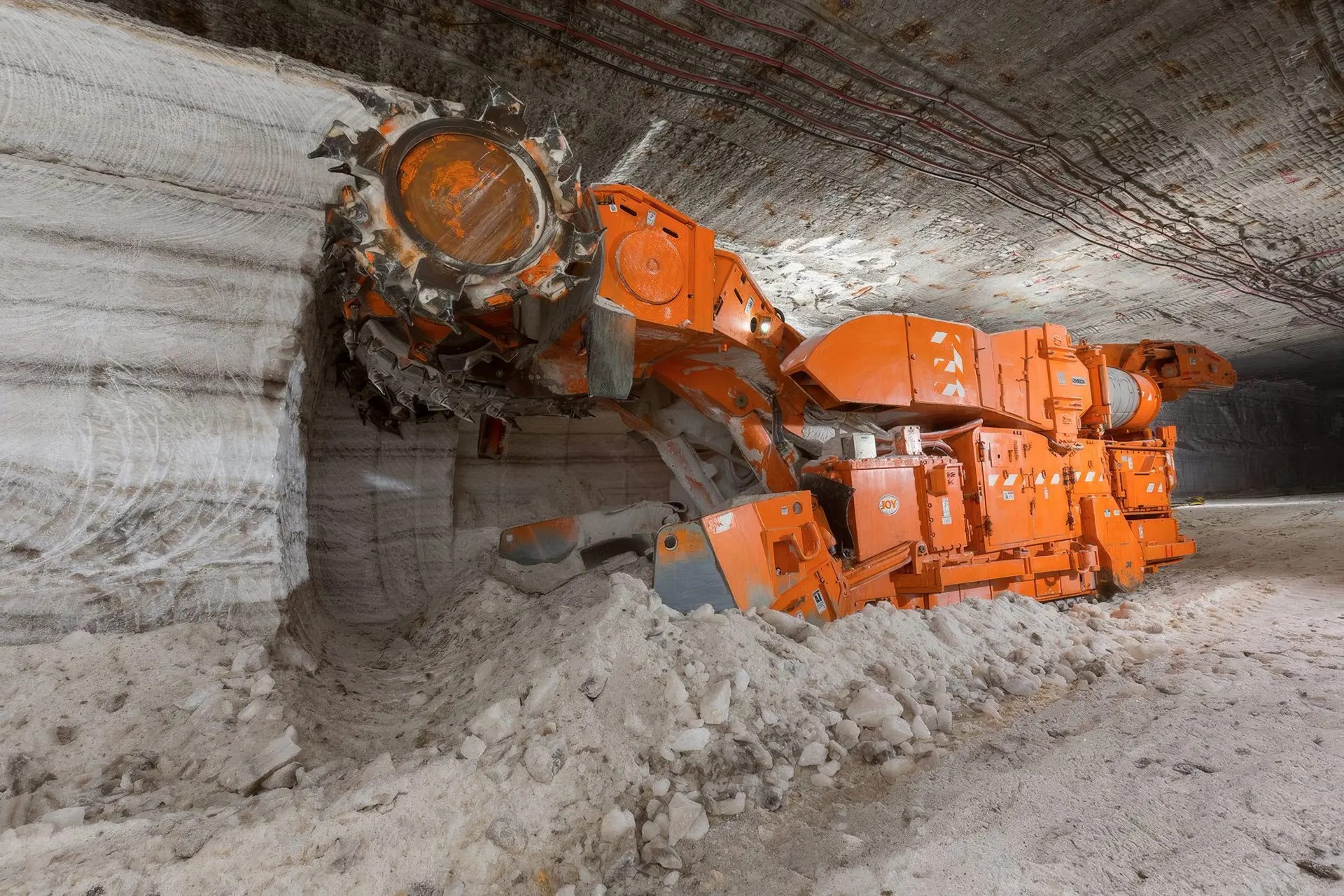
Atomic Eagle's value optimization and technical review program tests alternative mine sequencing. It will assess optimized pit shells, the modeled outlines of the most economic open pit, and underground stopes, the openings from which ore is mined below ground, at updated uranium price assumptions. It will also test alternative mining methods and equipment that could increase the mining inventory, integrated open-pit and underground mine scheduling, and higher-throughput development scenarios. The objective is to determine whether Madaouela can support a larger and more valuable development than earlier studies contemplated.
Atomic Eagle has selected a new mining method for the underground. Management expects the method to enable much faster underground extraction and, combined with a larger open pit at the higher uranium price, to raise the production level at Madaouela and bring output forward.
The company will review historical metallurgical test work and the existing process flowsheet, the sequence of steps a plant uses to recover the metal, against contemporary uranium processing technologies, design practices, and operating experience. That review will look for ways to improve uranium recoveries and plant operability, reduce capital intensity and operating costs, and simplify process design. Operating costs, capital staging, infrastructure requirements, and power and logistics strategies complete the scope.
The 5-Million-Pound Annual Production Target
Atomic Eagle intends to seek up to 5 million lb of uranium oxide a year from the larger operation. Hoskins cites early work on the project for his confidence in the target:
"Our intention is to seek to double production, so to get up to a 5 million pound per annum operation, and with some of the early work, I think we're quite confident that we can achieve that. And that's obviously going to have a big impact on the economics."
The target is an intention that the formal work has yet to test. As of September 30, 2026, no optimization or estimation work at current prices had been undertaken, and there is no certainty that such work would increase the mining inventory or the resource.
Atomic Eagle will evaluate a range of throughput and production scenarios to determine whether increased production rates could support a more valuable project. In parallel, it will continue to assess development, financing, and commercial scenarios internally so that the most attractive options identified by the optimization work can be evaluated. The stated rate of 5 million lb a year is the figure investors can compare with the scoping study's updated economic outcomes when it is released.
Resource Conversion, Scoping Study & Financing
A JORC resource for Madaouela is targeted for the fourth quarter of 2026. Subject to that estimate, the first output of the optimization program is expected to be a scoping study planned for the first quarter of 2027, which will include updated economic outcomes and a roadmap for future feasibility work.
Atomic Eagle is maintaining flexibility on funding and strategic partnership pathways. Its undertakings to the government include updating the feasibility studies and environmental approvals while progressing financing. Hoskins names the kinds of investors the financing process will approach:
"From there, we'll seek to run a financing process and equally seek to engage with strategic investors, whether that be American, Chinese. One of the advantages of doing business in uranium in Africa is that you're flexible enough to be able to go either way, and there is no geopolitical alignment."
Madaouela lies in the Tim Mersoi Basin of northern Niger, which also hosts SOMAIR, with more than 178 million lb of historical production, and the former COMINAK operation, with 165 million lb. On September 16, 2026, Global Atomic announced that the board of the US International Development Finance Corporation had conditionally approved a proposed debt facility of up to US$414.2 million for its Dasa uranium project in Niger. That approval is subject to material conditions and relates solely to Dasa.
The Investment Thesis for Atomic Eagle
- Atomic Eagle controls Madaouela through its 60%-owned subsidiary under a Mining Convention executed on September 23, 2026.
- Madaouela hosts a foreign estimate of 116.5 million pounds of uranium oxide at 1,282 parts per million.
- The 2022 feasibility study optimized the mine at a uranium price of US$55 per pound and excluded about 19.6 million pounds of inferred resources from the mine plan.
- Atomic Eagle intends to seek a Madaouela operation of up to 5 million pounds per year by advancing underground mining alongside a larger open pit.
- A JORC resource is targeted for the fourth quarter of 2026, and a scoping study with updated economic outcomes is planned for the first quarter of 2027.
Atomic Eagle intends to seek a larger production rate at Madaouela, based on a higher uranium price and an earlier underground start than the 2022 plan used. The JORC resource in the fourth quarter of 2026 and the scoping study in the first quarter of 2027 are the next dated steps in testing that larger operation.
TL;DR
Atomic Eagle is seeking to operate a mine producing up to 5 million lb of uranium oxide per year by introducing a new underground mining method alongside a larger open pit. The 2022 FS used a uranium price of US$55 per pound and excluded about 19.6 million lb of inferred resources, while the contract price was US$96.50 per pound as of August 31, 2026. A JORC resource is targeted for the fourth quarter of 2026, and a scoping study with updated economic outcomes is planned for the first quarter of 2027.
FAQs (AI-Generated)
Analyst's Notes





Subscribe to Our Channel









Stay Informed


