




New Found Gold Declares Hammerdown Commercial Production


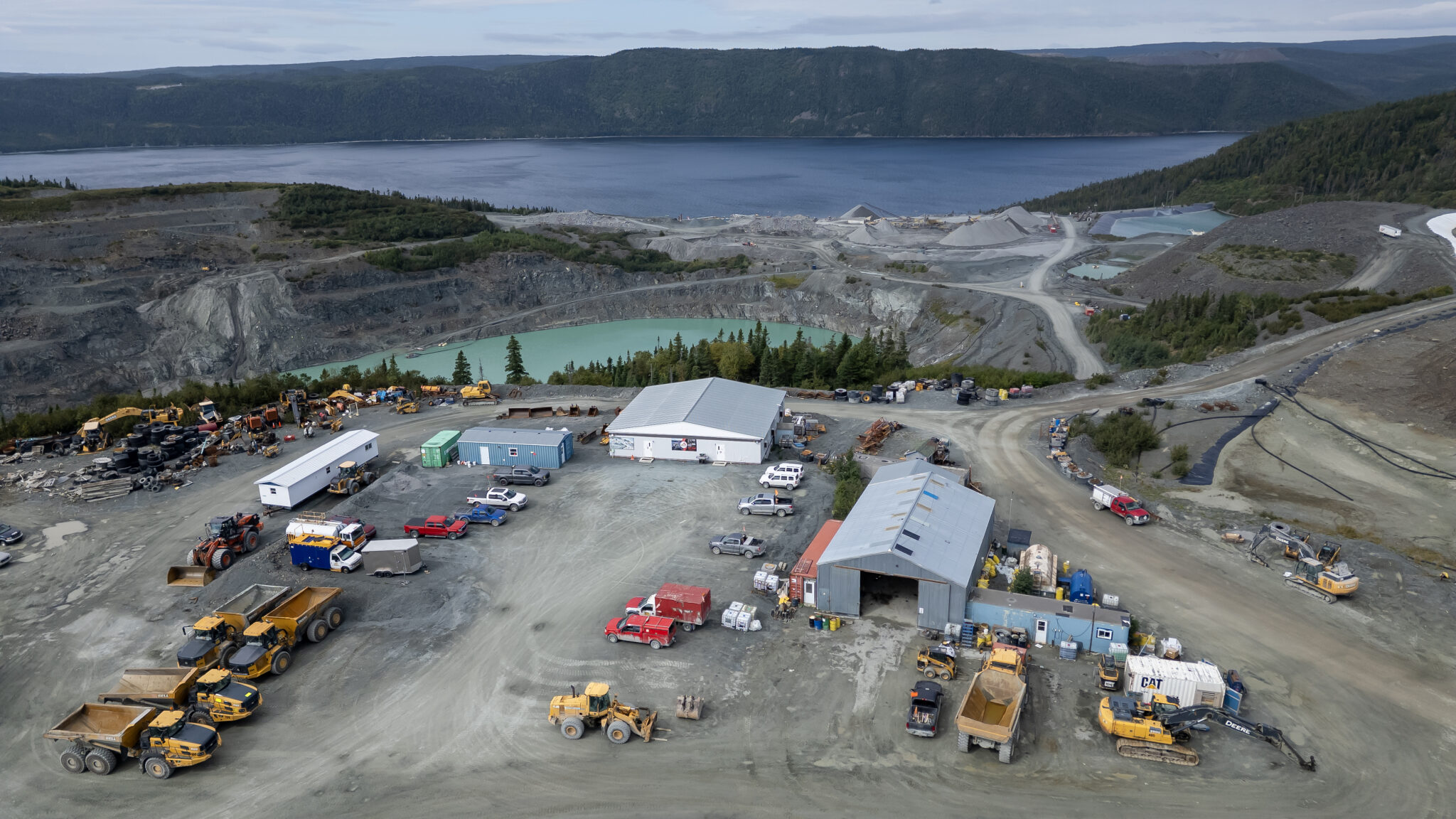
Hammerdown hits sustained throughput, recovery and grade targets as New Found Gold advances toward a mid-tier producer profile and its larger Queensway Gold Project.
- New Found Gold has declared commercial production at its 100%-owned Hammerdown Gold Mine in central Newfoundland, achieving the milestone on August 19, 2026 after meeting sustained throughput, recovery and grade criteria over 60 consecutive days.
- The mine produced 1,989 ounces of gold in August 2026, bringing year-to-date production to 9,140 ounces, with CEO Keith Boyle noting that August output reached the top end of Hammerdown's expected 20,000 to 25,000 ounce annual run rate.
- Management is targeting further cost reductions through a new crushing and sorting circuit expected to reach commissioning readiness in the fourth quarter of 2026, alongside a planned conversion of the Pine Cove mill to a gravity carbon-in-leach circuit targeted for the fourth quarter of 2027.
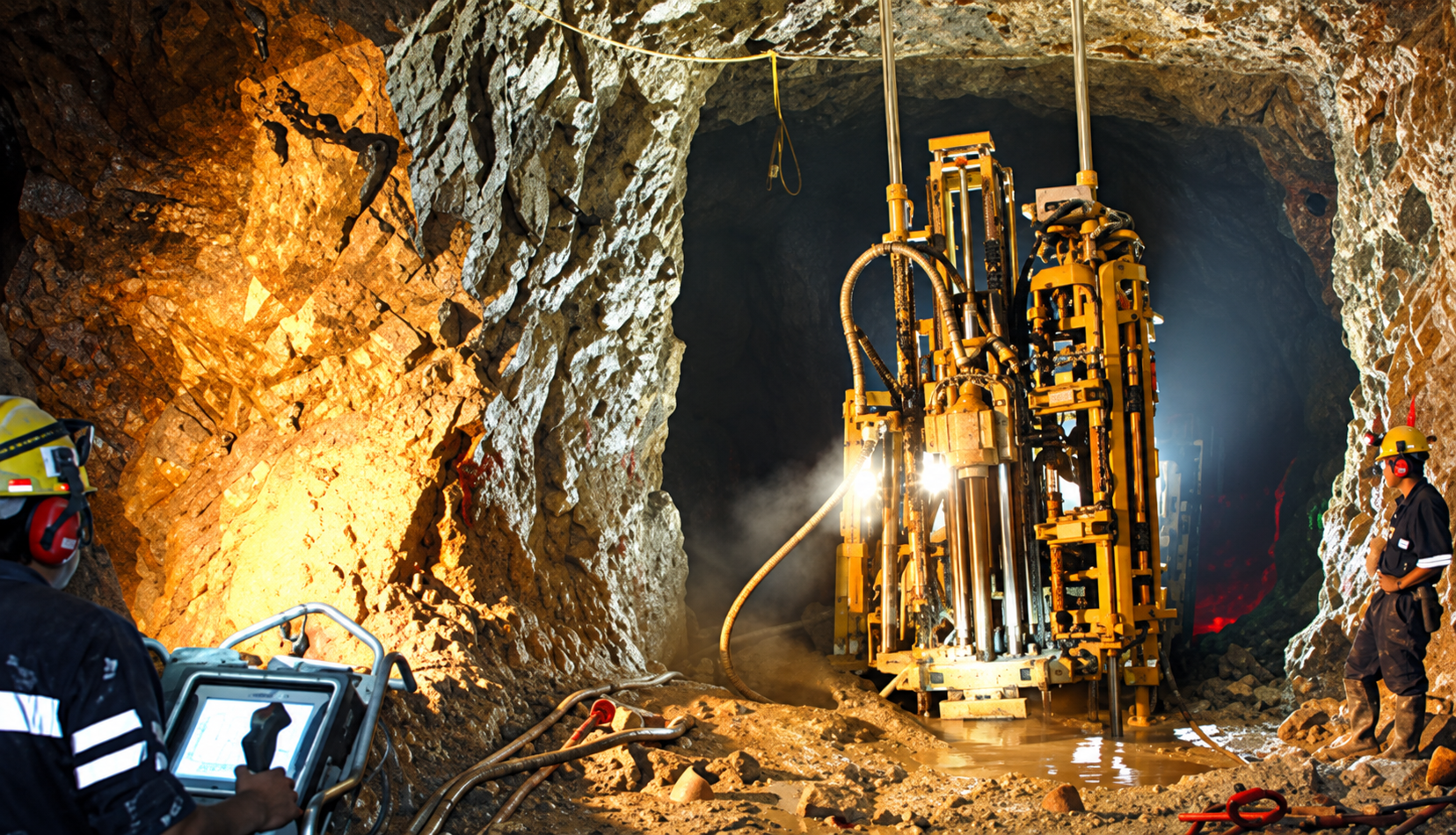
- The company switched its grade control drilling method from reverse circulation to core drilling in April 2026 to more precisely delineate Hammerdown's narrow, high-grade veins, and reports that production is reconciling well against the underlying mineral resource estimate.
- New Found Gold is advancing its flagship Queensway Gold Project toward an updated environmental project report submission, with a goal of processing Queensway material by the fourth quarter of 2027.
Introduction to New Found Gold & Hammerdown Mine
New Found Gold Corp. (TSX / NYSE American: NFGC) has declared commercial production at its 100%-owned Hammerdown Gold Mine in central Newfoundland, marking the company's formal transition from developer to producing gold company. The milestone caps a rapid build-out since New Found Gold acquired the Hammerdown mine and the adjacent Pine Cove processing mill, a transaction that gave the company an operating asset to generate cash flow while it advances its flagship Queensway Gold Project toward development.
CEO Keith Boyle framed the achievement as evidence that the company is delivering on its stated strategy of building a producing gold business in Newfoundland and Labrador.
"We're an emerging gold mining company with Hammerdown Gold Mine now in commercial production. Our Queensway project is advancing through the development phase, and exploration on a great property package."
Hammerdown is a narrow-vein, open-pit gold deposit feeding the refurbished Pine Cove Mill. Together, the two assets form the operational backbone of New Found Gold's strategy: use Hammerdown's near-term cash flow to help fund Queensway's development while proving out the operating team's capabilities on a smaller, first mine.
Interview with Chief Executive Officer, Keith Boyle
Understanding Commercial Production & Its Significance
Commercial production is a threshold that mining companies define and disclose themselves, and New Found Gold set a comparatively conservative bar for Hammerdown. The company required 60 consecutive days in which throughput at the Pine Cove Mill reached at least 85% of the mill's 700 tonne-per-day nameplate capacity, gold recovery reached at least 80%, and feed grade reached at least 80% of the mine-plan head grade outlined in the Hammerdown preliminary economic assessment (PEA).
"For us, it was sixty days where our throughput would be 85% of nameplate and our recovery would be at least 80% gold recovered, and our feed grade would be 80% of the mine plan head grade."
Boyle noted that because Hammerdown is a narrow-vein deposit and the company's first operating mine, management chose a higher bar for consistency before declaring the milestone. Hammerdown cleared all three thresholds comfortably: average throughput of approximately 748 tonnes per day, 87.7% gold recovery, and average feed grade of 2.92 grams of gold per tonne over the 60-day measurement period, with the milestone achieved on August 19, 2026.
For investors, the declaration signals that Hammerdown's production is repeatable rather than a short-lived ramp-up spike, an important distinction for a company transitioning from explorer to producer.
Production Metrics & Future Projections
Hammerdown produced 1,989 ounces of gold in August 2026, bringing cumulative production for the first eight months of the year to 9,140 ounces. The average realized gold price over that period was C$6,271 per ounce (approximately US$4,532 per ounce), reflecting both operating performance and an elevated gold price environment.
"Hammerdown is really slated to be a 20,000-25,000 ounce a year producer. In the month of August, we actually produced at the top end of that scale."
Management attributed the strength to improved grade control practices and higher tonnages moved by the operating team. Looking ahead, Boyle pointed to the PEA's projection of higher-grade material reaching the mill as mining advances toward the base of the current open pit, noting that the PEA identified potential for up to 35,000 ounces of production next year, though the company is still finalizing its mine plan for that period.
New Found Gold anticipates a run rate of 20,000 to 25,000 ounces of gold produced per year at an all-in sustaining cost of approximately US$2,500 per ounce, broadly consistent with the underlying PEA. The company said it plans to provide formal annual guidance for Hammerdown in due course.
Operational Optimization & Cost Control Strategies
With Hammerdown now at a steady operating run rate, management's focus is shifting from ramp-up to margin improvement. Two capital projects sit at the centre of that effort: a new crushing and sorting circuit, and the planned conversion of the Pine Cove Mill to a higher-recovery gravity carbon-in-leach (“Gravity-CIL”) configuration.
"We're currently building our own crushing and sorting circuit now. It's anticipated to be in full production or ready to commission towards the fourth quarter. That is part of this optimization and cost reduction because that'll generate less cost, and with the sorter it'll increase the grade, which is better on the denominator side."
Ore sorting is expected to reject waste material ahead of transport to the mill, lowering crushing costs per tonne while lifting the grade of material delivered for processing, a combination management expects to reduce all-in sustaining costs. Separately, New Found Gold is converting Pine Cove from its current 700 tonne-per-day flotation-leach-Merrill Crowe circuit to a 1,400 tonne-per-day Gravity-CIL circuit, a configuration management believes is better suited to Hammerdown ore. The permit amendment enabling the circuit conversion has been received, with the expansion permit to be applied for in due course; the conversion itself is progressing on schedule and on budget, with completion targeted for the fourth quarter of 2027.
Grade Control & Resource Management
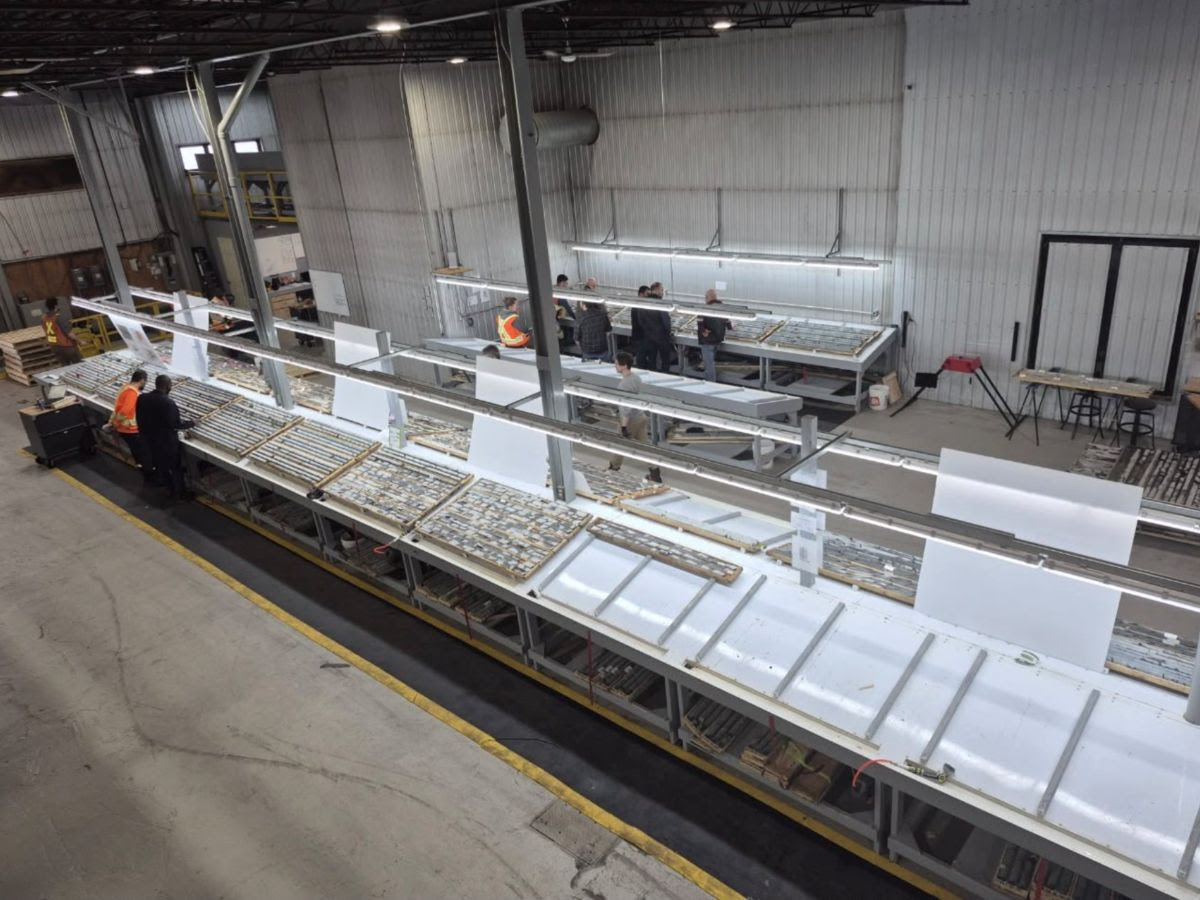
Grade control has emerged as one of the more consequential operational lessons from Hammerdown's ramp-up, and one Boyle said will carry directly into the development of Queensway. In April 2026, the company switched its grade control drilling method from reverse circulation (“RC”) to diamond drilling.
"We switched over from what the previous management had put in as grade control drilling, which was RC, and we switched over to core. The veins are a foot wide or a couple of feet wide, half a metre wide, and for us to be more precise in our grade control we needed to be more precise in locating those veins. RC drilling kind of smears those veins."
The company now drills grade control holes on a five-by-five-metre spacing, reflecting the narrow, high-grade nature of Hammerdown's veins. Boyle said the resulting production data is reconciling well against Hammerdown's underlying mineral resource estimate, the basis for the PEA. Separately, the company is drilling below the current Stage 1 pit to de-risk inferred mineral resources located near historical underground workings, work intended to feed into an updated Hammerdown mineral resource estimate planned for 2027.
Community Engagement & Environmental Considerations
New Found Gold's Hammerdown ramp-up has also expanded its workforce and local hiring footprint. As of mid-2026, the combined Hammerdown and Pine Cove operations employed 445 people, comprising 94 direct employees and 351 contractors, with 65 new jobs created since the mine entered production. Over 90% of new hires are from Newfoundland and Labrador, and 60% of the workforce lives within an hour's drive of the site, allowing most employees to commute rather than live in a camp.
"It's really a good part of our social license that we've created all these jobs and we're a good corporate citizen."
Boyle also praised the province as a mining jurisdiction, describing government engagement on permitting as constructive. During ramp-up, the operation recorded zero lost-time incidents across more than 262,049 person-hours worked in 2026. On the environmental side, New Found Gold is preparing an updated Environmental Project Report for Queensway addressing questions raised by communities during public consultation, primarily around dust, blasting and water quality, and plans to host an open house before resubmitting the report for a government decision.
Future Developments
New Found Gold's near-term catalysts span both operating and corporate milestones. Boyle noted that analyst coverage of the company has continued to expand as the production story matures, growing from five to six covering firms with the recent addition of Beacon Securities.
"It just demonstrates more credibility that, look, we're a mining company now. We're producing ounces, we're producing cash flow, and that cash flow is going to grow as we develop Queensway."
The company's shares began trading on the Toronto Stock Exchange under the symbol “NFGC” on August 26, 2026, aligning its TSX listing with its existing NYSE American symbol. On the Queensway side, New Found Gold is targeting a decision on its environmental assessment in the new year, following resubmission of its Environmental Preview Report, with a goal of processing Queensway material by the fourth quarter of 2027. Asked what investors should watch for next, Boyle pointed to Queensway's technical work:
“The next big one is the announcement of the updated PEA and mineral resource estimate for Queensway.”
Combined with the continued ramp-up of Hammerdown and the pending crushing and sorting circuit, that update is likely to be the next significant data point shaping the market's view of New Found Gold's path toward becoming, in Boyle's words, “Canada's next mid-tier gold producer.”
The Investment Thesis for New Found Gold
- Hammerdown provides New Found Gold with an operating, cash-generating asset ahead of a larger construction decision at Queensway, reducing near-term reliance on external financing.
- Commercial production was declared against conservative, pre-defined criteria and cleared with meaningful margin, supporting management's credibility on future guidance.
- August 2026 production of 1,989 ounces sits at the top end of Hammerdown's 20,000 to 25,000 ounce annual guidance range, with further grade uplift anticipated as mining advances toward the base of the Stage 1 pit.
- Planned crushing, sorting and Pine Cove Gravity-CIL circuit upgrades target lower unit costs and higher recoveries, offering a visible margin-improvement pathway through 2027.
- Grade control data is reconciling well against the underlying resource model, an early signal of geological and mining confidence relevant to the larger-scale Queensway project.
- A TSX listing alongside the existing NYSE American listing and growing analyst coverage broaden the company's investor base and market visibility.
- Queensway remains the larger long-term value driver, with an updated PEA and mineral resource estimate expected as the next major catalyst.
New Found Gold's Hammerdown commercial production declaration is best understood as a proof point rather than an end in itself. It demonstrates that a management team assembled specifically to build and operate mines can take a narrow-vein, high-grade deposit from acquisition through to a sustained, repeatable production run, hitting throughput, recovery and grade targets simultaneously over a 60-day measurement period. That operational credibility matters as much as the roughly 20,000 to 25,000 ounce annual scale of Hammerdown itself, because the lessons learned on grade control, ore sorting and mill optimization are the same disciplines the company will need at Queensway, a substantially larger project along the same Newfoundland trend.
For investors, Hammerdown's cash flow provides some insulation from external capital markets while Queensway's permitting and engineering work continues, and the growing base of analyst coverage suggests the market is beginning to price New Found Gold as a producer rather than purely a developer. The next tests will be whether the crushing and sorting circuit delivers the anticipated cost and grade benefits on schedule, whether the Pine Cove Gravity-CIL conversion stays on its stated 2027 timeline, and whether the updated Queensway PEA confirms the project's economics at current gold prices.
Macro Thematic Analysis
New Found Gold's Hammerdown milestone fits a broader pattern among junior and mid-tier gold developers in 2026: a shift from relying on equity markets toward relying on internally generated cash flow to fund growth. With gold prices elevated through the year, companies able to bring smaller, permitted assets into production quickly have gained a financing advantage over pure-play developers still dependent on capital raises to reach construction decisions. New Found Gold's acquisition of the Hammerdown mine and Pine Cove Mill gave it exactly that kind of asset, and the company's realized gold price of roughly C$6,271 per ounce over the first eight months of 2026 illustrates how favourable the pricing backdrop has been for producers able to sell ounces now rather than wait years for a larger project to reach production.
The broader theme is one of sequencing: using a smaller, de-risked operation to fund, and operationally de-risk, a larger one. The grade control lessons, mill optimization work and workforce New Found Gold has built at Hammerdown are explicitly intended to transfer to Queensway, a materially larger deposit along the same fault structures. That approach reduces the execution risk typically associated with a company's first major construction decision, since the team will have already run a mine rather than building one from a standing start.
The clearest articulation of this thesis comes directly from management. As CEO Keith Boyle put it, describing the connection between Hammerdown's cash flow and the company's broader growth plan:
"We're producing ounces, we're producing cash flow, and that cash flow is going to grow as we develop Queensway."
For investors, that sentence captures the core of New Found Gold's near-term investment case: a self-funding bridge from first production to a substantially larger development decision.
TL;DR
New Found Gold has declared commercial production at its Hammerdown Gold Mine in Newfoundland, hitting sustained throughput, recovery and grade targets over 60 consecutive days through August 19, 2026. August output of 1,989 ounces sat at the top end of the mine's 20,000 to 25,000 ounce annual guidance, supported by improved grade control and a switch to core drilling for more precise vein definition. Management is now focused on cost reduction through a new crushing and sorting circuit and a planned Pine Cove Gravity-CIL mill conversion, both progressing toward completion. New Found Gold remains focused on advancing its larger Queensway Gold Project, with an updated PEA expected as the next major catalyst.
FAQ's (AI-Generated)
Analyst's Notes





Subscribe to Our Channel



Stay Informed






















