




Cobra's Wudinna Keeps 91% of Recovery on 40% Less Reagent


Desorption tests gave Cobra's Wudinna rare earth project a measured recovery curve, and the scoping study now picks its operating point from it.
- Desorption tests at Cobra Resources' Wudinna project measured rare earth recovery across four ammonium sulfate (AMSUL) concentrations and a range of acidity levels, not a single operating condition.
- Cutting AMSUL concentration by 40% at the Boland prospect held neodymium and praseodymium (NdPr) recovery at 70% against 77% at full strength.
- Acidified site groundwater with no added AMSUL still recovered 51% NdPr, 46% dysprosium and terbium (DyTb), and 50% heavy rare earth elements (HREE) at Boland.
- At 0.5 M and pH 3, the Head prospect recovered 40% NdPr against Boland's 77%, and Head's heavy rare earth recoveries exceeded its own NdPr recovery in every test.
- The tests establish neither commercial reagent consumption nor a preferred operating condition, and both fall to the scoping study.
The Wudinna Deposit & the Recovery Method It Allows
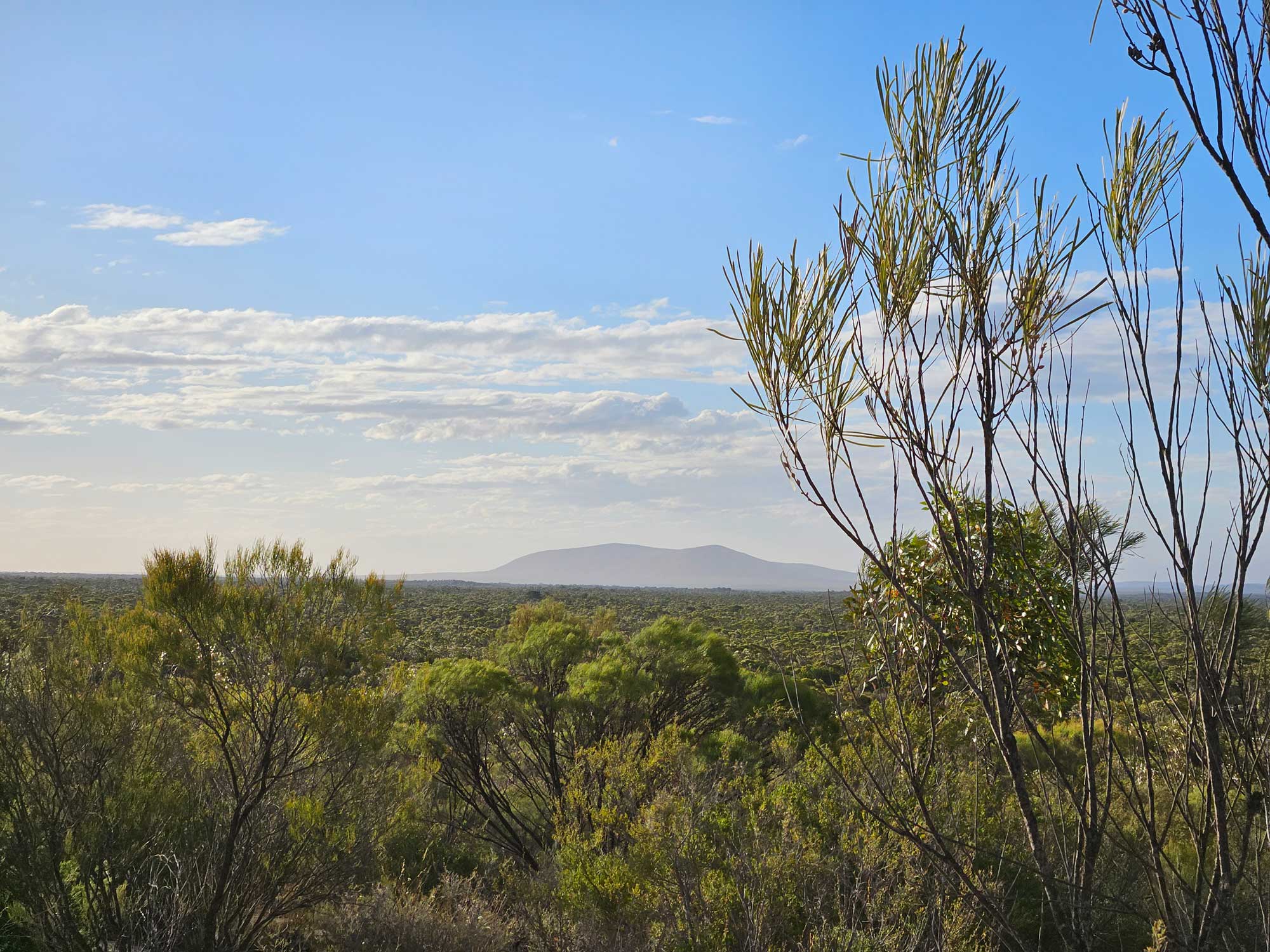
Cobra Resources (LSE: COBR) discovered rare earth mineralization at its Wudinna project in South Australia in 2023 across two prospects: Boland and Head. The rare earths are associated with clays and organic matter inside the sands of the Narlaby Paleochannel, an ancient buried river system, and the mineralized sand is permeable and lies within a hypersaline aquifer confined by low-permeability clay units. That confinement lets the deposit be worked by in situ recovery (ISR), a method that dissolves the metal underground instead of excavating it. Ionic mineralization of this kind is highly desirable, because it carries a high weighting of valuable heavy rare earth oxides and can be desorbed cost-effectively.
ISR circulates a mildly acidic ammonium or magnesium sulfate solution, called a lixiviant, through the mineralization using engineered injection and extraction wells, with the confining geology intended to control where that solution flows between them. Because there is no bulk excavation, the rare earths are recovered in solution, which avoids much of the conventional mining and processing infrastructure. The method is not novel in this jurisdiction: confined-aquifer ISR accounts for more than 60% of global uranium production, and it has been used for decades in geologically similar environments in South Australia, which has an established regulatory framework for it. That style of ISR causes temporary ground disturbance, and the groundwater is regenerated over time.
Bench-scale testing indicates the mineralization is amenable to ISR recovery techniques. The paleochannel geology at Wudinna covers 3,200 square kilometers, and the project targets bottom-quartile recovery costs. The method leaves the operating recipe open. Recovery is determined by what the solution does underground, not by how much rock is moved, which places the strength and acidity of that solution at the center of the project's economics. The desorption program therefore tested reagent strength as a variable, across four settings at Boland and three at Head.
What the ANSTO Test Program Measured
The Australian Nuclear Science and Technology Organization (ANSTO) ran 24-hour desorption tests, the step in which rare earths detach from the clays holding them and pass into solution, on bulk composite samples from the Boland and Head prospects. The composites were prepared from samples across 26 intervals from 24 drillholes, and the program used site-sourced saline groundwater throughout. Composites built at that scale average the response across many intervals, so each test reads the prospect, not a single hole. The Boland composite assayed 605 parts per million total rare earth oxide, and the Head composite 706 parts per million.
The program compared four reagent strengths and a range of acidity levels rather than a single operating condition. Boland was tested at 0.5 M, 0.3 M, and 0.1 M ammonium sulfate (AMSUL), where M is the molar concentration of the reagent in the solution, and against acidified site groundwater with no added AMSUL. Head was tested at 0.5 M and 0.3 M against the same reagent-free groundwater, with no 0.1 M case. Acidity ranged from pH 4 to pH 2.5 at Boland and from pH 4 to pH 3 at Head. Every condition was run over the same 24 hours, so contact time is held constant across the comparison, and the differences that emerge belong to the chemistry.
Reported recoveries are calculated from the concentration of rare earths in the recovered solution, adjusted for dilution, and were checked against recoveries calculated from what was left in the solids. One Boland test, run at 0.5 M and a target pH of 4, was excluded from reporting because those two measures did not reconcile within acceptable limits. Every other condition reconciled within them, and each of those sits in the reported set. The scale of the composites provides confidence that the response is representative of the mineralized material tested, and a composite can support that claim and no more.
Boland: Recovery Against Reagent Strength
At pH 3, the Boland composite recovered 77% of its neodymium and praseodymium (NdPr), 74% of its dysprosium and terbium (DyTb), and 72% of its heavy rare earth elements (HREE) using 0.5 M AMSUL. Moving to 0.3 M, a 40% reduction in reagent concentration, returned 70% NdPr, 67% DyTb, and 67% HREE. Those figures retain approximately 91%, 91%, and 93% of the recovery achieved at 0.5 M. The three measures move together at that step, which means the reduction does not favor or penalize any part of the basket.
Below that point, the response degrades gradually instead of collapsing. At 0.1 M, the composite still returned 58% NdPr, 53% DyTb, and 56% HREE, and acidified groundwater with no added AMSUL recovered 51% NdPr, 46% DyTb, and 50% HREE. A portion of the ionically bound rare earths, therefore, desorbs without any external AMSUL addition, which puts the lower bound of the measured range well above zero. That gradual shape makes reagent strength a variable an engineer can solve for, since a response that fell away sharply below full strength would leave only one usable condition.
Acidity moves recovery on its own axis. Holding AMSUL at 0.5 M and lowering the pH target from 3 to 2.5 lifted Boland recoveries to 83% NdPr, 80% DyTb, and 79% HREE, while raising the pH target to 3.5 dropped them to 61%, 52%, and 53%, respectively. The reagent-free case responds to acidity in its own right, returning 31% NdPr, 26% DyTb, and 30% HREE at pH 4, and 41%, 37%, and 41% at pH 3.5 before reaching its pH 3 figures. Both AMSUL concentration and pH materially influence recovery, and each can be evaluated as an operating trade-off rather than accepted as a fixed input. Two levers acting on the same output give the engineering work more than one route to a given recovery, and choosing between them is an economic exercise.
Head's Different Response & the Uranium Trade-Off
Head does not answer the same test the same way. At 0.5 M and pH 3, it recovered 40% NdPr, 57% DyTb, and 58% HREE, against Boland's 77%, 74%, and 72% under matched conditions. Moving Head to 0.3 M returned 36% NdPr, 52% DyTb, and 53% HREE, retaining approximately 90%, 91% and 91% of the 0.5 M results, so the proportional penalty for cutting reagent is close to identical at the two prospects, even where the absolute levels are not. Both prospects were tested against the same reagent-free groundwater baseline and under matched conditions at 0.5 M and 0.3 M.
The ordering of the three measures also differs. HREE and DyTb recoveries exceeded those of NdPr under every Head test condition. Across the pH series at 0.5 M, NdPr recovery ran from 23% at pH 4 to 31% at pH 3.5 and 40% at pH 3, while DyTb over that same range went from 28% to 42% to 57%. Reagent-free acidified groundwater recovered 13% NdPr, 19% DyTb, and 21% HREE at pH 3.5, and 23%, 33%, and 36% at pH 3. An operating point tuned to the NdPr response at Boland would therefore be reading the wrong end of the basket at Head.
Reagent strength moves more than rare earth recovery. At pH 3 on the Boland composite, reducing AMSUL from 0.5 M to 0.0 M reduced uranium recovery from 29% to 5%. No equivalent figure was reported for the intermediate concentrations, for other acidity levels, or for Head, so the result is a single comparison between two endpoints on a single composite. Lower additions of ammonium and sulfate to the confined aquifer are among the potential benefits that the lower-reagent operating cases will be assessed for, alongside lower AMSUL consumption and reduced exposure to AMSUL supply and pricing. Across both prospects, the response was consistent enough to support the next phase of optimization.
What the Scoping Study Has to Settle
The test work defines a range of potential operating conditions and stops there. These tests establish neither commercial reagent consumption nor the preferred operating condition, and reaching those conclusions requires further column work, solution management assessment, and economic evaluation in the scoping study. Recovery, reagent consumption, solution chemistry, and overall economics will be assessed together to define preferred commercial operating parameters, while engineering design and further test work determine the operating configuration, recovery assumptions, and development economics. Ongoing test work is evaluating the technical and economic potential for ISR recovery of critical rare earth elements at Wudinna, and the desorption results are one input to that evaluation, not a conclusion drawn from it.
Two milestones stand in front of that work. Cobra is targeting a maiden mineral resource estimate (MRE) shortly, with scoping study updates to follow it. Management says the metallurgical program supporting the MRE is also intended to enable economic studies at the scoping and pre-feasibility study (PFS) level. The resource estimate and the operating conditions are separate questions that converge on the same study: one defines how much material there is, and the other how much of its contained metal comes out.
Managing Director of Cobra Resources, Rupert Verco, put the resource estimate first in that sequence:
"We're currently working through our resource estimate, and that's not far away."
Verco tied the metallurgical work to the studies it is meant to feed:
"We've got an extensive met program underway to support that resource estimate and to then enable economic studies so scoping PFS level assessments."
What the desorption results add to that sequence is an envelope. The scoping study now selects an operating point from a measured curve on which the recovery consequence of each step is already quantified for both prospects, and the reagent-free case sets the floor. The economic half of the decision is still to come, but the technical half of it is no longer an assumption.
The Investment Thesis for Cobra Resources
- Measured operating range, the desorption program replaced a single recovery assumption at Wudinna with a measured response across four reagent strengths at Boland, three at Head, and a spread of acidity levels at both.
- Shallow reagent penalty cutting ammonium sulfate concentration by 40% at Boland gave up under a tenth of recovery across neodymium and praseodymium, dysprosium and terbium, and the heavy rare earth elements.
- Reagent-free floor acidified site groundwater carrying no added ammonium sulfate still recovered about half the neodymium and praseodymium, and half the heavy rare earth elements at Boland.
- Two prospects, two profiles, as Head recovered 40% neodymium and praseodymium against Boland's 77% under matched conditions, while its heavy rare earth recoveries exceeded its own neodymium and praseodymium recoveries in every test.
- Uranium moves with the reagent uranium recovery on the Boland composite fell from 29% to 5% as the reagent was removed entirely at pH 3, though that comparison was reported only at the two endpoints.
- Economics outstanding commercial reagent consumption and the preferred operating condition remain for the scoping study, which will weigh recovery, reagent consumption, solution chemistry, and overall economics.
The investment question at Wudinna shifts from whether the deposit responds to leaching to which operating point yields the best return. The desorption results answer the recovery half of that question at both prospects, and they leave the other half, what the reagent and the solution management actually cost, to the scoping study and the engineering work feeding it.
TL;DR
Cobra Resources now holds a measured recovery curve for Wudinna in place of a single operating assumption. At Boland, 40% less AMSUL gave up under a tenth of the recovery; reagent-free acidified groundwater still returned about half; and uranium recovery fell from 29% to 5% as the reagent came out. Head answers the same test at lower absolute levels, with its heavy rare earths leading, so one operating recipe will not serve both prospects. The scoping study selects the operating point and now draws from a curve with the recovery consequence of every step already quantified.
FAQs (AI-Generated)
Analyst's Notes





Subscribe to Our Channel








Stay Informed






















