Scarcity, Speed, and Fine Print: Inside Mining’s Two-Month Royalty Sprint


.jpg)
Seven royalty deals in two months, from a $1.9bn uranium merger to a 20-year-payback silver stream, reveal how mining investors are pricing scarcity in 2026.
- Seven distinct royalty transactions closed or were announced across roughly two months, ranging from a US$1.9 billion uranium-and-land merger to a $132.5 million iron ore royalty.
- Uranium Royalty Corp's combination with Sweetwater Royalties implies a US$1.9 billion enterprise value for Sweetwater, the largest deal of the period by headline value.
- LunR Royalties' all-equity Fruta del Norte silver stream carries a payback period stretching into decades, reflecting how far buyers must reach to compete with Silver Wheaton for scarce silver deals.
- Electric Royalties CEO Brendan Yurik estimates AI-driven demand alone could add roughly 50% to copper consumption over coming decades, a swing barely reflected in demand models five years ago.
- Electric Royalties has spread its exposure across 43 royalties and eight or nine metals rather than concentrate capital in single-asset deals worth $300 million or more.
The royalty and streaming sector doesn't usually move this fast. In barely two months, seven structurally distinct transactions have landed - a uranium-and-land merger, a district-scale silver stream, a gold stream on a mine only now returning to production, a single-asset silver royalty, a royalty update that cost nothing to obtain, an iron ore royalty tied to America's critical minerals push, and a copper project-finance package built from streams and equity. On The Royalty Show, Brendan Yurik, CEO of Electric Royalties Ltd (TSXV:ELEC), shared his insights on what each deal actually looked like beneath its headline number - and what a run like this says about where capital believes the real risk in mining now sits: not underground, but in the years it takes to get metal out of it.
A Two-Month Sprint Across Multiple Deal Types
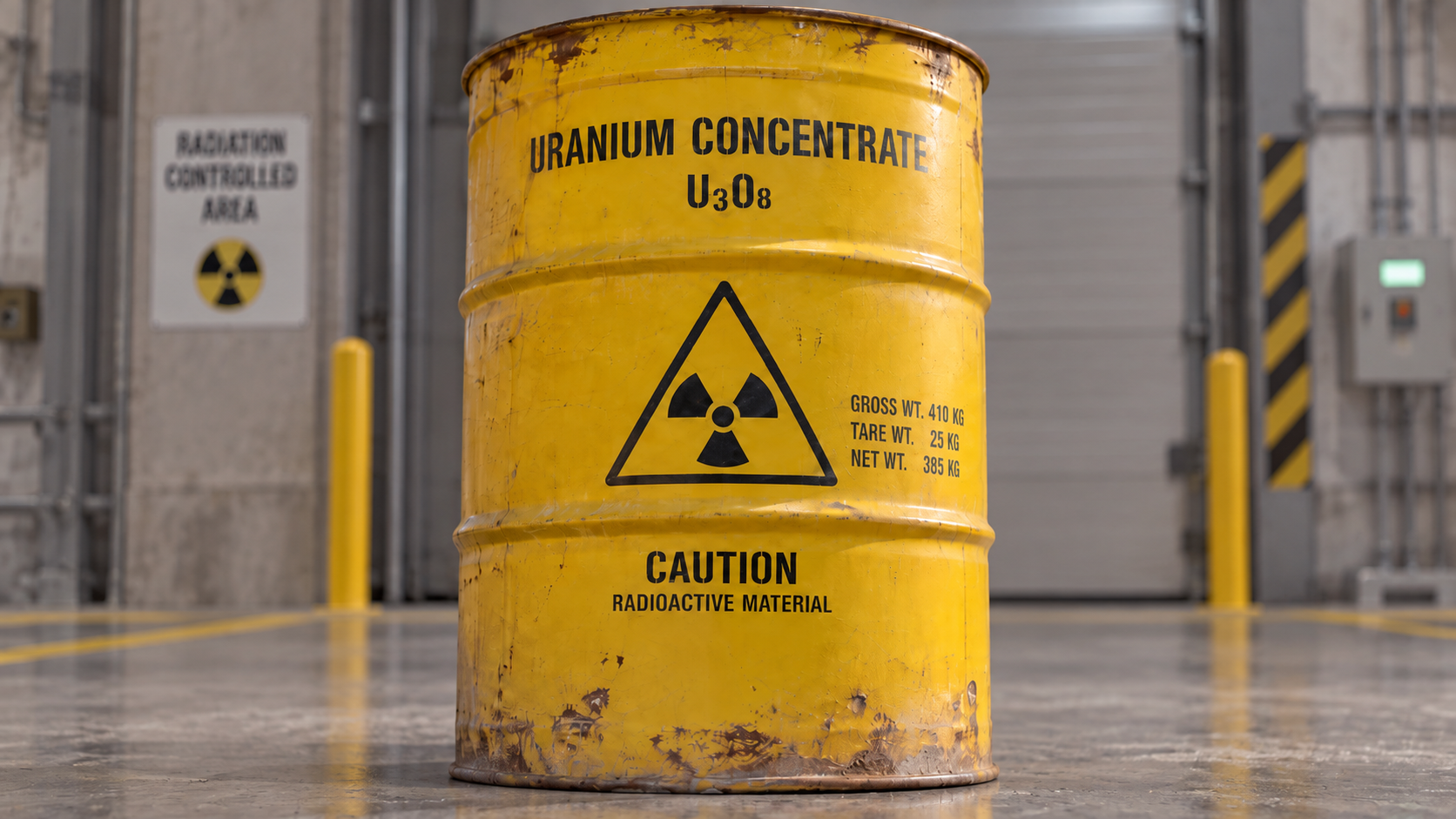
The scale alone sets the tone. Uranium Royalty Corp (NASDAQ:UROY) has combined with Sweetwater Royalties in a transaction implying a US$1.9 billion enterprise value for Sweetwater - by far the largest deal of the period, and an unusual one in that it bundles uranium royalties with a substantial land and trona-royalty position in Wyoming rather than a conventional single-commodity royalty book.
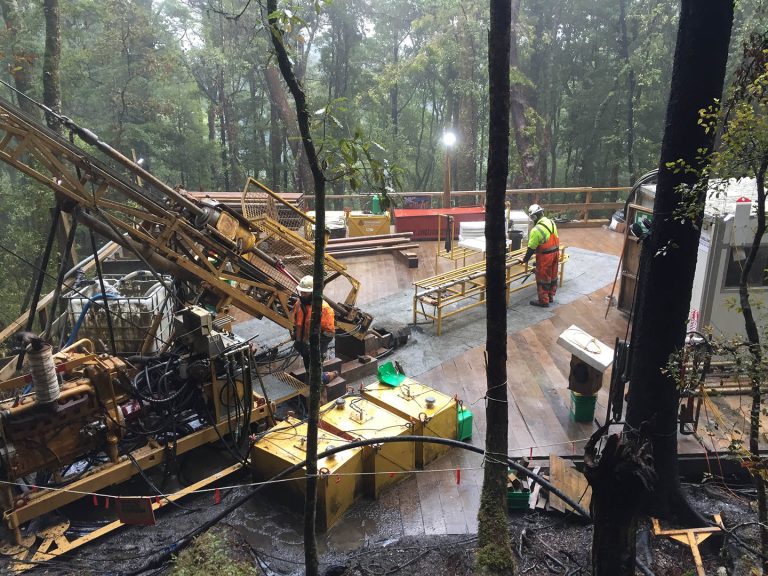
At the other end of the risk spectrum sits LunR Royalties' (TSXV:LUNR) completing an all-equity silver stream with Fruta Del Norte mine in Ecuador in May. It is, on Yurik's telling, comfortably the most expensive deal of the group when measured by payback - a period stretching into decades on current production. The bet embedded in that price is that Fruta del Norte gets bigger: more silver, more mine life, more production, rather than a return generated purely from what is already being dug up.
Triple Flag Precious Metals' (TSX:TFPM) US$440 million gold stream on the newly restarted Ravenswood mine in Queensland completed in June sits in between a faster payback than the Fruta del Norte deal but still a nine-figure commitment to a single asset. Elemental Royalty Corp's (TSX:ELE) roughly C$327 million acquisition of Vizsla Royalties, which brings an uncapped, district-scale NSR over the Panuco silver-gold project in Mexico, is smaller in absolute terms but concentrated entirely in one royalty. Alongside it, Elemental's separate reserve-expansion update on its already-owned Karlawinda royalty cost nothing at all yet is expected to lift payments toward roughly $12.3 million a year, a reminder that a well-timed update on an existing asset can add as much value as a acquisition, without writing a cheque.
The Metals Royalty Company (NASDAQ:TMCR), a spinout of The Metals Company (NASDAQ:TMC), closed a $132.5 million royalty on Mesabi Metallics' iron ore project in Minnesota in June. This is the largest royalty transaction so far in the critical-minerals and iron ore space, and one tied directly to US industrial and supply-chain policy. And Canadian Copper Inc (CSE:CCI) closed a precious-metals stream and equity package worth up to roughly $44 million with OR Royalties Inc (TSX:OR) in July, a smaller, more traditional project-finance structure that funds construction rather than an outright asset purchase.
Sweetwater and the Silver Premium
Set side by side, the Fruta del Norte and Ravenswood deals illustrate how differently the market is pricing risk within the same broad category. Ravenswood's faster payback reflects a mine already back in production and ramping toward steady-state output. Fruta del Norte's stretched payback reflects a different wager entirely - on exploration upside and production growth rather than what the mine is producing today.
Yurik highlights the gap of how little competition exists at the top of the silver market as Silver Wheaton basically owns the top five above and the top five below. In a market that concentrated, buyers chasing a scarce, high-quality silver asset are effectively bidding against the deepest pockets in the sector which pushes price, and therefore payback period, in one direction only.
Whether that premium is justified comes down to a single variable:
"If you believe that metal prices are going to double, then that royalty potentially has double the value," Yurik said.
The same logic applies to a doubling of production or a doubling of mine life. The risk is that an investor's view of the future, not the royalty's terms, ends up doing most of the work in that valuation.
Reading the Fine Print: Thresholds, Step-Downs and NPIs
Headline royalty percentages, Yurik argued, tell only part of the story - and sometimes a misleading part. A 1% royalty bought for a few million dollars can be worth radically more or less than another 1% royalty depending on buried terms: buyback clauses, production or revenue thresholds, and whether the interest is a true royalty or a net profits interest.
The single riskiest clause type, in his view, is the automatic threshold:
"Thresholds - automatic thresholds where they hit a certain milestone, and then something will happen automatically where it's like they don't have to give you any money. It's just poof, all of a sudden the royalty will cut in half, or sometimes even to zero."
A royalty that looks like a 2% NSR on a mine with a 20-year production profile can, in practice, pay out on only the first few thousand ounces before the rate collapses - a structural risk that isn't visible in the headline terms at all. Net profits interests carry a related but distinct danger: unlike a royalty, an NPI pays nothing if the operator isn't making money, which turns what looks like a royalty into a direct bet on operator profitability. Overly generous royalty rates create their own failure mode in the opposite direction - Yurik noted that a 7% NSR is close to unworkable for most operations, pointing to the well-known case of a nickel-gold project renegotiated down from 7% to roughly 3.5% because production simply wasn't viable at the original rate.
Buyback options cut both ways. Once a royalty is close to being paid annually, the economics of buying it back usually become compelling for the operator - which is why Yurik said Electric Royalties avoids writing buybacks into its own agreements wherever possible, with only one of its 43 royalties carrying one. But a buyback exercised by an operator can also be read as a positive signal: it typically means management has enough confidence in the project's future cash flow to prefer paying it off over continuing to share it.
The Demand Story Nobody Has Modelled Yet
Underlying all seven deals is a demand picture Yurik believes investors are still catching up to. Five years ago, copper demand models were built almost entirely around a linear electric-vehicle adoption curve - with no allowance for artificial intelligence, which barely featured as a demand driver at the time. On his estimate, AI-related demand alone could add roughly 50% to copper consumption over the coming decades. Robotics, Yurik argued, sits even further outside current forecasting, is a demand driver with the potential to rival AI's eventual impact, but one that isn't built into any published model today.
The corresponding supply story is, in Yurik's words, "equally as bad" as the demand side is good and considerably harder to communicate to investors. Ore deposits take millions of years to form; new discoveries are scarce; permitting and construction timelines routinely run a decade or more; and a meaningful share of currently producing mines are already in their final years of output. Several of Electric Royalties' own assets illustrate the point directly: its manganese royalty sits on what the company describes as effectively the only project of its kind in Canada, and its US tin royalty covers one of only two tin deposits the US Geological Survey considers potentially economic domestically.
Electric Royalties' Own Playbook: Diversification Over Concentration
Set against deals like Sweetwater and Fruta del Norte, Electric Royalties' own strategy is deliberately the opposite of concentrated. The company holds 43 royalties spread across eight or nine metals in what Yurik describes as safe jurisdictions - a structure built specifically to avoid the single-asset risk embedded in a $300 million-plus royalty purchase.
"We're diversified [across] 43 different royalties, all safe jurisdictions, across eight, nine different metals. I'm risk averse."
That diversification comes at a cost in headline deal size - Electric Royalties isn't writing $400 million cheques - but it also means no single threshold clause, buyback, or underperforming asset can materially damage the overall portfolio.
Yurik also pointed to AI-assisted valuation work as a genuinely new tool for investors trying to make sense of a sector this fragmented: with the right inputs, he said, an investor can now run comparative valuations across the royalty universe far faster than was previously possible, cutting through the sector's tendency to obscure real risk behind a single blended headline number.
Key Takeaways
Two months of dealmaking have made one thing explicit: "royalty" is not a single asset class with a single risk profile. A $1.9 billion land-and-royalty merger, a decades-payback silver stream, and a free reserve update on an existing royalty are all, technically, royalty transactions - but they carry entirely different risk-return profiles, and the terms buried inside each agreement (thresholds, buybacks, NPI structures) can matter as much as the headline price. The underlying driver of the activity, in Yurik's framing, is a supply-demand gap that the market is only beginning to price - one where AI and, eventually, robotics could add demand nobody has yet modelled, against a supply base that cannot be expanded on anything but a multi-decade timescale.
TL;DR
Seven royalty transactions - from Uranium Royalty Corp's US$1.9 billion Sweetwater combination to a $132.5 million iron ore royalty and a decades-payback Fruta del Norte silver stream - have redrawn the royalty landscape in two months. Electric Royalties CEO Brendan Yurik argues the surge reflects growing recognition of a structural gap between rising metal demand (AI alone could add ~50% to copper demand) and constrained supply. But not all royalties are equal: buried terms like automatic thresholds, step-downs, and net profits interests can quietly halve a royalty's real value regardless of its headline rate. Electric Royalties' own response has been diversification - 43 royalties across eight or nine metals - rather than concentrating capital in single, high-priced assets.
FAQs (AI Generated)
Analyst's Notes





Subscribe to Our Channel


.webp)

.webp)
Stay Informed