




Serabi Gold Adds Second Mining Front at Coringa with Serra South Discovery


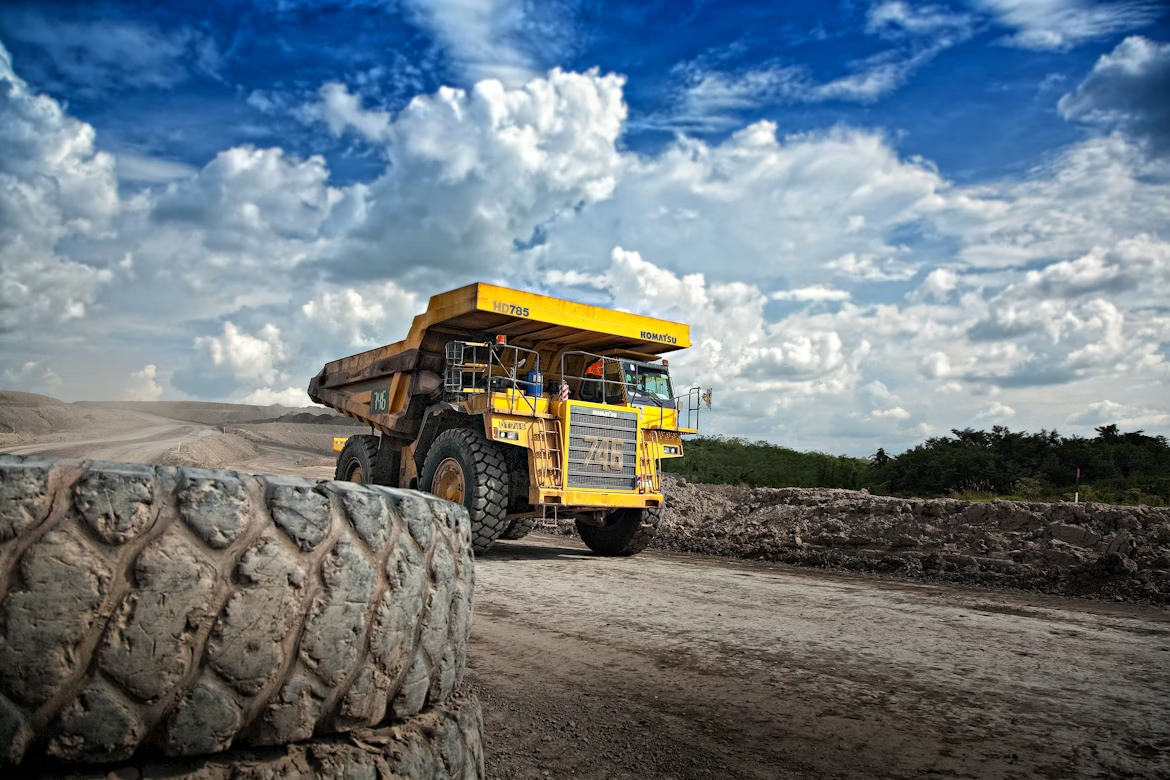
Serabi Gold's 2025 Coringa drilling confirmed Serra South as a structurally distinct zone, adding a second potential mining front to the development pipeline.
- Serabi Gold's 2025 brownfield drilling at Coringa confirmed Serra South as a mineralised zone approximately 500 metres south of the existing Serra mine infrastructure, formed at the intersection of the Fofão structural trend and the main Serra and Meio fault system.
- Follow-up drilling in the corridor between the two zones returned only a narrow, lower-grade structure, ruling out an underground connection and confirming that a separate portal will be required to access Serra South.
- A second operating front at Coringa would reduce single-source dependence and support more flexible mine scheduling as the operation transitions from selective open stoping to longhole open stoping in 2026.
- The 2025 Coringa drilling programme totalled 20,800 metres across 90 diamond holes, forming part of a 38,400-metre group campaign, with a consolidated mineral resource estimate update expected in March 2026.
- Serabi's stated inventory objective of 1.5 million ounces or more across Coringa and the Palito Complex underpins the company's longer-term path toward 70,000-100,000 ounces per annum, beyond the approximately 60,000-ounce capacity supported by the 330,000-tonne-per-annum plant expansion already underway.
Serra South Confirmed as a Structurally Distinct Zone
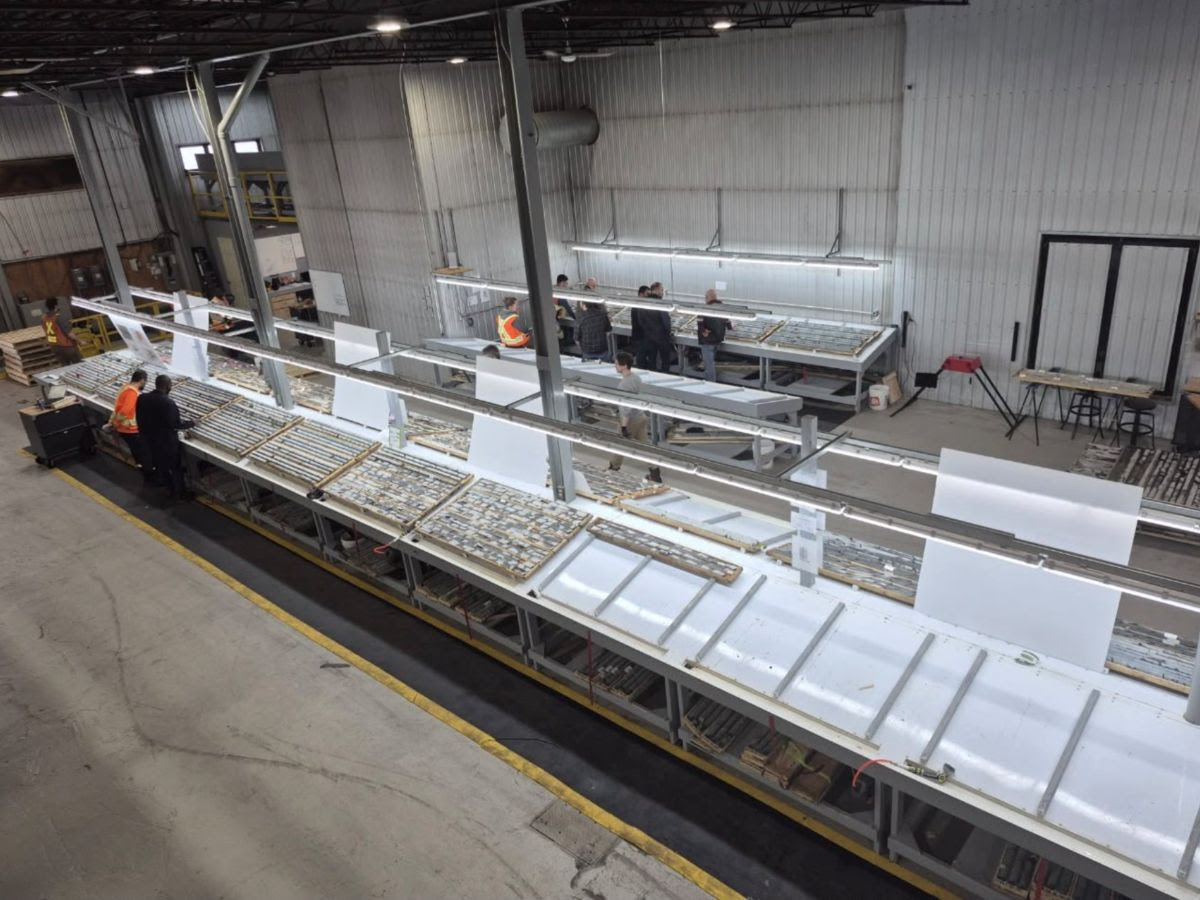
Serabi Gold completed detailed definition drilling at Serra South through the fourth quarter of 2025, running three rigs on a 50-metre grid spacing. Intercepts included 0.87 metres at 137.48 grams per tonne and 0.53 metres at 153.07 grams per tonne, though the zone remains at an early stage of delineation.
Geological interpretation places the origin of Serra South at the convergence of two structural systems: a trend from the Fofão area and the primary fault controlling the Serra and Meio zones. The exploration team has identified the same intersection geometry at other locations within the Coringa tenements and has begun mapping those convergence points, with drilling to test them planned for the second half of 2026.
Drilling Confirms Separation; Portal Required
Follow-up drilling targeted the corridor between Serra South and the existing Serra zone to determine whether a single access point could serve both areas. Results returned only a narrow, lower-grade structure in the intervening ground, consistent with the interpretation that mineralisation at each zone is controlled by a discrete structural intersection rather than a continuous vein system.
A separate portal will be required to access Serra South. That requirement introduces incremental capital and development lead time relative to a connected scenario. The scale and continuity of Serra South, as established through ongoing delineation, will govern whether a standalone access development is economically justified. The March 2026 resource estimate update incorporates the full 2025 drill programme and will provide the first formal basis for that assessment.
Mine Planning Implications of a Second Front
A second independently accessible operating front at Coringa changes the scheduling and sequencing options available to mine planners. The current operation draws ore from a single underground source, concentrating all production decisions on a single area of workings. A second front, accessible via its own portal, enables ore blending, parallel development schedules, and production continuity during maintenance or development cycles at either zone.
Coringa is simultaneously transitioning its mining method from selective open stoping to longhole open stoping in 2026. Longhole stoping generates higher volumes per unit of development and operates as a non-entry method, though it produces more dilution in the run-of-mine feed. Ore sorting performance demonstrated throughout 2025 makes that trade-off viable, with the ore sorter pre-concentrating material and removing dilution waste before transport to the Palito Complex.
Chief Executive Officer of Serabi Gold, Mike Hodgson, on what ore sorting enables operationally at Coringa:
"It's going to allow us to mechanize Coringa more. We can get faster throughput, mine safer, quicker, and it can go to the ore sorter."
A second operating front under the same longhole and ore sorting framework would extend that operating model to an additional access area.
Feed Economics and the Processing Ceiling
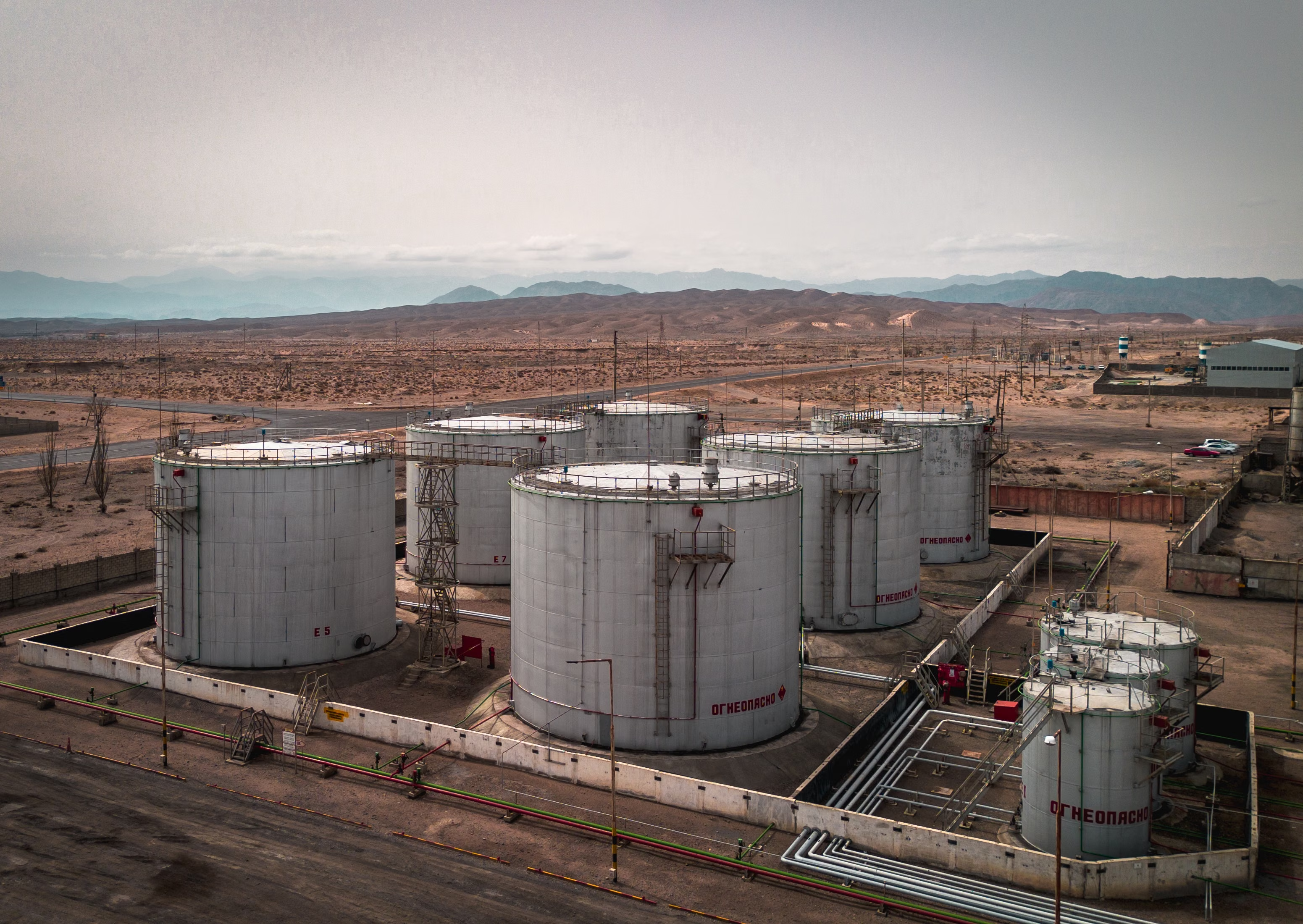
Coringa has no standalone processing plant. Pre-concentrated ore is trucked approximately 200 kilometres to the Palito Complex, where it is processed alongside ore from the Palito mine. Group output is constrained by Palito's milling capacity rather than by Coringa's extraction ceiling.
On the structural constraint that has defined the group's production ceiling, Hodgson stated:
"We've been, for a long time, a plant-constrained business. We truck ore from Coringa, we high-grade it with an ore sorter, we truck a pre-concentrate to Palito, we feed the Palito plant."
Serabi is installing a fourth ball mill at the Palito Complex to raise annual throughput to 330,000 tonnes, with commissioning targeted for the fourth quarter of 2026 and the work funded from the company’s existing cash balance. The economic case for the expansion rests on expanding feed volume. The 2024 Coringa preliminary economic assessment (PEA), based on a $2,100 per ounce gold price, produced a post-tax net present value at a 5 percent discount rate (NPV5%) of $184 million over an 11-year mine life. The same assessment estimated a life-of-mine all-in sustaining cost (AISC) of $1,241 per ounce.
Current gold prices, substantially above the base case, improve the operating margin relative to existing costs and strengthen the case for throughput growth. Each additional ore source developed at Coringa expands the feed available to the enlarged plant. Serra South, if delineation confirms a commercially viable resource, would contribute to that feed base.
Programme Scale and the Inventory Target
Across the 38,400-metre group campaign covering both Coringa and the Palito Complex, 154 holes were completed, with 65 returning grades above 3 grams per tonne. NCL Ingeniería y Construcción has been engaged to prepare the consolidated mineral resource estimate update incorporating all 2025 drilling, with results expected in March 2026.
Serra South produced some of the highest-grade intercepts in the 2025 programme, including holes returning 0.25 metres at 395.00 grams per tonne and another returning 0.87 metres at 137.48 grams per tonne. Outside Serra South, the Demétrio zone returned a gold-anomalous corridor approximately 500 metres in length, with mineralisation displaying higher galena content relative to other Coringa zones and vein thicknesses averaging approximately 30 centimetres, with grades above 10 grams per tonne. The mineralisation style at Demétrio, like Serra South, is considered highly amenable to ore sorting given the strong contrast between vein and host rock.
Hodgson, on the inventory objective underpinning the two-year drilling effort:
"The objective is to move from a 1 million ounce resource inventory total to about 1.5, maybe up to 2 million."
A $9 million 2026 brownfield programme comprising 30,000 metres of diamond drilling was approved and commenced in January. The immediate Coringa focus is the southeast extension of Serra South, along with follow-up at Serra North and Fofão, an additional zone identified through structural data collected in 2025 that shows a mineralised trend distinct from the main Serra and Meio orientations.
District Context at Coringa
Coringa's existing resource underlies approximately 1.5 kilometres of a broader eight-kilometre artisanal working trend. Drilling to date has reached only approximately 250 metres of vertical depth across most of the district, and significant strike length remains untested. All known mineralisation lies within 30 kilometres of anomalous soil geochemistry.
The Tapajós mineral province, within which Coringa sits, is the third-largest alluvial goldfield in the world, with reportedly up to 30 million ounces of historical artisanal gold production. Only approximately 7 million ounces have been defined in hard rock deposits across the province, a fraction of the estimated alluvial endowment. The Coringa district's eight-kilometre artisanal trend sits within that broader system and has been drilled along only a portion of its length.
The intersection-controlled structural geometry that produced Serra South has been mapped at additional locations within the tenements. Those convergence points are among the primary targets for the 2026 drilling programme. The current Coringa resource, as of the April 2024 estimate, totals 179,000 measured and indicated ounces at 7.0 grams per tonne and 271,000 inferred ounces at 5.8 grams per tonne.
The Investment Thesis for Serabi Gold
- Serra South was confirmed in 2025 as a structurally distinct mineralised zone at Coringa, approximately 500 metres south of the existing Serra mine, with drilling establishing a narrow, lower-grade corridor between the two zones and a separate portal identified as the required access route.
- A second operating front would reduce single-source dependence at Coringa and provide ore-scheduling flexibility as the mine transitions from selective open stoping to longhole open stoping, a shift enabled by demonstrated ore-sorting performance throughout 2025.
- Coringa operates without a standalone processing plant, with all sorted ore trucked to the Palito Complex for milling, making each additional ore source at Coringa directly relevant to the utilisation case for the expanded plant capacity being commissioned in the fourth quarter of 2026.
- The Palito Complex expansion to 330,000 tonnes per annum requires a growing feed base; the consolidated resource update due in March 2026 will indicate progress toward the 1.5 million ounce inventory threshold management has linked to production growth beyond 60,000 ounces per annum.
- Coringa's existing resource covers only 1.5 kilometres of an eight-kilometre artisanal working trend drilled to approximately 250 metres of vertical depth, and the intersection-controlled structural geometry that generated Serra South has been identified at multiple additional points within the tenements.
- Development economics for Serra South remain subject to ongoing delineation, with the capital requirements of a new portal and the zone's resource scale to be assessed following the March 2026 resource update and subsequent engineering work.
Serra South extends Coringa's development pipeline without altering the current operating profile. Near-term indicators include the zone's scale, as reflected in the March 2026 resource estimate, the capital requirements for a new portal, and the pace of delineation along the southeast extension. Whether additional zones convert into defined resources depends on how the 2026 programme tests the structural convergence targets mapped in 2025.
TL;DR
Serabi Gold's 2025 drilling confirmed Serra South as a separate mineralised zone at Coringa requiring its own portal, adding a second potential mining front as the operation transitions to longhole stoping and ore sorting. The zone was identified within a 20,800-metre Coringa programme forming part of a 38,400-metre group campaign, with a consolidated resource update expected in March 2026 and a $9 million follow-on programme underway. Capital requirements for Serra South development remain subject to further delineation.
FAQs (AI-Generated)
Serra South is a mineralised zone at Serabi Gold's Coringa mine in Para State, Brazil, located approximately 500 metres south of the existing Serra mine infrastructure. It was confirmed during the 2025 brownfield drilling programme, with detailed definition drilling completed in the fourth quarter of 2025 on a 50-metre grid spacing.
Drill results in the corridor between Serra and Serra South returned only a narrow, lower-grade structure, ruling out a continuous underground connection. The geological interpretation holds that mineralisation at each zone is controlled by a discrete structural intersection, making each zone structurally separate and requiring independent access infrastructure.
Serra South is one of several new zones being delineated as part of the 38,400-metre group drilling campaign completed in 2025. Serabi is targeting a consolidated group mineral inventory of 1.5 million ounces or more across Coringa and the Palito Complex, with an updated resource estimate incorporating the full 2025 programme expected in March 2026.
Coringa has no standalone processing plant; ore is crushed and sorted on site, then trucked approximately 200 kilometres to the Palito Complex for milling. Group production throughput is limited by plant capacity at Palito, which Serabi is expanding to 330,000 tonnes per annum with a fourth ball mill targeted for late 2026.
A second accessible front would allow mine planners to schedule production from two independently accessible underground areas rather than one, enabling ore blending, parallel development, and operational continuity if one area requires maintenance or development work. That flexibility becomes more relevant as Coringa transitions to the longhole stoping method in 2026.
Analyst's Notes





Subscribe to Our Channel



.jpg)
Stay Informed






















