




Serabi Gold: Brazil's Best-Kept Mining Secret Is Opening Up


Serabi Gold targets 60koz output by 2026, holds zero long-term debt, and operates inside Brazil's most underexplored gold belt, as major banks forecast gold above $6,000/oz.
- Serabi Gold is targeting production growth from its current 30,000 to 40,000 ounces per annum range to 60,000 ounces per annum by 2026, with a longer-term ambition exceeding 100,000 ounces per annum by 2028.
- The company carries no long-term debt and holds a net cash position, reinforced by a $5 million working capital facility, which is rare financial discipline for a junior miner.
- Its Coringa Gold Project, 100% owned and funded entirely from internal cash flow, is already producing and ramping up via two active orebodies.
- Serabi controls 84,000 hectares of tenements in the Tapajós gold district, a region with over 30 million ounces of historic gold production that remains largely underexplored.
- Major institutional banks including J.P. Morgan ($6,300/oz), Goldman Sachs ($5,400/oz), and UBS ($6,200/oz) now forecast gold prices reaching record levels by end-2026, setting up powerful margin expansion for low-cost producers like Serabi.
Right Metal, Right Company, Right Moment
Gold is no longer quietly waiting in the background. The metal set 53 new all-time highs during 2025 alone, according to the World Gold Council's Full Year 2025 Gold Demand Trends report, with the average Q4 price reaching a record US$4,135 per ounce, up 55% year-over-year. Total gold demand exceeded 5,000 tonnes for the first time in recorded history in 2025, generating an unprecedented value of US$555 billion. Entering 2026, the macro forces that drove that run, namely central bank accumulation, ETF inflows, dollar weakness, and real yield compression, remain firmly in place.
For investors seeking direct, leveraged exposure to the gold price, the strategic question has shifted. It is no longer whether gold has further to run, but which company to ride it with. Serabi Gold Plc, listed on London's AIM market, represents a compelling and often overlooked answer. Operating in Brazil's Tapajós region, one of the world's most historically prolific yet underexplored gold districts, Serabi is a self-funding, debt-free producer at an inflection point in its growth trajectory. As gold prices climb toward levels the largest banks on earth are now openly projecting, Serabi's cost structure and production growth plan position it to benefit disproportionately.
What Serabi Gold Actually Does (And Why That Matters to You)
Serabi Gold Plc is a UK-incorporated, Brazil-focused gold mining company with its primary assets in the State of Pará. The company has maintained continuous gold production for over a decade from its Palito Complex, consistently delivering between 30,000 and 40,000 ounces of gold per annum. This is not a speculative exploration story. Serabi is an operating business with a decade of uninterrupted production, a management team with deep Brazil experience, and a track record of delivering projects on time and within budget.
The company's investment case makes its ambition plain. Serabi describes itself as:
"poised to become Brazil's premier gold growth company through organic growth and strategic corporate opportunities over the next 5 years."
The two cornerstones of that plan are the established Palito Complex and the emerging Coringa Gold Project, located approximately 200 kilometres south of Palito. Together, they sit within 84,000 hectares of exploration tenements in the Tapajós district, a region whose historic gold production of over 30 million ounces makes it one of South America's most significant gold provinces.
What separates Serabi from the crowded field of junior miners is operational discipline. Management employs over 700 people directly, more than 70% of whom come from local communities surrounding the Palito Complex and Coringa. The company is 100% managed in-country by Brazilian professionals, an arrangement that reduces operational friction and regulatory risk in ways that foreign-managed operations routinely underestimate.
The Coringa Project: Your Clearest Near-Term Catalyst
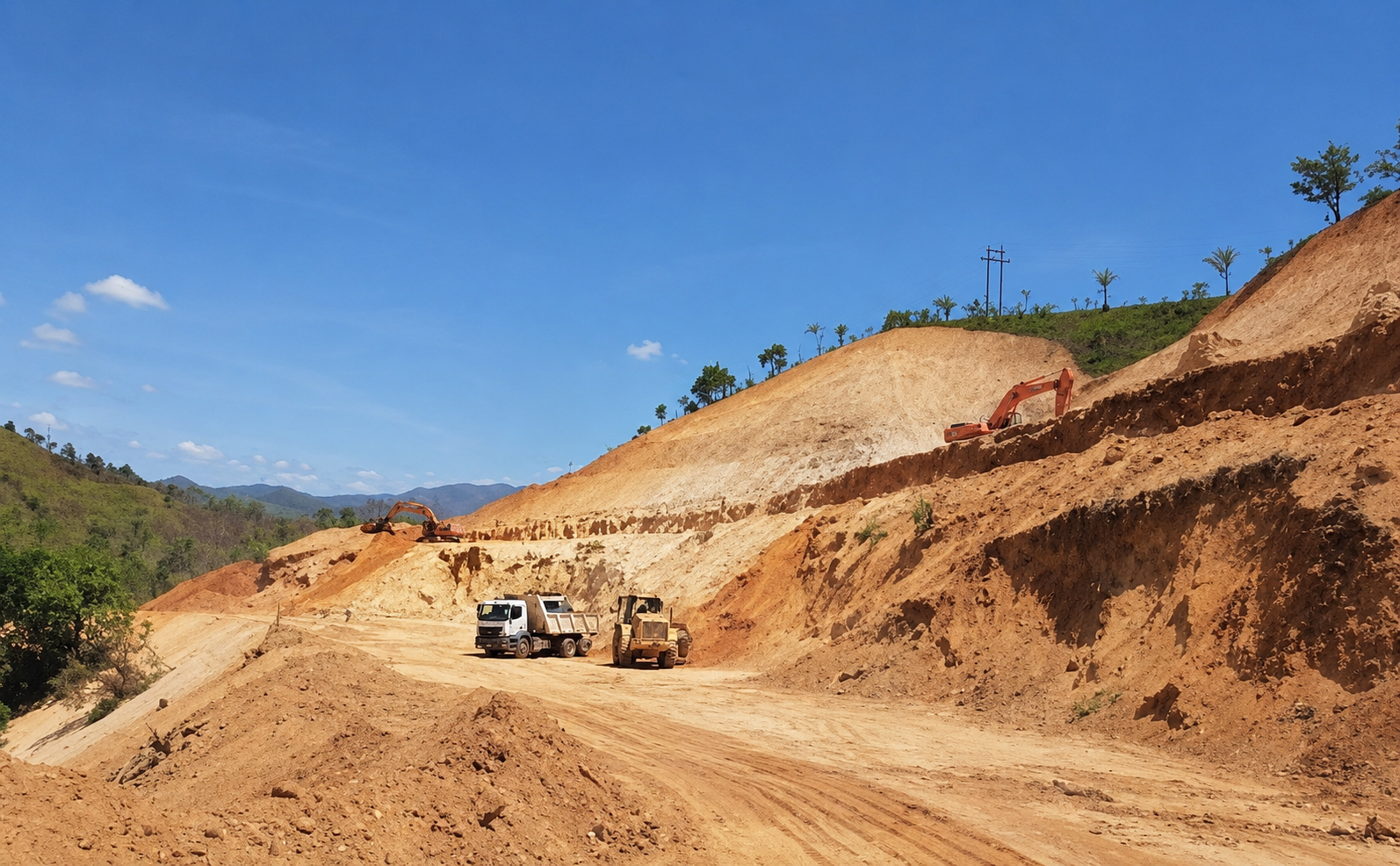
The Coringa Gold Project is the single most consequential near-term growth driver in Serabi's portfolio. Acquired in December 2017 for $22 million from Anfield Gold (subsequently absorbed into Equinox Gold), the project achieved first gold production in July 2022 and is now ramping up through two active orebodies, Meio and Serra. A crusher and ore sorter commissioned in Q4 2024 is in full operation, and high-grade ore is being trucked directly to the Palito plant for processing, eliminating the need for a standalone processing facility at Coringa and dramatically reducing capital requirements.
As of April 2024, Coringa's mineral resource totals 179,000 ounces of Measured and Indicated Resources at an average grade of 7.03 grams per tonne gold, plus 271,000 ounces of Inferred Resources at 5.81 grams per tonne. The ore sorting technology deployed at the site reduces the mass of mined material requiring transportation by 45% to 50%, cutting haulage costs and environmental footprint simultaneously. Critically, construction at Coringa has been funded entirely from internal cash flow, meaning no equity was issued and no debt was taken on to build it.
Serabi's stated production target is for Coringa to lift consolidated group output to 60,000 ounces per annum by 2026. The company's investment case is direct about what this means for costs:
"Production growth to 60koz pa Au by 2026, driving an all-in sustaining cost reduction to approximately $1,500/oz Au."
Against a gold price backdrop that the world's most-followed institutional analysts now place well above $4,000 per ounce for the year ahead, that cost target implies a significant and growing margin per ounce produced.
What the Big Banks Are Saying About Gold in 2026
The gold price forecast landscape for 2026 has shifted materially upward since mid-2025, and the numbers from tier-one institutions now make for striking reading. An analyst, in a note published February 2, 2026, raised its gold price target to $6,300 per ounce by Q4 2026, up from a prior target of $5,055 per ounce, citing continued central bank and investor demand. Research simultaneously raised its target to $6,200 per ounce through September 2026, with an extreme upside scenario reaching $7,200. Analyst forecasts gold reaching $5,400 per ounce by December 2026.
Banks has reiterated a $6,000 per ounce forecast for 2026, citing "persistent investment demand" amid ongoing de-dollarization trends. Morgan Stanley's bull case stands at $5,700 per ounce for the second half of 2026. A February 2026 Reuters poll of 30 strategists produced a median 2026 gold forecast of approximately $4,746 per ounce, itself a significant premium to where gold spent most of 2024.
Not all forecasts are uniformly bullish. $4,746 represents a meaningfully more cautious central view than the institutional outliers, and risk factors remain real. A hawkish Federal Reserve pivot, a faster-than-expected decline in geopolitical tension, or a sustained dollar recovery could all challenge the high-end scenarios. Investors in gold-exposed equities like Serabi should treat the forecast range, from approximately $4,746 on the conservative median to $6,300 at the aggressive institutional high, as a planning framework, not a guarantee.
The Demand Engine Behind Gold: What the WGC Data Shows
The structural demand backdrop underpinning these price forecasts is not speculative. According to the World Gold Council's Full Year 2025 Gold Demand Trends report, total gold demand exceeded 5,000 tonnes for the first time in history in 2025, with total value reaching US$555 billion, a 45% year-over-year increase. Central bank purchases totalled 863 tonnes in 2025, remaining historically elevated despite falling short of the exceptional 1,000-plus-tonne years of 2022, 2023, and 2024. The WGC's 2025 Central Bank Survey found that 95% of respondents expected global official gold reserves to increase over the next 12 months, the highest level of optimism in the survey's eight-year history, with a record 43% of central banks indicating plans to increase their own holdings.
ETF demand added a further layer of structural support. According to research, US-listed gold ETFs added 437 tonnes of demand in 2025, pushing holdings to a record 2,019 tonnes with US$280 billion in assets under management. Bar and coin demand reached a 12-year high of 420 tonnes in Q4 2025 alone. Analysts has described gold as "an effective portfolio diversifier and hedge," a characterisation that is being validated in real time by the entities with the longest time horizons and deepest analytical resources.
For Serabi, this demand environment translates directly into operating leverage. Every $100-per-ounce increase in the gold price, held against a stable cost base, flows almost directly to operating cash flow. At a targeted AISC of approximately $1,500 per ounce and a gold price of $5,000 per ounce, the implied margin per ounce is approximately $3,500. At 60,000 ounces of annual production, that margin profile begins to look transformative for a company of Serabi's current market scale.
The Balance Sheet: Why Serabi Can Afford to Grow
In an industry where leverage is often the silent killer of shareholder value, Serabi's financial position stands out. The company carries no long-term debt, holds a net cash position, and maintains access to a $5 million working capital facility for additional liquidity headroom. The Coringa development, a project that began producing gold in July 2022 and now operates two orebodies with a commissioned ore sorter, was funded entirely from operational cash flow. That means no dilution, no interest burden, and no covenant risk.
The board took a further investor-friendly step in 2025 by initiating a formal shareholder return policy, to be executed through either share buybacks or dividends. This is a meaningful signal: management does not introduce return programmes unless it has confidence in the durability of the underlying free cash flow generation. Serabi's investor materials describe the company as "well-funded to pursue near-term growth opportunities," and in the context of an aggressive 2025 and 2026 brownfield exploration programme targeting a doubling of the resource base, that funding capacity is being actively deployed rather than held idle.
The company's investment case notes a target of reaching 1 million ounces of gold resource at each of Palito and Coringa by 2027, which would provide the mineral inventory to support production exceeding 100,000 ounces per annum beyond 2028. With 16,000 metres of drilling programmed at Coringa in 2025 using three active rigs, and a 60-kilometre ground IP survey in progress, the exploration engine is running. In a sector where new greenfield discoveries are increasingly scarce and expensive to advance, Serabi's brownfield approach carries a structural cost and timeline advantage.
The Investment Thesis for Serabi Gold
- Enter or build a position in Serabi Gold ahead of its 60,000-ounce annual production target for 2026, as junior miner re-ratings typically front-load around production inflection points.
- Add Serabi to a precious metals allocation as a leveraged play on the gold price, given its targeted AISC of approximately $1,500 per ounce against institutional gold forecasts ranging from $4,746 (Reuters poll median) to $6,300 (J.P. Morgan) for 2026.
- Monitor the issuance of Coringa's long-term Installation License as the single most important regulatory de-risking event that could attract institutional capital.
- Diversify into AIM-listed production-stage gold companies like Serabi if gold prices sustain above $5,000 per ounce, as low-AISC producers historically outperform exploration-stage peers in sustained price rallies.
- Watch for interim resource update announcements from the 2025 Coringa drilling programme (16,000 metres programmed, three active rigs) as near-term share price catalysts.
- Track shareholder return announcements (buybacks or dividends) as signals of the board's ongoing confidence in free cash flow durability beyond the growth phase.
What This All Means: Investor Takeaway
Serabi Gold occupies an unusual and attractive position in the junior gold mining universe. It is not a pre-revenue exploration play asking investors to fund the discovery of a deposit. Nor is it a mature mid-tier producer with limited re-rating headroom. It sits at the most rewarding inflection point on the mining development curve: a self-funding, debt-free operator with a clear near-term production growth path, a newly initiated shareholder return programme, and a large, underexplored land package that provides multi-year exploration optionality in one of the world's most historically significant gold districts.
The macro environment for gold in 2026 provides a powerful tailwind. The World Gold Council's data shows demand exceeding 5,000 tonnes annually for the first time in history. J.P. Morgan has raised its year-end 2026 target to $6,300 per ounce. Goldman Sachs forecasts $5,400 per ounce by December 2026. Central banks purchased 863 tonnes in 2025 alone, maintaining the structural demand floor that has underpinned gold's multi-year bull run. For a producer targeting 60,000 ounces of annual output at an AISC of approximately $1,500 per ounce, the margin arithmetic in this environment is compelling.
Investors with exposure to the broader gold theme owe it to themselves to examine whether Serabi's combination of operational track record, financial discipline, and near-term production growth belongs in their portfolio. The company is not without risk, as junior miners rarely are, but in the context of the macro tailwinds behind gold in 2026, Serabi's investment case is as concrete and well-evidenced as the sector offers.
TL;DR
Serabi Gold is a debt-free, self-funding Brazilian gold producer targeting 60,000 ounces per annum by 2026 at an AISC of approximately $1,500 per ounce, as J.P. Morgan forecasts gold at $6,300/oz and the World Gold Council records the first-ever 5,000-tonne annual demand year.
FAQs (AI-Generated)
Serabi produces between 30,000 and 40,000 ounces of gold per annum from its Palito Complex in Brazil's Tapajós district.
The company targets 60,000 ounces per annum by 2026, driven by the Coringa Gold Project ramp-up, with a longer-term goal exceeding 100,000 ounces per annum by 2028.
.P. Morgan targets $6,300/oz by end-2026, Goldman Sachs forecasts $5,400/oz, UBS targets $6,200/oz, and Deutsche Bank forecasts $6,000/oz; a Reuters poll of 30 analysts produced a median of approximately $4,746/oz.
No: Serabi holds a net cash position with no long-term debt, and funded the Coringa project construction entirely from internal operating cash flow.
The issuance of Coringa's long-term Installation License is the key permitting event pending, with the current three-year trial mining license extended to January 2027.
Analyst's Notes





Subscribe to Our Channel




Stay Informed






















