




i-80 Gold's Reserve Declarations: 8 Things You Need to Know


i-80 Gold's 2026 feasibility studies will produce first-ever reserve declarations, triggering a US GAAP accounting shift and institutional re-rating.
Project Overview
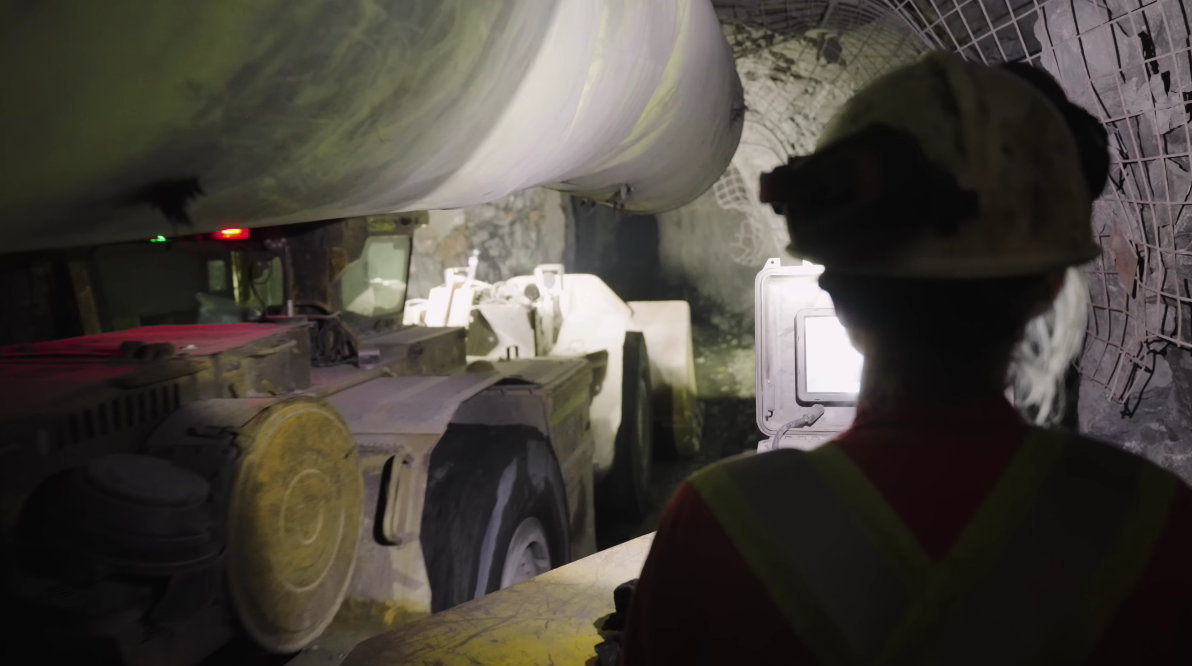
i-80 Gold (NYSE: IAUX | TSX: IAU) is advancing five Nevada projects: Granite Creek underground, Granite Creek open pit, Cove underground, Archimedes underground, and Mineral Point open pit. All of the company's projects are currently classified as exploration-stage projects. Extraction is already underway at both Granite Creek underground and Archimedes underground, with both operating without reserve status. The second-quarter 2026 feasibility studies at Granite Creek and Cove are the first events in the company's history to change that classification.
1. What the Second Quarter of 2026 Feasibility Studies Actually Deliver
The Granite Creek and Cove feasibility studies are reserve-declaration events, the first in the company's history, not routine technical updates.
Feasibility studies for both the Cove underground and Granite Creek underground projects are expected to be completed in the second quarter of 2026, and each will include a mineral reserve statement.
Executive Vice President and Chief Operating Officer of i-80 Gold, Paul Chawrun, confirmed earlier this year that the infill drilling required to upgrade resources to measured and indicated status was already complete for these assets:
"So we've already done that at Granite and at Cove. And so those feasibility studies with reserve statements will be in the second quarter of this year."
In the first quarter of 2026, the company recorded revenue of $52.4 million, representing 10,590 ounces of gold sold. Granite Creek alone produced 8,857 ounces and sold 8,767 ounces in the same period. The studies will formalise reserve status across operations that are already producing, and will formalise regulatory and accounting frameworks for extraction, already in progress, not a transition from exploration to extraction.
2. Why No Reserves Exist Yet & What That Status Means
All of i-80 Gold's projects remain at the exploration stage under Subpart 1300 of Regulation S-K (S-K 1300) because no mineral reserves have been declared at any property, and both active extraction sites are operating in that classification.
Under S-K 1300, mineral resources are not economic mineral reserves, and their economic viability has not been demonstrated. Inferred mineral resources carry a lower level of confidence than indicated mineral resources, cannot be converted to a mineral reserve, and generally cannot form the basis of a feasibility or pre-feasibility study.
The company has started extraction at both Granite Creek underground and Archimedes underground, while all projects remain in exploration-stage classification, a position that constrains how development expenditures are treated on the income statement and limits the valuation frameworks institutional counterparties can formally apply. The feasibility study process at Granite Creek underground and Cove underground is the mechanism that ends that classification for those two assets.
3. The Infill Drilling Work Behind the Reserve Conversion
Converting inferred mineral resources into the measured and indicated classifications required for reserve definition is the technical prerequisite for completing the feasibility study, and the 2026 drill program has been sized to achieve this.
The 2026 drill programme is the largest in company history by planned footage and budget, with approximately $10 million allocated to infill drilling at Granite Creek to achieve the measured and indicated resource classification required for reserve definition. The Granite Creek feasibility study results were slightly delayed due to the infill programme continuing to encounter ore beyond the original schedule.
Chawrun described the cause of the delay:
"It delayed the feasibility results a little bit, but that's primarily because we kept finding ore. We kept finding the ore body, and we needed to find a time to stop, and we're also spending approximately $10 million on that this year."
At Cove, infill drilling returned results consistent with Carlin-style deposits, which carry generally high resource-to-reserve conversion rates. That conversion profile provides confidence that the second-quarter 2026 study will produce a reserve statement meeting the S-K 1300 standard.
4. The US GAAP Accounting Shift Reserve Declarations Will Trigger
Reserve declarations at Granite Creek underground and Cove underground will mechanically reclassify development-stage expenditures from the income statement to the balance sheet, a structural change to the company's financial reporting under United States Generally Accepted Accounting Principles (US GAAP).
The company transitioned to US GAAP in 2024. Under that framework, pre-development, evaluation, and exploration costs are expensed until mineral reserves are declared, on the assumption that reserves will be confirmed. Once reserve declarations are made, those qualifying expenditures currently expensed will be capitalised. Total pre-development, evaluation, and exploration expenses were $25.7 million in the first quarter of 2026 alone.
The reserve declarations at Granite Creek underground and Cove underground will trigger the capitalisation of qualifying costs, removing a recurring expense line from the income statement and recording a capitalised asset on the balance sheet. That reclassification alters how the company's profitability and asset coverage read to institutional analysts applying standard financial screens.
5. The Financing Foundation Behind the Execution Plan
The recapitalisation removed the primary obstacle to executing the development plan and provides capital sufficient to fund both phases without returning to markets.
The recent recapitalisation has secured over $1.0 billion in capital, fully funding Phases 1 and 2 of the development plan and materially reducing execution risk. An additional consequence is the ability to commence the Environmental Impact Statement process earlier than previously planned, which could accelerate the Mineral Point open-pit timeline by one to two years.
Chawrun identified the capital raise as the constraint, now resolved:
"The largest hurdle was for us to raise this capital. The technical work is ongoing, has been ongoing."
With financing secured, the company's stated focus has shifted entirely to execution across the portfolio.
6. Lone Tree Plant & the Processing Infrastructure Transition
The board's construction decision on the Lone Tree Plant refurbishment in the first quarter of 2026 advances a transition from toll milling to owner-operated processing across the Nevada underground portfolio.
Capital commitments for the Lone Tree Plant refurbishment reached $31.2 million as of March 2026. The plant is anticipated to process material from the Granite Creek, Archimedes, and Cove underground mines. The company provided Hatch Engineering with a full notice to proceed following board approval and is advancing the execution plan ahead of the previously indicated timeline. Near-term catalysts include the commencement of demolition and construction at the Lone Tree Plant.
7. Portfolio Valuation & Institutional Positioning
The total portfolio after-tax net present value (NPV) ranges from $1.6 billion to $4.9 billion across gold price scenarios, and the institutional shareholder register reflects the depth of capital already positioned ahead of the reserve declarations.
At a 5% discount rate and a gold price of $2,175 per ounce, the total portfolio after-tax NPV is $1.6 billion. At $3,000 per ounce, that figure rises to $4.9 billion. Institutional shareholders on the register include Sprott Asset Management, Orion Resource Partners, The Vanguard Group, Van Eck Associates Corporation, Condire Management, Daniel Kaufman, Nokomis Capital, Pale Fire Capital SE, and Amundi Asset Management. The reserve declarations and the US GAAP capitalisation they trigger are the conditions under which net-present-value-based valuation frameworks become formally applicable to the full asset base.
8. The Remaining Study Timeline: 2026 to 2027
In the second quarter of 2026, Granite Creek underground and Cove underground events open a study calendar that extends through the first half of 2027 and will add reserve-bearing status to the three remaining Nevada projects.
A feasibility study for Archimedes underground is targeted for late in the first quarter of 2027, pending the potential expansion of the current drill program. Underground development at Archimedes underground advanced approximately 660 metres in the first quarter of 2026. A pre-feasibility study for Mineral Point open pit is targeted for 2027, with timing currently under review. Pre-feasibility or feasibility studies for the Granite Creek open pit are currently under review for timing. Near-term catalysts over the next 12 to 18 months include the completion of technical studies across all five projects.
Key Takeaway for Investors
- The Granite Creek underground and Cove underground feasibility studies, expected in the second quarter of 2026, will include the company's first mineral reserve statements under S-K 1300.
- All i-80 Gold projects remain classified as exploration-stage because no mineral reserves have been declared at any property, and extraction at Granite Creek underground and Archimedes underground is proceeding without reserve status.
- The 2026 drill program, the largest in company history by planned footage and budget, allocates approximately $10 million to infill drilling at Granite Creek underground to achieve the measured and indicated resource classification required for reserve definition.
- Under United States Generally Accepted Accounting Principles, adopted in 2024, reserve declarations will require capitalising pre-development, evaluation, and exploration expenditures that are currently expensed, altering the financial statement structure.
- Over $1.0 billion in raised and available capital from the recapitalisation fully funds Phases 1 and 2 of the development plan and may accelerate the Mineral Point open pit timeline by 1 to 2 years through earlier commencement of the Environmental Impact Statement process.
- The total portfolio after-tax net present value at a 5% discount rate is $1.6 billion at $2,175 per ounce gold and $4.9 billion at $3,000 per ounce gold, with an institutional shareholder register that includes Sprott Asset Management, Orion Resource Partners, The Vanguard Group, and Condire Management.
Bottom Line
The second-quarter 2026 feasibility studies at Granite Creek underground and Cove underground are the first in a sequence of events that will change i-80 Gold's regulatory classification, accounting framework, and institutional valuation standing. Reserve declarations will move both projects out of the exploration stage under S-K 1300, convert currently expensed pre-development costs into capitalised assets under US GAAP, and make NPV analysis formally applicable to a portfolio carrying a post-tax value of $1.6 billion at $2,175 per ounce and $4.9 billion at $3,000 per ounce. With over $1.0 billion in capital secured, construction progressing at the Lone Tree Plant, and a study calendar running through the first half of 2027, the reserve declarations are the opening event in a derisking cycle. The market's assessment of these studies as routine technical releases rather than structural inflexion points is the gap that the catalyst calendar exists to close.
Analyst's Notes





Subscribe to Our Channel







Stay Informed






















