Silver Innovations Could Open New Markets for Mining Investment


Cheaper nanoparticle production and new catalyst designs could widen industrial demand, increasing the importance of dedicated silver supply.
- The Silver Institute's October 2026 news bulletin highlights research on silver's role in hydrogen production, electricity generation, and optical materials, alongside potential environmental treatment uses, identifying applications that could broaden future industrial demand.
- Mexican researchers used a US$30 Arduino microcontroller to produce silver nanoparticles, reducing reliance on laboratory equipment costing thousands of dollars.
- South Korean researchers found that silver catalysts rely on electrode contact during electricity generation and particle surface area during hydrogen production, helping optimize catalyst design for both processes.
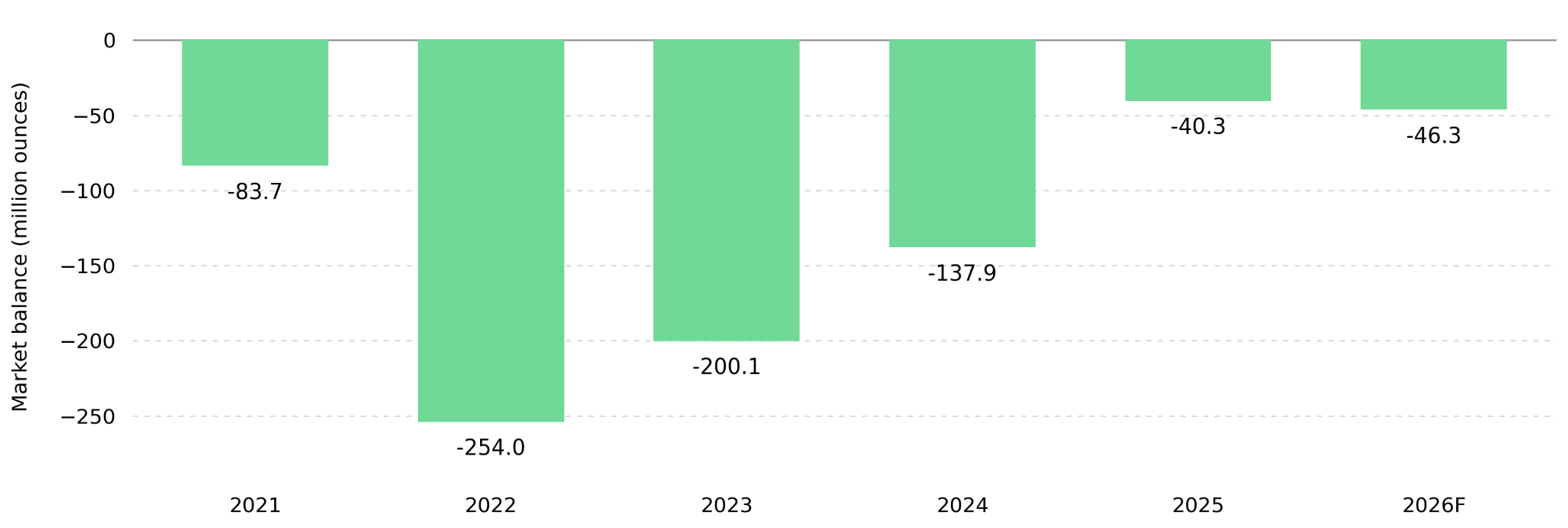
- The World Silver Survey 2026 forecasts a 46.3-million-ounce silver market deficit in 2026 and a 5% increase in other industrial demand, reinforcing the importance of future silver supply.
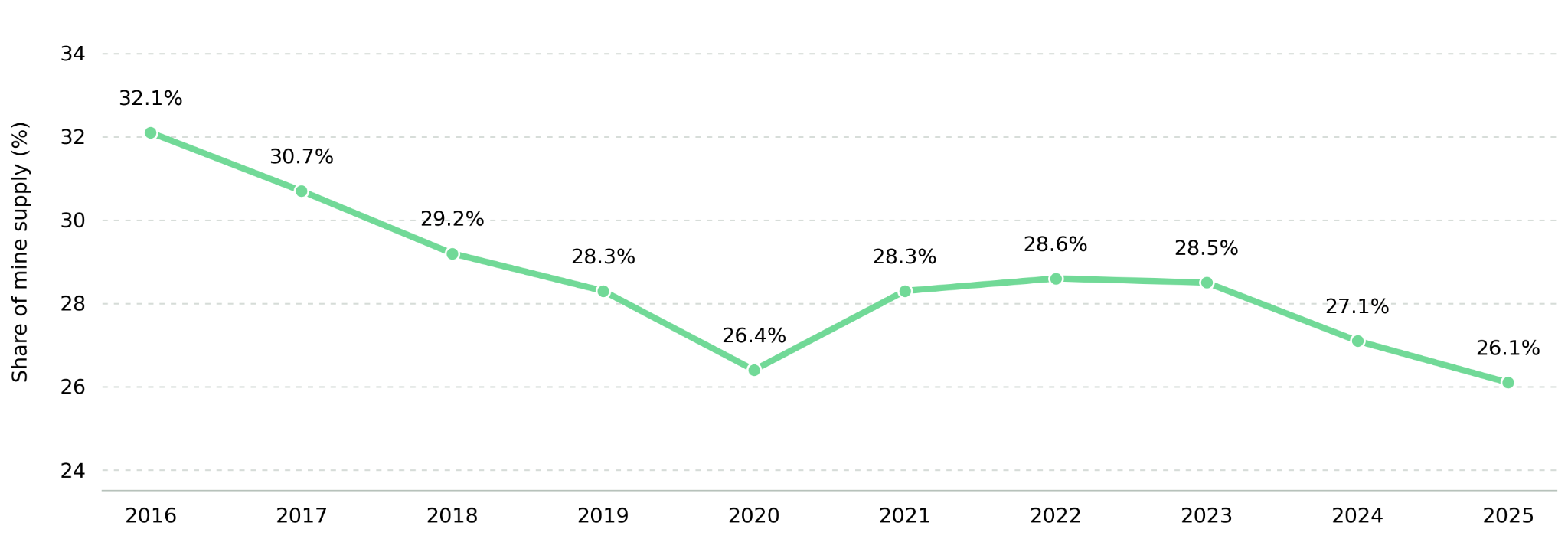
- Primary silver mines supplied only 26.1% of global mined silver in 2025, leaving most output dependent on other metals and highlighting the importance of silver-focused projects for future supply growth.
New Silver Technologies Expand Potential Industrial Markets
The Silver Institute's October 2026 news bulletin highlights research using silver catalysts for electricity generation and hydrogen production, alongside silver-assisted fabrication of optical materials. Other advances lower equipment costs for silver nanoparticle research and simplify nanoshell manufacturing, supporting potential applications in solar energy and environmental treatment.
Industrial fabrication accounted for approximately 58% of total silver demand in 2025, according to the World Silver Survey 2026. The potential contribution of emerging technologies to future demand will depend on their adoption in commercial manufacturing and the amount of silver required for production.
Lower-Cost Silver Processing Opens Potential Industrial Uses
Researchers at Universidad Veracruzana in Mexico used a US$30 Arduino microcontroller and common components to produce silver nanoparticles, offering an alternative to laboratory equipment costing thousands of dollars. Their design, published in HardwareX, provides instructions for replicating the system, allowing smaller laboratories to conduct silver-based materials research at lower equipment costs.
The Central University of South Bihar received a 2026 patent for producing hollow silver nanoshells without high-speed stirring, reducing manufacturing costs. The nanoshells can absorb selected wavelengths of sunlight, improve catalytic reactions through greater surface area, and help break down industrial pollutants, supporting potential applications in solar energy and environmental treatment.
Silver Catalyst Designs Could Reduce Energy Conversion Costs
Researchers at Seoul National University studied how silver catalysts help reversible solid oxide cells switch between electricity generation and hydrogen production. Published in Energy & Environmental Science, the research identifies a potential route to lowering electricity and hydrogen production costs.
The study found that contact between silver particles and the electrode is important during electricity generation, while the particles' exposed surface area matters more during hydrogen production. These findings help researchers design silver catalysts for each process rather than simply increasing the amount of silver used.
Silver-Assisted Etching Could Lower Optical Material Costs
A September 2026 study published in Discover Chemistry used silver to create tiny silicon wires that produced visible light during testing. The process requires no specialized manufacturing facilities and could lower production costs for light-based sensors and other technologies.
Silver structures on the silicon surface also strengthened signals measured during optical testing. Researchers subsequently removed the silver from the samples, demonstrating its role in producing the material without remaining in the tested structures. Future industrial silver demand from this process would depend on production volumes and how much silver is consumed or recovered during manufacturing.
Catalyst Replacement Supports Growth in Other Industrial Silver Demand
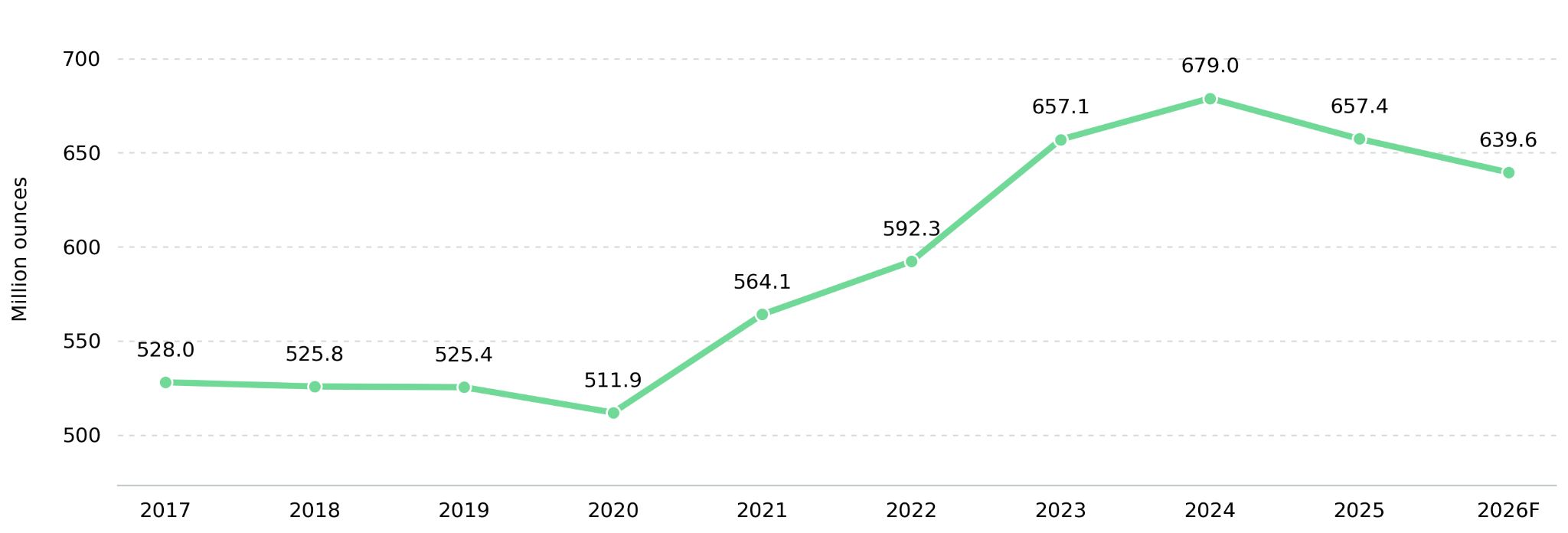
Metals Focus forecasts other industrial silver demand rising 5%, from 157.4 million ounces in 2025 to 165.7 million ounces in 2026, partly driven by replacement purchases of silver-based catalysts used in ethylene oxide production. This established chemical process demonstrates how specialized industrial applications contribute to silver consumption beyond electronics and solar panels.
Emerging applications in catalysts, nanomaterials, and optical technologies could create additional sources of industrial silver demand. The amount of silver consumed will depend on commercial production volumes and how much silver each process requires. With the market forecast to remain in deficit in 2026, additional industrial demand would increase the importance of production from existing mines and future projects.
Byproduct Reliance Strengthens Case for Silver-Focused Mine Growth
Primary silver mines supplied only 26.1% of global mined silver in 2025, with most production coming from lead-zinc, copper, and gold operations where output depends on the economics of those metals. Metals Focus forecasts global silver mine production declining 0.3%, from 846.6 million ounces in 2025 to 844.1 million ounces in 2026. This dependence on other commodities makes expanding dedicated silver operations a more direct route to increasing silver supply.
The World Silver Survey 2026 reports that average primary-silver all-in sustaining costs (AISC) declined 1% to US$12.21 per ounce in 2025. Improvements in mining infrastructure, processing capacity, and metal recovery can increase silver output while supporting operating efficiency. Such investments provide a practical route to expanding production as silver's industrial applications evolve.
Americas Gold & Silver reported record silver production of 800,458 ounces and sales of 860,850 ounces in the third quarter of 2026. Cosalá contributed 415,879 ounces, up 23% quarter over quarter, with cash generation from its Mexican operations supporting upgrades at Galena to increase future output. The company maintained full-year silver production guidance of 3.2 million to 3.6 million ounces.
Oliver Turner, Executive Vice President of Corporate Development at Americas Gold & Silver, explains how silver exposure varies across producing miners:
“Our current revenue exposure, which is a good way to look at the silver universe, is actually over 90%. We're 90% exposed to the silver metal… About 50% of silver producers' exposure is actually below 50%.”
Project Financing Advances Future Silver Supply
Metals Focus reports that converting and expanding silver resources into reserves typically takes at least 18 to 24 months, highlighting the time required to advance future supply. Completed feasibility studies and available financing can strengthen the ability of new silver projects to progress toward construction and production.
Vizsla Silver is advancing its Pánuco project in Mexico, targeting first silver production in the second half of 2028. Its November 2025 feasibility study projected a US$1.802 billion post-tax net present value at a 5% discount rate (NPV5%) and initial capital costs of US$238.7 million. Cash and short-term investments of US$411 million as of July 31, 2026, exceeded the study's initial capital estimate, supporting the planned development.
Declining Silver Reserves Increase Need for Resource Expansion
The World Silver Survey 2026 reports that identified resources, excluding reserves, at primary silver mines declined to 7,792.4 million ounces in 2025, while mineral extraction exceeded new reserve additions. This highlights the importance of exploration and resource expansion in strengthening the pipeline of potential future silver supply.
GR Silver Mining is advancing a fully funded 20,000-meter drilling program at its Plomosas project in Mexico, supported by an existing resource estimate of 55 million indicated and 22 million inferred silver ounces. A recent San Marcial drill hole intersected 45.1 meters grading 1,623 grams per tonne silver, reinforcing the project's resource expansion potential. A resource update and preliminary economic assessment planned for the first half of 2027 will provide further insight into the project's scale and economic potential.
Eric Zaunscherb, President and Chief Executive Officer of GR Silver Mining, links industrial silver demand with declining physical inventories:
“With regard to the industrial uses, we continue to see growth in silver consumption in photovoltaics, solar cells, and in EVs. I think that the outlook is pretty good for silver.”
New Silver Applications Could Increase Need for Dedicated Supply
Silver's emerging applications in energy conversion and advanced materials could introduce additional industrial demand as these technologies move toward commercial production. With most silver produced as a byproduct of other metals, growth in silver-specific demand increases the importance of dedicated silver projects capable of expanding supply.
This makes the ability to deliver additional silver at competitive costs increasingly relevant to mining investment. Operating improvements, funded development plans, and resource expansion offer different pathways to future supply, with their economic value depending on production potential, capital requirements, and execution. As new technologies expand silver's potential industrial uses, projects capable of converting mineral resources into commercially viable production could become more important.
The Investment Thesis for Silver
- Emerging technologies create new demand opportunities as advances in energy conversion, catalysts, and optical materials expand silver's potential industrial applications.
- Lower manufacturing costs support commercial adoption by making silver-based materials more accessible for research and future production.
- Producers can strengthen operating margins through higher silver recovery, increased production capacity, and improved operating efficiency.
- Developers can advance future silver supply through strong project economics, secured financing, and progress toward construction.
- Explorers can increase long-term resource potential through successful drilling that expands mineral inventories and supports future project development.
- Silver's reliance on byproduct mining creates opportunities for dedicated supply growth, as production decisions at mines focused on other metals may not respond directly to rising silver demand.
Silver's emerging applications in energy conversion and advanced materials could create additional industrial demand beyond established markets. With most silver produced alongside other metals, growth in silver-specific demand increases the importance of projects capable of expanding dedicated supply. This makes the cost and timing of bringing additional silver ounces to market a defining measure of mining investment value as new industrial applications advance.
TL;DR
Research highlighted in the Silver Institute's October 2026 bulletin identifies potential new applications for silver in hydrogen production, electricity generation, optical materials, and environmental treatment. Lower-cost nanoparticle equipment and simpler manufacturing methods could make specialized silver technologies more accessible. The World Silver Survey 2026 forecasts a 46.3-million-ounce market deficit alongside 5% growth in other industrial demand. With most silver produced alongside other metals, dedicated silver projects have an important role in future supply growth. Producers improving operational efficiency, developers advancing funded projects, and explorers expanding mineral resources provide different pathways to meeting potential demand from emerging technologies.
FAQs (AI-Generated)
Analyst's Notes





Subscribe to Our Channel










Stay Informed