7.4-Meter Q24 Interval Opens a New Follow-Up Area at IsoEnergy’s Dorado


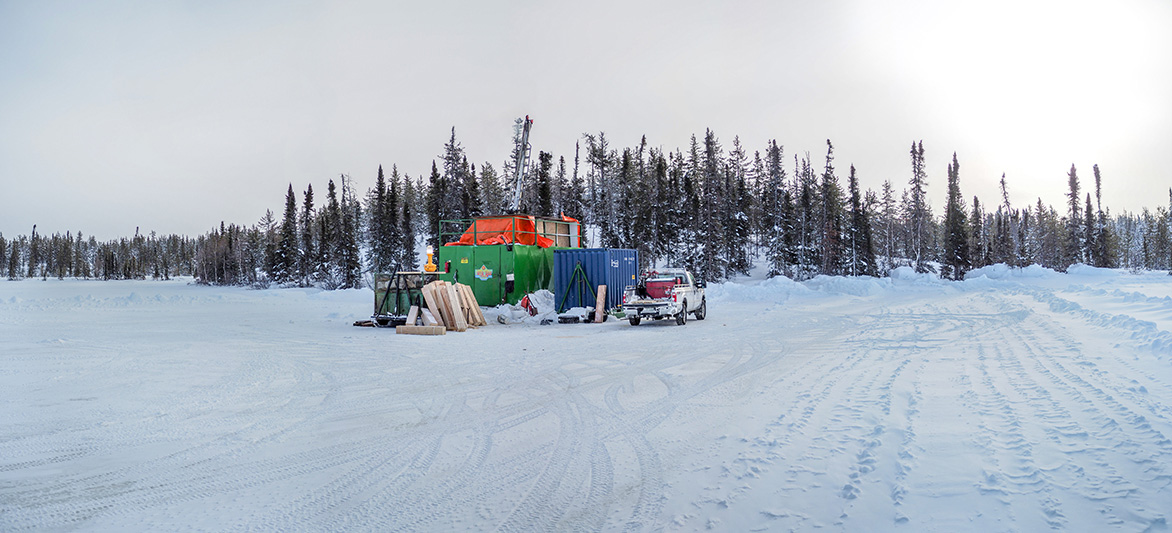
Dorado's summer drilling found radioactivity at a new Q24 target, and the IsoEnergy-Purepoint venture will use the results to set its 2027 priorities.
- The Dorado joint venture completed 3,669 meters (m) of summer drilling across the Nova, Q23, and Q24 targets.
- The first hole at Q24 recorded 7.4 m averaging 8,760 counts per second at the unconformity.
- Q24 is a separate target from both Nova and Q23.
- Laboratory assays from the summer drilling are pending.
- The joint venture will use the summer results to set its 2027 exploration priorities.
What Has Happened
IsoEnergy (NYSE American: ISOU | TSX: ISO) owns 50% of the Dorado joint venture in Saskatchewan's Athabasca Basin, and Purepoint Uranium Group owns the other 50% and operates the project. The partners completed their 2026 summer program with 3,669 meters (m) of drilling across 3 target areas, Nova, Q23, and Q24. Demobilization was completed in September 2026.
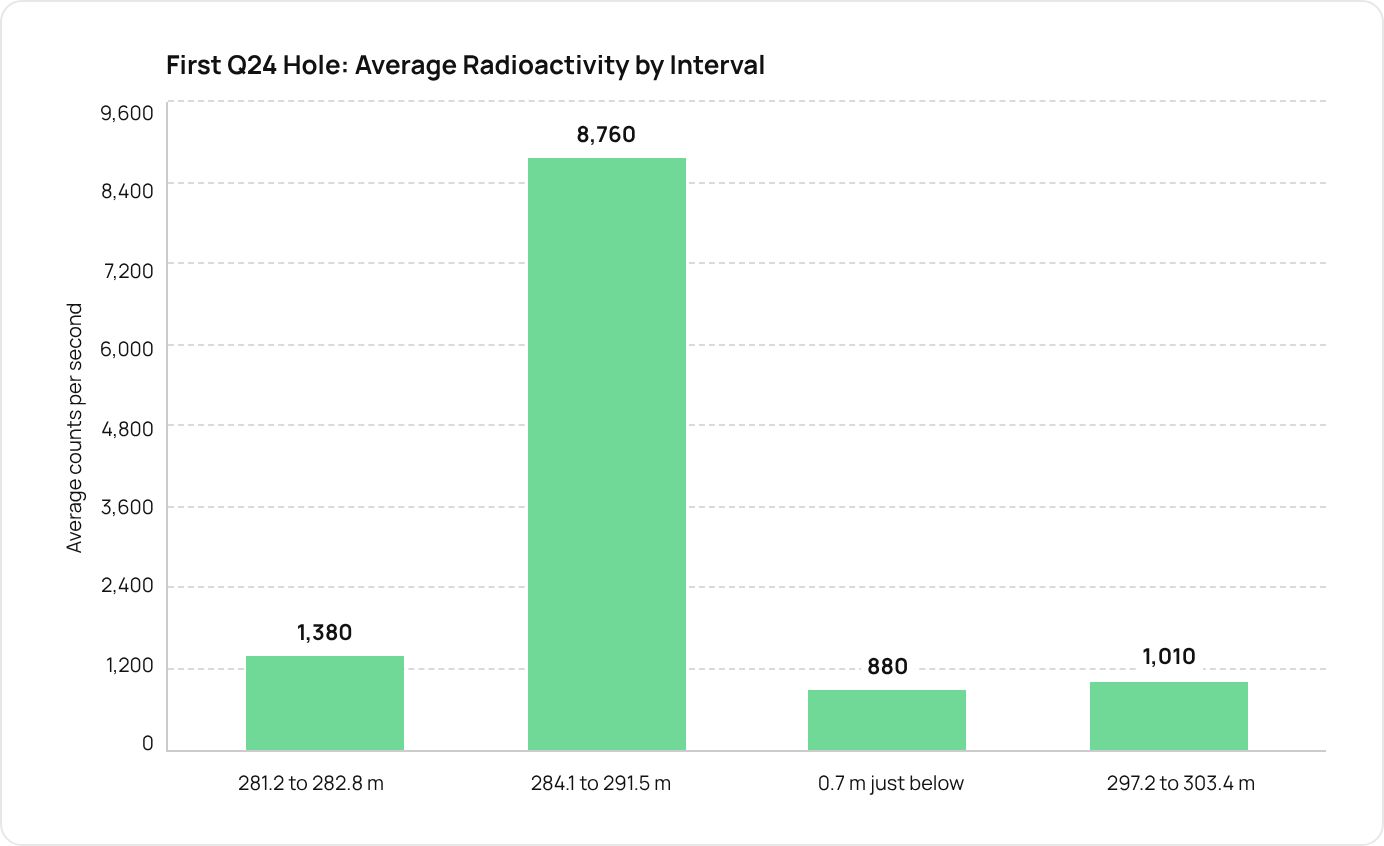
The first hole drilled at Q24 recorded 7.4 m averaging 8,760 counts per second across the unconformity, including 0.5 m averaging 38,710 counts per second. The unconformity is the boundary between the younger sandstone and the older basement rock below it. The hole’s maximum probe reading was 50,110 counts per second. These results, reported on September 17, 2026, are radiometric only, measuring natural radioactivity rather than grade, and laboratory assays from the summer drilling remain pending.
Q24 Results & What the Probe Shows
The Q24 hole tested a strong ground electromagnetic conductor, a zone of rock below the surface that conducts electricity. Drilling passed through strongly altered and broken sandstone before reaching the unconformity at about 285 m depth.
The main radioactive interval ran from 284.1 to 291.5 m downhole. It occurs mostly within strongly altered and structurally disrupted basement rock with local fault breccia, which is rock broken up along a fault. Just above it, the hole recorded 1.6 m averaging 1,380 counts per second from 281.2 to 282.8 m, and just below it, 0.7 m averaging 880 counts per second.
A further interval of 6.2 m averaging 1,010 counts per second followed from 297.2 to 303.4 m. Chalcopyrite, a copper-bearing mineral, appeared as veining at 294.8 m and adds evidence of hydrothermal activity, the movement of hot fluids through rock. From 318 to 343 m, the hole cut basement rock containing pyrite and graphite with alteration and local fault breccia.
Comparison With Earlier Dorado Disclosures
Earlier drilling at Nova returned confirmed assays of up to 8.1% uranium oxide over 0.4 m, within 1.62% uranium oxide over 2.1 m. Mineralization at Nova has been identified along a structural corridor of about 1 kilometer (km), and it is associated with intense alteration, structural disruption, and graphitic basement rocks. A previously released Nova hole from the summer program recorded 5.6 m averaging 11,730 counts per second, including 0.4 m averaging 50,650 counts per second, with a maximum of 53,300. A newly reported Nova hole recorded 0.5 m averaging 700 counts per second.
At Q23, east of Q24, the newly reported summer hole recorded 1.2 m averaging 1,030 counts per second, with a maximum of 1,870. It also recorded 0.8 m at 1,000 counts per second and 1.7 m at 660 counts per second. The hole cut desilicified sandstone, which has lost silica to altering fluids, along with broken core in the lower sandstone. Two other Q23 holes from the summer were previously released, and Q23 is now an additional priority target area.
Q24 is separate from both Nova and Q23 and adds another priority area for follow-up drilling at Dorado.
Broader Context
Dorado sits on the eastern margin of the Athabasca Basin, among IsoEnergy's eastern Athabasca holdings, which total 344,812 hectares across 20 properties. Purepoint also operates the Aurora and Celeste Blocks with IsoEnergy. IsoEnergy's Hawk property has more than 15 km of prospective strike, the distance along which a geological structure runs, and widely spaced drill holes there have intersected elements of unconformity-style uranium geology.
IsoEnergy's Hurricane deposit is at Larocque East, about 40 km northwest of the McClean Lake mill. Hurricane has an indicated resource of 48.6 million pounds (lb) of uranium oxide at 34.5%, plus an inferred 2.7 million lb at 2.2%, effective July 8, 2022, with mineralization at about 325 m depth. IsoEnergy’s 2026 summer drilling there recorded elevated radioactivity across a 600-meter strike length along the South Trend, with assays also pending. Of the 26 summer holes at Larocque East, 18 returned intervals at or above 350 counts per second over 0.5 m, and 13 returned 1,000 counts per second or greater.
Chief Executive Officer of IsoEnergy, Philip Williams, ties the South Trend drilling to a high-grade find made early in the year:
"And then in the winter of this year, or so early this year, we made a breakthrough in the sense that we were able to find high-grade on that South Trend. And so we've been spending a lot of time, a lot of drill holes, drilling that South Trend out from the resource itself."
Dorado adds partner-operated discovery work to IsoEnergy's Athabasca exploration beyond Hurricane. In the same basin, Cigar Lake mine output is projected at about 18 million lb per year through 2034, then dropping to about 7 million lb in 2035 and about 1 million lb in 2036.
What to Watch Next
Laboratory assays from the summer drilling at Nova, Q23, and Q24 will be reported when they become available. For Q24, the assays will give the grade of the recoverable core within the 7.4 m interval, because core recovery was incomplete in that higher-radioactivity section. All intercepts are core width, and true thickness is yet to be determined.
The joint venture will combine the Q24 and Q23 results, and the geology logged during the program, with final MobileMT interpretations. MobileMT is an airborne survey that maps the ground's electrical conductivity. That work will set the 2027 exploration priorities, with exploration at Dorado focused on advancing the Nova Discovery while evaluating other priority targets, including Q23 and Q24.
FAQs (AI-Generated)
Analyst's Notes





Subscribe to Our Channel





Stay Informed