




Silver's 4.5% Slide Owes Less to Iran Than to the Fed


Silver now trades on Fed rate odds rather than oil, making funding runway the test that separates silver developers worth holding until hike bets fade.
- Spot silver fell 4.5% to $61.39 per ounce on September 28, per Reuters, after the US rejected an Iranian peace proposal and Brent crude returned above $100.
- The fall ran through the Fed, not oil. Higher oil lifted October hike odds to 70.3%, which pushed Treasury yields to multi-year highs and raised the cost of holding non-yielding silver.
- Hot PCE data on September 30 and strong payrolls on October 2 would lock in an October hike and widen silver's discount to its $64.30 September 25 close.
- TSX and ASX-listed pre-production developers that need equity within two quarters protect existing holders by stretching cash since neither the PCE print nor the Iran talks can be timed.
- A CME FedWatch October hike probability below 50% after the PCE release could reverse the rate-driven selloff.
Fed Hike Bets on Iran Oil Shock Knock Silver 4.5% Lower
Spot silver fell 4.5% to $61.39 per ounce on Monday, September 28, Reuters reported, after US President Donald Trump rejected an Iranian proposal to end the conflict and reopen the Strait of Hormuz, lifting oil prices about 3%. Gold fell 3.5%, platinum 2.8% and palladium 3.6% the same session, while Brent crude returned above $100 a barrel. Silver traded near $60.50 on Tuesday, Trading Economics reported.
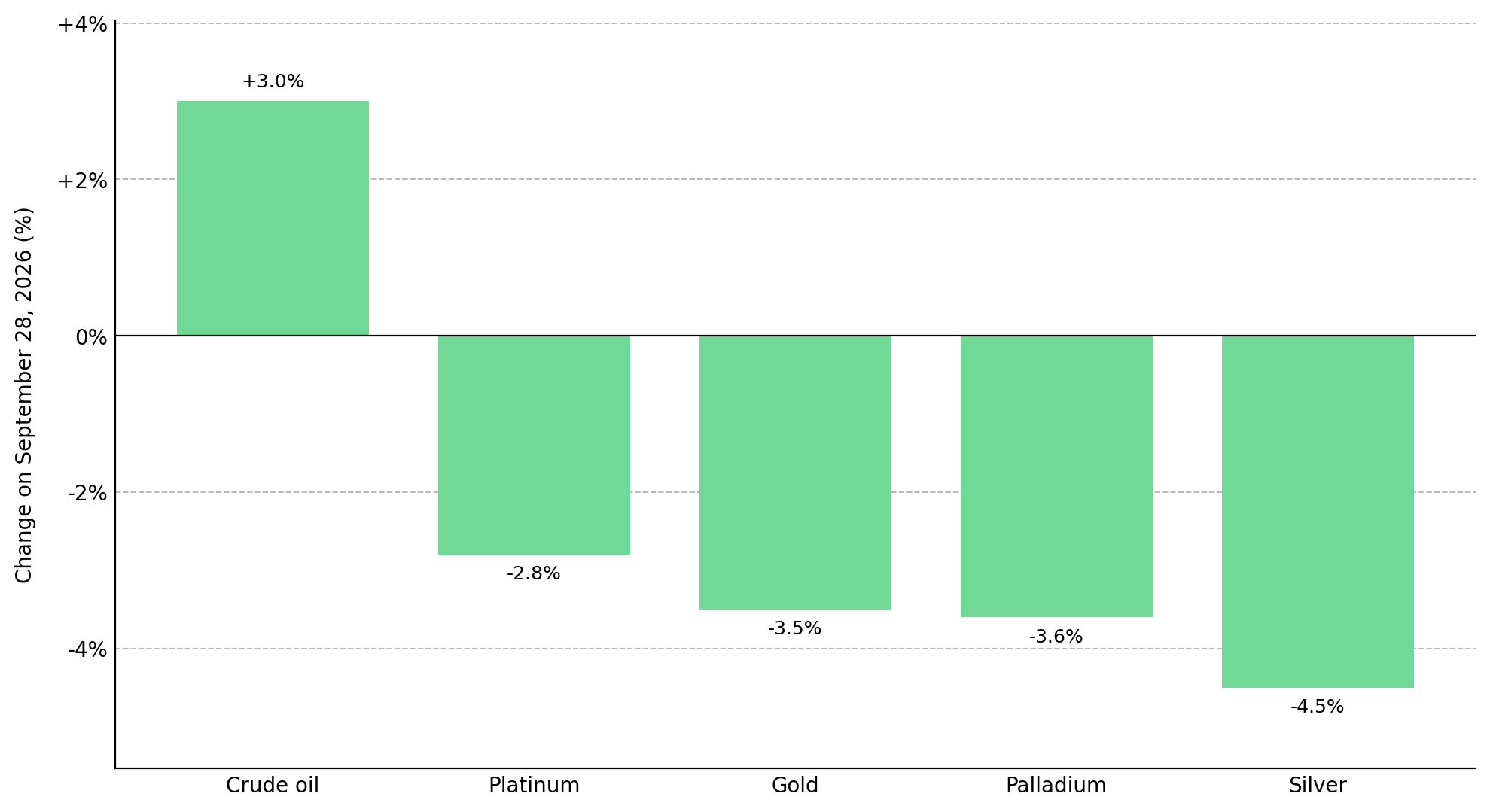
The headline credits Iran, but the price moved on the Fed. Oil at $100 is an inflation signal, and silver is widely held as an inflation hedge. It fell anyway because traders read the oil spike as more rate hikes: a 70.3% chance of an October increase and 94% for December on CME's FedWatch Tool.
Rising Treasury Yields Lift the Cost of Holding Silver
Oil above $100 feeds fuel and freight costs into consumer prices. Higher expected inflation pushes the Fed toward further hikes and the Fed raised its benchmark rate by a quarter percentage point earlier this month, its first increase in three years
Expected hikes lift Treasury yields at fresh multi-year highs on September 29. Higher yields raise the income a silver holder forgoes, since bullion pays none. The US dollar also held near a two-month high making dollar-priced silver dearer for buyers paying in other currencies.
Neither driver clears quickly. Iranian officials reportedly doubt a deal before the US midterm elections in November, which keeps the oil premium in place. Cleveland Fed President Beth Hammack is among policymakers warning that rates may need to rise further, per Reuters.
PCE and Payrolls Data Decide Whether Silver's Rate Discount Deepens
An Iran agreement would lift silver only after lower oil reaches inflation data and Fed pricing, a lag of at least one data cycle.
TSX and ASX-listed pre-production silver developers carry the most exposure. Their value sits in cash flows years away, which falls hardest when discount rates rise. Hot PCE data on Wednesday, September 30, and strong payrolls on Friday, October 2, would price an October hike, widening silver's discount to its September 25 close of $64.30. Soft prints would unwind that rate premium. The horizon runs from Wednesday's release to the Fed's October meeting.
The reversal trigger is the CME FedWatch probability of an October hike falling below 50% after the PCE release. At that level a hike stops being the base case: silver's rate premium loses its anchor and the developer financing window reopens.
Higher Discount Rates Push Silver Developers Toward Non-Dilutive Funding
Pre-production developers answer a lower silver price assumption and a higher discount rate by protecting cash. That means deferring spend that does not advance a permit, feasibility study or construction decision, so the next equity raise follows a milestone. Producers can fund growth from cash flow, with spot silver 32.58% above its level a year earlier..
Developers needing capital within two quarters look past share sales first, using streams, royalties or offtake prepayments in exchange for future revenue. A developer funded through its next milestone waits out the rate cycle without issuing shares at depressed prices, so any silver recovery and milestone re-rate accrue to an undiluted share count.
Neither step depends on calling the PCE print or the Iran talks, whose signals conflict: Trump told Axios both sides return to negotiations this week, while Iranian officials doubt a deal.
Fed Tightening Makes Silver a Rate Trade
Silver is trading as a rate asset while the Fed is tightening. The price responds to the Fed's reaction to oil, not to oil-driven inflation itself. The inflation-hedge case belongs to periods of falling real rates, not to a hiking cycle set off by an energy shock.
The long-horizon read runs the other way. A tightening cycle that closes the financing window for new silver projects today thins the pipeline of mines arriving later in the decade. That strengthens the multi-year case for funds with the mandate to hold through it.
For pre-production silver developers, the Fed's path now belongs in the valuation as a discount-rate input, not in a risk footnote. Value has moved toward producers with cash flow and developers funded through their next milestone.
Analyst's Notes





Subscribe to Our Channel


Stay Informed






