




Oil-Driven Fed Bets Sink Gold Nearly 4%, Opening a Selective Rebound Case



China added 20.2 metric tons to gold reserves, while ETF holders weigh real yields and the risk of another 3.9% slide to July’s low.
- Spot gold fell nearly 4% to $4,110.55 an ounce on September 28, its lowest since August 5, then recovered 0.6% to $4,140.10 on September 29.
- With Brent near $105 a barrel on September 28, CME FedWatch priced a 70% chance of an October Fed hike, increasing the appeal of yielding assets relative to gold.
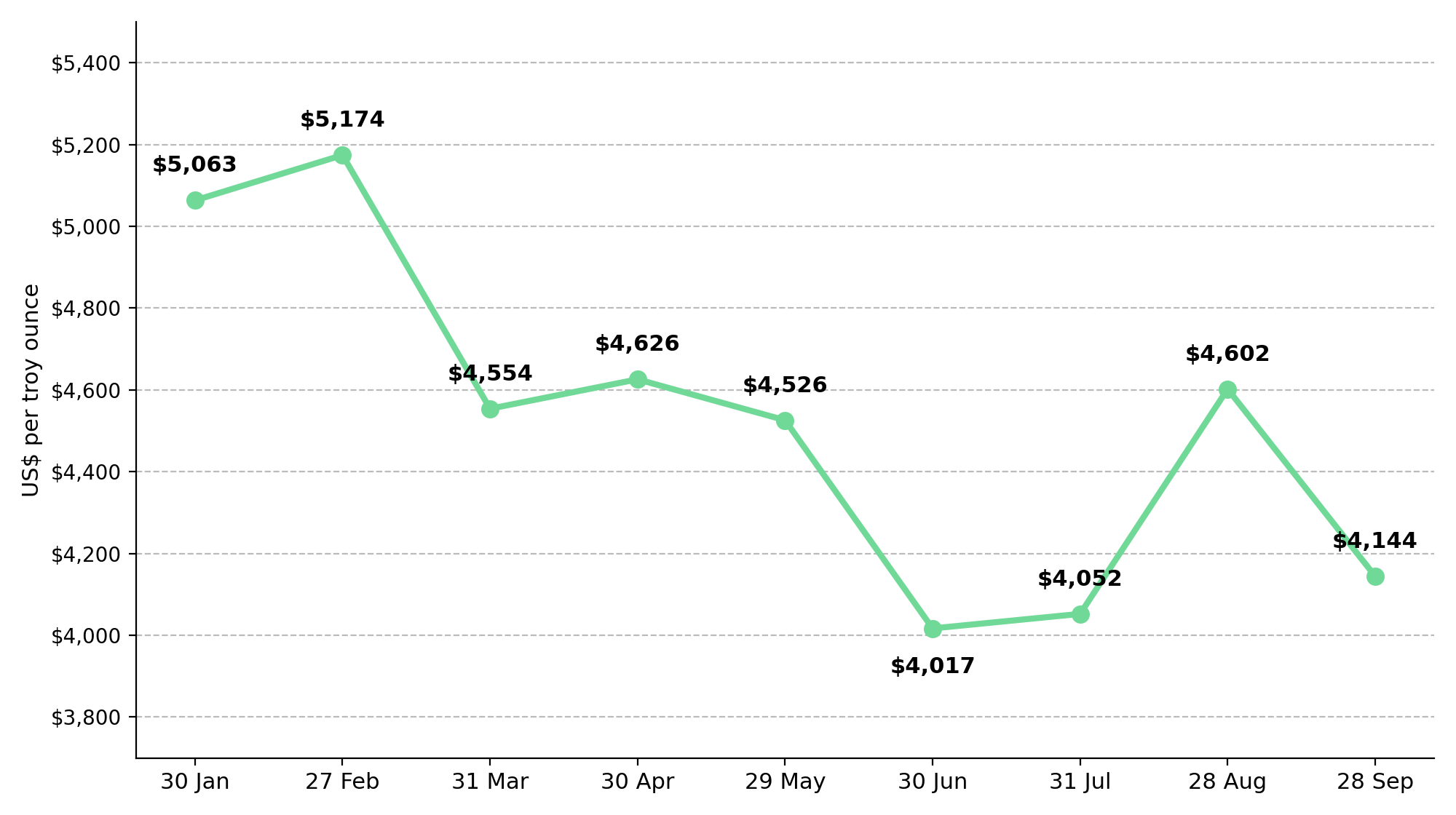
- The July 1 LBMA low of $3,978.55 sits 3.9% below September 29 spot gold; a further rise in hike expectations could bring that level back into focus.
- The World Gold Council’s September 9 ETF commentary recorded $18 billion of August inflows. September 29 spot gold was 5.9% below the stated $4,398.80 August LBMA average, which is a comparison point, not ETF holders’ purchase price.
- If the October hike probability falls below 50% after the September 30 inflation release, a key source of pressure on gold would weaken, creating room for a rebound if yields also fall.
Hormuz Oil Shock Drives Gold to Seven-Week Low
Spot gold fell nearly 4% to $4,110.55 an ounce on September 28, its lowest since August 5, then recovered just 0.6% to $4,140.10 on September 29.
Brent rose above $107 a barrel after President Donald Trump rejected Iran’s proposal to reopen the Strait of Hormuz within seven days. Higher oil prices strengthened inflation concerns, while CME FedWatch put the chance of an October Fed hike at 70%, increasing the appeal of interest-paying assets over gold. If oil and hike odds fall, that rate pressure could weaken and support a gold rebound.
Rising Real Yields Make Treasury Bonds More Attractive Than Gold
Restricted Hormuz shipments risk keeping Brent above $100 a barrel, adding to inflation concerns while gold faces higher rate expectations. The BEA’s July Personal Income and Outlays report showed 3.7% headline and 3.3% core inflation over 12 months, before the Fed raised its target range 25 basis points to 3.75%-4.00%. The 10-year Treasury real yield then rose from 2.83% on September 25 to 2.90% on September 28, increasing the return forgone by holding gold.
Mediated US-Iran talks offer a route to lower oil prices if they reopen Hormuz. The Fed’s September projections put the median year-end policy rate at 4.1%, consistent with roughly one more 25-basis-point hike, while Lisa Cook, Fed Governor, warned that oil and AI-related demand could add inflation pressure without calling for another hike. If talks lower Brent below $100 or softer inflation reduces hike odds, rate pressure on gold could weaken and support a rebound.
Softer Inflation Lowers Fed Hike Odds
Ricardo Evangelista, Director and Chief Executive Officer of ActivTrades, described Tuesday’s 0.6% gain as a rebound from Monday’s nearly 4% fall and said sentiment had not changed, as reported by Reuters. The WGC recorded $18 billion of gold ETF inflows in August, showing how much exposure was added before the sell-off. September 29 spot gold was 5.9% below August’s $4,398.80 LBMA average, though that average is not any ETF holder’s purchase price.
Hotter August PCE inflation and stronger September payrolls could lift hike odds, putting the July low of $3,978.55, 3.9% below Tuesday’s spot price, back in focus. Softer inflation and Brent below $100 could reduce rate pressure; a return to the August average would mean 6.2% gold-price upside from Tuesday’s spot price, before ETF fees.
The September 30 PCE release and October 2 payrolls report precede the Fed’s October 27-28 meeting. A drop below 50% in CME FedWatch’s October hike probability would strengthen the rebound case if real yields also fall.
Gold’s 9.3% Slide Tests ETF Position Sizing
The WGC’s Gold ETF Flows: August 2026 recorded $7.7 billion of North American inflows. Physically backed gold ETFs pay no yield, so higher real yields increase the return holders give up while they wait for gold to recover.
The WGC said August inflows likely reflected currency-policy concerns, fiscal risk, and price momentum. Higher rates can add to federal interest costs as debt is refinanced, leaving a possible fiscal-risk case for gold even while yields weigh on its price. Gold’s 9.3% fall from the WGC’s $4,563 August close leaves momentum-based purchases needing fresh evidence of a rebound.
A return to the July low of $3,978.55 would take gold another 3.9% below the September 29 spot. Smaller, unleveraged positions leave more capacity to respond if inflation data or Iran talks lower rate pressure; leveraged futures traders face margin calls and larger losses on posted capital if gold falls further.
Fed Tightening Into an Oil Shock Splits Gold ETF Holdings
Gold is trading as a rate-sensitive asset, not an inflation hedge, while the Fed tightens into an oil shock: the inflation that should support it is lifting the real yield that prices it.
For holders of physically backed gold ETFs, why a position was opened matters more than its entry price. Holdings built against fiscal and currency risk keep their thesis, with central bank buying continuing underneath; holdings built on August's momentum do not.
Fiscal-risk holders have reason to hold and to add at the lower price, sized for further drawdown. Momentum holders have reason to cut exposure rather than wait to break even. Higher rates enlarge the US interest bill that drew August buyers in, strengthening the long-horizon case as the price weakens. Leveraged holders carry the greatest risk of loss.
Analyst's Notes





Subscribe to Our Channel







Stay Informed






















