




Slower US Copper Stockpiling Could Lower Mining Entry Costs


%20(1).png)
Copper inventory shifts can alter near-term supply, while project costs, resource confidence, and funding guide assessments of future production.
- US commercial copper holdings are estimated at 1.1 million metric tons; reexports could increase supply elsewhere and reduce regional price premiums.
- A narrower US copper price premium could reduce imports for stockpiling if the price gap no longer covers shipping and financing costs, leaving more metal available elsewhere.
- Global copper mine output fell approximately 1% year over year in January-July 2026; releasing stored metal can improve availability but does not add new mine production.
- Power terms help developers estimate electricity costs, while resource estimates and recovery testing help explorers assess potential copper output.
- Inventory-related share-price declines could lower entry costs, but project selection still requires published cost estimates, tests of economics at lower copper prices, and funding covering the next milestone.
Tariff Expectations Concentrate Copper Stocks in the US
US commercial copper holdings total an estimated 1.1 million metric tons, including stocks outside exchange totals, according to Citi’s estimate cited in Reuters’ October 12, 2026 report. Commercial ownership means any release of this metal depends on the returns available from storage, domestic sales, or reexports.
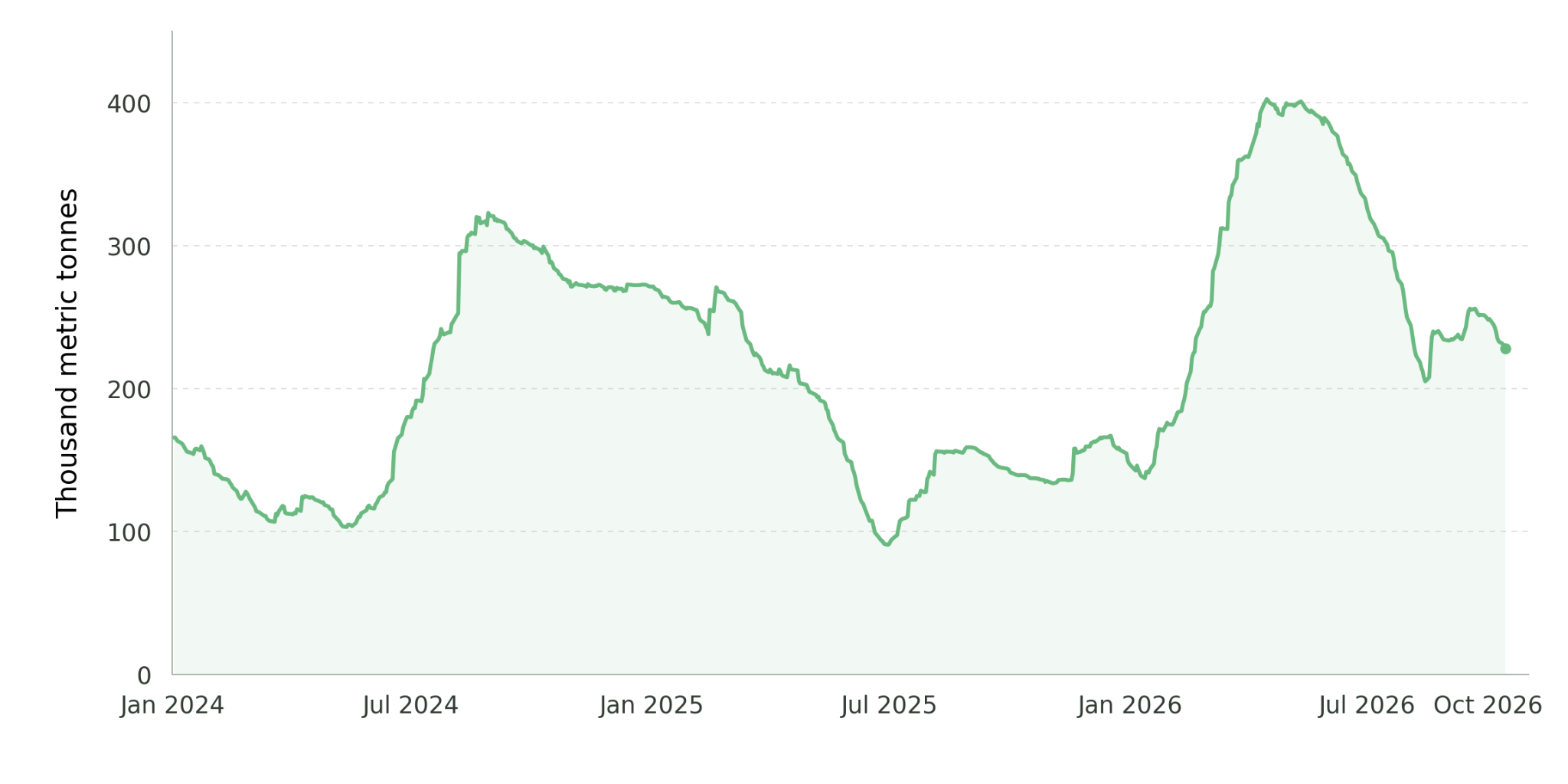
The Commodity Exchange, Inc. (COMEX) warehouse report dated October 9, 2026 recorded approximately 713,347 metric tons of copper as of October 8. Exchange stocks overlap with the broader US estimate, so the totals should not be added. Registration for exchange delivery does not establish an owner’s intention to sell the metal for industrial use.
Narrower US Price Premiums Could Increase Copper Supply Elsewhere
Higher COMEX copper prices relative to the London Metal Exchange (LME) made US-bound shipments profitable, drawing metal away from other markets and helping lift LME prices. If changing tariff expectations narrow that premium, additional shipments into US warehouses could become less attractive.
LME copper fell more than 3% on September 10, 2026, after news that the US had not decided whether to impose refined copper tariffs challenged expectations that the duties would proceed. The July 30, 2025 proclamation proposed duties of 15% from January 1, 2027, and 30% from January 1, 2028, subject to a further presidential decision.
US manufacturers could use stored copper to replace fresh imports, leaving more newly supplied metal available elsewhere. Reexports could increase overseas supply directly if selling abroad offers owners a higher return than US sales after shipping and transaction costs. A smaller price premium alone would not confirm either movement.
Declining Copper Mine Output Raises the Need for New Production
Redistributing stored copper can improve near-term availability, but it does not add mine production. Long-term project valuations must therefore assess copper price assumptions against future demand and mine supply, rather than warehouse stocks alone.
The International Copper Study Group (ICSG) reported preliminary year-over-year changes for January-July 2026, with mine production down approximately 1%, refined production up 1.7%, and apparent refined usage up 2.4%. Refined production includes recycled copper, so it can increase while mine output declines. Stored refined metal can meet some near-term demand, while additional mine capacity helps replace output lost elsewhere.
The International Energy Agency (IEA), in its Global Critical Minerals Outlook 2026, projects that base-case supply from existing and announced mines would fall approximately 25% short of 2035 copper requirements under its Stated Policies Scenario (STEPS). Those requirements deduct secondary supply, including recycled copper, from total demand and account for refining losses. Under these assumptions, narrowing the gap requires additional mine output, while resource studies, engineering, permits, and financing determine which projects can deliver that production.
Copper Price Uncertainty Makes Project Costs Central to Valuation
If inventory shifts lower copper prices, operating cost estimates help test whether projected revenue would cover production expenses. Engineering, permitting, and funding plans establish the work and capital required before production can begin.
Power Cost Estimates Support Disciplined Copper Project Financing
Power supply terms help estimate electricity expenses, while grid access and detailed engineering help define construction requirements.
Marimaca Copper secured grid connection approval and signed a preliminary Power Purchase Agreement (PPA) framework for its Marimaca Oxide Deposit (MOD), providing greater visibility over electricity supply and costs. Estimated power costs align closely with the Definitive Feasibility Study (DFS) assumption of US$93 per megawatt-hour (MWh). Proposed ramp-up terms offer flexibility as operations start, while road upgrades and detailed engineering advance construction readiness.
Rising Mining Costs Require Testing Copper Project Returns
Economic studies assess whether recoverable copper can generate returns after construction and operating costs. Net Present Value (NPV) measures discounted project cash flow, while Internal Rate of Return (IRR) is the discount rate at which NPV equals zero. For expansions at existing mines, known as brownfield projects, declining grades and greater depth can increase the volume of rock processed and the work required to extract it.
Fitzroy Minerals reported approximately C$1.95 million in proceeds from early warrant exercises on October 8, 2026, adding funding for its Chilean copper work programs. Buen Retiro’s maiden Mineral Resource Estimate (MRE), Preliminary Economic Assessment (PEA), and environmental permit application are targeted for the fourth quarter of 2026, followed by a Pre-Feasibility Study (PFS) in the second quarter of 2027. These studies aim to quantify recoverable copper, project economics, and development requirements for the proposed heap-leach operation.
Merlin Marr-Johnson, President and Chief Executive Officer of Fitzroy Minerals, explains why maintaining copper production requires increasing investment:
“Production growth within Chile, and in fact globally, is difficult. […] Brownfield has got more and more expensive, and that is a function of increased complexity, increased volumes as grades decline and increased depths as the big projects are being mined deeper and deeper and deeper.”
Projected Copper Supply Gaps Raise the Value of Resource Definition
Closer drilling and geological modeling can strengthen confidence in a deposit’s estimated copper content, while recovery testing helps assess how much copper could be recovered during processing. These inputs support estimates of potential production and revenue under different copper price assumptions.
Copper Supply Needs Support Plans to Restart Concentrate Production
Higher-confidence resources help define mineable areas, while processing tests assess recoverable output. Evaluating existing infrastructure helps establish its capacity and the refurbishment spending required for a restart.
Selkirk Copper completed 52,485 meters of Phase 2 drilling at Minto by September 28, exceeding its original 50,000-meter target. The results support resource conversion and mine-plan refinement, while samples will support planned copper, gold, and silver recovery testing for the upcoming feasibility study. Its completed PEA also informs management’s assessment of potential concentrate production.
M. Colin Joudrie, President and Chief Executive Officer of Selkirk Copper, explains how the restart strategy combines existing infrastructure with further technical work:
“It’s a solid study that reflects not just the asset itself, but that sort of accelerated timeline because it’s a restart. We’re not building from the ground up. […] We’re focusing on the mine plans and that integrated start.”
Copper Supply Needs Support Drilling to Establish Deposit Scale
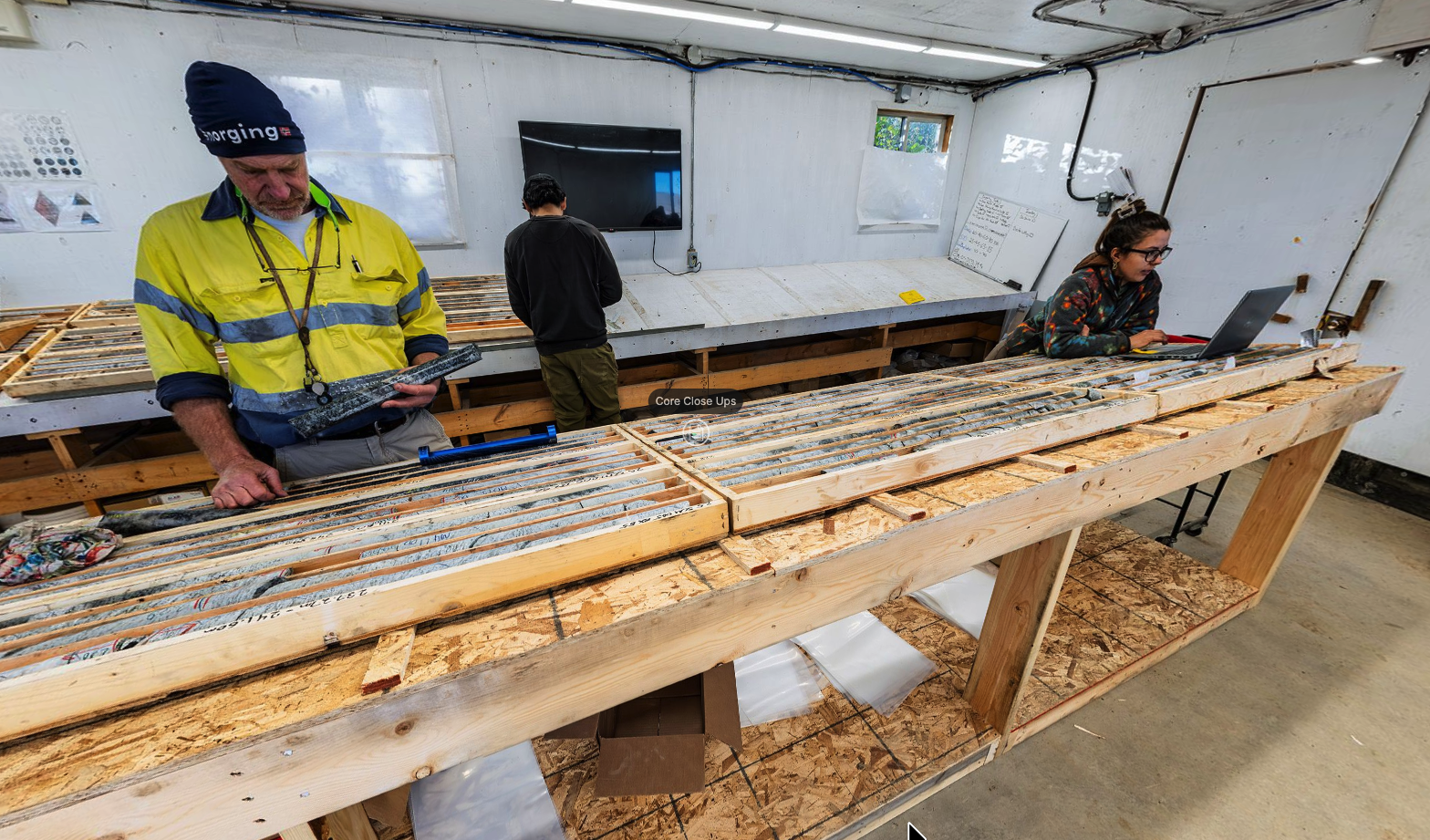
Abitibi Metals Corp reported a drilled interval of 60.2 meters at 1.08% copper at B26, including 9.2 meters at 3.42% copper, supporting continuity within the deposit. Up to three drill rigs are planned for the remainder of 2026 to expand and better define the resource. The program is targeting resource expansion and conversion for a future resource update.
Cobra Resources reported a drilled interval of 23 meters at 0.63% copper at Blue Rose within its Manna Hill project in South Australia, including 12.4 meters at 1.01% copper. Mineralized intervals extend beyond 300 meters downhole and remain open, supporting further testing of the system’s dimensions. Follow-up drilling of up to 6,000 meters across 52 holes and four prospects has begun to test extensions and establish scale.
Mogotes Metals plans up to 20,000 meters of Filo Sur drilling in 2026-2027, targeting expansion of discoveries and a November 2026 restart subject to weather and access. At Beskauga, drilling has begun under a program of up to 50,000 meters, targeting initial results in the fourth quarter of 2026 and a PEA within 12 months of the September 22, 2026 announcement. The programs combine testing of deposit scale with planned economic evaluation.
Copper Trade Flows Test Whether Inventory Shifts Increase Overseas Supply
Slower US stockbuilding could reduce import demand even while inventories rise. Declining reported warehouse stocks show that withdrawals exceeded additions, but do not identify the metal’s destination.
US trade volumes and warehouse locations help distinguish reexports from domestic transfers, while the COMEX-LME price gap indicates whether US-bound shipments remain commercially attractive. Changes in exchange-delivery status alone do not confirm physical movement, so inventory releases must be assessed alongside trade and consumption data.
The Investment Thesis for Copper
- Inventory-related mining share-price declines could lower entry costs, with project value assessed using resource and recovery evidence for explorers and economic studies for more advanced projects.
- Power arrangements and infrastructure plans help quantify developers’ operating and construction costs, while permitting milestones help assess when production could begin.
- Converting resources into higher-confidence categories supports mine planning, while continuity and recovery testing help explorers assess deposit size and potential copper output.
- Economic studies should quantify recoverable copper and construction spending, with NPV and IRR sensitivities showing how project value and returns respond to different copper prices, recovery rates, and operating costs.
- Funding that covers spending through the next milestone helps sustain planned work during copper price declines, while permit status, infrastructure access, and local operating costs help assess development budgets and schedules.
Copper inventory shifts can change near-term availability and prices without adding new mine production. Resource definition, engineering, permitting, and financing help establish which projects can contribute to longer-term supply. The investment opportunity is to assess inventory-related share-price weakness against that progress, seeking lower entry costs in developers and explorers whose technical evidence, cost estimates, and funding support their next steps toward production.
TL;DR
Tariff expectations have encouraged copper stockpiling in the US by making imports more profitable. A smaller US price premium could slow imports or encourage reexports, improving availability elsewhere and potentially lowering copper prices. If mining share prices also decline, advancing projects could offer lower entry costs. Inventory releases do not add mine production, so meeting projected longer-term supply requirements depends on developing additional capacity. Assess developers through power costs, engineering, permits, and funding, and explorers through resource confidence, drilling continuity, and recovery testing. Economic studies should test returns across copper prices, with funding covering the next milestone.
FAQs (AI-Generated)
Analyst's Notes





Subscribe to Our Channel













Stay Informed


