Sovereign Risk & Supply Gaps: Atomic Eagle & the Realities of African Uranium Development


.webp)
Atomic Eagle Limited is discovering that technically sound projects and improving commodity prices are necessary but insufficient conditions for success, as permitting complexity, community obligations, and geopolitical volatility reshape the development calculus across Africa.
- Long-term uranium contract prices recovered from approximately $32 per pound in 2016 to 2017 to $80 per pound by mid-2024, driven by simultaneous supply disruptions in Russia, Kazakhstan, and Niger, according to UxC Uranium Market Research, Sprott Asset Management, Cameco, and Reuters.
- The Prohibiting Russian Uranium Imports Act, signed into US law in May 2024, removed a source that had supplied approximately 27% of enriched uranium to US reactors as recently as 2022, according to the US Energy Information Administration (EIA), creating sustained upward pressure on uranium contract prices.
- Kazatomprom's August 2023 production cut to approximately 90% of subsoil use agreement capacity reduced output by an estimated 2,000 to 2,500 tonnes of uranium, according to Kazatomprom's own guidance update and UxC's 2024 Supply Outlook, representing one of the cycle's most significant single supply side shocks.
- Niger supplied approximately 24% of European Union natural uranium imports in 2022, making the curtailment of its output after the July 2023 military coup a material disruption for European utilities and a cautionary example of sovereign risk for uranium developers operating in West Africa.
- Atomic Eagle Limited's Muntanga Uranium Project in Zambia, with a completed Feasibility Study (FS) reporting a znet Present Value at an 8% discount (NPV8%) of $243 million and an Internal Rate of Return (IRR) of 20.8%, and its Madaouela Uranium Project in Niger, hosting approximately 116 million pounds of uranium at 1,300 parts per million (ppm), together illustrate the dual opportunity and complexity defining African uranium development today.
Introduction
The uranium market is undergoing one of its most consequential structural shifts since the Fukushima Daiichi accident of 2011. After more than a decade of depressed prices, idled mines, and utility oversupply, primary uranium supply has failed to keep pace with recovering demand as reactor construction accelerates across Asia and governments in the United States, Canada, and the United Kingdom actively support nuclear energy as a component of long-term decarbonisation strategies. For junior mining companies with advanced but undeveloped uranium projects, particularly those positioned in Africa, the window of opportunity is real. Yet the path from completed feasibility study to operating mine has rarely been more demanding.
Long-term uranium contract prices, which had bottomed at approximately $32 per pound between 2016 and 2017 according to UxC Long-Term Price Indicator historical data and Cameco Annual Reports covering 2017 to 2022, and which remained in the $32 to $38 per pound range through much of the post-Fukushima decade, climbed from approximately $54 per pound in mid-2023 to $80 per pound by mid-2024. This level was corroborated by the UxC Long-Term Price Indicator for June 2024, Cameco's Second Quarter 2024 Investor Presentation, Sprott Asset Management's Second Quarter 2024 Uranium Report, and Reuters reporting from June and July 2024. The recovery was driven by a convergence of supply disruptions: the Prohibiting Russian Uranium Imports Act signed into US law in May 2024, which removed a source accounting for approximately 27% of enriched uranium supplied to US reactors as recently as 2022 according to the EIA Uranium Marketing Annual Report 2022; Kazatomprom's August 2023 production cut of an estimated 2,000 to 2,500 tonnes of uranium relative to prior guidance according to Kazatomprom's Production Guidance Update and UxC's 2024 Supply Outlook; and the curtailment of Nigerien output following the July 2023 military coup, which removed a supplier of approximately 24% of European Union natural uranium imports in 2022 according to Eurostat.
For the industry as a whole, the improving price environment has created a genuine opportunity for developers with shovel-ready projects. Yet the experience of junior companies navigating the gap between technical readiness and financial close reveals a more complicated picture, one in which commodity tailwinds are frequently offset by the weight of permitting obligations, community resettlement requirements, sovereign risk exposure, and capital market scrutiny that has grown considerably more demanding since the last uranium cycle.
Industry Context
Africa occupies a distinctive position in the global uranium supply picture. The continent hosts several of the world's most significant undeveloped uranium deposits, concentrated primarily in sandstone-hosted geological formations of the Karoo Supergroup extending across Zambia, Niger, and Malawi. These deposits share characteristics that make them potentially competitive on an operating cost basis, including shallow geometry, amenability to open pit mining, and suitability for heap leach processing. They also share a set of development challenges that reflect both the complexity of operating in frontier mining jurisdictions and the particular regulatory demands that uranium attracts as a strategic commodity subject to radiation protection legislation, export controls, and international safeguarding requirements.
The structural supply deficit now emerging in the uranium market has its roots in the prolonged period of price depression that followed Fukushima. As reactor operators drew down inventories and utilities delayed long-term contracting, primary producers reduced output, deferred development decisions, and placed operating mines on care and maintenance. The World Nuclear Association (WNA) and the International Atomic Energy Agency (IAEA) have both identified the inadequacy of the current development pipeline relative to projected reactor growth as a structural concern for long-term supply adequacy. The consequence of that extended underinvestment is a pipeline of advanced development projects that is insufficient to meet the demand growth projected as reactor construction accelerates globally.
The gap between a completed feasibility study and a financed, construction-ready project has widened considerably across the mining industry, driven by more demanding environmental and social standards, longer regulatory timelines, and the growing expectations of development finance institutions whose participation is often essential to closing the project finance stack for large capital projects in sub-Saharan Africa. For uranium projects specifically, this gap is further complicated by the additional regulatory layer associated with ionising radiation, nuclear safeguarding, and the reputational sensitivities that continue to attach to the nuclear fuel cycle in some investor communities.
Emerging Practices & Industry Progress
Across the uranium development sector, companies are adapting to this more demanding environment by front-loading technical and social investment earlier in the development cycle than was previously standard practice. Environmental & Social Impact Assessments (ESIAs) that were once prepared concurrently with feasibility studies are increasingly being advanced in parallel with engineering work, with community baseline surveys, resettlement planning, and stakeholder engagement programmes initiated well before project economics are finalised.
Alignment with International Finance Corporation (IFC) Performance Standards has become a de facto requirement for projects seeking debt financing from development finance institutions and export credit agencies, the lenders whose participation is most accessible for large-scale resource projects in Africa. This alignment shapes not only the content of environmental documentation but the depth and duration of community engagement processes, the rigour of resettlement action planning, and the breadth of social investment programmes expected to accompany project development.
Companies are also investing more systematically in resource growth and technical derisking between feasibility completion and financing close. The recognition that lenders and equity investors apply greater scrutiny to resource confidence, mine life, and processing recovery assumptions than in earlier cycles has driven increased expenditure on infill drilling, metallurgical test work optimisation, and geotechnical investigation. Project financing advisory has also matured as a discipline, with specialist financial advisors being engaged earlier in the development process to structure financing approaches, identify prospective lenders, and manage the due diligence processes that must be completed before financing terms can be agreed.
Remaining Challenges
Despite this progress, significant challenges remain. The timeline from feasibility completion to financing close for greenfield mining projects in sub-Saharan Africa routinely extends to three to five years, driven by the sequential nature of regulatory approvals, the duration of lender due diligence processes, and the complexity of resettlement planning in areas with established rural communities. For uranium projects, radiation protection licensing and export permit requirements add additional regulatory steps that have no equivalent in base or precious metal development.
Community resettlement represents one of the most operationally and ethically demanding aspects of resource project development in populated areas. Physical resettlement requires comprehensive household surveys, asset valuation, consultation, grievance mechanisms, and the construction of replacement housing and community facilities before affected populations can be moved. The cost, duration, and reputational risk associated with resettlement programmes have increased substantially as international standards have evolved and as affected communities have become more aware of their rights under national and international frameworks.
The financial barriers to development remain acute for junior companies without operating cash flow. Capital requirements for greenfield uranium projects in Africa typically range from $250 million to $350 million for initial development, exceeding the balance sheet capacity of most junior developers and requiring access to project finance, strategic equity, or offtake-linked financing structures that are contingent on achieving milestones that themselves require capital to reach. Sovereign risk adds a further layer of complexity that is difficult to mitigate through technical excellence or financial structuring alone, as the experience of uranium developers in West Africa has demonstrated with considerable force in recent years.
Company & Project Examples
Atomic Eagle (ASX:AEU | OTCQX: GVXXF), operating the Muntanga Uranium Project in Zambia following its acquisition of GoviEx Uranium Inc., provides one of the most detailed current case studies in African uranium development. Atomic Eagle completed its Feasibility Study in the first quarter of 2025, reporting an after-tax NPV of $243 million at an 8% discount rate, an IRR of 20.8%, initial capital expenditure (Capex) of $282 million, and a total life of mine (LOM) operating cost (Opex) of $32.20 per pound of uranium produced. The project's Mineral Reserve stands at 39.6 million tonnes at an average grade of 320 ppm uranium, containing 27.99 million pounds of uranium, and is supported by a March 2026 Mineral Resource Estimate (MRE) update that expanded total Mineral Resources to approximately 58.8 million pounds of uranium across all categories following infill drilling at the Chisebuka and Muntanga East prospects.
The community obligations associated with Atomic Eagle's Zambian project are substantial. Physical resettlement of 958 people affected by Phase One mining at the Muntanga and Dibbwi East deposits is required before operations can commence, supported by a detailed Resettlement Action Plan (RAP) developed with comprehensive household surveys and an asset inventory cut-off date communicated to affected communities in November 2024. Phase Two development, covering the satellite deposits at Dibbwi, Njame, and Gwabi, will affect additional communities but is not anticipated for five to seven years into the operational life of the project.
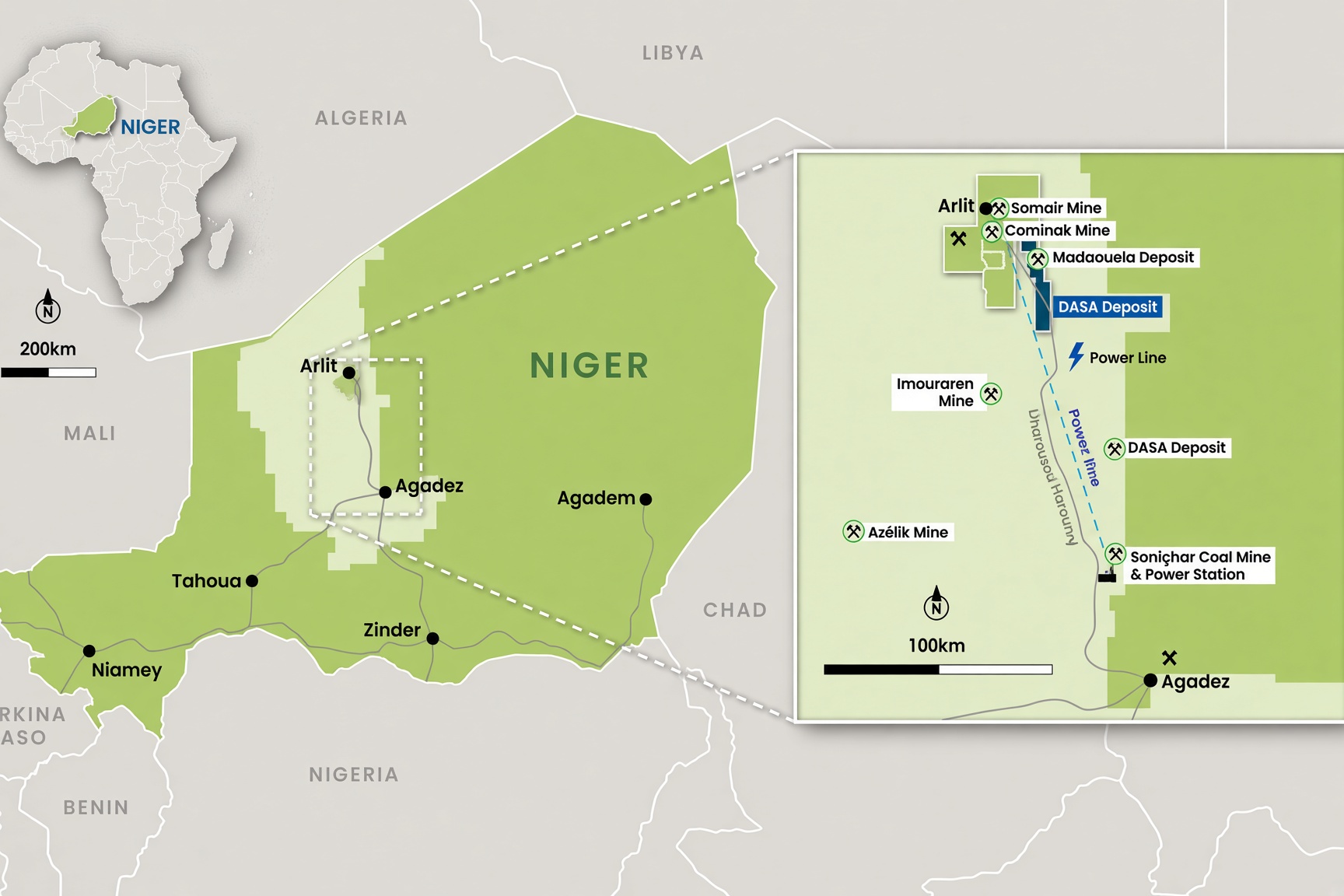
Atomic Eagle's Madaouela Uranium Project in Niger presents a contrasting case study in sovereign risk crystallisation. The project, into which approximately $170 million had been invested and which hosts approximately 116 million pounds of uranium at 1,300 ppm, had its mining permit withdrawn by the Nigerien government in July 2024 following the military coup of July 2023, resulting in a $65 million impairment charge and the commencement of proceedings under the Convention on the Settlement of Investment Disputes Between States & Nationals of Other States (ICSID Convention). Those proceedings were temporarily suspended in February 2025 following the signing of a letter of intent establishing a framework for negotiated resolution.
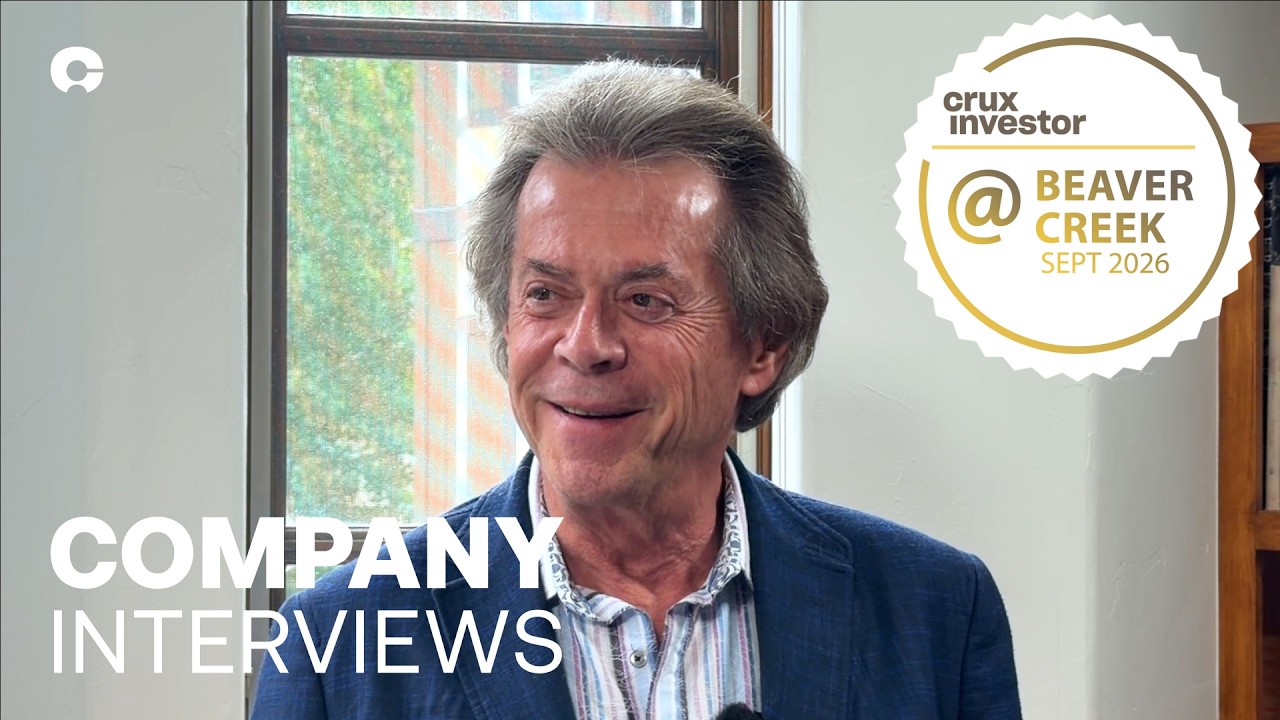
Atomic Eagle Chief Executive Officer Phil Hoskins addressed the asset's significance directly:
"The asset that GoviEx were developing, spent $170 million on it. It's 116 million pounds at 1,300 parts per million. It's a globally significant undeveloped uranium asset."
Hoskins described the current negotiating environment as constructive, explaining that both parties share a fundamental interest in seeing the project built:
"I don't think Atomic Eagle nor the Niger government want to see a protracted legal battle, because it doesn't see the mine get built. And if you're the Niger government, you want to see taxes and royalties and jobs created by what is a world class mine."
On the question of market valuation, Hoskins was candid about the disconnect between the asset's intrinsic value and its current market pricing:
"We listed off the back of Zambia and Niger was always option value, and the longer it goes, the closer we get to hopefully converting that option value into real value for shareholders."
Regional & Jurisdictional Perspective
The contrast between Zambia and Niger as uranium development jurisdictions encapsulates a broader pattern visible across African mining. Zambia offers a stable democratic governance framework, an established legislative regime anchored by the Mines & Minerals Development Act, and a fiscal structure comprising a 30% corporate income tax rate and a 5% revenue royalty calibrated to attract investment while capturing an equitable share of resource rents. The country's history of large-scale copper mining has produced an institutional familiarity with the demands of major resource project development that is reflected in regulatory processes, local contractor capacity, and community engagement frameworks.
The Sahel region, by contrast, has seen governance deteriorate markedly since 2020, with military coups in Mali, Burkina Faso, Guinea, and Niger disrupting mining operations, altering fiscal and regulatory frameworks, and introducing new forms of sovereign risk that established risk management frameworks were not designed to address. For uranium specifically, the strategic importance of the commodity and the involvement of state entities and international interests in its development adds a political dimension to project risk that goes beyond the standard considerations of mining licence security and fiscal stability.
The lesson that emerges from comparing these jurisdictions is not that African uranium development is uniformly risky, but that jurisdictional differentiation within the continent has become more pronounced and more consequential than at any point in the recent past. Developers and their financial backers are applying more granular assessments of country risk, governance trajectory, and regulatory stability when allocating development capital, a discipline that is reshaping where investment flows and which projects advance toward construction.
Industry Outlook
The uranium supply gap identified by the WNA and the IAEA will not be closed by commodity prices alone. Closing it will require a sustained commitment from developers, governments, communities, and capital providers to build the conditions under which technically viable projects can advance through the development pipeline at the pace that a supply-constrained market requires. For companies operating in Africa, the opportunity is real and the technical foundations increasingly solid, but the development process itself has become a primary competitive differentiator.
As Hoskins framed it when discussing Atomic Eagle's position in Niger, development credibility is itself a competitive asset in negotiations with sovereign governments:
"The fact that our group is able to put forward a credible set of expertise in developing uranium projects in Africa, that's what I think is seen by them as the ticket to getting that project built as quickly as possible."
The broader industry implication is that the next phase of uranium supply growth will be shaped as much by the quality of developer-government relationships, the rigour of community engagement, and the depth of technical derisking as by commodity prices or resource size. Companies that invest in these dimensions of development credibility now are positioning themselves not just for the current cycle, but for the sustained demand growth that the WNA and IAEA project will characterise the nuclear fuel market through the 2030s and beyond.
FAQs (AI-Generated)
Analyst's Notes





Subscribe to Our Channel



Stay Informed