




The Predictability Premium: How Geological Consistency Could Drive P2 Gold’s Re-Rating


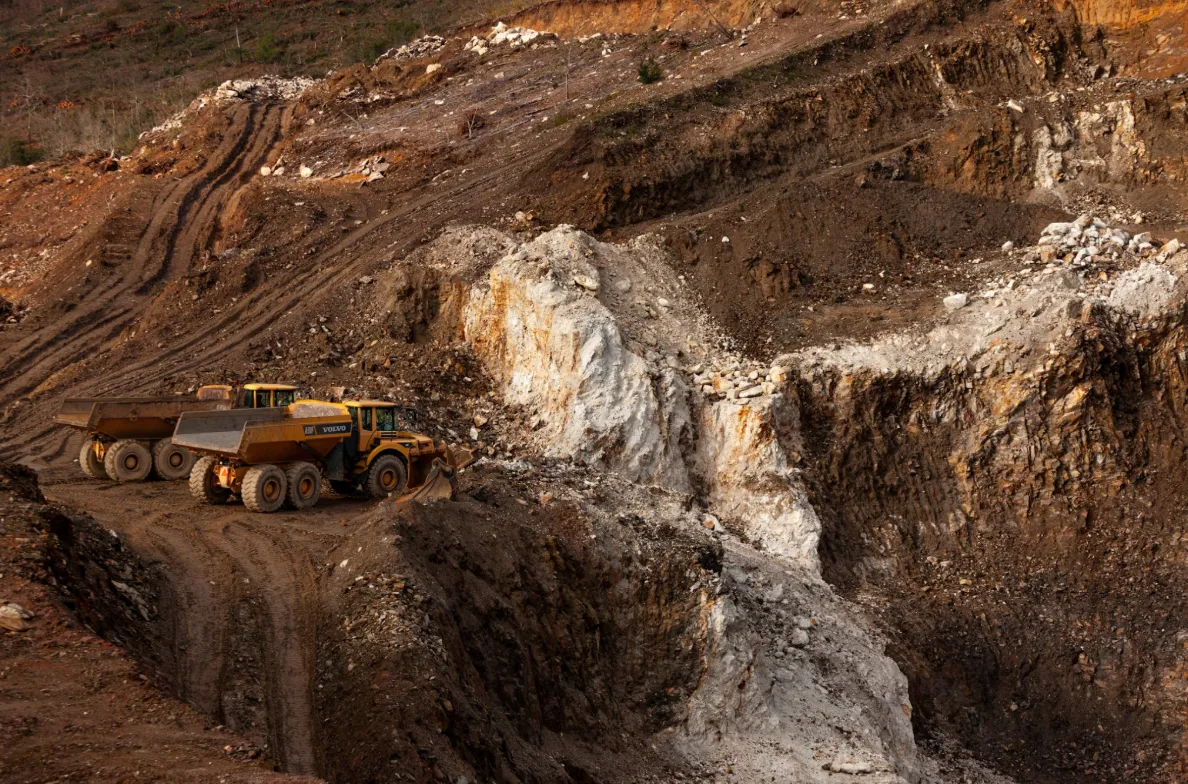
P2 Gold's Lucky Strike mirrors Sullivan's ore controls, but the re-rating from C$175.6 million to C$1 billion hinges on the Q4 2026 feasibility study.
- P2 Gold carries a market capitalisation of C$175.6 million against a 2025 preliminary economic assessment (PEA) base-case after-tax net present value at a 5% discount rate (NPV5%) of US$942.9 million, with the company targeting a re-rating toward a billion dollars through 2026 as the feasibility study (FS) is completed.
- April 2026 drill results confirm that ore controls at the Lucky Strike Zone are the same as at the Sullivan Zone, confirming the mineral resource model ahead of the third quarter of 2026 mineral resource estimate (MRE) update.
- Five drill holes on the western half of the Lucky Strike Zone appear to have intersected a higher-grade core similar to the Sullivan Zone's core, with the core open for expansion to the north and south and the zone remaining open in all directions.
- The Lucky Strike Zone has the potential to be significantly larger than the Sullivan Zone based on available current and historical drill data, with current drilling focused on the western half of a zone measuring approximately 700 metres by 500 metres.
- The 2025 PEA structures heap leach production in years 1 to 5 at 9 million tonnes per year ahead of mill construction, with the company evaluating an increase to 12 million tonnes per year, targeting 150,000 ounces of gold and 45 million to 50 million pounds of copper per year over a 14.2-year mine life.
Why the Feasibility Study Is the Re-Rating Trigger
P2 Gold (TSX-V: PGLD | OTCQB: PGLDF) is advancing the Gabbs Project toward a feasibility study (FS) targeting completion in the fourth quarter of 2026. At this stage, the key issue is not valuation, but whether the FS will be considered credible by institutional investors. An FS is only as strong as the geological model and assumptions on which it is built. If those inputs are unstable or poorly constrained, the resulting economics lose relevance, regardless of headline output metrics. The credibility of the FS, therefore, depends on whether the underlying resource model behaves predictably when tested through further drilling and engineering refinement.
President and Chief Executive Officer of P2 Gold, Joseph Ovsenek, framed the standard explicitly:
"You have to have a robust feasibility study, not a marketing document."
The emphasis is not just on outcomes, but on whether the study reflects operational reality closely enough to meet institutional standards.
What "Same Ore Controls" Means for the Feasibility Study
The predictability premium is the valuation benefit that accrues when a project’s geological model is demonstrably consistent. When ore controls at Lucky Strike are confirmed to be the same as at the Sullivan Zone, the anchor of the 2025 preliminary economic assessment (PEA), the resource model feeding the FS is built on predictable geology. That predictability reduces the risk of FS assumptions diverging from actual mine performance, which is where studies typically lose institutional credibility. The April 2026 drill results provide geological evidence that this level of predictability exists at Lucky Strike.
The company states that available drill data confirms the ore controls at the Lucky Strike Zone are the same as at the Sullivan Zone, where mineralisation is localised within and below specific rock layers. Mineralisation is concentrated at the core of the system and in areas surrounding vertical structures, with gold-dominant mineralisation transitioning to copper-gold mineralisation at depth. The combined mineralised thickness reaches up to 125 metres, with the main mineralised body ranging up to 75 metres thick and deeper footwall mineralisation ranging from 20 to 60 metres.
The Sullivan Zone is the geological anchor of the 2025 PEA. The Lucky Strike results indicate a comparable geological framework, with similar structural controls on mineralisation and a higher-grade core observed in drilling on the western half of the zone. Five drill holes have intersected this higher-grade core, consistent with the core geometry defined at Sullivan. This is the predictability premium in practice. Consistent ore controls reduce the risk that the resource model diverges from what is ultimately mined, which is a key source of downside revision in feasibility-stage projects. That divergence between model and reality is where feasibility studies lose institutional credibility. Ovsenek’s stated commitment to a study rooted in operational reality is only achievable if the geology underlying it is predictable.
Lucky Strike's Scale & What Remains to Be Proven
The current drilling is focused on the western half of the Lucky Strike Zone, which measures approximately 700 metres by 500 metres as defined by current and historical drilling. Based on available drill data, the Lucky Strike Zone has the potential to be significantly larger than the Sullivan Zone, and remains open in all directions.
Since the start of the Infill and Expansion Drill Program in October 2025, 38 of the 62 reverse circulation (RC) drill holes completed to date have been drilled at Lucky Strike, out of a planned total of 70 holes. The program is designed to further define continuity and expand the mineralised envelope ahead of the updated mineral resource estimate (MRE) scheduled for the third quarter of 2026.
The updated MRE will be the first point at which the full-scale contribution of Lucky Strike is formally incorporated into the Gabbs Project resource base, feeding directly into the FS planned for the fourth quarter of 2026.
The Phased Capital Structure & What the Feasibility Study Must Address
The 2025 preliminary economic assessment (PEA) structures the Gabbs Project across a 14.2-year mine life in two distinct phases. In years 1 to 5, the project operates as an open-pit mine feeding a heap leach facility at 9 million tonnes per year, producing gold doré and copper. From years 6 to 14.2, a mill operating at 5 million tonnes per year is added alongside a reduced heap leach operation at 4 million tonnes per year. Total preproduction capital costs are US$382.7 million, with total production capital costs, including mill construction, at US$571.8 million.
The phased structure is designed so that heap leach cash flows from years 1 to 5 precede mill construction, establishing a pathway to fund the mill from operating cash flow rather than requiring all capital upfront. The company is evaluating options, including bringing forward mill construction and increasing the processing rate from 9 to 12 million tonnes per year, targeting 150,000 ounces of gold per year and 45 million to 50 million pounds of copper per year under the higher throughput scenario.
The FS targeting the fourth quarter of 2026 will serve as the basis for evaluating a production decision and related funding requirements. The total production capital of US$571.8 million represents the financing requirement that the FS must evaluate. The geological consistency confirmed at Lucky Strike directly supports the reliability of the resource model that underpins those capital estimates. Running in parallel with the FS, the company has begun environmental baseline studies ahead of finalising the mining plan of operations.
Ovsenek described the approach:
“We've started a lot of those studies up front before we have our mining plan of operations finalised, because we know there are certain things that are going to be looked at. We've hired local consulting firms that know the area. They've done this work for other mines, other projects, so bring them in and get them working before the mining plan of operations is actually finalised. That gives us a bit of a jump start".
That sequencing is designed to compress the permitting timeline rather than wait for the FS to be complete before starting baseline work.
What Needs to Go Right
The re-rating case from C$175.6 million toward C$250 million to C$1 billion depends on four outcomes holding together. First, the feasibility study must confirm the 2025 PEA assumptions, which outline an after-tax NPV5% of US$942.9 million at US$2,350 gold and US$4.50 copper, a 14.2-year mine life, and average annual production of 109,000 ounces of gold and 15,000 tonnes of copper.
The third quarter of 2026 MRE needs to define the scale of Lucky Strike by incorporating the full infill and expansion drilling program and demonstrating its potential to exceed the Sullivan Zone. The phased capital structure must remain financeable, with US$382.7 million in preproduction capital and US$571.8 million total, including the mill, supported by a heap leach to mill pathway that allows later-stage funding from operating cash flow. Finally, continued capital rotation into developers is required, supported by the scarcity of Nevada projects capable of producing more than 100,000 ounces of gold annually, which reinforces both the timing and credibility of a re-rating.
Investment Thesis for P2 Gold
- A feasibility study is only as credible as the geological model it is built on, and the April 2026 Lucky Strike drill results show that ore controls match those at the Sullivan Zone. This consistency underpins whether the fourth quarter of 2026 feasibility study will carry institutional weight.
- P2 Gold trades at a market capitalisation of C$175.6 million against a 2025 preliminary economic assessment base case after-tax net present value at a 5% discount rate of US$942.9 million, highlighting a clear valuation gap and a stated path toward a re-rating toward C$250 million to C$1 billion if execution holds.
- Recent drilling strengthens that case, with Lucky Strike mirroring Sullivan in structure, grade distribution, and mineralisation geometry, while five western holes point to a potential higher-grade core and a system that may exceed Sullivan in scale.
- Closing the gap now depends on delivery: the third quarter of 2026 mineral resource estimate must define Lucky Strike’s scale, the fourth quarter feasibility study must confirm costs and production within Preliminary Economic Assessment ranges, and the US$571.8 million total capital requirement must remain financeable through the phased heap leach to mill approach.
- Management has committed to delivering a study grounded in operational reality, aligning execution discipline with the geological de-risking achieved through the April 2026 program.
The re-rating from C$175.6 million to a billion dollars is not automatic. It is conditional on the feasibility study being the kind of document the market trusts. Geological consistency is what makes that trust achievable.
TL;DR
P2 Gold’s re-rating case from C$175.6 million toward C$250 million to C$1 billion depends on whether the fourth quarter 2026 FS is considered credible by the market. April 2026 drilling at Lucky Strike confirms ore controls consistent with the Sullivan Zone, reducing key geological uncertainties that typically undermine feasibility-stage valuation confidence. The third quarter 2026 resource update and fourth quarter FS will determine whether this geological consistency translates into a higher valuation multiple.
FAQs (AI-Generated)
The predictability premium refers to the valuation benefit of geological consistency. When ore controls at Lucky Strike are confirmed to be the same as at the Sullivan Zone, the resource model feeding the FS is built on predictable geology. That predictability reduces the risk of the FS assumptions diverging from actual mine performance, which is the primary reason institutional investors discount PEA-stage valuations.
The company states that available drill data confirms the ore controls at Lucky Strike are the same as at the Sullivan Zone, with mineralisation hosted within and below specific rock layers, concentrated at the core of the zone and in areas surrounding vertical structures. Five drill holes on the western half appear to have intersected a higher-grade core similar to Sullivan's, with the core open for expansion to the north and south. The combined mineralised thickness reaches up to 125 metres. The results confirm the mineral resource model.
The current drilling is focused on the western half of the Lucky Strike Zone, which measures approximately 700 metres by 500 metres. Based on available data, the company states that Lucky Strike has the potential to be significantly larger than Sullivan. The zone remains open in all directions. The updated MRE targeting the third quarter of 2026 will be the first point at which Lucky Strike's contribution to the Gabbs resource base is quantified.
Total preproduction capital costs are US$382.7 million. Total production capital costs, including mill construction, are US$571.8 million. The PEA structures heap leach production in years 1 to 5 at 9 million tonnes per year ahead of mill construction, which is added from years 6 to 14.2 alongside a reduced heap leach operation. This phased structure establishes a pathway to fund the mill from operating cash flow.
The 2025 PEA sequences heap leach production at 9 million tonnes per year through years 1 to 5, requiring US$382.7 million in preproduction capital, before mill construction begins. The company is evaluating increasing the processing rate to 12 million tonnes per year, targeting 150,000 ounces of gold per year and 45 million to 50 million pounds of copper per year.
Analyst's Notes





Subscribe to Our Channel


.png)





Stay Informed






















