




U.S. Gold Corp's Fully Permitted Wyoming Project Shifts Investor Focus from Regulatory Risk to Financial Execution


U.S. Gold Corp's permitted CK Gold Project in Wyoming offers reduced regulatory risk, with a DFS due early 2026 and 18-month path to production.
- One of the most significant risks in US mining development is permitting uncertainty, with federal approval processes often extending beyond seven years and creating prolonged periods of capital dilution before any cash flow materializes.
- U.S. Gold Corp's CK Gold Project in Wyoming has secured all major permits required for development, with the final air quality permit approved in November 2024 and the company receiving its unconditional permit to mine in December 2024.
- This compressed permitting timeline materially reduces development risk, allowing investors to evaluate construction costs, operating margins, and financing structure rather than speculating on regulatory outcomes.
- The company's February 2025 SK-1300 Pre-Feasibility Study outlines a ten-year mine life supported by gold and copper production, with all-in sustaining costs of $937 per gold equivalent ounce and defined capital requirements.
- The central consideration is not upside optionality but risk containment, specifically how permitting certainty, cost visibility, and balance-sheet strength affect valuation outcomes in a capital-intensive sector where delays routinely translate into dilution.
Why Permitting Represents One of the Risks in Mining Investments
Permitting risk is often underweighted in early-stage mining valuations, yet it remains one of the primary determinants of whether a project reaches production or stalls indefinitely. Understanding why regulatory timelines matter requires examining both the structural features of US permitting and the capital market consequences that follow.
How Extended Permitting Timelines Affect Investor Outcomes
Typical US federal permitting processes involve multiple agencies, environmental impact statements under the National Environmental Policy Act, and a Record of Decision that can take years to secure. Projects on federal land frequently face litigation risk, interagency coordination delays, and shifting regulatory priorities across administrations.
The capital market consequences are measurable. Extended pre-revenue timelines increase the probability of repeated equity raises, each of which dilutes existing shareholders. Institutional investors often apply higher risk-adjusted discount rates to projects without clear permitting visibility, compressing enterprise value per ounce and enterprise value to net present value multiples before any operational performance can be assessed.
A high-grade resource without permits remains financially uncertain. Enterprise value per ounce and enterprise value to net present value metrics often reflect permitting status as much as geology, with permitted developers trading at meaningful premiums to peers still navigating regulatory processes.
Luke Norman, Executive Chairman of U.S. Gold Corp, frames the company's permitting context:
"Right before Christmas of 2024 we received our final unconditional permit to mine. You're one of the only junior mining companies with a fully permitted, shovel-ready project in North America."
Wyoming's Regulatory Structure & What Distinguishes It
Wyoming's approach to mining regulation differs from federal processes in ways that have direct implications for project timelines and investor confidence. The CK Gold Project provides a practical case study in how jurisdictional structure affects development outcomes.
State-Level Oversight Versus Federal Regulation
The CK Gold Project is located entirely on the State of Wyoming and private land with no direct federal involvement. The US Army Corps of Engineers determined that the project footprint does not impact waters of the United States, eliminating a common source of federal permitting requirements. This land status reduced overlap between agencies and created clearer accountability for review timelines.
A Documented Permitting Sequence
The project secured permits through a defined sequence: Industrial Siting Permit with unanimous approval in June 2023, Mine Operating Permit in April 2024, WYPDES water discharge permit in May 2024, Mine Reclamation Bond acceptance in June 2024, and Air Quality permit in November 2024. The company notes minimal organized opposition to the project throughout this process.
What Faster Permitting Means
For investors, compressed permitting timelines enable earlier transition from development-stage speculation to financing and construction decisions. Reduced uncertainty around project sequencing improves the ability to model cash flows and capital needs with greater precision.
Luke Norman emphasizes the operational readiness this creates:
"The definitive feasibility study is going to set the pathway immediately to project finance. Ultimately it's an 18-month runway into development, through development, into production."
What a Fully Permitted Project Changes for Capital Allocation
Once permitting is complete, the risk profile of a mining project shifts fundamentally. Regulatory uncertainty gives way to financial execution risk, which investors can evaluate using established frameworks for capital cost control, operating cost discipline, and financing structure.
From Regulatory Risk to Financial Risk
With permits secured, the primary variables become capital cost management, operating cost performance, and the terms under which construction financing is arranged. These are risks that institutional investors understand and can price, unlike the binary outcomes associated with permitting where delays or denials can eliminate value entirely.
Infrastructure Access & Cost Predictability
The CK Gold Project's location approximately 20 miles from Cheyenne provides access to competitive power pricing from a local provider with in-state generation, allowing the site to tie into the existing grid without constructing dedicated power facilities. Road access requires a four-mile connection to a paved state road, with discussions regarding road maintenance underway with neighboring landowners.
Luke Norman describes the practical implications:
"Our location being just 20 miles outside of Cheyenne, Wyoming, is remarkable. It's not like building a mine up in Alaska or in South America. Your employment hub is right there. You're going in for contracts from everything, from electrical engineering, plumbing. You're not reliant on flying people in and out."
Why Capital Intensity Matters to Investors
Lower upfront capital expenditure requirements reduce financing pressure and limit dilution during the construction phase. The elimination of remote camp requirements and dedicated power generation lowers both initial capital and ongoing operating costs. For investors, these factors improve valuation confidence by narrowing the range of potential outcomes.
What the Pre-Feasibility Study Tells Investors
The company's February 2025 SK-1300 Pre-Feasibility Study provides the technical and economic parameters against which the project is currently evaluated, with a definitive feasibility study targeting release in early 2026.
Key Economic Metrics
The pre-feasibility study defines all-in sustaining costs of $937 per gold equivalent ounce over the life of mine, a cost structure that provides meaningful margin at current gold prices. The study outlines an approximately ten-year mine life with defined capital requirements and processing parameters.
Gold & Copper Production Profile
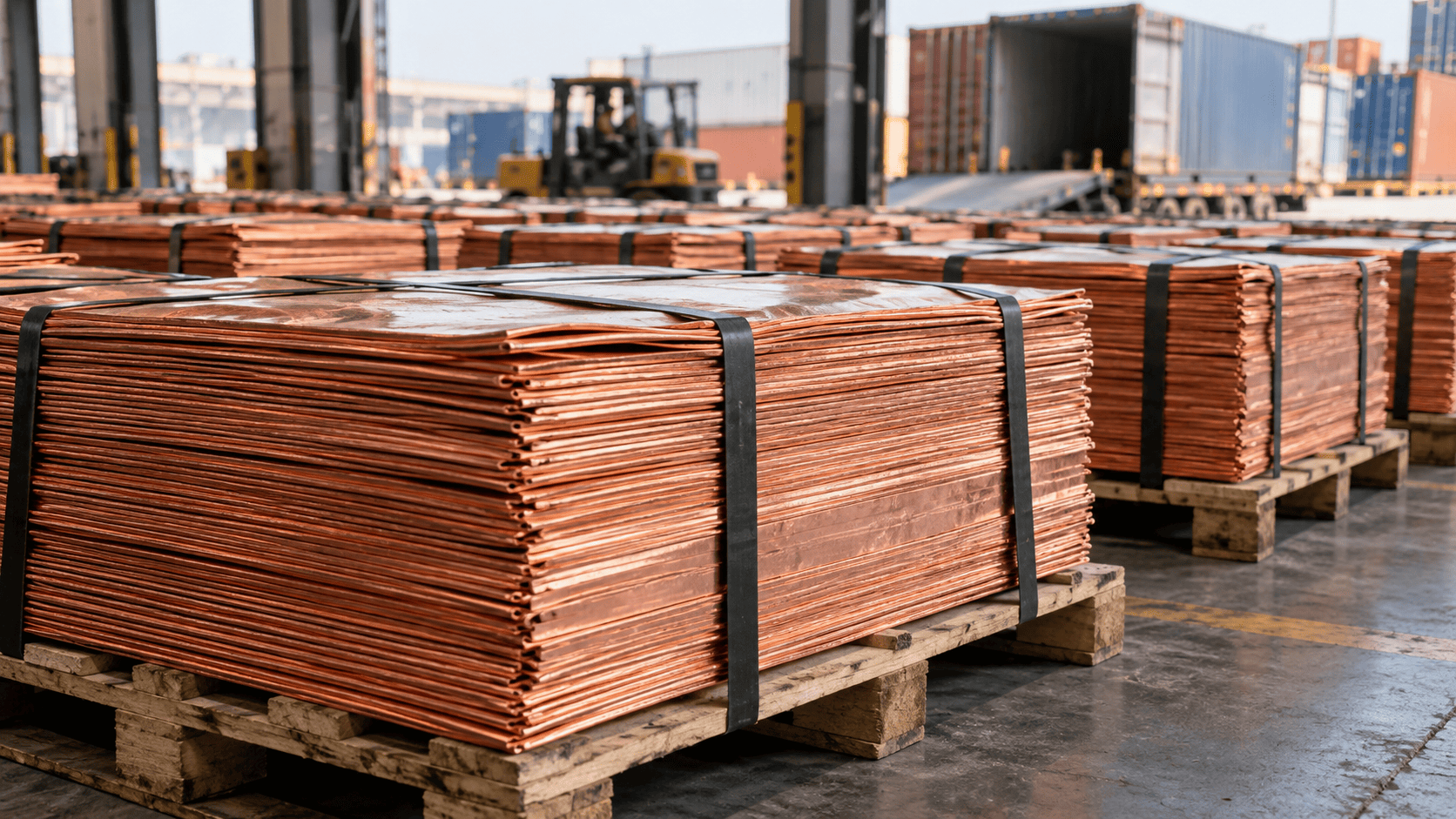
The project's copper by-product component plays a meaningful role in economic stability. Average annual gold equivalent production is projected at 143,278 ounces for the first three years of operation. By-product credits can stabilize cash flow during periods of gold price volatility, reducing earnings sensitivity to single-commodity price movements.
Luke Norman quantifies the expected production profile:
"The first year of production is forecasted at 130,000 ounces of gold and 24 million pounds of copper that you can forward sell."
Engineering Progress Toward Feasibility
The process plant design is largely complete at feasibility study level, with bids for major equipment being solicited. Advanced engineering work has incorporated Jameson cell flotation technology, smaller plant footprint designs, and optimizations for grinding and filtration. The company is targeting release of its definitive feasibility study in late January or early February 2026.
Social License & Its Relevance After Permitting
Permitting approval does not eliminate stakeholder risk. Social license, the ongoing acceptance of a project by local communities and interest groups, remains relevant throughout construction and operation.
Early Stakeholder Engagement as Risk Mitigation
U.S. Gold Corp has conducted over 400 stakeholder meetings addressing water use, dust management, and land use concerns. The Industrial Siting Permit received unanimous approval, and the company reports minimal organized opposition to the project.
Why Investors Monitor Social License
Lower probability of legal or political disruption translates to greater confidence in construction schedules and reduced headline risk post-permit. For institutional investors, projects with established community relationships present fewer operational surprises than those that treated permitting as a purely regulatory exercise.
How Permitted US Projects Fit the Current Gold Sector
The scarcity of fully permitted domestic gold developments creates a specific context for evaluating U.S. Gold Corp's position within the broader sector.
Limited Pipeline of Permitted Domestic Projects
The number of fully permitted US gold developments in the pipeline has declined as environmental review requirements have expanded and litigation risk has increased. Simultaneously, global jurisdictional risk has come under greater scrutiny, with investors increasingly focused on regulatory stability and rule of law.
Permitting as a Differentiator in Capital Markets
The company's December 2025 private placement of $31.2 million illustrates institutional interest in permitted development assets.
Luke Norman describes the validation:
"$31,234,000 precisely, bringing in the likes of the big funds that we brought in, McKenzie, Libra out of New York. It just validates the work and effort that's gone in through the engineering side of things and culminating into a kind of tick of approval."
Exploration Upside & Resource Expansion Potential
Beyond the current reserve base, the CK Gold Project presents exploration optionality that could extend mine life and enhance project economics.
Luke Norman describes the geological opportunity:
"We're going to start drilling below the reserve. Now that we see another million ounces potential below the reserve, 1.7 million ounces of reserve, you bring another million ounces into this project, it'll be another billion dollars in net present value. 80 percent of the holes drilled into CK have bottomed in mineralization."
The company's technical work indicates that depth and strike length volumetrics are sufficient to potentially double the current gold-copper resource if mineralization continues along strike.
Capital Discipline & Share Structure
In a sector where dilution frequently erodes shareholder value, U.S. Gold Corp's approach to capital management warrants examination. As of January 1, 2026, the company has 16,442,395 common shares outstanding.
Luke Norman addresses the company's financing philosophy:
"We still only have 16.5 million shares outstanding, so we don't want to blow that up. We want to take it all in debt. We're just going to take the one that's smartest for the company and the investors."
The company is exploring vendor financing options for CK Gold development, seeking structures that preserve equity value through the construction phase.
The Investment Thesis for U.S. Gold Corp
Investors evaluating permitted development-stage gold companies can consider several factors that distinguish these assets from earlier-stage peers.
- Permitting certainty reduces long-dated regulatory risk, allowing analytical focus to shift toward financial execution and capital efficiency.
- Defined capital expenditure and all-in sustaining cost estimates from pre-feasibility work improve cash flow forecasting and support more reliable valuation models.
- Copper by-product exposure can stabilize operating margins, particularly during periods of gold price weakness.
- Infrastructure access in established jurisdictions lowers execution risk by reducing the probability of logistical cost overruns.
- Tight share structures combined with disciplined financing approaches can limit dilution through the construction phase.
- Exploration potential within permitted footprints offers upside optionality without additional regulatory risk.
- Near-term feasibility milestones provide catalysts for re-rating as projects transition from development to construction decisions.
U.S. Gold Corp's CK Gold Project illustrates how regulatory certainty can affect a mining investment's risk profile. According to the company, major permits have been secured, with a definitive feasibility study targeted for early 2026 and an estimated 18-month development timeline to production following financing.
That permitting status, if maintained through construction, would provide a degree of forward visibility that many North American gold developers have not yet achieved. For investors, this shifts analysis toward execution and financing risk rather than regulatory uncertainty, though meaningful questions remain around capital requirements, commodity price assumptions, and the company's ability to secure development funding on acceptable terms. In a sector where permitting delays routinely translate into project devaluation, advancement through regulatory milestones represents tangible progress.
TL;DR
The CK Gold Project has secured all major permits required for development, with final approvals received in late 2024. This permitting status shifts investor analysis from regulatory uncertainty toward financial execution risk. The February 2025 pre-feasibility study outlines $937/oz all-in sustaining costs, approximately ten-year mine life, and combined gold-copper production. A definitive feasibility study is targeted for early 2026, with an estimated 18-month development timeline following financing. The project's location near Cheyenne provides infrastructure advantages, while exploration potential below existing reserves could extend mine life. Key remaining considerations include capital requirements, financing terms, and commodity price assumptions.
FAQs (AI-Generated)
The project has received all major permits, including Industrial Siting Permit (June 2023), Mine Operating Permit (April 2024), WYPDES water discharge permit (May 2024), Mine Reclamation Bond acceptance (June 2024), Air Quality permit (November 2024), and unconditional permit to mine (December 2024).
According to the February 2025 pre-feasibility study, all-in sustaining costs are estimated at $937 per gold equivalent ounce over an approximately ten-year mine life, with average annual production of 143,278 gold equivalent ounces during the first three years.
The company is targeting release of its definitive feasibility study in late January or early February 2026.
According to company guidance, the project has an estimated 18-month development timeline from financing through construction to production.
The company's technical work indicates potential to expand the resource, with management noting that 80% of holes drilled have bottomed in mineralization and depth extensions could potentially add significant ounces to the current 1.7 million ounce reserve base.
Analyst's Notes





Subscribe to Our Channel





Stay Informed






















