




Undervalued? Nr Term Production, Cash Flow Potential and Exploration Upside Highlight Valuation Disconnect for Cabral Gold


Cabral Gold is 60% through Phase One construction, targeting Q4 2026 gold production, while a $20M raise funds aggressive exploration of its 7km Brazilian gold district.
- Cabral Gold is 60% through construction of its Phase One heap leach oxide project at Cuiú Cuiú in northern Brazil, with commissioning targeted for Q3 2026 and commercial gold production expected in Q4 2026.
- The company's Phase One prefeasibility study was completed at an assumed gold price of $2,500 per ounce but as gold currently trades around $4,500 per ounce, anticipated annual cash flow has expanded to an estimated $60–$65 million against a current market capitalisation of approximately $200 million, implying the stock trades at roughly just 3x annual cash flow.
- Cabral announced a $20 million bought deal financing directed entirely toward accelerating exploration drilling across the Cuiú Cuiú district, following the best drill result in the project's history at Jerimum Cima.
- The company received its Licença Prévia (LP) for a full mining license in Brazil which removes the trial mining ceiling and opens the pathway to operate at the full Phase One design capacity of 3,000 tonnes per day and beyond.
- With four new discoveries made, 35,000 metres of drilling completed, and more than 50 peripheral targets identified across a 7-kilometre open soil anomaly, Cabral's exploration upside remains substantially unpriced in its current valuation.
Cabral Gold finds itself at an inflection point that few junior mining companies reach: simultaneously constructing a near-term producing mine and sitting atop a gold district that management believes remains substantially underexplored. President and CEO Alan Carter provided a comprehensive update on the company's progress across Phase One construction, a newly announced $20 million financing, a high-grade exploration discovery, and the long-term case for why the company's shares remain undervalued despite significant share price appreciation over the past 18 months.
Even after recent softness, gold trading above $4,500 per ounce fundamentally changes the economic profile of projects that might have been marginal just a few years ago. For Cabral, whose Phase One prefeasibility study was conducted at an assumed gold price of $2,500 per ounce, the current price environment means that the anticipated cash flows from Phase One production are substantially larger than originally modelled.
Phase One Construction: On Schedule and On Budget
The Cuiú Cuiú Phase One project is a heap leach oxide operation designed to mine the saprolitic, free-digging weathered material that extends to approximately 60 metres depth across the district. This material does not require drilling and blasting, and its processing is significantly less capital-intensive than hard rock gold mining operations, which require crushing and grinding circuits. The initial design capacity is 3,000 tonnes per day.
As of late March 2026, construction is approximately 60% complete. The total construction cost is $37.7 million, making it a modest capital build by industry standards. Commissioning is planned for Q3 2026, with commercial production targeted for Q4 2026. Carter noted that the rainy season presented a potential challenge to the construction timeline, but the earth-moving phase is now complete and concrete foundations are in place:
"We're on schedule and on budget," Carter confirmed. "We're just coming to the end of the rainy season. We've lost a few days through wet weather, we knew we would. We anticipated that and we built that into the schedule."
The Phase One prefeasibility study, completed in July 2025, returned an after-tax internal rate of return of 78% at a gold price assumption of $2,500 per ounce. With gold currently trading around $4,500 per ounce, the economics have strengthened materially. The company anticipates producing approximately 25,000 ounces in the first 12 months at an all-in sustaining cost of $1,200-1,300 per ounce (higher estimate relating to increased costs due to ongoing war in Iran), implying a potential cash margin of around $3,200 per ounce at current prices. This translates to an estimated of up to $65 million in annual cash flow against a current market capitalisation of approximately $200 million.
Permitting Milestone: Full Mining License Granted
A significant and somewhat under-appreciated development in recent weeks has been the granting of the Licença Prévia (LP) for Cabral's full mining license. Under Brazilian law, which equates to approximately 1,500 tonnes per day. The full mining license removes the trial mining license ceiling and allows the company to operate at the Phase One design capacity of 3,000 tonnes per day and beyond.
Carter characterised this milestone as the single most important step in Brazil's mine permitting process, noting that its achievement materially reduces permitting risk for both Phase One and the much larger Phase Two project. For investors evaluating Cabral, this milestone removes what had been one of the key execution risks associated with achieving the full Phase One production rate.
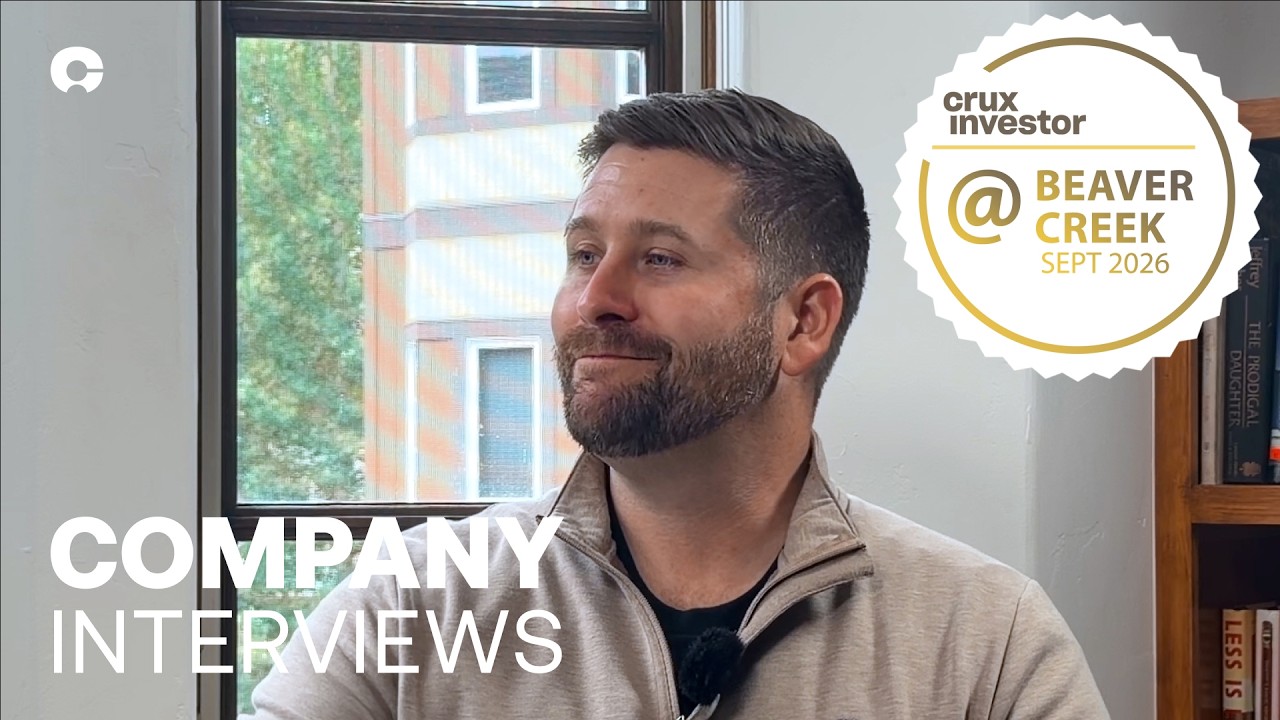
Interview with Alan Carter, President & CEO of Cabral Gold
The $20 Million Bought Deal for Exploration Acceleration
Cabral announced a $20 million bought deal financing with proceeds directed entirely toward expanding the exploration drilling program across the Cuiú Cuiú district. The company currently has three drill rigs operating on site. Carter indicated that this will increase materially in the coming weeks, with detailed guidance on rig counts, meterage targets, and priority drill areas expected to be released within a few weeks of the announcement.
The timing of the financing was driven primarily by a remarkable drill results with 9.5 metres at 87.4 grams per tonne (g/t) gold at Jerimum Cima, located approximately 3 kilometres from the existing resource area and entirely outside the current 1.2 million ounce resource base. Carter described it as the best drill result in the project's history by a significant margin. The geometry and grade suggest a coherent zone with meaningful scale potential.
Carter was direct about the rationale for raising capital ahead of cash flow from Phase One.
"We think we can increase the value of this company faster if we can grow the global resource base here faster, and we can demonstrate the economic viability of stage two through a PEA faster."
The financing was structured as a bought deal with no warrants and no broker warrants, which Carter highlighted as an indication of both the quality of the deal and the current market appetite for Cabral's story.
The Lassonde Curve and the Valuation Argument
Carter referenced the Lassonde Curve, a widely recognised framework in the mining industry that maps how junior mining companies tend to be valued at different stages of development, to frame his argument that Cabral remains undervalued. The curve typically shows a trough in valuation at the point of a construction decision, followed by rising value as production approaches and is achieved. Cabral made its construction decision in November 2025 and is now more than halfway through the build, placing it at a point on the curve where, in Carter's assessment, significant valuation headroom remains.
He also noted that junior gold producers are typically valued at approximately seven times annual cash flow, and that at anticipated Phase One cash flow levels, that multiple could imply a market capitalisation roughly double the current level. A second, larger Lassonde Curve, associated with a future Phase Two construction decision, has not yet been priced in at all, given that no economic study has yet been completed for the hard rock operation.
The Cuiú Cuiú District Scale and Exploration Upside
A central element of Carter's valuation argument is the scale and geological context of the Cuiú Cuiú district. The project is located immediately northwest of the Tocantinzinho mine, the third-largest gold mine in Brazil, which produced just under 180,000 ounces in 2025. Cabral's claims are contiguous with those of G Mining, and the two projects share the same geological structure and host rock.
Cuiú Cuiú is estimated to produce approximately 2 million ounces of placer gold. Tocantinzinho, by comparison, produced 200,000 ounces of placer gold. The soil anomaly at Cuiú Cuiú measures approximately 7 kilometres across and remains open, compared to a 1-kilometre anomaly at Tocantinzinho when it was first identified. Carter, who was involved in the original discovery of Tocantinzinho approximately 20 years ago, uses this comparison to frame the exploration scale of what Cabral controls.
The company has drilled 35,000 metres and made four new discoveries, including Jerimum Cima. The company now considers it to have six or seven deposits, with three drills turning and more than 50 peripheral targets identified. The hard rock component of the existing resource stands at over 900,000 ounces.
The Investment Thesis for Cabral Gold
- Near-term cash flow catalyst: Phase One is fully funded, 60% constructed, and on track for commercial gold production in Q4 2026. The transition from developer to producer is a well-established re-rating catalyst for junior mining companies, and Cabral is approaching that inflection point within the next two to three quarters.
- Compelling economics at current gold prices: Phase One was modelled at $2,500 per ounce gold. With gold trading around $4,500 per ounce, the cash margin has expanded substantially. Estimated annual cash flow of $60–$65 million against a current market capitalisation of approximately $200 million implies the stock is trading at roughly 3x annual cash flow well below the typical junior producer multiple of 7x.
- Significant resource growth potential: The global resource has not been updated since September 2022, and 35,000 metres of drilling and four new discoveries have been completed since then. A resource update is expected to deliver a materially higher ounce count, particularly as the Jeremias discovery is advanced. Investors should assess the potential re-rating associated with a new resource estimate at current gold prices.
- District-scale exploration upside: With over 50 peripheral targets identified, a 7-kilometre open soil anomaly, and a placer gold endowment ten times larger than Tocantinzinho, the exploration upside at Cuiú Cuiú has not been reflected in the current resource or valuation. The $20 million exploration program funded by the bought deal is designed to accelerate the conversion of targets to deposits.
- Phase Two optionality is unpriced: The hard rock resource of over 900,000 ounces, estimated at $1,800 per ounce gold in 2022, has not been the subject of any economic study. A preliminary economic assessment of Phase Two, which management intends to advance, would represent a second, independent re-rating catalyst entirely separate from Phase One production.
- Permitting risk substantially reduced: The granting of the full mining LP removes the most significant regulatory hurdle in Brazil's mine permitting process and provides a pathway to expand Phase One beyond its initial design capacity, while also providing regulatory line-of-sight for Phase Two.
- Aligned management: CEO Alan Carter has invested $2 million of his own capital in the company. This is a meaningful alignment signal for prospective investors evaluating management's conviction in the project.
Macro Thematic Analysis: Northern Brazil Emerges as a Major Gold Region
The investment case for Cabral Gold cannot be fully assessed without understanding the broader context in which it is operating. Northern Brazil, specifically the Tapajós region of Pará state, is emerging as one of the most significant new gold regions globally, and the commissioning of G Mining's Tocantinzinho in 2024 has materially raised the profile of the entire district.
The Tapajós region was the site of one of the world's largest gold rushes in the 1980s, when an estimated one million garimpeiros entered the region in pursuit of alluvial gold. The scale of that placer gold production, and the recognition that the hard rock sources feeding those placers were never systematically explored, has driven renewed institutional interest. For Cabral, the same structural controls, same host rocks, and comparable grades have been demonstrated at scale next door. At current gold prices above $4,500 per ounce, the economics of northern Brazilian gold production are highly compelling: operating costs are relatively modest, the weathered oxide material can be processed cheaply, and the jurisdictional risk has been substantially reduced by the successful permitting and construction of Tocantinzinho.
For investors with exposure to the junior gold development sector, Cabral represents a relatively rare combination: a near-term producer with a definable cash flow profile, an under-resourced district with demonstrated exploration upside, and management with direct experience discovering and developing the analogous project next door.
TL:DR
Cabral Gold is 60% through building a low-cost gold mine in northern Brazil, targeting Q4 2026 production. At current gold prices, the company could generate $60–$65 million in annual cash flow against a $200 million market cap, implying a 3x cash flow multiple versus the typical junior producer multiple of 7x. A full mining license has been granted, a $20 million exploration program has been funded following the best drill result in the project's history, and a much larger Phase Two hard rock project sits in the pipeline with no economic study yet completed. The re-rating case is built on near-term production, exploration upside, and an outdated resource estimate that has not captured four new discoveries.
Frequently Asked Questions (FAQs) AI-Generated
The company is targeting commissioning of its Phase One heap leach oxide operation for Q3 2026, with commercial gold production expected in Q4 2026. Construction is currently 60% complete, on schedule, and within budget. The Phase One project is fully funded through a $45 million gold loan secured from institutional shareholders in November 2025.
The $20 million bought deal financing is directed entirely toward exploration drilling, not construction. The raise was accelerated following an exceptional drill result of 9.5 metres at 87.4 g/t gold at the Jerimum Cima target which management determined warranted an immediate increase in drilling activity. The company currently has three rigs on site and plans to add further rigs to accelerate resource growth and advance the economic case for Phase Two.
Under Brazilian law, Cabral had previously been operating under trial mining licenses, which cap production at 500,000 tonnes per year which is equivalent to approximately 1,500 tonnes per day. The Phase One project is designed for 3,000 tonnes per day. The recently granted Licença Prévia (LP) for the full mining license removes that ceiling, allowing the company to operate at full design capacity and beyond, while also materially reducing permitting risk for the larger Phase Two project.
Phase One was prefeasibility-studied at an assumed gold price of $2,500 per ounce. Gold is currently trading around $4,500 per ounce, which has substantially expanded the anticipated cash margin to approximately $3,200 per ounce. At an expected production rate of 25,000 ounces in the first 12 months, this implies annual cash flow of $60–$65 million — a figure that was not contemplated when the original economic study was completed.
Phase Two refers to the development of Cuiú Cuiú's hard rock gold deposits, which sit below the saprolitic oxide material being targeted in Phase One. The hard rock resource currently stands at over 900,000 ounces, last estimated in 2022 at a gold price of $1,800 per ounce. No economic study has yet been completed for Phase Two. Management intends to advance a preliminary economic assessment (PEA) for Phase Two as part of the accelerated exploration program, which would represent an independent re-rating catalyst separate from Phase One production.
Analyst's Notes





Subscribe to Our Channel





Stay Informed






















