




Undervalued? Vista Gold's 5.2Moz Gold Reserve in Mt Todd Trades at a Deep Discount


.webp)
Vista Gold rightsized Mt Todd: $425M capex, 153K oz/yr, 27.8% IRR @$2.5K gold. Trading at EV/oz discount to peers despite 5.2M oz reserves. Permitting through mid-2027.
- Vista Gold completed a feasibility study that rightsized the Mt Todd Gold project from 50,000 to 15,000 tons per day and reduced initial capex by 59% making the project financeable without a major partner.
- The project demonstrates strong economics with 153,000 ounces annual production over 15 years, after-tax NPV of $1.1 billion and 27.8% IRR at $2,500 gold, with all-in sustaining costs near $1,500 per ounce.
- Valuation metrics show significant disconnect as enterprise value per reserve ounce and resource ounce trail peer companies despite 5.2 million ounces of proven/probable reserves and 10.6 million total ounces.
- Management is addressing legacy perceptions around hard ore and past operator failures through proven high pressure grinding rolls (HPGR) crusher technology and 90% recovery rates.
- Catalysts include permitting approvals through mid-2027, building an experienced mine development team, and multiple financing pathways including project banks, government infrastructure funding, and potential streaming arrangements.
Vista Gold Corp. (NYSE:VGZ) President and CEO Frederick H. Earnest presented a detailed case for why the company's flagship Mt Todd Gold project in Australia's Northern Territory remains undervalued relative to peer developers. In a comprehensive discussion, Earnest outlined the strategic decision to rightsize the project, addressed persistent legacy concerns, and detailed the catalysts expected to close the valuation gap over the next 12-24 months. For investors evaluating gold development opportunities in a volatile market, understanding Vista Gold's repositioning and the specific metrics driving the undervaluation thesis provides context for assessing the risk-reward profile.
The Rightsized Mt Todd Project
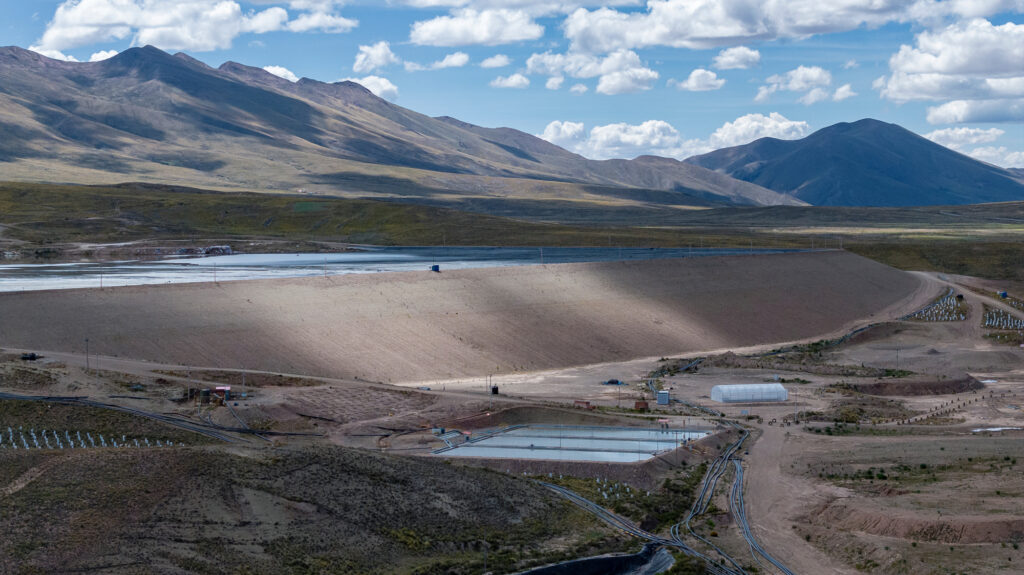
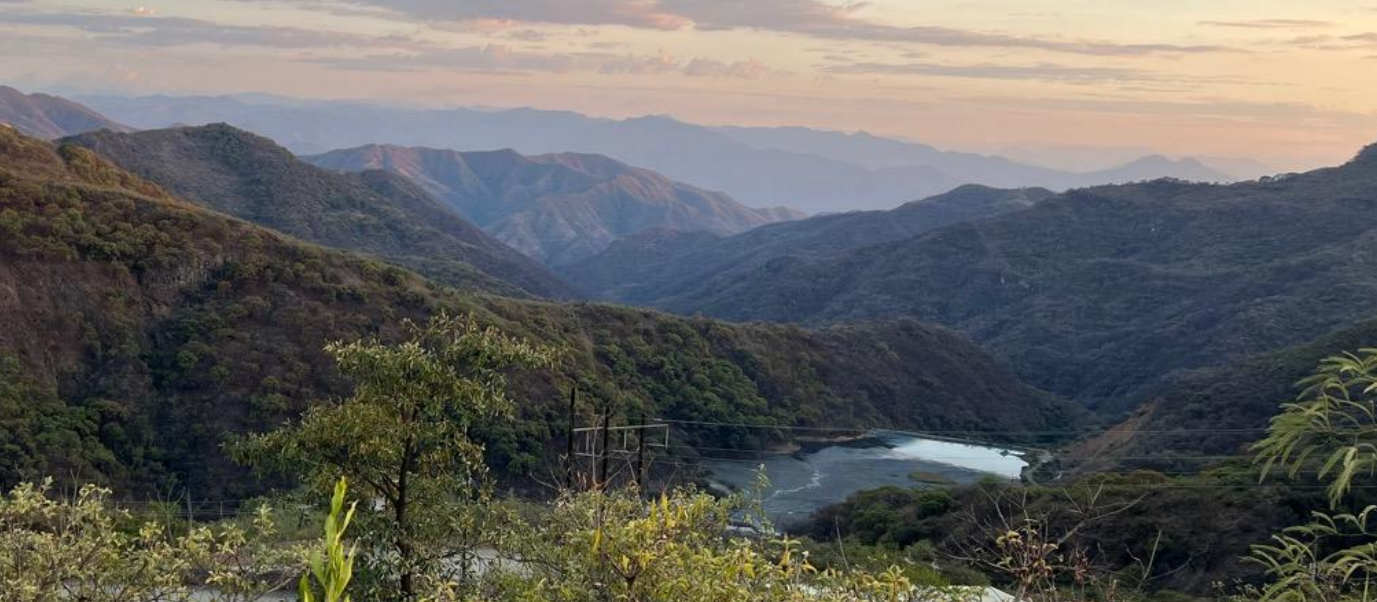
Mt Todd represents one of Australia's largest undeveloped gold projects, located approximately three hours south of Darwin in the Northern Territory. The project operated previously in the 1990s, leaving considerable existing infrastructure including a tailings storage facility with 90-million-ton capacity, a freshwater reservoir, and previously developed pit areas. The deposit features a 1.6-kilometer strike length with mineralised zones varying between 200-300 meters in width, drilled to 600 meters depth.
Vista Gold completed a feasibility study in July 2025 that fundamentally reshaped the project's development pathway. The company reduced throughput from 50,000 tons per day to 15,000 tons per day, which Earnest characterised as rightsizing rather than downsizing. This strategic shift decreased initial capital requirements from approximately $1 billion to $425 million, a 59% reduction that management believes positions the project within reach of independent financing without requiring a major mining company partner.
The revised project parameters target production of 153,000 ounces of gold annually over the first 15 years, with a 30-year total mine life. The company raised its design cutoff grade from 0.35 grams per ton to 0.5 grams per ton, increasing the reserve grade from 0.77 grams per ton to 0.97 grams per ton. Earnest emphasised this shift toward prioritising grade over tonnage as critical to the project's economics.
Project Economics at Conservative Gold Pricing
At a gold price of $2,500 per ounce which management considers conservative given current market conditions, the feasibility study projects an after-tax net present value (NPV5%) of $1.1 billion and an internal rate of return (IRR) of 27.8%. All-in sustaining costs are estimated at just under $1,500 per ounce for the mine life, with first-15-year costs slightly lower at approximately $1,450 per ounce.
The project demonstrates significant leverage to gold price appreciation. At $3,300 per ounce, the after-tax NPV5% increases to $2.2 billion with an IRR approaching 45%. With gold prices currently around $4,500 per ounce, this sensitivity analysis suggests substantial value upside from the base case assumptions.
Valuation Disconnect Analysis
Earnest presented comparative valuation metrics positioning Vista Gold against both Australian and international peer developers. While the company's market capitalisation and price-to-NAV ratios show some discount to peers, the most pronounced disparity emerges in enterprise value per reserve ounce and enterprise value per resource ounce metrics. The CEO acknowledged this frustration directly:
"We have a 10 million ounce total resource and this is where the frustration comes in. We've got a tremendous asset in a tier one jurisdiction with a lot of ounces and pretty straightforward metallurgy. Why aren't we getting a better valuation?"
This valuation gap forms the core of management's undervaluation thesis. With 5.2 million ounces of reserves which substantially larger than many peers, and a conservative project economics, the company believes the market has not fully recognised the asset's scale and quality.
Interview with Frederick H. Earnest, President & CEO of Vista Gold
Addressing Legacy Concerns
A significant portion of the discussion centered on overcoming what Earnest termed legacy issues stemming from Mt Todd's previous operational history. The project's reputation suffers from perceptions around ore hardness and past operator failures, which management argues are either misunderstood or no longer relevant given technological advances and lessons learned.
On the hardness issue, Earnest clarified that Mt Todd ore is not geologically harder than typical deposits, but rather requires more energy to crush and grind due to how the rock is bonded. This translates to approximately $50 per ounce in additional energy costs compared to softer ore bodies, a differential that appears immaterial at current gold prices of $4,500 per ounce.
Earnest acknowledged the challenge of overcoming market memory sighting previous project owner (Pegasus Gold) lost a lot of money in 1997. He suggested that ultimately, successful construction and operation will be required to fully dispel these concerns.
Progress Toward De-risking
Management outlined several factors it considers de-risked or in progress toward de-risking:
- Technical and Economic Validation: The feasibility study using conservative $2,500 gold pricing demonstrates project viability with significant leverage to higher prices.
- Capital Reduction: Lowering initial capex to $425 million positions the project within Vista Gold's independent financing capability, eliminating dependence on a major partner.
- Grade Enhancement: Raising cutoff grades prioritises higher-quality ore and revenue generation per ton processed.
- Permitting Progress: The company is converting existing permits to align with the revised feasibility study design. This includes Aboriginal areas protection authority (AAPA) certificates, mining management plan conversion to an environmental mining license, and updates to environmental impact statements and federal environmental protection authorisations. Earnest indicated various approvals are expected from late 2026 through mid-2027.
- Team Building: Vista Gold has added four team members in Australia in early 2026 and is actively recruiting a Managing Director or Chief Operating Officer with Australian mine-building experience. The company plans to add board members with Australian operational credentials and subsequently build out project director, construction manager, process manager, and mine manager roles.
- Future Expansion Potential: While designed at 15,000 tons per day producing 153,000 ounces annually, the project incorporates expansion capability. Earnest suggested potential future expansion to 300,000-450,000 ounces per year, which would make the asset significantly more attractive to potential acquirers.
Earnest discussed M&A dynamics candidly, noting that as a developer, Vista Gold faces pressure from potential acquirers seeking discount valuations. By advancing toward production independently, the company aims to achieve revaluation before entertaining acquisition discussions, thereby capturing greater value for shareholders
The Financing Pathway
The company closed a $44.85 million financing in early March 2026, providing over $50 million in pro forma cash to fund near-term activities. Vista Gold has engaged Endeavour Financial as debt financing advisor and identified multiple funding pathways.
On the debt / streaming side, Earnest outlined three primary options: traditional Australian project finance banks, the Northern Australia Infrastructure Fund (offering lower-cost, longer-tenor government-backed financing), and a potential streaming arrangement with Wheaton Precious Metals, which currently holds a small royalty on the project. Earnest expressed confidence in financing availability:
"We're quite bullish on our ability to raise the money on the debt / stream side as well as the equity side to move the project forward as the project has been designed right now."
The CEO emphasised that financing work proceeds in parallel with permitting, with banks requiring permit certainty before finalising commitments. He cautioned that mine financing differs substantially from consumer lending, requiring extensive due diligence and committee approvals over an extended timeline.
Key Takeaways and Investment Implications
Vista Gold's undervaluation thesis rests on several pillars: a substantial resource base significantly larger than many peers, recently de-risked economics through project rightsizing, and a clear pathway to independent development without major partner dependence. The company trades at a discount on enterprise value per ounce metrics despite favourable project economics at conservative gold price assumptions.
The financing environment appears supportive, with multiple pathways identified and recent equity raise completed. The strategic decision to rightsize eliminates the binary risk of securing a major partner, but introduces execution risk on Vista Gold's management team. The next 12-24 months will be critical in determining whether the company can deliver on permitting milestones, complete the management team build-out, and advance toward a construction decision that would validate the undervaluation thesis or reveal obstacles that justify the current discount.
For investors with conviction in gold prices remaining elevated and confidence in management's ability to execute the development pathway, the valuation disconnect presents a potential opportunity. Conservative investors may prefer to wait for permitting certainty and team completion before committing capital, accepting reduced upside potential in exchange for de-risked entry timing.
TL;DR
Vista Gold rightsized Mt Todd to $425M initial capex (a 59% reduction), targeting 153,000 oz/year with strong economics (27.8% IRR at $2,500 gold, 45% IRR at $3,300) and $1,500 AISC. Despite 5.2M oz reserves and 10.6M oz resources, the company trades at significant enterprise value per ounce discounts to peers. Management is advancing permitting approvals through mid-2027, building an Australian operational team, and pursuing independent financing through multiple pathways to close the valuation gap.
FAQs (AI Generated)
The "rightsizing" reduced initial capex 59% to $425M, making the project independently financeable without requiring a major partner while prioritising higher-grade ore (0.97 g/t vs 0.77 g/t reserve grade).
Legacy perceptions from 1990s operational failures, permitting timeline extending through mid-2027, incomplete management team build-out, and execution risk on independent development without major partner backing remain key concerns.
At $3,300+ gold prices and $1,500 AISC, the $50/ounce differential represents minimal margin impact. Modern HPGR technology enables 90% recovery versus 70% historically, offsetting energy costs.
Various approvals anticipated from mid-2026 through mid-2027, including Aboriginal protection certificates, environmental mining license conversion, and federal environmental authorisations - prerequisite for finalising project financing.
Enterprise value per reserve/resource ounce significantly lags peers despite comparable market cap and price-to-NAV ratios, driven by Mt Todd's 5.2M oz reserves and 10.6M oz total resources.
Analyst's Notes





Subscribe to Our Channel





Stay Informed






















