




ValOre Metals Moves to Exit Uranium & Pursues Dual-Track Brazilian Precious Metals Strategy


ValOre Metals transferred Hatchet Uranium, advances Pedra Branca PGE metallurgy with the University of Cape Town, and targets Brazilian gold acquisitions for less than C$0.8 million cash.
- ValOre Metals has entered an Amalgamation Agreement to transfer its 51%-owned Hatchet Uranium Corp. subsidiary to Future Fuels Inc., with the transaction pending TSXV acceptance before April 30, 2026, reducing its uranium exposure and supporting its transition toward a Brazilian precious metals-focused strategy.
- In parallel, ValOre is pursuing advanced-stage gold project acquisitions in Northeastern Brazil targeting assets with established operating teams and district-scale exploration upside, with a third-quarter 2026 target for M&A evaluation focused on near-term production potential, contingent on an acquisition that had not been publicly announced by the end of the first quarter 2026.
- The University of Cape Town's (UCT) Department of Chemical Engineering has demonstrated that bioleaching pre-treatment followed by cyanidation achieves 72.88% platinum and 74.07% palladium extractions from weathered material at Pedra Branca over 22 days, and caustic pre-treatment followed by cyanidation achieves 66.42% platinum and 78.81% palladium extractions from chromitite material grading 6.4 to 8.5 grams per tonne.
- Lycopodium Ltd., engaged as lead consultant in the fourth quarter of 2025, is advancing a Preliminary Economic Assessment (PEA) targeting completion in the fourth quarter of 2026, with outstanding inputs including capital expenditure (capex) estimation, mine sequencing, and infrastructure requirements, and a planned transition into formal licensing and Environmental Impact Assessment (EIA) in the first quarter of 2027.
- ValOre held less than C$0.8 million in cash against two concurrent workstreams, with the coherence of the two-track strategy dependent on scale-up metallurgical results, a flowsheet integration decision, and a Brazilian gold acquisition that remained unconfirmed as of the end of the first quarter 2026.
Hatchet Uranium Disposal
The disposal of ValOre Metal's (TSXV: VO | OTCQB: KVLQF) 51%-owned Hatchet Uranium Corp. (HUC) subsidiary, structured as an Amalgamation Agreement with Future Fuels Inc. (FTUR) and 1564470 B.C. Ltd., converts ValOre's market positioning from a mixed uranium-precious metals vehicle into a focused Brazilian precious metals company. HUC shareholders voted unanimously to approve the transaction in March 2026. The deal remains subject to TSXV review and acceptance, with an outside date of April 30, 2026, extended from the original March 31, 2026, deadline.
ValOre's ownership structure in HUC reflects a history of incremental dilution. The company originally transferred property to HUC in exchange for 7.5 million shares at C$0.10 per share, holding 75% at inception. That position was subsequently reduced to 51% through charity flow-through and non-flow-through financings and share issuances to Skyharbour Resources Ltd. for property acquisitions. At closing, a C$250,000 debenture issued by HUC to Holley Investments Inc. converts into 5 million HUC shares at C$0.05 per share, reducing ValOre's final interest in HUC to 38%.
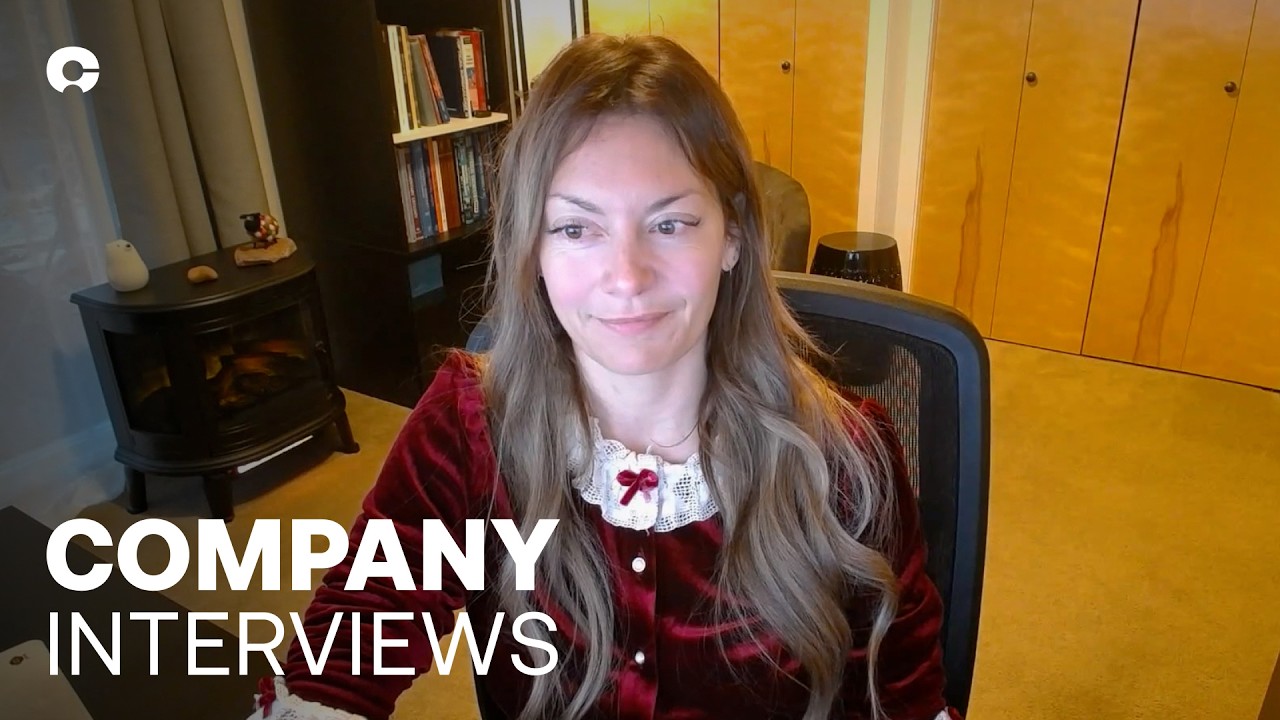
Chief Executive Officer and Director of ValOre Metals, Nick Smart, is direct about the perception problem the disposal is designed to close:
"In terms of history, we've previously held uranium assets. Among investors, there isn't that association of saying, okay, ValOre, serious player and developer of PGE assets. We've now cleared that up with our recently announced sale of the Hatchet uranium properties through to Future Fuels. We're 100% focused on precious metals and specifically the flagship Pedra Branca PGE project, so I think we've cleared that market perception, but there's still a journey for us in terms of market awareness."
Brazilian Gold Acquisition Strategy
ValOre's acquisition criteria for the Northeastern Brazil centre focus on advanced-stage gold projects with significant prior investment, established operating teams, and district-scale exploration and development upside. The programme is structured to generate near-term revenue alongside the longer-dated Pedra Branca platinum group element development, building an integrated precious metals business rather than a single-asset exploration vehicle.
The timeline for this track carries material execution risk. A first-quarter 2026 target for a Brazilian gold M&A announcement passed without a publicly confirmed transaction. The third-quarter 2026 target for M&A evaluation with a near-term production focus is formally retained in the strategic plan, contingent on an acquisition that had not been announced by the end of the first quarter 2026, leaving the revenue-generating component of the two-track structure without a confirmed asset.
Pedra Branca Metallurgy
Testwork at the University of Cape Town (UCT), Department of Chemical Engineering, has established two distinct extraction pathways for Pedra Branca's primary material types. For weathered material, which comprises approximately 30% of the inferred resource, bioleaching pre-treatment followed by cyanidation achieved 72.88% platinum and 74.07% palladium extractions over 22 days. For chromitite material, which grades 6.4 to 8.5 grams per tonne 2PGE+gold and accounts for approximately 5% of the inferred resource, caustic pre-treatment followed by cyanidation achieved 66.42% platinum and 78.81% palladium extractions. Caustic cracking demonstrated limited effectiveness on weathered material, establishing material-type specificity as a core processing design constraint.
Scale-up from bench to industrial configuration is the required step before these recovery rates can support Preliminary Economic Assessment (PEA) economic modelling. Current results derive from 1-litre shake flask testing; the programme advances to stirred tank reactors and column tests to simulate heap leaching. Variability testwork remains outstanding to determine whether high-grade chromitite should be processed through a standalone circuit or an integrated hybrid flowsheet, a question with direct implications for capital cost assumptions.
Smart puts the scale-up logic and its relationship to bench-scale results in plain terms:
"We then scale up and go to processes which are more comparable to what you would have at an industrial scale: stirred tank reactors, column tests to simulate heaps. That'll give us a much more realistic view of what our total extractions could be. As we move up and improve mixing in the system, we expect to see an increase in metal extractions. Seeing recovery in the 70s is great, that's good news, it shows that the process works. Certainly, there's room for optimisation, and we want to get that number as high as we can."
PEA Development Pathway & Milestones
Lycopodium Ltd., appointed as the lead consultant in the fourth quarter of 2025, is advancing the PEA toward a fourth-quarter 2026 completion target. Outstanding inputs include capital expenditure estimation, infrastructure requirements, mine sequencing, environmental impact inputs, and preliminary water and power supply studies. Drill core relogging is planned at Curiu, Esbarro, and Cedro to refine the mine planning assumptions that feed into those estimates.
The metallurgical scale-up programme defines the critical path to PEA completion. Stirred tank reactor testing and an assessment of alternative lixiviants are targeted for completion in the third quarter of 2026, followed by column tests for heap leach simulation, process economics, and preliminary design in the fourth quarter of 2026. Both sequences must conclude before the PEA can integrate finalised processing assumptions. Upon completion, a planned transition into formal licensing and Environmental Impact Assessment (EIA) is targeted for the first quarter of 2027.
Smart puts it this way:
"What I'd watch as an investor over the coming months is the ongoing information we're going to be releasing as part of this build-up programme: as we continue the metallurgical testwork and scale that up, repeatability of the results, what does it look like at a larger scale. With the PEA in hand, we then go into the licensing process and are looking to fast-track that as much as we can within the Brazilian context."
Capital Position & Execution Risk
With less than C$0.8 million in cash as of April, ValOre is advancing two workstreams simultaneously: metallurgical scale-up and PEA development at Pedra Branca, and gold asset acquisition in Northeastern Brazil. The Hatchet transaction's close remains conditional on TSXV acceptance before April 30, 2026; until that milestone is met, the uranium disposal itself is not finalised. The cash position relative to the concurrent programme scope makes execution sequencing a variable that directly affects whether both tracks can be maintained.
Three unresolved dependencies frame the near-term execution question. Bench-scale platinum and palladium recovery rates must be demonstrated as repeatable and improvable at industrial-scale mixing before PEA economic assumptions can be confirmed. Variability testwork will determine whether chromitite material is processed in a standalone circuit or an integrated hybrid flowsheet, with consequences for the capital cost structure of the PEA. A gold acquisition has not been announced, leaving the near-term revenue component of the strategy dependent on the timing of an open M&A deal.
Smart frames the valuation gap precisely, and identifies the two drivers he believes explain it:
"We've got an ounce count comparable to our peers, we've got good grades, but these are companies that are all 100 to 200 million dollar market cap companies. ValOre today is sitting around C$26 million, so the real question is why. ValOre has a good project, and we're just not being recognised for it in terms of pricing. I think there's perhaps a bit of a lack of market awareness, or perhaps even market confusion about who ValOre is, and whether we're a serious player within the PGE space."
The Investment Thesis for ValOre Metals
- The Hatchet Uranium disposal, pending TSXV acceptance before April 30, 2026, removes the structural barrier to institutional recognition as a platinum group element developer by eliminating the market confusion between the company's uranium history and its current precious metals identity, making it a precondition for re-rating rather than merely an administrative step.
- The University of Cape Town's demonstration of distinct extraction pathways for weathered and chromitite material reduces flowsheet development risk relative to a single-process approach, though industrial-scale validation of bench-scale recovery rates in the 66% to 79% range remains the binding constraint on the quality of Preliminary Economic Assessment inputs.
- The fourth quarter 2026 Preliminary Economic Assessment, led by Lycopodium Ltd., will formally quantify Pedra Branca's economics, and its output will determine whether the asset can support a valuation re-rating relative to development-stage peers in the platinum group element sector.
- A third-quarter 2026 gold production target from Northeastern Brazil introduces near-term revenue potential into an otherwise development-stage portfolio, but that potential carries limited analytical weight until a specific acquisition target is announced and an asset is confirmed on terms.
- The simultaneous requirement to deliver metallurgical scale-up results, resolve a flowsheet integration decision, complete a gold acquisition, and advance the Preliminary Economic Assessment within approximately three quarters concentrates execution risk into a narrow window in which a delay in any one workstream has direct consequences for the others.
- With less than C$0.8 million in cash and no confirmed acquisition asset, incremental capital requirements between the current period and fourth quarter 2026 are an unquantified variable that the existing treasury position cannot fully absorb, making financing a latent dependency in the capital allocation logic.
TL;DR
ValOre is exiting uranium and repositioning as a pure-play Brazilian precious metals company. UCT bench-scale testwork has confirmed platinum and palladium recoveries of 66% to 79% across Pedra Branca's two material types, but industrial-scale validation and a flowsheet integration decision remain outstanding before Lycopodium's fourth quarter 2026 PEA can be finalised. A third-quarter 2026 gold production target in Northeastern Brazil lacks a confirmed acquisition to support it. Whether ValOre can complete metallurgical scale-up, resolve flowsheet design issues, and close a gold deal within roughly three quarters, all from a cash position of less than C$0.8 million, will determine whether the PEA functions as a credible re-rating event.
FAQs (AI-Generated)
The transaction transfers ValOre's 51%-owned Hatchet Uranium Corp. subsidiary to Future Fuels Inc. through an Amalgamation Agreement, subject to TSXV acceptance before April 30, 2026. It removes uranium from ValOre's corporate identity, completing the company's transition to a pure-play Brazilian precious metals business centred on Pedra Branca platinum group element development and gold acquisitions in Northeastern Brazil.
ValOre is targeting advanced-stage gold projects in Northeastern Brazil with established operating teams, district-scale exploration upside, and significant prior investment. A first-quarter 2026 target for an M&A announcement passed without a confirmed transaction, and the associated third-quarter 2026 gold production target remains contingent on an acquisition that had not been announced by the end of the first quarter 2026.
The testwork confirmed that weathered material and chromitite material at Pedra Branca require separate extraction processes, with bioleaching pre-treatment applicable to weathered material and caustic pre-treatment applicable to chromitite. Both pathways produced platinum and palladium recoveries in the 66% to 79% range at bench scale, with scale-up to stirred tank reactors and column tests required before those rates can support PEA economic modelling.
Lycopodium Ltd., as lead consultant, is targeting completion of the PEA in the fourth quarter of 2026, with outstanding inputs including capital expenditure estimates, infrastructure requirements, mine sequencing, and EIA. A transition into formal licensing and EIA is targeted for the first quarter of 2027 upon PEA completion.
The primary risks are the concentration of multiple unresolved outcomes within a narrow execution window: bench-scale metallurgical recovery rates must be demonstrated as repeatable at industrial scale, a flowsheet integration decision must be made with direct consequences for capital cost assumptions, and a gold acquisition must be announced to activate the near-term revenue track. All three must progress within approximately two to three quarters from a less than C$0.8 million cash position.
Analyst's Notes





Subscribe to Our Channel


.png)


.jpg)

Stay Informed


