




ValOre Metals' Pedra Branca Roadmap: 7 Things You Need to Know



Pedra Branca's 2026 programme advances from metallurgical scale-up to a Preliminary Economic Assessment by end-2026 and licensing by the first quarter of 2027.
Project Overview
ValOre Metals is advancing its 100%-owned Pedra Branca platinum, palladium, and gold project in Ceará State, Brazil, through a year in which the order of milestones matters as much as the individual results. The asset comprises 45 exploration licences covering 51,096 hectares and carries a 2022 National Instrument 43-101 inferred resource of 2.198 million ounces of platinum group element plus gold (2PGE+Au) in 63.6 million tonnes grading 1.08 grammes per tonne 2PGE+Au. Across seven distinct near-surface resource zones, Esbarro, Curiu, Cedro, and Cana Brava are identified as the core deposits.
The project is now positioned between initial metallurgy validation and integrated study work. Lycopodium's appointment as lead process engineering consultant in the fourth quarter of 2025 gives the 2026 programme a defined engineering framework, but the real significance lies in sequencing. Each workstream is intended to answer a different development question before the project reaches a Preliminary Economic Assessment (PEA) targeted for end-2026.
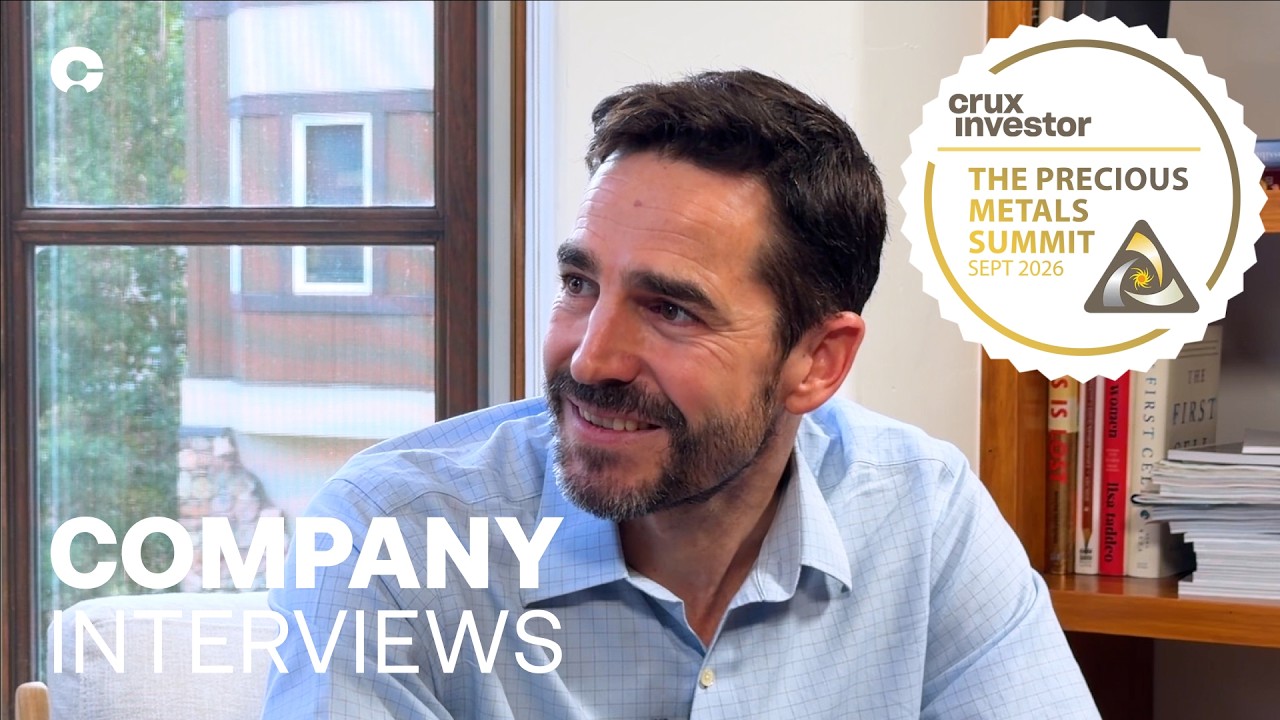
Chief Executive Officer and Director of ValOre Metals, Nick Smart, puts it this way:
"Advancing the test work, doing the engineering work, and the preparation work in order to publish a preliminary economic assessment, which is our big target for the year. That's proving the economics, you know, can we extract these ounces out of the ground economically and sell them."
1. March Metallurgy Results Moved Pedra Branca from Concept to Study Preparation
The March metallurgy update did not complete the process story, but it did justify moving Pedra Branca into the next stage of study work.
For weathered Esbarro material, bioleaching plus cyanidation achieved 72.88% platinum extraction and 74.07% palladium extraction over 22 days. Weathered material accounts for about 30% of the project's total inferred platinum group element ounces and sits within the near-surface portion of the resource, representing a meaningful part of any early development case if recoveries, scale, and cost can be aligned.
For chromitite material, caustic cracking plus cyanidation achieved 66.42% platinum extraction and 78.81% palladium extraction. That is a different pathway aimed at a smaller but higher-grade component of the resource. Massive chromitite represents about 5% of the total inferred resource at 2PGE+Au grades of 6.4 to 8.5 grammes per tonne. Together, these results give ValOre two candidate processing routes to develop further, one linked to near-surface weathered material and another linked to higher-grade chromitite, but both still require scale-up and integration work before they can support study-level design.
2. The Next Proof Point is Scale, Not Just Recovery Percentages
Third quarter 2026 work has to show whether the bench-scale recoveries remain credible under more industrially comparable conditions.
That is why the next phase centres on larger-scale stirred tank reactor tests and alternative lixiviant assessment. At this stage, the question is not whether a laboratory can produce encouraging extractions. The question is whether the process behaves in a way that supports realistic plant assumptions, reagent selection, and total extraction expectations at a scale relevant to preliminary engineering and economic work.
Smart is precise on the next stage:
"We then scale up, and we go to processes which are more comparable to what you would have in an industrial scale, so stirred tank reactors, column tests to simulate heaps, and that'll give us a much more realistic view in terms of what our total extractions could be expected. We expect that as we move up and we have better mixing in the system, we should actually see an increase in terms of these metal extractions."
If scale-up results hold or improve, they provide a stronger basis for flowsheet assumptions and downstream economic inputs. If they do not, the PEA would need to reflect a more conservative processing case. The third quarter of 2026 is therefore a dependency milestone, not a box-ticking exercise.
3. Heap Leach Simulation Is a Separate Decision Gate for Weathered Material
Fourth-quarter 2026 column testing is not confirmation of heap leaching, but a decision gate on whether weathered material can support a lower-cost route.
Column tests targeted for the fourth quarter of 2026 are intended to simulate heap leaching, which could support a lower-capital, lower-complexity processing route for near-surface weathered material, with implications for the economics of an early development stage.
Bench-scale extractions from weathered Esbarro material demonstrate that metal recovery via bioleaching and cyanidation is feasible. Column tests are intended to determine whether that concept translates into a heap-style environment. Until those fourth-quarter results are available, heap leaching remains a candidate route rather than an established development assumption.
4. Chromitite Could Shape the Early Mine Plan, but Only if Circuit Work Holds Up
Chromitite offers a possible higher-grade early feedstock, but processing compatibility still needs to be demonstrated at a level that supports mine planning.
Massive chromitite forms a relatively small portion of the resource, about 5% of total inferred ounces, but it carries materially higher 2PGE+Au grades of 6.4 to 8.5 grammes per tonne. That creates a possible strategic role in the early years of mine life, where higher-grade feed can improve the quality of an initial production profile if the processing route is workable and economically supportable.
The remaining technical question is how this material fits into the broader plant concept. Further variability work and scale-up caustic cracking testwork are intended to determine whether chromitite is best treated through a standalone circuit or as part of a hybrid flowsheet. Until that is resolved, chromitite is better understood as a mine-plan option than a committed processing route.
5. The PEA Must Turn Technical Work into One Economic Model
The end-of-2026 PEA is not just a reporting deadline; it is the point at which separate technical workstreams must function as a single development case.
A PEA can only do its job if metallurgy, process design, site requirements, and development sequence are internally consistent. At Pedra Branca, that means fourth-quarter 2026 work must combine process economics, scalability assessment, flowsheet development, and preliminary design into a framework that supports capex framing, infrastructure assumptions, and mine sequencing.
The supporting inputs extend beyond metallurgy. ValOre is continuing preliminary water and power supply studies, while historical drill core across Curiu, Esbarro, and Cedro is being relogged to refine geological controls and mine planning assumptions. The PEA will be the project's first integrated economic picture, not simply a recovery study with a valuation attached, and those geological and infrastructure inputs determine whether that picture is internally consistent.
6. Infrastructure and Concession Progress Define the Roadmap’s Practical Limits
Pedra Branca's development sequence is not being built in isolation from access, utilities, community conditions, and concession status.
Pedra Branca is about 4 hours by paved highway from a deep-water port, with electricity close to the site and community support identified as a positive local factor. Those are not economic outcomes in themselves, but they shape the realism of future development assumptions when the PEA sets out project scale, site infrastructure needs, and practical sequencing.
Smart frames the site's advantages plainly:
"In the case of Pedra Branca, we've got some real advantages, you know, we've got great infrastructure at that site, about 4 hours by paved highway from a deep water port, got electricity that runs close by the site, and we've got a community that really wants to see this built as well. So we don't see any major impediments to bringing this project forward."
Regulatory progress is also moving in parallel. Final Exploration Reports for Esbarro, Cedro, Curiu, and Cana Brava have been approved by the Agência Nacional de Mineração (ANM), and those claims have advanced to the Mining Concession Application Phase. That does not replace the need for future permitting work, but it provides the 2026 to 2027 roadmap with a clearer legal and administrative framework for the core deposits expected to anchor the next stage of studies.
7. End-2026 Is the Study Hinge, First Quarter 2027 Is the Regulatory Transition
Pedra Branca's roadmap is best read as a chain of dependencies, ending in a study milestone and then shifting into a permitting milestone.
The third-quarter 2026 targets include stirred-tank reactor tests and an assessment of alternative lixiviant. The fourth-quarter 2026 targets include column tests, process economics, scalability work, flowsheet development, preliminary design, and publication of the PEA. That sequence is logical because the later work depends on the earlier work, producing process assumptions that can be costed and designed.
The first quarter of 2027 is then targeted for Pedra Branca licensing and Environmental Impact Assessment (EIA) work. End-2026 is not the finish line; it is the handoff point between technical and economic definition on one side and regulatory advancement on the other. If the timetable holds, Pedra Branca enters 2027 with its first integrated economic document complete and the next stage of project progression already defined.
Key Takeaway for Investors
- Pedra Branca's 2026 programme is structured around dependency management, which means the investment case over the next 12 months will be shaped by whether each technical stage delivers inputs usable by the next one.
- Weathered material could matter disproportionately to the early development concept because it accounts for about 30% of inferred platinum group element ounces and is being assessed for processing routes that may offer a simpler entry point.
- Chromitite introduces optionality into the early mine plan because a small portion of higher-grade material can influence sequencing, provided circuit design confirms it can be processed efficiently within a coherent plant concept.
- The Preliminary Economic Assessment is the point at which Pedra Branca stops being judged mainly on metallurgical promise and starts being evaluated on integrated project economics, development scale, and execution logic.
- Infrastructure access and Mining Concession Application Phase progress reduce the number of external unknowns that typically sit outside technical study work, thereby enhancing the roadmap's operational credibility.
- First quarter 2027 marks the planned shift from defining project economics to entering the licensing and Environmental Impact Assessment pathway, which is the next filter for development momentum.
Bottom Line
ValOre's 2026 programme at Pedra Branca is best understood as a sequence rather than a series of disconnected catalysts. The March metallurgy update established candidate routes for weathered material and chromitite. Third quarter 2026 scale-up work is intended to test whether those routes remain credible under more industrially relevant conditions. Fourth quarter 2026 then has to convert that technical base into process economics, flowsheet design, preliminary engineering inputs, and a PEA.
That makes the end-2026 study deadline the project's central hinge. If the milestones are completed in order and on schedule, Pedra Branca would move from a resource-and-testwork story toward a project with its first integrated economic document and a targeted transition into licensing and EIA work in the first quarter of 2027.
Analyst's Notes





Subscribe to Our Channel






Stay Informed


