West Red Lake Gold's Path From Ramp-Up to Steady State: 7 Things You Need to Know


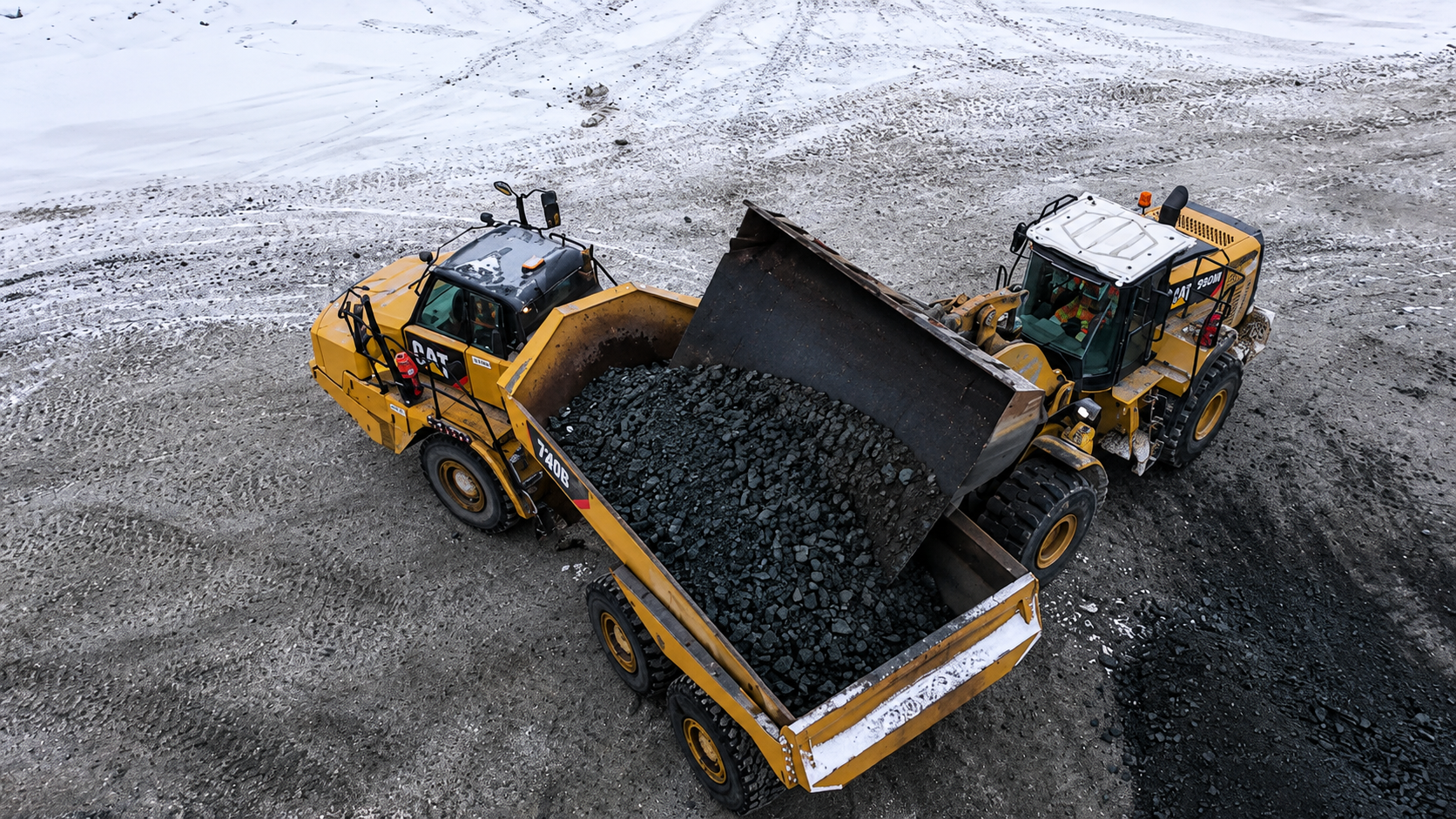
West Red Lake Gold's Madsen Mine is moving toward steady state as higher mining rates shift the operating test toward sustaining mill throughput in 2026.
Project Overview
West Red Lake Gold Mines Ltd. (TSXV: WRLG | OTCQX: WRLGF) operates the Madsen Mine in Ontario's Red Lake district, where commercial production began on January 1, 2026. The company is targeting 35,000 to 45,000 ounces of gold production in 2026, with approximately 60% weighted toward the second half of the year as the operation progresses through its ramp-up.
The second-quarter improvement does not yet represent steady-state production. Madsen has demonstrated that underground tonnes, grade, gold production, and cash generation can increase during the ramp-up, but management identifies consistency as the next test. With approximately 60% of annual production guidance weighted toward the second half, maintaining higher mining rates, increasing mill throughput, and sustaining grade are required to deliver the back-end-weighted production profile. The key operational focus is now shifting from proving Madsen can scale underground production to demonstrating that higher mining rates can be sustained alongside consistent processing throughput, stope sequencing, and cash generation.
1. The Second Quarter Improved, But Madsen Is Not Yet at Steady State
West Red Lake Gold produced 8,576 ounces of gold during the second quarter, compared with 5,667 ounces in the first quarter, while mined tonnes increased 46% to 75,524 tonnes. Average mined grade rose to 4.3 grams per tonne of gold, up from 3.5 grams per tonne in the first quarter, while gold recovery remained stable at approximately 95%.
The higher-production quarter coincided with lower reported unit costs. Cash costs declined 23% to US$2,000 per ounce sold and all-in sustaining costs declined 30% to US$3,284 per ounce sold, bringing the latter within West Red Lake Gold's US$2,800 to US$3,600 per ounce 2026 guidance range. The simultaneous improvements in tonnes, grade, production, and unit costs established a stronger operating base, but there is not yet evidence that those rates are sustainable.
President & Chief Executive Officer of West Red Lake Gold Mines Shane Williams distinguished the quarterly improvement from steady-state performance:
“No, we're not at steady state yet. We have another quarter probably of ramp-up to get to that steady state.”
The next operating test is therefore whether the second-quarter gains persist across successive quarters rather than whether Madsen can deliver another isolated increase in output.
2. Higher Mining Rates Are Shifting the Test Toward Mill Throughput
Underground mining had been running consistently at approximately 1,000 tonnes per day since around the middle of the second quarter, while processing was running at approximately 800 tonnes per day. The difference was the accumulation of approximately 5,000 to 6,000 tonnes of stockpiled ore per month, indicating that underground production had begun to exceed immediate mill throughput.
Reported quarter-end data show the same operating relationship. Average mining reached 878 tonnes per day against approximately 842 tonnes per day of mill throughput, leaving 10,768 tonnes in the surface stockpile at June 30. West Red Lake Gold expects mill processing rates to increase to approximately 1,000 tonnes per day over the second half of 2026. Because the mill's current permit limits throughput to 800 tonnes per day, securing regulatory approval to expand this permit capacity is increasingly important to converting available underground tonnes into additional gold production.
The Madsen mill's current permit limits throughput to 800 tonnes per day, compared with a nameplate capacity of 1,100 tonnes per day. The immediate operating test is not whether installed processing capacity exists, but whether West Red Lake Gold can secure the higher permitted rate and subsequently sustain processing at levels closer to underground mining.
3. More Available Stopes Are Supporting Mining Consistency
The increase in underground tonnes is being supported by a broader active stope sequence. Madsen is working through 6 to 7 stopes simultaneously across different stages of drilling, silling, stoping and extraction. A more mature sequence provides multiple potential ore sources rather than leaving production dependent on a single active mining area.
Equipment availability supports that sequence. West Red Lake Gold has added 7 or 8 new trucks and is achieving approximately 75% to 80% equipment availability. Higher equipment availability allows developed and available stopes to translate into mined tonnes rather than leaving the production sequence constrained by haulage equipment. The operating requirement is broader than reaching approximately 1,000 tonnes per day underground. Maintaining that rate requires sufficient developed stopes, available equipment, and haulage capacity to work together consistently, while the surface stockpile provides a buffer between daily underground production and mill requirements.
4. New Mining Areas Are Expanding the Sources of Future Ore
West Red Lake Gold is progressively advancing mining areas with less historical extraction. Williams identified the 4447 Complex as newly defined, higher-grade non-remnant mineralization, while the company is also advancing the 904 Complex, the eastern connection toward Derlak and the Fork deposit. The broader multi-complex approach is intended to increase operational flexibility by providing additional sources of underground ore.
The 904 Complex is a large, approximately 200-meter-by-200-meter non-remnant mining area currently under development, with the company targeting it to support mining in the first half of 2027. Fork is also in initial development and is targeted to enter the 2027 production profile, while approximately 500 meters of advancement along the 13 Level East Drive is planned in 2026 to provide another mining front and drill access east of the current mineral resource estimate (MRE).
These areas can broaden the sources of ore available to Madsen and reduce dependence on historically mined sections of the deposit, but their future production contribution remains dependent on development access and subsequent mining performance. The catalyst is additional mining flexibility; the execution risk is whether those new areas become available on the targeted development schedule.
5. Long-Hole Stoping Is Changing How Madsen Is Being Mined
Madsen's demonstrated mining approach is evolving from the original concept of combining long-hole and cut-and-fill mining. All mining completed to date has used long-hole open stoping, and the operation is moving toward a lower-grade, higher-tonnage model relative to the historical mine concept.
Williams explained the operating trade-off between the two methods:
“Long-hole is bigger tonnage, lower grade. Cut-and-fill is higher grade but lower production, lower tonnage.”
The gold price is a factor that allows lower-grade material to enter the economic mining envelope, and Madsen described a transition toward greater tonnage at a lower average grade. A lower-grade, higher-tonnage model increases the importance of sustained mill throughput, dilution control, mine-to-mill reconciliation, and unit-cost discipline because higher tonnes must offset the economic impact of lower average grades.
6. Free Cash Flow Now Has to Persist Through the Remaining Ramp-Up
West Red Lake Gold's second-quarter results demonstrated a financial improvement alongside the operating ramp-up. Gold sales increased 34% to 8,260 ounces, revenue reached C$49.0 million, and income from mine operations increased 31% to C$20.1 million. Cash costs declined 23% to US$2,000 per ounce sold, and all-in sustaining costs (AISC) declined 30% to US$3,284 per ounce sold.
Free cash flow (FCF) moved from negative C$6.1 million in the first quarter to positive C$9.7 million in the second quarter while West Red Lake Gold spent approximately C$6.3 million on non-sustaining growth capital, primarily for Fork access and Madsen shaft refurbishment. The company ended June with approximately C$31.2 million of cash and cash equivalents, making the next financial test whether positive cash generation can continue alongside development spending. That requirement extends to the balance sheet. Management is monitoring whether cash continues to build and confirmed that West Red Lake Gold has started paying down debt.
7. Steady-State Madsen Comes Before the Broader Multi-Asset Plan
West Red Lake Gold's development sequence places Madsen's operating ramp-up ahead of the broader district strategy. Near-term development includes access to the 904 Complex and Fork deposit, advancement of the 13 Level East Drive toward Derlak, and Phase 1 shaft refurbishment. The 2027 phase targets the 904 Complex and Fork, with the latter entering the production profile, along with additional underground development, increased shaft haulage capacity, and additional mining fronts.
Rowan represents the later satellite-development component of that strategy. The company is targeting a first-half 2029 production profile, while the preliminary economic assessment-stage concept outlines approximately 35,200 ounces of gold annually over 5 years from an underground operation, with ore proposed to be trucked approximately 80 kilometers to the Madsen mill. Rowan represents potential future mill feed rather than a solution to the immediate Madsen ramp-up. Madsen's ability to demonstrate that consistency establishes the operating base from which additional mining complexes and satellite deposits could contribute to a larger production platform.
Key Takeaways for Investors
Madsen's second quarter showed higher underground tonnes, gold production, and positive FCF, but management has not yet characterized the operation as being in a steady state. With approximately 60% of 2026 production guidance weighted toward the second half, the immediate proof points are whether higher underground mining rates persist, whether West Red Lake Gold secures approval to increase permitted mill throughput to approximately 1,000 tonnes per day, and whether processing and grade can be sustained as the active stope sequence matures. The growing stockpile provides available mill feed but also highlights the gap between underground production and current processing throughput.
Beyond the current ramp-up, West Red Lake Gold is targeting additional mining flexibility through the 4447 Complex, the 904 Complex, the Fork deposit, the 13 Level East Drive and shaft refurbishment before Rowan becomes part of the longer-term production strategy. The investment case depends less on repeating the second quarter's 51% production increase than on demonstrating that underground tonnes, mill throughput, grade and unit costs can remain aligned across successive quarters while positive FCF continues alongside development spending and debt repayment.
Analyst's Notes





Subscribe to Our Channel


.png)

Stay Informed