




P2 Gold & Car Body: 7 Things You Need to Know About the Early Cash Flow Strategy


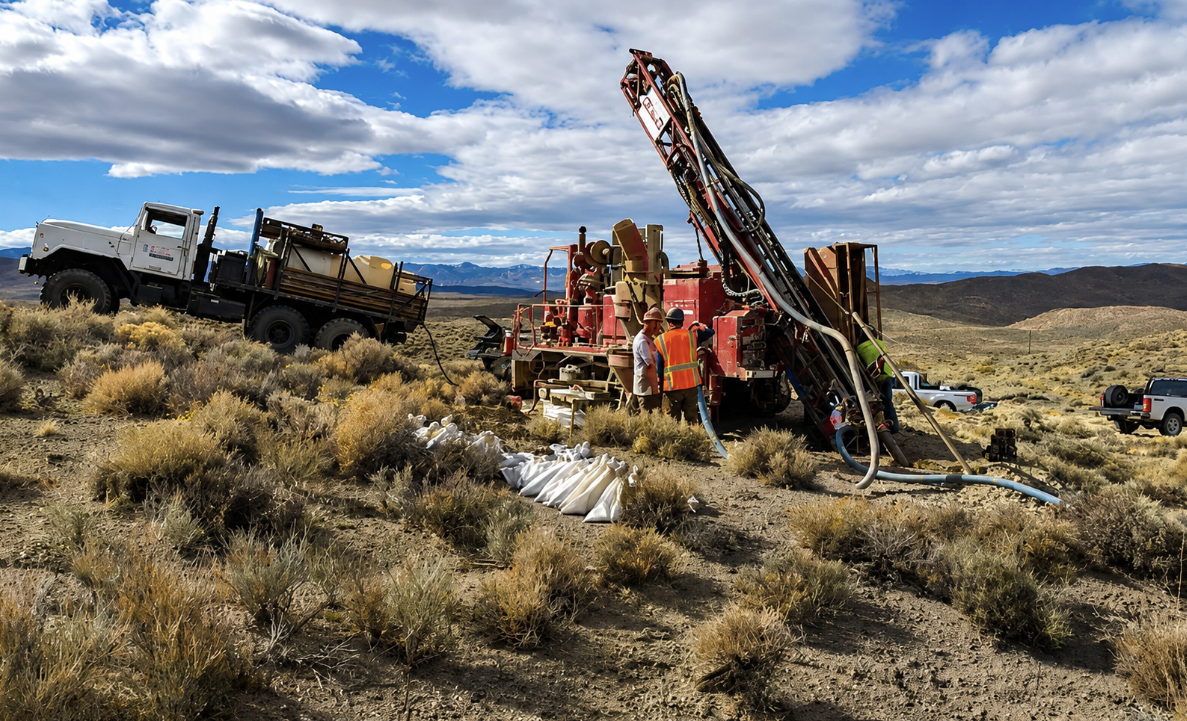
P2 Gold's Car Body metallurgy supports a potential route to earlier Gabbs gold cash flow during construction, with the concept moving into feasibility work.
Project Overview
P2 Gold Inc. (TSXV: PGLD | OTCQB: PGLDF) is advancing its 100%-owned gold-copper Gabbs Project in Nevada through feasibility-level engineering, metallurgical testing, resource drilling, and permitting. The October 2025 preliminary economic assessment (PEA) outlined average annual production of 109,000 ounces of gold and 33 million pounds of copper at a processing rate of 9 million tonnes per year over a 14.2-year mine life. The feasibility study (FS) is advancing at a nominal rate of 12 million tonnes per year, targeting an average annual production of 150,000 ounces of gold and 45 to 50 million pounds of copper.
P2 Gold has identified mining and processing the Car Body Zone during construction as an opportunity to accelerate cash flow at Gabbs. Recent metallurgical results provide technical support for evaluating that strategy within the FS and support P2 Gold's assessment of Car Body as a potential source of gold production during construction.
1. Car Body Returned 95.6% Gold Recovery After 73 Days
Column testing returned an average gold recovery of 95.6% after 73 days, providing the metallurgical basis for P2 Gold's proposed early Car Body processing strategy. The FS metallurgical program tested 3 columns of Car Body oxide mineralization, each containing approximately 31.5 kilograms of material at a nominal particle size of 6.1 millimeters. Average gold recovery reached 78.3% after 7 days, 92.7% after 39 days, and 95.6% after 73 days.
The final 73-day recovery incorporates tail assays into the calculated head assays, whereas the earlier 7-day and 39-day recoveries are interim figures that remain subject to change at the end of the program when final tail assays are incorporated. P2 Gold states that the results demonstrate positive leach kinetics, providing the technical basis to evaluate Car Body as a source of gold production during Gabbs construction.
2. Car Body's Lack of Material Copper Simplifies Its Proposed Processing Route
Car Body does not contain material amounts of copper mineralization, eliminating the need for a sulphidization, acidification, recycling and thickening (SART) plant to treat solution from the zone. This distinguishes Car Body from the broader Gabbs gold-copper processing configuration, in which SART is used to recover copper from cyanide-soluble gold-copper ores.
The SART circuit uses sulphidization to bind copper in the leach solution, acidification to free cyanide and precipitate copper, recycling to return cyanide to the leaching process, and thickening to produce a copper precipitate for sale as concentrate. Car Body's lack of material copper allows P2 Gold to evaluate its proposed early processing strategy without requiring the SART plant to treat solution from Car Body mineralization.
3. P2 Gold Is Evaluating Contract Mining, Crushing & Portable Carbon-in-Column Processing
P2 Gold's current Car Body plans contemplate contract mining and crushing together with a leased portable carbon-in-column plant, providing a proposed processing route for Car Body during Gabbs construction. Under the concept, Car Body mineralization would be stacked and irrigated once sufficient liner has been installed at the planned Gabbs heap-leach facility.
The proposed sequence connects Car Body processing to construction of the heap-leach facility. Rather than waiting for the complete Gabbs processing configuration to become operational, P2 Gold is evaluating contract mining and crushing with leased carbon-in-column processing to recover gold from Car Body during construction. The FS will assess this proposed sequence within the broader Gabbs development plan.
4. Car Body Could Move Gold Cash Flow Into the Construction Period
P2 Gold states that Gabbs could conceivably generate cash flow from Car Body operations roughly 6 months after project construction begins. The company links this potential timing to the proposed use of contract crushing and mining, a leased portable carbon-in-column plant, and the ability to stack and irrigate Car Body mineralization once sufficient heap-leach liner has been installed.
Car Body adds another potential stage to the broader development sequence being evaluated for Gabbs. The strategy remains under evaluation in the FS. P2 Gold has not quantified the amount of Car Body cash flow, Car Body-specific capital requirements, or the resulting effect on overall Gabbs project economics.
5. Car Body Is Smaller Than Gabbs' Principal Resource Zones, but Its Development Role Is Different
Car Body's relevance to the proposed development sequence comes from its processing characteristics and potential timing rather than its resource scale. The April 2024 mineral resource estimate (MRE) contains 3.2 million tonnes of inferred Car Body oxide mineralization grading 0.93 grams per tonne gold for 0.096 million ounces, together with 1.1 million tonnes of inferred sulfide mineralization grading 0.75 grams per tonne gold for 0.027 million ounces. The deposit remains open along strike to the east.
P2 Gold identifies Sullivan and Lucky Strike as containing the bulk of the Gabbs mineral resources. The zones also differ geologically: Sullivan, Lucky Strike and Gold Ledge contain gold-copper-silver porphyry mineralization, while Car Body contains gold-silver low-sulphidation epithermal mineralization. Sullivan remains open downdip, while Lucky Strike remains open in all directions.
Although Car Body is significantly smaller than Sullivan and Lucky Strike, P2 Gold identifies its potential contribution as coming from construction-phase gold cash flow rather than from resource scale. Its different mineralization and processing characteristics underpin the separate development strategy now being evaluated.
6. Car Body Drilling Adds Data Ahead of the Updated Gabbs Resource
New Car Body drilling provides additional geological and metallurgical data ahead of the planned updated Gabbs MRE. One diamond drill hole intersected 39.62 meters grading 0.76 grams per tonne gold from 9.14 meters downhole, including 13.72 meters grading 1.62 grams per tonne gold. A second hole returned 28.19 meters grading 0.78 grams per tonne gold from 5.33 meters downhole, including 4.57 meters grading 3.08 grams per tonne gold. True thicknesses remain to be determined.
The 3 Car Body diamond drill holes were completed to provide samples for the FS metallurgical test program, directly linking the drilling to the test work underpinning the proposed early processing strategy. Car Body will also be incorporated into the planned updated Gabbs MRE, providing an updated resource basis for evaluating its position within the development sequence.
7. The Feasibility Study Will Determine How Car Body Fits Into the Broader Gabbs Plan
The updated Gabbs MRE and FS are the next milestones for determining how the Car Body strategy fits within the proposed 12-million-tonne-per-year development plan. P2 Gold is targeting the announcement of the updated MRE in the fourth quarter of 2026, with Car Body to be included alongside results from additional drilling at Sullivan and Lucky Strike. The updated resource will form the basis of the FS, which is targeting completion in the first quarter of 2027.
The FS is advancing at a nominal production rate of 12 million tonnes per year and is targeting average annual production of 150,000 ounces of gold and 45 to 50 million pounds of copper. The broader configuration under evaluation includes heap-leach processing at 14 million tonnes per year for the first 2 years, followed from year 3 by 5 million tonnes per year of heap-leach processing and a 7-million-tonne-per-year mill.
Car Body adds a potential earlier stage to this sequence rather than replacing the planned heap-leach and mill configuration. The FS will include a discussion of accelerating Car Body mining and cash flow, while permitting baseline studies continue to support the Mining Plan of Operations. P2 Gold identifies permitting as the critical path to production, making it the principal schedule constraint.
Key Takeaways for Investors
P2 Gold's Car Body results add a potential early-production component to the existing Gabbs development plan. An average gold recovery of 95.6% after 73 days, combined with the absence of material copper mineralization, supports the company's evaluation of contract crushing and mining using a leased portable carbon-in-column plant. P2 Gold states that Gabbs could conceivably generate cash flow from Car Body operations roughly 6 months after project construction begins.
The investment relevance depends on whether the FS converts the Car Body concept into a defined operating and economic plan. P2 Gold has not quantified Car Body's potential construction-period cash flow, Car Body-specific capital requirements, or its effect on overall Gabbs project economics. The updated MRE, targeted for the fourth quarter of 2026, and the FS, targeted for the first quarter of 2027, are the next disclosed milestones for defining Car Body's resource contribution and proposed role within the broader Gabbs development sequence.
Analyst's Notes





Subscribe to Our Channel


.png)




Stay Informed






















