




West Red Lake Gold's Q2 Production Step-Up: 7 Things You Need to Know


West Red Lake Gold's Q2 results highlight higher grades, stronger production, and growing cash generation as the Madsen Mine ramp-up accelerates into late 2026.
Project Overview
West Red Lake Gold Mines Ltd. (TSX-V: WRLG) reported second quarter 2026 operating results from the Madsen Mine that showed higher production, higher grades and stronger mining rates than the previous quarter. Gold production increased 51% to 8,576 ounces, while mined ounces increased 73% to 10,459 ounces. These results matter because Madsen remains in its production ramp-up phase, and the increase in output, cash generation and stockpile growth indicates that development work completed during the restart is converting into operating performance. With the company targeting 35,000 to 45,000 ounces of production in 2026, the second half of the year will determine whether the operation can sustain these gains at the scale required to achieve guidance.
1. Gold Production Increased 51% Quarter-Over-Quarter
West Red Lake Gold produced 8,576 ounces of gold during the second quarter of 2026, a 51% increase from 5,667 ounces in the first quarter. Mined ounces increased 73% to 10,459 ounces from 6,033 ounces, while ore mined increased 46% to 75,524 tonnes from 51,616 tonnes. Average mined grade increased to 4.3 grams per tonne gold from 3.5 grams per tonne in the first quarter, while underground mining rates increased to 878 tonnes per day from 573 tonnes per day.
These improvements generated more contained gold and resulted in higher production from the processing plant. During the operational update interview, the company targeted another production increase during the third quarter, making the next quarter an important test of whether the current production trend can be sustained.
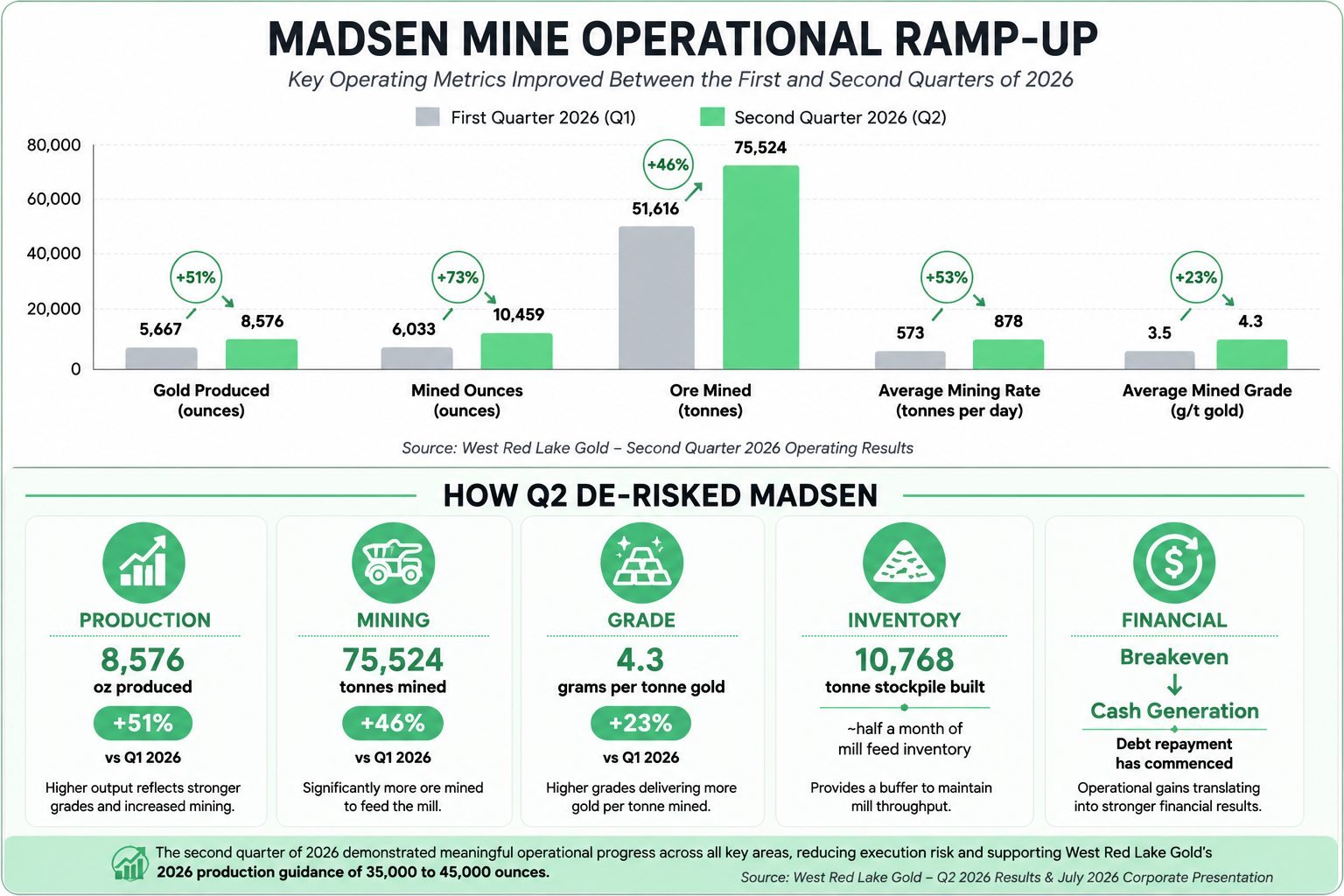
Figure 1. Madsen Mine operating metrics improved across production, grade, mining activity and financial performance during the second quarter of 2026.
2. Grade Increased 23% As Mining Advanced Into Higher-Grade Areas
Average mined grade increased 23% to 4.3 grams per tonne gold from 3.5 grams per tonne in the first quarter. Because grade measures the amount of gold contained in each tonne of ore, higher grades increase gold production without requiring the same percentage increase in mining volume.
President and Chief Executive Officer of West Red Lake Gold Mines, Shane Williams, explained:
"The top of the deposit is very much remnant old areas, but now we're down into the part of the ore body that's less and less mined. That triple 47 we've talked about and that 904, and as we get into that area, that's where we're seeing the increase."
The company identifies the 4447 and 904 complexes as key mining areas within the current production plan. Management stated during the interview that grades are targeting the 6 to 8 grams per tonne range as mining advances deeper into these areas, which would increase contained gold ounces per tonne relative to current levels.
3. Mining Rates Now Exceed Processing Requirements
Average underground mining rates increased 53% to 878 tonnes per day during the second quarter, while mill throughput averaged approximately 842 tonnes per day. The underground mining rates exceeded 1,000 tonnes per day from the middle of the quarter onward. This matters because previous operators struggled to consistently generate sufficient ore to maintain processing rates.
Williams discussed the operational shift:
"We're actually in the position already that our mill is at capacity, and so that's been working very well, which has allowed us to ramp up underground tonnage, move the material with the confidence that now when we go to mine an area, we know that the models will mine this. We'll get the gold out."
4. A 10,768-Tonne Stockpile Has Reduced Mill Feed Risk
West Red Lake Gold reported a surface stockpile of 10,768 tonnes at the end of the second quarter. During the interview, management stated that approximately 15,000 tonnes had been accumulated on the surface ahead of the mill.
At the average second-quarter mill throughput rate of 842 tonnes per day, the reported stockpile represents approximately half a month of processing feed. This inventory can help maintain throughput during temporary underground interruptions, maintenance activities or production sequencing delays.
5. Geological Model Performance Is Supporting Mine Planning
Drilling, underground development, and production data have improved confidence in model reconciliation. The company also reported that drilling now supports mine planning into 2027 and 2028. This matters because more accurate reconciliation improves grade forecasting, stope sequencing and production planning, reducing the risk that planned mining areas deliver materially different results than expected.
Mining dilution has been lower than initially anticipated in certain areas, and long-hole stoping continues to perform effectively. These factors support more predictable production outcomes as the mine advances into deeper production areas.
6. The Mine Has Moved From Breakeven To Cash Generation
One of the most significant developments in the update was management's confirmation that the operation generated cash during the second quarter after reaching breakeven in the first quarter.
Williams discussed the financial impact of the quarter:
"So at the moment we are building up. We were break-even when I had our first quarter results. As we get into the second quarter, we're building up cash in the balance sheet at the moment."
Debt repayment has also commenced. The combination of cash generation and debt reduction indicates that production improvements are beginning to produce financial outcomes rather than remaining solely operational achievements.
7. The Second Half Of 2026 Will Determine Whether Guidance Is Achieved
West Red Lake Gold maintained 2026 production guidance of 35,000 to 45,000 ounces. Approximately 60% of annual production is targeted for the second half of the year. Grades are targeting the 6 to 8 grams per tonne range as mining advances deeper into the deposit and additional production areas become available. Higher grades would increase contained gold ounces per tonne and support higher production levels without requiring the same percentage increase in mining volume.
The third-quarter and fourth-quarter results will provide the clearest indication of whether the operational improvements reported in the second quarter can be sustained at the level required to achieve annual guidance.
Key Takeaways for Investors
The second-quarter results provide evidence that West Red Lake Gold's restart strategy is advancing from development execution toward operational consistency. Higher mining rates, improved grades and the creation of a surface stockpile indicate that the mine is producing sufficient ore to support mill throughput while building operational flexibility. Management's comments regarding model reconciliation and mine planning visibility into 2027 and 2028 also suggest that geological uncertainty is declining as more areas of the deposit are accessed and mined.
The next evaluation point is whether these operational improvements can be sustained through the second half of 2026. The company has maintained production guidance of 35,000 to 45,000 ounces for the year, with approximately 60% of production weighted toward the second half. Third-quarter and fourth-quarter operating results will therefore provide the clearest indication of whether higher-grade mining areas and stronger underground productivity can translate into consistent production growth and continued cash generation.
Analyst's Notes





Subscribe to Our Channel








.jpg)

Stay Informed






















