




Western ETF Selling Masks Record Central Bank Gold Buying


Central banks bought a record 289 tonnes of gold as Western ETFs sold 45 tonnes. Watch US TIPS yields and Fed policy for the next move in gold prices.
- Central banks bought a record 289 tonnes of gold in Q2, up from a revised 57 tonnes in Q1, showing official-sector demand strengthened even as Western gold ETFs recorded net outflows, according to the World Gold Council.
- Global gold ETFs recorded net outflows of 45 tonnes in Q2, with North American funds accounting for all 45 tonnes and 61 tonnes of H1 outflows, their weakest first half since 2013.
- Spot gold traded near $4,053 per ounce within a multi-week $4,000 to $4,100 range, about 8% below the Q1 record average, showing central bank buying has offset weaker Western ETF demand and kept prices broadly stable.
- Markets price a 63% chance of a September Fed rate hike after the Fed left rates unchanged, keeping pressure on gold by raising the opportunity cost of holding a non-yielding asset.
- Watch the US 10-year TIPS yield nearing 2.5%: WGC says that level has historically raised gold's opportunity cost and could deepen ETF outflows through Q3 2026.
Fed Uncertainty Keeps Gold Range-Bound While Official Buyers Continue Accumulating
Spot gold traded near $4,053 per ounce while US gold futures rose 0.5% to $4,112, holding a $4,000 to $4,100 range as Fed policy uncertainty offsets geopolitical risk. Stable prices mask a sharp split in demand.
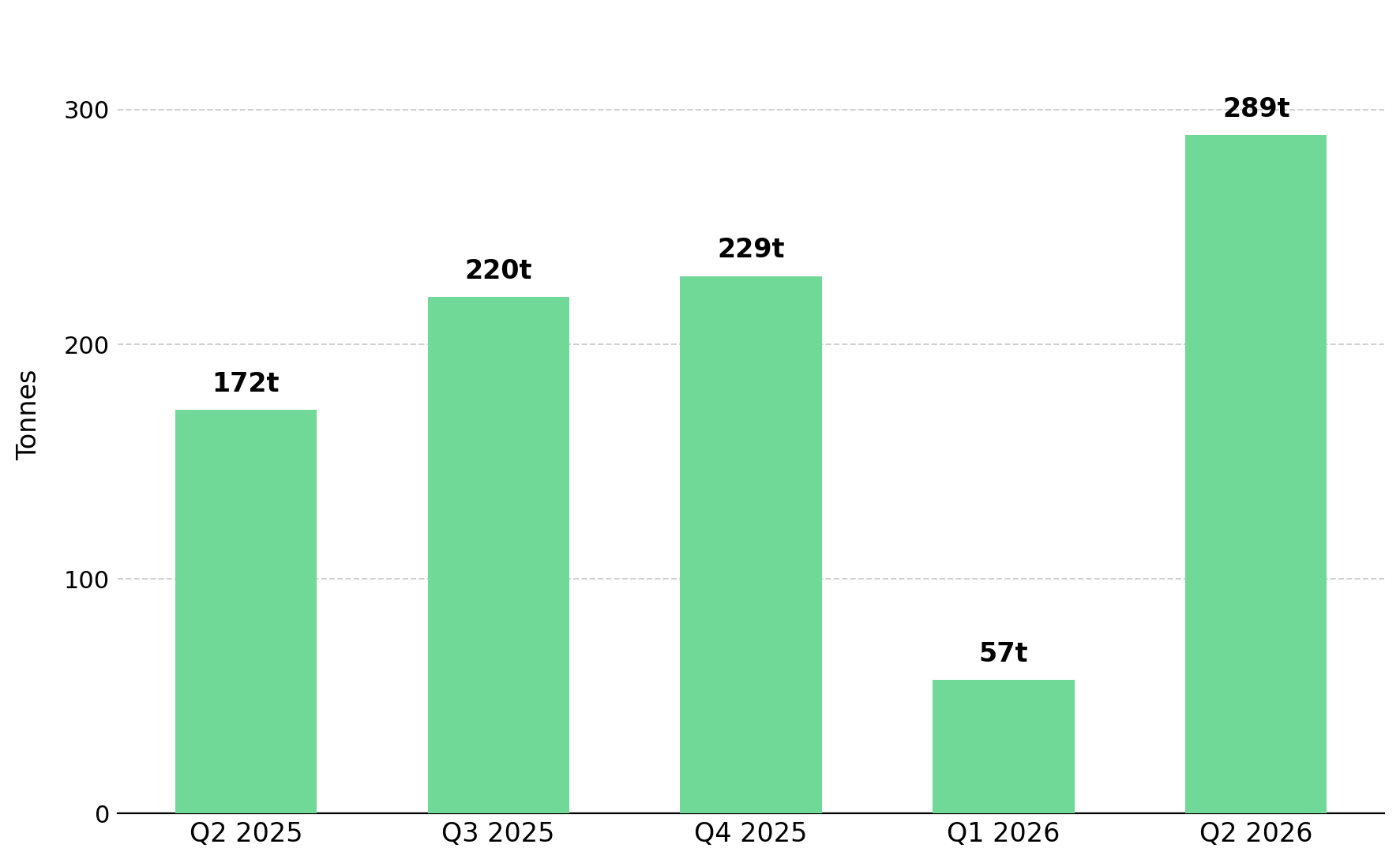
Gold averaged $4,506 per ounce in Q2, down 8% from the Q1 record but still 37% above a year earlier. While Western gold ETFs recorded net outflows of 45 tonnes, central banks bought a record 289 tonnes, showing official-sector demand remained strong despite weaker market sentiment.
Higher Real Yields Drive ETF Selling While Reserve Diversification Sustains Gold Demand
Four factors drove the Q2 ETF outflows. North American gold ETFs recorded net outflows of 45 tonnes in Q2 and 61 tonnes in H1, their weakest first half since 2013. The World Gold Council attributes the selling to gold's pullback from its Q1 record, hawkish Fed signals, inflation concerns linked to the US-Iran conflict, and a stronger US dollar, which increased the opportunity cost of holding non-yielding gold.
Even so, bar and coin demand remained stable at 307 tonnes. Central banks responded to a different risk. Japan and the US jointly intervened to support the yen after it fell to a 40-year low near ¥164 per US dollar and Japan's 10-year government bond yield reached a 30-year high. Former Bank of Japan official Atsushi Takeuchi said the intervention aimed to limit spillover into US Treasuries, reinforcing the reserve diversification case that supported record central bank gold purchases in Q2.
45% of Central Banks Plan to Add Gold, Supporting Demand Beyond ETF Flows
The World Gold Council expects central bank gold demand to remain above its long-term average in H2, although below 2025 levels, while mine supply growth remains limited by long project development timelines. Ricardo Evangelista of ActivTrades says rising global debt, elevated inflation, and limited mine supply growth continue to support gold prices over the longer term. Three scenarios emerge from the current data.
Bear case: A US 10-year TIPS yield above 2.5% could increase gold's opportunity cost, extend ETF outflows, and pressure prices below $4,000 per ounce.
Bull case: Renewed currency market intervention and faster reserve diversification could lift gold back toward its Q1 record average.
The next confirmation point is the World Gold Council's Central Bank Gold Reserves Survey, where a record 45% of respondents plan to increase gold reserves and 89% expect global reserves to keep growing.
Record Mining Costs Raise the Gold Price Needed to Protect Producer Margins
Two factors are shaping gold-sector margins. Gold mining costs reached a record $1,785 per ounce in Q1, up 16% y/y, requiring higher gold prices to protect producer margins. Jewelry demand by volume fell 17% y/y to 278 tonnes in Q2, while spending rose 14% y/y to $40 billion as higher prices offset lower purchases. Gold remains caught between tighter Fed policy and continued central bank reserve diversification.
New York Fed President John Williams said inflation should slow over time but the Fed would raise rates if needed. Higher interest rates increase gold's opportunity cost, yet central bank buying continues to support demand. Whether the Fed raises rates or geopolitical tensions remains uncertain. With official-sector demand remaining strong despite short-term policy risks, the evidence continues to support gold as a long-term diversification asset rather than a trade driven by headlines.
2.5% US TIPS Yield Could Trigger Fresh ETF Selling: Watch Payrolls for Confirmation
Gold is likely to remain in its $4,000 to $4,100 range if the US 10-year TIPS yield stays below 2.5% and Fed rate expectations remain broadly unchanged. Continued central bank buying would support physical gold and producers that preserve margins despite record mining costs.
A US 10-year TIPS yield above 2.5%, or a September Fed rate hike, could extend ETF outflows and pressure gold prices in the short term. However, continued reserve diversification by central banks could cushion downside risk if official-sector demand remains near recent levels. Watch US JOLTS, ADP employment, and nonfarm payrolls this week, as each could shift Fed expectations, real yields, and short-term gold prices.
Analyst's Notes





Subscribe to Our Channel



Stay Informed






















