




Why Cobra Resources Is Building the Economics Into Its Rare Earth Resource


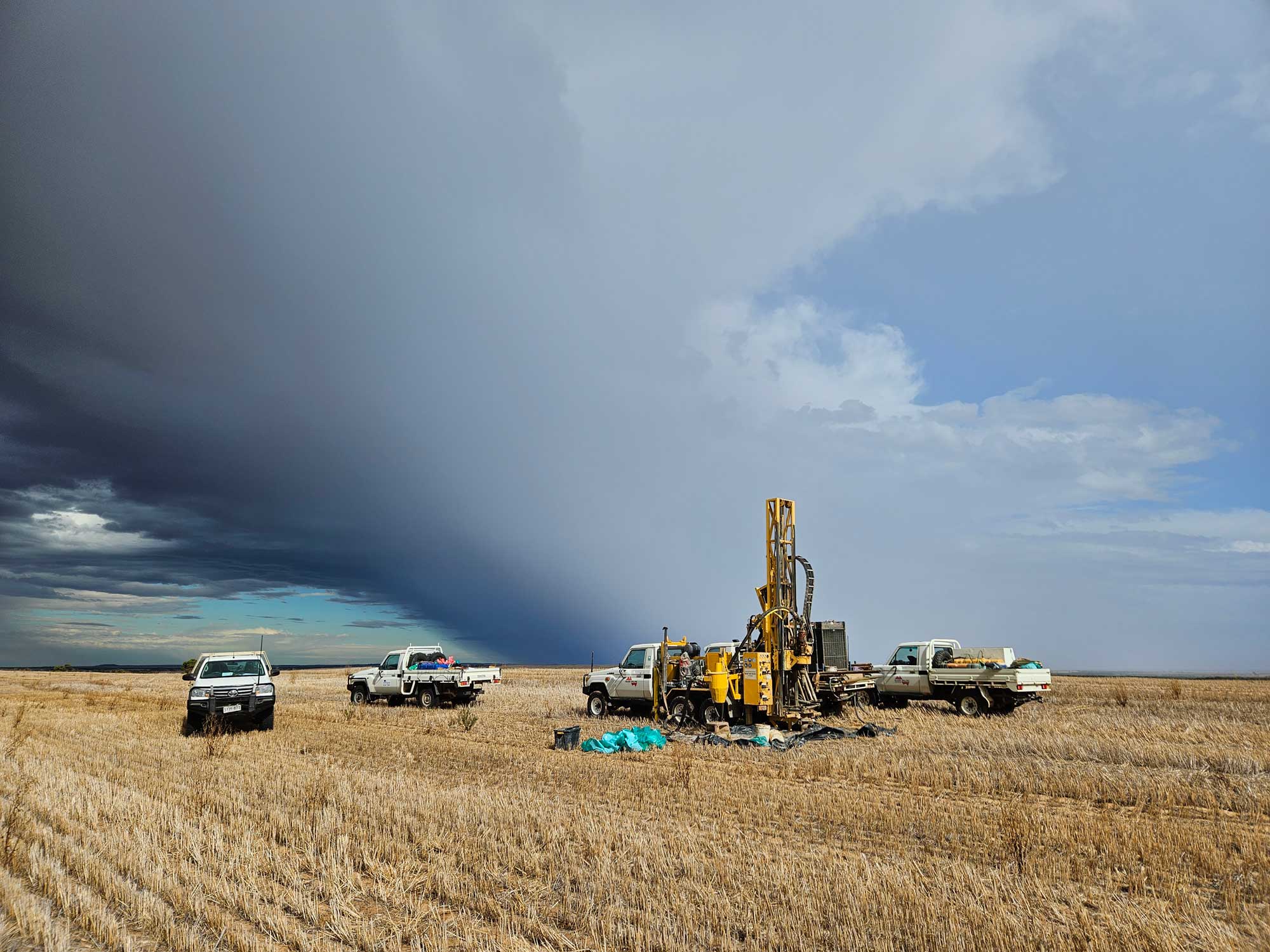
Cobra Resources is modelling permeability and acid generation in its maiden Wudinna rare earth resource to de-risk the economics and accelerate production.
- Cobra Resources has completed resource-definition drilling of 74 holes for about 3,200 metres across its Boland and Head prospects in South Australia, with roughly 80% of results received and the system still open to the north and south.
- The drilling has defined a continuous high-grade flank of about 5 kilometres at Head and is sufficient to support a maiden Mineral Resource Estimate (MRE).
- Cobra is targeting a collective maiden resource of 200 million to 400 million tonnes at more than 1,000 parts per million Total Rare Earth Oxide (TREO).
- The company plans to model permeability and natural acid generation alongside grade in the resource, applying an economically variable cut-off to capture the lowest-cost in situ recovery (ISR) zones.
- A capital-light field demonstration, estimated to cost a couple of million Australian dollars, will potentially utilise ANSTO's existing pilot facility to confirm the ISR process prior to a scoping study.
Cobra Resources (LSE: COBR) has spent the past year defining a rare earth system in South Australia that it intends to develop through in situ recovery (ISR), a method that dissolves and pumps mineralisation from the ground rather than excavating it. The drilling results released on June 24, 2026, set up a maiden resource at the company's Wudinna project, but the more distinctive signal is how Cobra intends to build that resource: by modelling the economics of extraction into the estimate itself. Permeability and the deposit's capacity to generate its own acid are being treated as resource inputs that sit alongside grade.
Drilling Scale at Boland & Head
Cobra completed 74 drill holes for about 3,200 metres of sonic core across its Boland and Head prospects, a drilling method suited to recovering representative samples from unconsolidated sediments. At Head, the programme defined a continuous high-grade flank of about 5 kilometres that remains open to the north and south, and the drilling shows continuous ISR-recoverable mineralisation across both prospects. With roughly 80% of assay and permeability results received, the scale and continuity are sufficient to support a maiden Mineral Resource Estimate (MRE), and Cobra is targeting a collective 200 million to 400 million tonnes at more than 1,000 parts per million Total Rare Earth Oxide (TREO) across a landholding that spans 3,200 square kilometres of palaeochannel systems.
The Three Host Formations
Mineralisation sits in three stacked formations, each at a different stage of de-risking. The Pidinga is the deepest and the most advanced, a confined aquifer of reduced, permeable sands with strong head pressure, where hydrology work is complete, and metallurgy is strong. Above it, the Garford clay has delivered good ionic recoveries but still needs permeability work, while the shallow Narlaby sand carries strong, concentrated grades but requires more work on the confined nature of its aquifer. Samples from the Garford and Narlaby are being analysed for acid generation, metallurgy, and particle sizing for inclusion in the resource.
The Levers That Drive the Economics
For an ISR project, how readily the rock flows and reacts carries as much economic weight as its metal content. Cobra describes three principal levers: grade and heavy rare earth enrichment, permeability, and the balance between acid generation and acid consumption.
Regarding permeability, the company is targeting rates of 1 to 2 metres per day, and scaled bench studies have indicated rates above 8 metres per day. An emulated tracer test recovered almost 80% of the injected tracer over two days, indicating well-field spacings of 15 to 25 metres and leach cycles of 30 to 60 days. Net Acid Production Potential (NAPP) estimates indicate that natural acid generation exceeds consumption within continuous high-grade zones, with a maximum potential acidity of 60 kilograms of sulphuric acid per tonne, compared with modelled consumption of 1 to about 16 kilograms per tonne.
Managing Director of Cobra Resources, Rupert Verco, frames the economics this way:
"The real enabler in this game for us is a combination of grade or heavy rare earth enrichment, permeability, and acid generation or consumption. They're the three principal levers that will inform and drive our economics, so having zones that are permeable and acid-generating is just as important as the grade."
Acid can account for around 30% of operating costs at a standard rare earth project, and with sulphuric acid currently difficult to source, generating it in the ground lowers both cost and supply risk.
Building Economics Into the Maiden Resource
The point of measuring all of this is to write it into the resource rather than leave it for a later study. Cobra plans to model permeability, acid generation, and consumption in a synchronous manner with grade, then apply an economically variable cut-off similar to a net smelter return. Under that logic, a lower-grade zone with high permeability and strong acid generation can be more economic than a higher-grade zone without those traits.
The product profile is unusually heavy. The optimised Mixed Rare Earth Carbonate (MREC) runs at 58.83% TREO, of which 42.9% is heavy rare earths, and removing cerium during impurity processing without solvent extraction lifts the heavy proportion from about 32% to 43%.
Verco is direct about how that translates into the resource model:
"We will build the economics into the model. If you think about reservoir modelling for oil and gas, it's a very similar scenario: you input the parameters that most impact your economics, and that's the strategy we're taking. That will then provide the basis for a scoping study that is fairly detailed and on a higher-rigour resource estimate."
One processing question remains open: radionuclide testing has returned low levels for everything except actinium, which exceeds the targeted limits. The company believes it can address this, with testing underway to cover ISR preconditioning, pH control, and actinium suppression.
The Path to Production
The accelerated timeline depends on the economics of ISR. Operators such as Kazatomprom run ISR at 15% to 20% of the capital intensity of hard-rock operations, and because the process is aquifer-confined rather than gravity-fed, its environmental footprint is lower, with liability costs per pound of uranium running around 28 times lower for ISR than at the Ranger uranium mine.
South Australia has hosted four ISR pilot studies in the past 2 years across copper and uranium, alongside long-running commercial ISR uranium operations in the same formations, and the state regulator is familiar with the containment requirements. The maiden resource is likely to carry an indicated component in the Pidinga, where the work is most advanced, and an inferred component across the overlying formations to capture scale.
Verco puts the trade-off plainly:
"We pride ourselves on our technical execution, and the key goal we really want to achieve is that if the resource estimate takes a little bit longer but brings production forward quicker, that's the ultimate achievement. That's what we're working on."
The higher-confidence Pidinga zone is the area the company intends to advance to a detailed scoping study.
What Comes Next
The remaining drillholes are due in the coming weeks. Cobra is weighing a capital-light field demonstration of ISR, potentially shipping a precipitated slurry to the Australian Nuclear Science and Technology Organisation (ANSTO) pilot facility to complete the flowsheet at a cost of a couple of million Australian dollars, with a field trial to produce larger MREC quantities targeted for early 2027. In parallel, a diamond core drilling programme is running 24 hours a day at the company's Manna Hill copper project.
FAQs (AI-Generated)
Analyst's Notes





Subscribe to Our Channel


.jpg)


Stay Informed






















