




New Found Gold Secures $205M Queensway Production Financing


New Found Gold announces a C$205M finance package with EdgePoint and Eric Sprott to fund Queensway Gold Project Phase I production by end of 2027.
- New Found Gold has announced a comprehensive C$205M finance package comprising a C$100M bought deal equity financing and a C$105M senior secured credit facility, both anchored by EdgePoint Investment Group, with cornerstone investor Eric Sprott participating in the equity component.
- The package replaces a previously announced US$75M debt term sheet with Nebari Natural Resources Credit Fund II and is structured to fully fund the C$155M capital cost outlined in the Queensway PEA, with an overrun buffer built into the facility.
- EdgePoint, entering as both the lead lender and co-lead underwriter on the equity, is making its first meaningful position in New Found Gold at market price, signalling institutional conviction in the Queensway asset's near-term production economics.
- CEO Keith Boyle confirmed there has been no change to timing or strategy, with first production from Queensway still targeted for end of 2027, and construction expected to begin this summer following permit amendments and environmental assessment submission.
- With Hammerdown approaching commercial production in the second half of 2025 and Queensway projecting approximately 100,000 ounces per year at an all-in sustaining cost of around $1,300 per ounce in its first years of operation, management sees the company as positioned for a significant re-rate as it transitions from developer to producer.
New Found Gold & Its Key Projects in Newfoundland
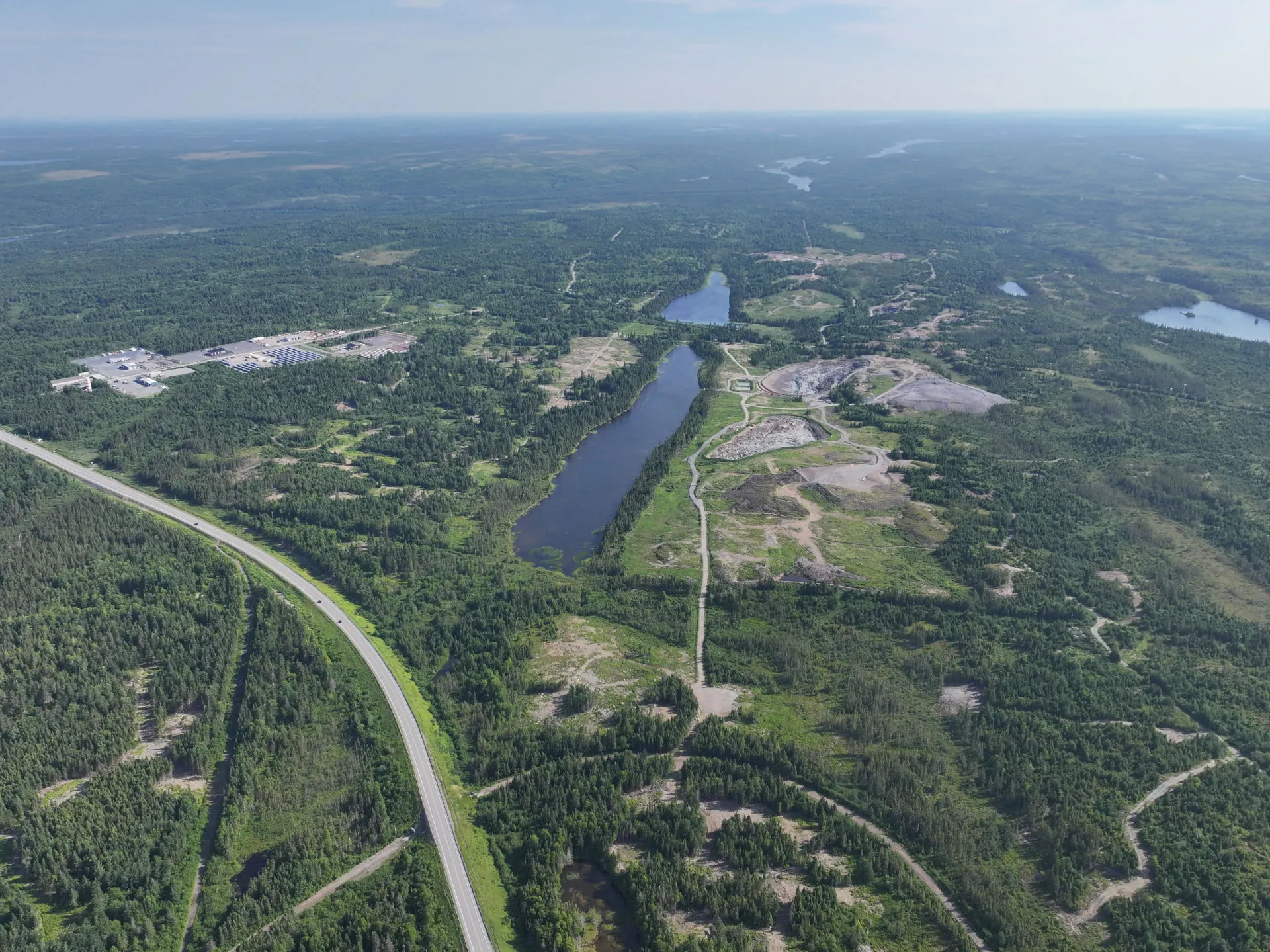
New Found Gold Corp. (TSXV: NFG | NYSE American: NFGC) is an emerging Canadian gold producer with two assets on the island of Newfoundland, Canada. The flagship Queensway Gold Project is the company's primary development target, currently advancing through detailed engineering toward a targeted Phase I production start by the end of 2027. Sitting alongside it is the Hammerdown Gold Project, which includes the Hammerdown deposit and the Pine Cove milling and tailings facilities, a combination that provides New Found Gold with an operational base from which to ramp toward full production.
The Pine Cove Mill is currently processing at 700 tonnes per day and is earmarked for expansion to 1,400 tonnes per day to accept Phase I material from Queensway. That mill expansion is at the detailed engineering stage, making it one of the most immediate capital priorities addressed by the new financing package. Hammerdown, meanwhile, is actively ramping up toward commercial production in the second half of 2026, providing the company with its first cash flow generation, cash that will layer into the broader capital picture alongside the newly secured facilities.
CEO Keith Boyle set out the company's position clearly:
"Our Queensway project is our flagship that we're advancing through development and targeting first production end of 2027. We have the Hammerdown Gold Project that we're ramping up now in production... through the first half of this year to get to a steady state the second half of the year."
The company also holds a substantial regional exploration package across the +110km strike extent at Queensway along two prospective fault zones, providing meaningful discovery upside beyond the defined project economics. Recent grade control drilling at the Keats Zone has returned very high-grade intercepts that management says will be central to early production material in Year 1.
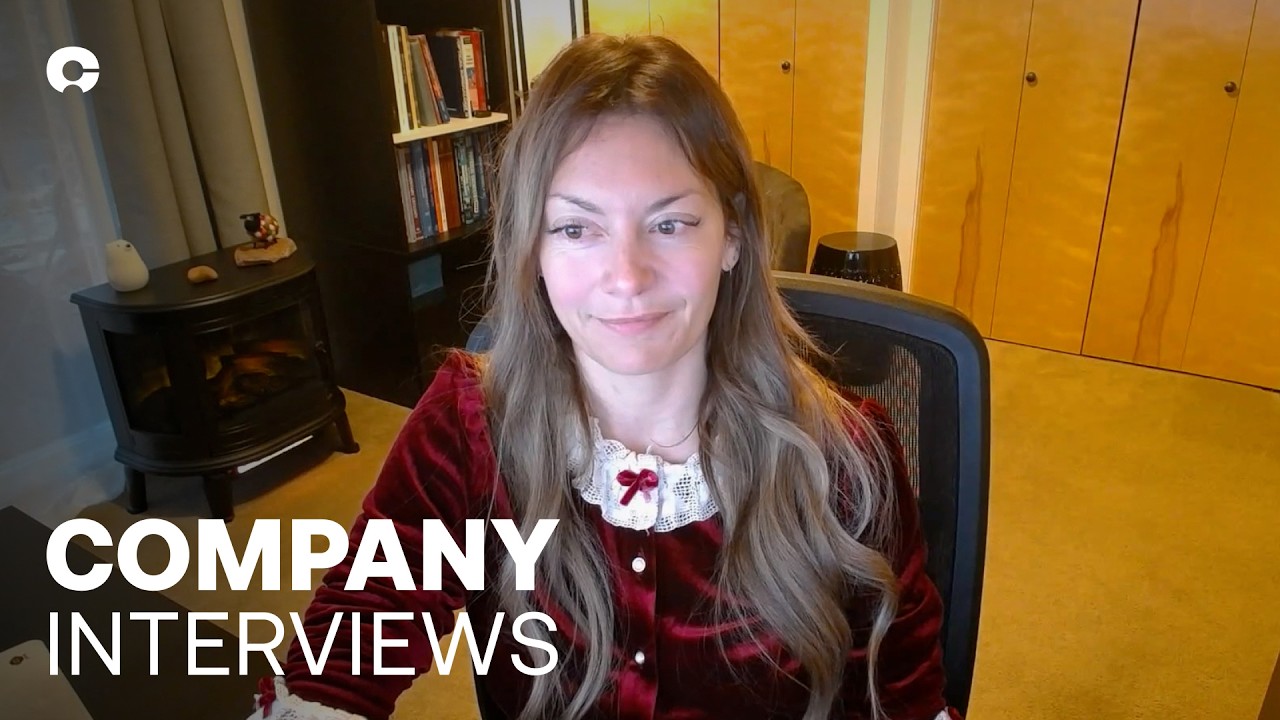
Interview with Chief Executive Officer, Keith Boyle
Financing Package Breakdown & Strategic Implications
The finance package announced by New Found Gold consists of two components. The first is a C$100M bought deal equity financing, led by BMO Capital Markets and SCP Resource Finance LP, with lead orders from EdgePoint Investment Group and cornerstone participation from long-time investor Eric Sprott. The equity was done at market, with no discount, a detail management highlights as significant evidence of genuine institutional demand rather than transactional necessity. The company has also granted the underwriters an overallotment option of 15%, exercisable within 30 days of closing.
The second component is a C$105M senior secured term credit facility provided directly by EdgePoint, structured in two tranches: C$70M (Tranche 1) to fund upon delivery of the security package and satisfaction of conditions precedent, and a further C$35M (Tranche 2) available at the company's discretion no later than 12 months after closing. Both tranches carry a 1% establishment fee, an 8.75% fixed annual interest rate payable quarterly, a 3-year term, and a 2% original issue discount. EdgePoint will also receive warrants for each tranche. Tranche 1 warrants with an aggregate value of US$6M and Tranche 2 warrants valued at US$3M, both exercisable for a period of three years.
The package replaces the non-binding US$75M term sheet with Nebari Natural Resources Credit Fund II, announced in March 2026. Boyle described the logic plainly:
"We had an inbound offer to not only match, well, better the terms of that facility, but also provide us with equity. And as you saw in the announcement, the equity was done at market. So there was no discount to it. They're coming in as long-term partners."
In terms of capital adequacy, the combined gross proceeds of C$205M are designed to cover the C$155M capital cost for Queensway Phase I as outlined in the July 2025 PEA, with sufficient headroom to provide an overrun buffer, a feature Boyle said was a deliberate priority given today's macroeconomic and construction cost environment. The Tranche 2 availability specifically provides this contingency flexibility without imposing immediate dilution or interest cost.
Operational Changes & Team Developments
The financing announcement is not occurring in isolation. New Found Gold has been assembling its construction and development infrastructure in parallel, and the capital package is now aligned with a team that Boyle says is already on the ground. WSP was appointed as EPCM contractor several months ago, and since the beginning of 2026, the company has been building out the construction management function around that appointment. The construction manager arrived on site the week of the announcement.
"We announced a few months ago that we had hired WSP as our EPCM contractor," Boyle noted. "We've been assembling that team and, in fact, the construction manager just showed up at site last week. I met him last week. I was up at site, and we went through what had to get done. And I was actually quite excited to see how quickly things are advancing on schedule to get the project completed."
The next operational steps are well-defined. New Found Gold expects to submit its environmental assessment application for Queensway by the end of April 2026. Permit amendments at Pine Cove, required to allow construction to commence, are expected within approximately 6 weeks of the announcement. Long lead item orders are being placed concurrently. Construction is expected to begin this summer, running through the winter into the processing plant construction phase. Early works at Queensway are slated to start later in 2026, with the project reaching a state where it can begin feeding material to the expanded Pine Cove Mill toward the middle to third quarter of 2027, ahead of Phase I production.
The Hammerdown ramp-up continues alongside this construction programme, with commercial production expected in the second half of 2026. Cash flow from Hammerdown will provide the company with an operational funding contribution during the Queensway construction window.
Investor Insights & Future Catalysts
For equity investors, the structure of this financing package conveys several signals. EdgePoint is not a specialist resource fund making a distressed entry; it is a mainstream Canadian wealth management firm, employee-owned and investment-led, making a strategic decision to add exposure to a near-term gold producer in a tier-one jurisdiction. The at-market pricing of the equity component, combined with EdgePoint's dual role as lender and co-lead on the bought deal, reflects a level of conviction that differentiates this transaction from many development-stage financings.
Frank Mullen, CIO of EdgePoint, commented in the press release:
"Queensway is a unique project, positioned for strong near-term cash flow via a rapid path to production with excellent exploration upside potential, all of which will drive the project's ability to deliver substantial long-term value and a significant return on our investment."
The production economics that underpin this conviction are straightforward to model. Based on figures cited in the Queensway PEA, Phase I production is expected to deliver approximately 100,000 ounces per year in the first two years at an all-in sustaining cost of approximately C$1,300 per ounce. At current gold prices, that translates to more than C$300M in annual cash flow, a figure Boyle highlighted directly when asked how investors should interpret institutional interest.
"The first couple of years, we're looking at over $300 million of cash flow at today's prices. So do the multiples on that."
The key near-term catalysts for investors to monitor include: submission of the Queensway environmental assessment application (targeted by end of April 2026); receipt of Pine Cove permit amendments (within approximately six weeks of announcement); placement of long lead item orders; commencement of construction (summer 2026); Hammerdown reaching commercial production (second half 2026); and first ore feed to the expanded Pine Cove Mill (mid to Q3 2026).
The Investment Thesis for New Found Gold
- Fully funded to production: The C$205M financing package covers the C$155M Queensway Phase I capital cost as defined in the PEA, with a structured overrun facility providing additional certainty.
- Institutional validation at market: EdgePoint's entry at no discount, in both equity and debt roles, represents a quality signal from a mainstream Canadian institutional investor with a long-duration mandate.
- Hammerdown cash flow bridge: Hammerdown is actively ramping up and expected to reach commercial production in H2 2026, generating operational cash flow during the Queensway construction period.
- Compelling Phase I economics: Approximately 100,000 ounces per year in the first two years at ~C$1,300 AISC implies C$300M+ in annual cash flow at current gold prices, providing a basis for a meaningful re-rate on production.
- High-grade Keats Zone inventory: Recent grade control drilling at Queensway's Keats Zone has confirmed very high-grade material targeted for Year 1 production, supporting the upper end of PEA production assumptions.
- Tier-one jurisdiction: Newfoundland and Labrador offers a stable, mining-friendly permitting environment with an established workforce and infrastructure base.
- Exploration optionality: A +110km strike extent along two prospective fault zones at Queensway provides district-scale exploration upside that is not priced into current development-stage economics.
- Clear 18-month execution roadmap: Environmental assessment, permits, long lead items, construction start, and Hammerdown commercial production all fall within a visible near-term window.
New Found Gold has executed a financing package that addresses the central risk facing any development-stage company: certainty of funding to the finish line. The combined C$205M in gross proceeds, structured across an at-market bought deal and a three-year secured credit facility with an overrun tranche, puts the company in the strongest financial position it has occupied since the Queensway resource story first emerged. The involvement of EdgePoint as both institutional lender and equity co-lead, alongside the continued commitment of cornerstone investor Eric Sprott, provides a degree of validation that goes beyond simple capital adequacy. What the market will now focus on is execution - the environmental assessment submission, the Pine Cove permit amendments, the long lead item procurement cycle, and the construction management machine that WSP and the newly assembled site team are now operating. If those milestones track to schedule, the re-rate thesis that both management and institutional investors are underwriting has a credible foundation. The transition from developer to producer, with C$300M in projected annual cash flow from Queensway Phase I alone, represents a step-change in the company's financial profile that current multiples do not yet fully reflect.
Macro Thematic Analysis: Gold Development in a Structurally Supportive Market
The New Found Gold financing package does not exist in a vacuum. It lands at a moment when gold is trading at, or near, all-time highs in most major currencies, and when institutional capital is meaningfully re-engaging with the development and production end of the gold equities spectrum after years of structural underinvestment. The conditions that make a transaction like this possible - an at-market bought deal, a mainstream institutional lender entering at favourable terms, cornerstone participation from one of the sector's most closely watched private investors - are themselves a product of a gold market that has fundamentally re-priced the economics of junior and mid-tier production.
The supply side of the gold market is structurally constrained. Major producers have spent the past decade prioritising capital discipline over growth, and the pipeline of permitted, development-ready projects in tier-one jurisdictions is thin. Queensway, with its defined Phase I economics, existing milling infrastructure at Pine Cove, and high-grade near-surface mineralisation at the Keats Zone, is a rare convergence of geological quality and development readiness that institutional capital has struggled to find elsewhere. EdgePoint's entry is consistent with a broader theme of long-duration institutional capital seeking exposure to near-term gold cash flows in stable jurisdictions, rather than waiting for the exploration cycle to deliver the next generation of discoveries.
The macro backdrop also influences the urgency of the overrun facility. Construction costs, equipment lead times, and labour markets remain elevated in many jurisdictions. The deliberate inclusion of a contingency tranche (the C$35M Tranche 2) reflects a disciplined approach to project risk in an environment where cost blow-outs have damaged the credibility of multiple development-stage companies in recent years. As Boyle put it:
"We can all see what's happening in the world today. We don't know where things will go. And so for us to be secure in knowing that we have the money in the bank to execute on this project and get to the Queensway production, which is the value driver of the company."
That security of funding is as much a macro hedge as it is a project finance decision.
TL;DR
New Found Gold has secured a C$205M finance package comprising a C$100M at-market bought deal equity financing and a C$105M senior secured credit facility, both anchored by EdgePoint Investment Group, with cornerstone investor Eric Sprott participating in the equity. The package replaces an earlier term sheet and is structured to fully fund Queensway Phase I's C$155M capital cost, as defined in the July 2025 PEA, with an additional C$35M overrun tranche providing contingency headroom. Construction is expected to begin this summer, Hammerdown approaches commercial production in H2 2026, and Queensway Phase I first production remains on track for end of 2027. At current gold prices, Phase I production of approximately 100,000 ounces per year at ~C$1,300 AISC implies over C$300M in annual cash flow, underpinning the re-rate thesis institutional investors are now backing with real capital.
FAQ's (AI-Generated)
The package comprises a C$100M bought deal equity financing led by BMO Capital Markets and SCP Resource Finance LP, with lead orders from EdgePoint and cornerstone participation from Eric Sprott, plus a C$105M senior secured term credit facility provided by EdgePoint. Total gross proceeds are C$205M. The equity was priced at market — no discount to the prevailing share price — and the credit facility is structured in two tranches at a fixed 8.75% annual interest rate over a three-year term.
The company received an inbound offer from EdgePoint that improved on the terms of the previously announced US$75M Nebari term sheet, while also adding an equity component done at market. Management described the decision as straightforward, citing better terms, the absence of a share price discount on the equity, and the quality of EdgePoint as a long-term institutional partner. The Nebari facility has been formally withdrawn.
Queensway Phase I first production remains targeted for end of 2027, with no change to timing or strategy reported by management. The July 2025 PEA outlined a capital cost of C$155M. In the first two years of operation, Phase I production is projected at approximately 100,000 ounces per year at an all-in sustaining cost of approximately C$1,300 per ounce. At current gold prices, that implies annual cash flow in excess of C$300M.
The most immediate catalysts are: Queensway environmental assessment application submission (targeted by end of April 2026); Pine Cove permit amendments (approximately six weeks from announcement); long lead item orders; construction start (summer 2025); Hammerdown commercial production (H2 2025); and first ore feed to the expanded Pine Cove Mill (mid to Q3 2026). The Pine Cove mill expansion — from 700 to 1,400 tonnes per day — is currently in detailed engineering.
The bought deal equity was priced at market, meaning there was no discount to existing shareholders beyond the dilution of the share count itself. Management's position is that the dilution is offset by the certainty of funding it provides — specifically, the ability to reach Queensway production and the cash flows that will follow. CEO Keith Boyle noted the balance between debt exposure and equity was a deliberate risk management decision: "When we look out in time, it doesn't hamper us from that significant re-rate and increase in share price."
Analyst's Notes





Subscribe to Our Channel






.jpg)

Stay Informed






















