




Why P2 Gold's Most Valuable Drill Results Came From Geotechnical Holes


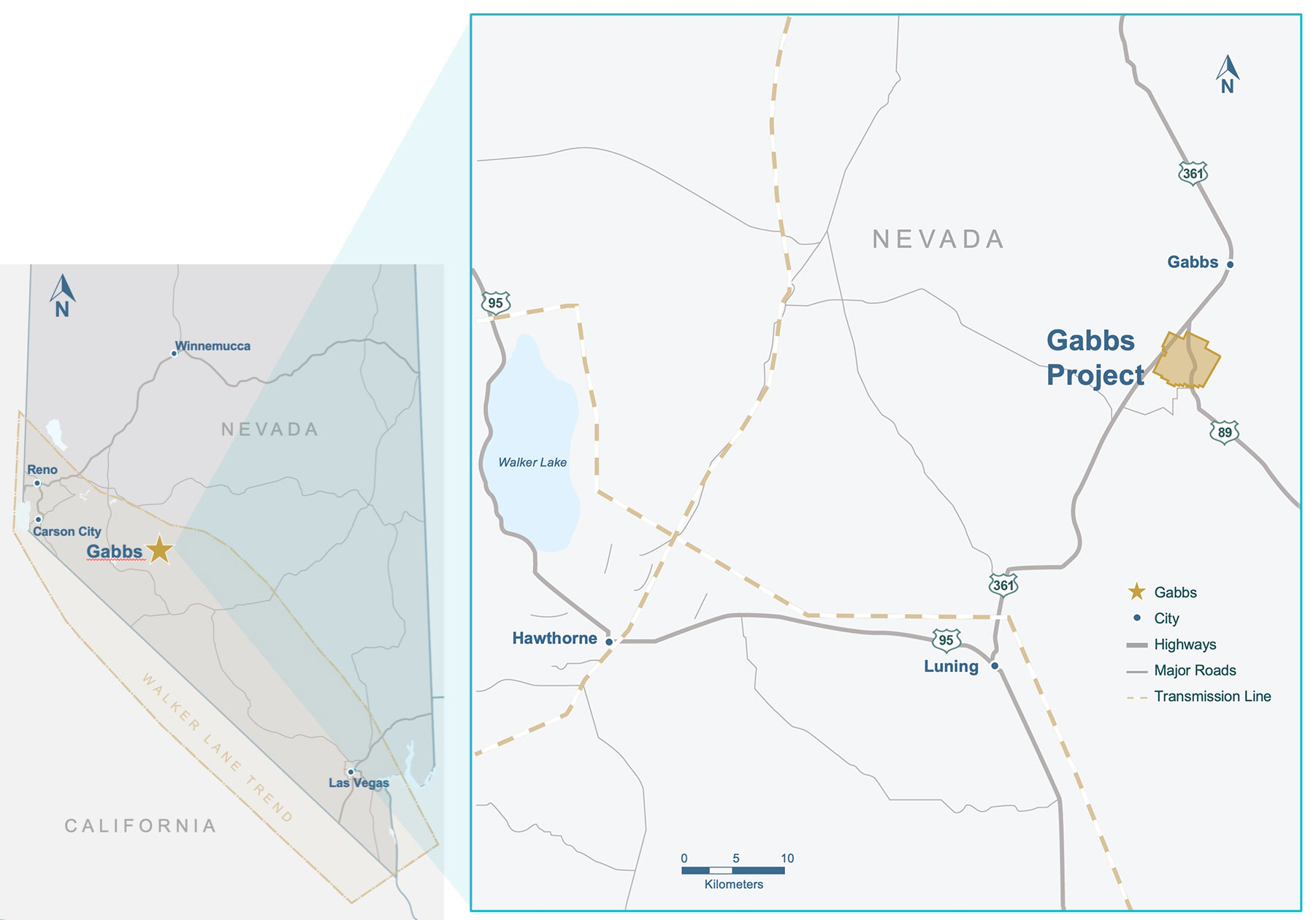
P2 Gold's geotechnical drilling at Gabbs confirms the Sullivan Zone keeps growing, adding value ahead of the Nevada project's 2026 feasibility study.
- P2 Gold drilled five holes at its Sullivan Zone to check the stability of a future mine pit, not to search for new gold and copper, but the holes still returned gold-copper mineralization, confirming the zone remains open for expansion and continues to grow.
- The company has not yet published a detailed breakdown of individual hole grades from this batch of results.
- Because the mineralization confirms the zone extends beyond what engineering work alone was expected to find, P2 Gold has planned a further drill program to test how far it continues, with results feeding the feasibility study's updated resource estimate.
- An October 2025 preliminary economic assessment (PEA), a standard early-stage mining study, valued the project in the hundreds of millions of US dollars using a smaller processing rate than the one now being tested for the feasibility study, a more detailed study used to support a construction decision.
- Shares of P2 Gold traded near CA$0.71 in mid-June 2026, giving the company a market capitalization of roughly CA$186 million, well below the project's estimated value.
Engineering Holes Turn Up New Mineralization
P2 Gold (TSXV: PGLD | OTCQB: PGLDF) reported results on June 18, 2026 from five drill holes at the Sullivan Zone, part of a program built to test how stable the pit walls will be once mining begins at its Gabbs gold-copper project in Nevada. The results follow a June 9, 2026 project update in which the company laid out its plan to advance drilling, geotechnical work, permitting, and the feasibility study at the same time, and this release is a direct extension of that plan. All five holes were positioned at the outer edge of the planned open pit, and all five intersected gold-copper mineralization there, an outcome the company was not specifically drilling to find. The company has cited this result as confirmation that the Sullivan Zone remains open for expansion down dip and continues to grow in size. P2 Gold has planned a follow-up program of 7,500 meters to test how far this mineralization extends, with the results expected to feed directly into an updated estimate of the project's total resource.
Management's De-Risking Strategy
Joseph Ovsenek, President and Chief Executive Officer of P2 Gold, has described 2026 as a year of running drilling, permitting, and engineering work at the same time rather than one after another, a strategy meant to shorten the path to a construction decision. Discussing that approach, Ovsenek said:
"The critical path for us we see along that timeline is the environmental permitting."
It explains that studies were started early to stay ahead of that risk. That same parallel approach explains why holes drilled purely for engineering purposes are now doing double duty as a source of new resource information.
On the construction timeline that approach is meant to support, Ovsenek has told that if permitting and engineering continue to advance on schedule, that they could be breaking ground in late next year, and that remains the company's target, a timeline the current drill results are meant to support rather than delay.
Project, Economic & Market Context
Gabbs sits in Nevada, on a mining trend that hosts several other gold and copper deposits, with road access, existing power, and water infrastructure already in place, features that keep construction costs lower than a remote project would face. The property includes four separate mineralized zones, and all of them remain open to further drilling, meaning their full size has not yet been defined.
The October 2025 Preliminary Economic Assessment (PEA) estimated the project's after-tax value in the hundreds of millions of US dollars, using a smaller processing rate than the larger one now being evaluated for the feasibility study, a change that would support higher annual gold and copper production if adopted. P2 Gold is targeting completion of the feasibility study by the end of 2026, with an updated resource estimate due before that.
Shares last traded near CA$0.71 in mid-June 2026, giving the company a market capitalization of roughly CA$186 million, a figure well below the project's estimated worth from the 2025 assessment. Management has pointed to that gap as something it expects to close as the feasibility study and permitting work progress. Since the current drill program began in late 2025, P2 Gold has completed dozens of holes across the Sullivan and Lucky Strike zones, with more testing planned at both.
Closing the Value Gap
The June 18, 2026 results reinforce a pattern that has defined P2 Gold's approach to Gabbs through 2026: work commissioned for one purpose, in this case pit engineering, is doubling as a source of new resource information ahead of the feasibility study. That reduces the cost of testing the Sullivan Zone's down-dip extension, since the company is not funding a separate exploration campaign to do it. For investors, the results themselves do not change the feasibility study timeline or the project's economics on their own. What they do is add another data point supporting management's case that the gap between Gabbs' estimated value and the company's current market capitalization can narrow as the feasibility study, updated resource estimate, and permitting work are completed on schedule.
FAQs (AI-Generated)
Analyst's Notes





Subscribe to Our Channel


%20(1)%20(1).jpg)
.jpg)
Stay Informed






















