




30% EV Battery Growth Expands Markets for Lithium & Non-China Nickel Supply


LFP adoption keeps lithium central, while nickel demand outside China and tighter financing favor projects with competitive costs and secured buyers.
- Electric vehicle battery deployment rose almost 30% to 1.2 terawatt-hours (TWh) in 2025, more than 7 times the 2020 level, expanding the volume base for lithium & nickel demand.
- Lithium is used in both lithium iron phosphate and nickel-containing batteries, so changes in cathode chemistry alter lithium use per battery rather than eliminate demand for the metal.
- Lithium iron phosphate accounted for more than 55% of global electric vehicle (EV) battery deployment in 2025, but nearly 80% of deployment outside China still used nickel-containing chemistries, preserving a distinct regional market for nickel supply outside China.
- China controlled more than 80% of battery manufacturing capacity, while Chinese producers supplied almost 75% of electric-car batteries in 2025, concentrating supply-chain risk and strengthening the commercial case for customer-qualified battery materials produced outside China.
- Projects with costs below expected sale prices, binding offtakes, permits, detailed engineering, and demonstrated processing reduce financing risk and improve production prospects.
30% EV Battery Growth Expands Lithium Demand & Regional Nickel Use
Despite weaker EV policy support in parts of the US and Europe, the International Energy Agency (IEA) reported that EV battery deployment reached 1.2 TWh in 2025, almost 30% above 2024 and more than 7 times the 2020 level. EVs accounted for more than 70% of total battery deployment, making vehicle electrification the sector’s largest demand source. The 1.2 TWh deployment base spans multiple regions and vehicle segments, supporting lithium demand broadly and nickel demand where nickel-containing chemistries dominate.
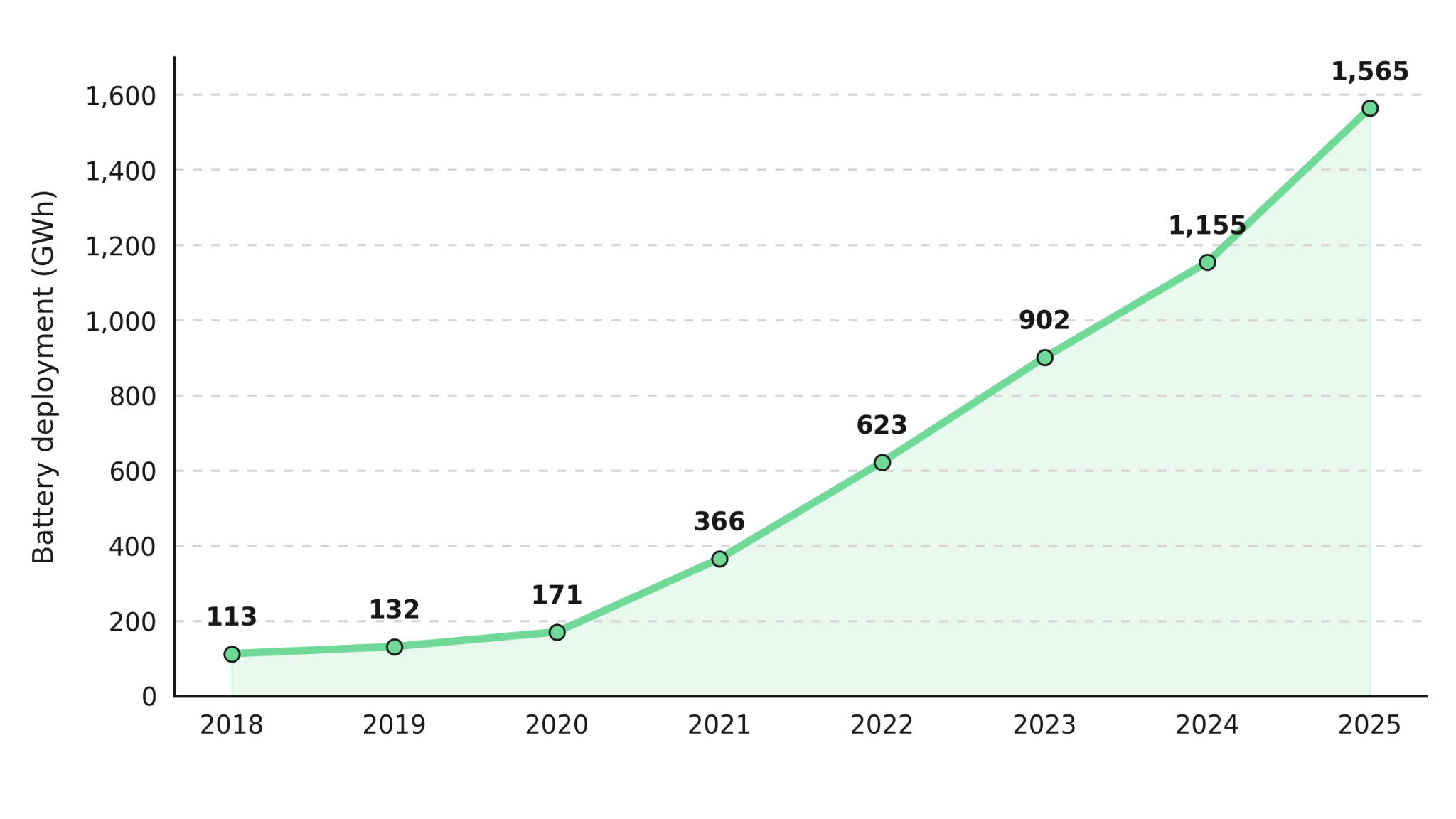
1.2 TWh EV Battery Deployment Expands Lithium Demand Across Chemistries
Light-duty vehicles represented more than 85% of EV battery deployment in 2025. Average battery sizes remained near 70 kilowatt-hours in the European Union and below 60 kilowatt-hours in China, indicating that higher vehicle volumes, not larger packs, drove most of the capacity increase. Lithium is used in both lithium iron phosphate (LFP) and nickel manganese cobalt (NMC) batteries, so rising vehicle volumes support demand across both leading cathode families. A 30% increase in battery deployment does not imply a 30% rise in lithium consumption because chemistry mix, inventories, manufacturing yields, and lithium intensity per kilowatt-hour determine material demand.
Electric-truck battery demand more than doubled in 2025, raising its share of global deployment to approximately 8% from less than 5% in 2024. Because trucks use larger packs, each additional truck adds more battery-metal demand than a light-duty EV. Across all EVs, China accounted for 60% of battery deployment, the European Union almost 15%, the US 10%, and emerging markets outside China 6%, making regional policies and vehicle requirements key determinants of LFP and NMC demand.
LFP Growth Expands Lithium Demand as Nickel Use Concentrates Outside China
Growth in LFP batteries redistributes demand among battery metals rather than eliminating it. LFP excludes nickel and cobalt from the cathode but retains lithium, while NMC and related chemistries use nickel where automakers prioritize energy density, driving range, payload, or cold-weather performance. Lithium demand therefore benefits from overall battery deployment, while nickel demand depends more heavily on regional chemistry and vehicle mix.
55% LFP Share Sustains Lithium Demand Across Leading Battery Chemistries
LFP accounted for more than 55% of EV batteries deployed globally in 2025, up from nearly 50% in 2024. LFP packs were more than 40% cheaper per kilowatt-hour on average than NMC alternatives, helping explain the chemistry’s share gain. Lower pack prices reduce EV and battery energy storage costs, supporting deployment even though lithium intensity varies by product. Lithium therefore remains necessary across the leading lithium-ion chemistries, making its price a direct input into battery-pack costs across both families.
Lithium prices at the beginning of 2026 were more than double year-earlier levels but remained approximately 70% below the 2022 peak. Growth in battery-storage demand, low Chinese inventories, and temporary mine disruptions tightened near-term supply and lifted prices. Higher lithium prices reach battery costs once lower-priced inventories are consumed and existing contracts reset. Sodium-ion batteries offer a potential substitute, but existing manufacturing capacity equaled just over 1% of lithium-ion capacity, limiting near-term substitution.
Nearly 80% Nickel-Containing Battery Share Sustains Demand Outside China
Global chemistry shares conceal a regional split, as nearly 80% of batteries deployed outside China in 2025 used nickel-containing chemistries such as NMC and nickel cobalt aluminum. LFP accounted for just over 10% of European Union EV battery demand, while its US share almost halved from its 2024 level. Nickel demand therefore depends on where batteries are installed and which vehicle requirements manufacturers prioritize. Faster LFP adoption outside China would reduce nickel use per battery, but the 2025 chemistry mix still supports demand for nickel suppliers that meet non-China customer specifications.
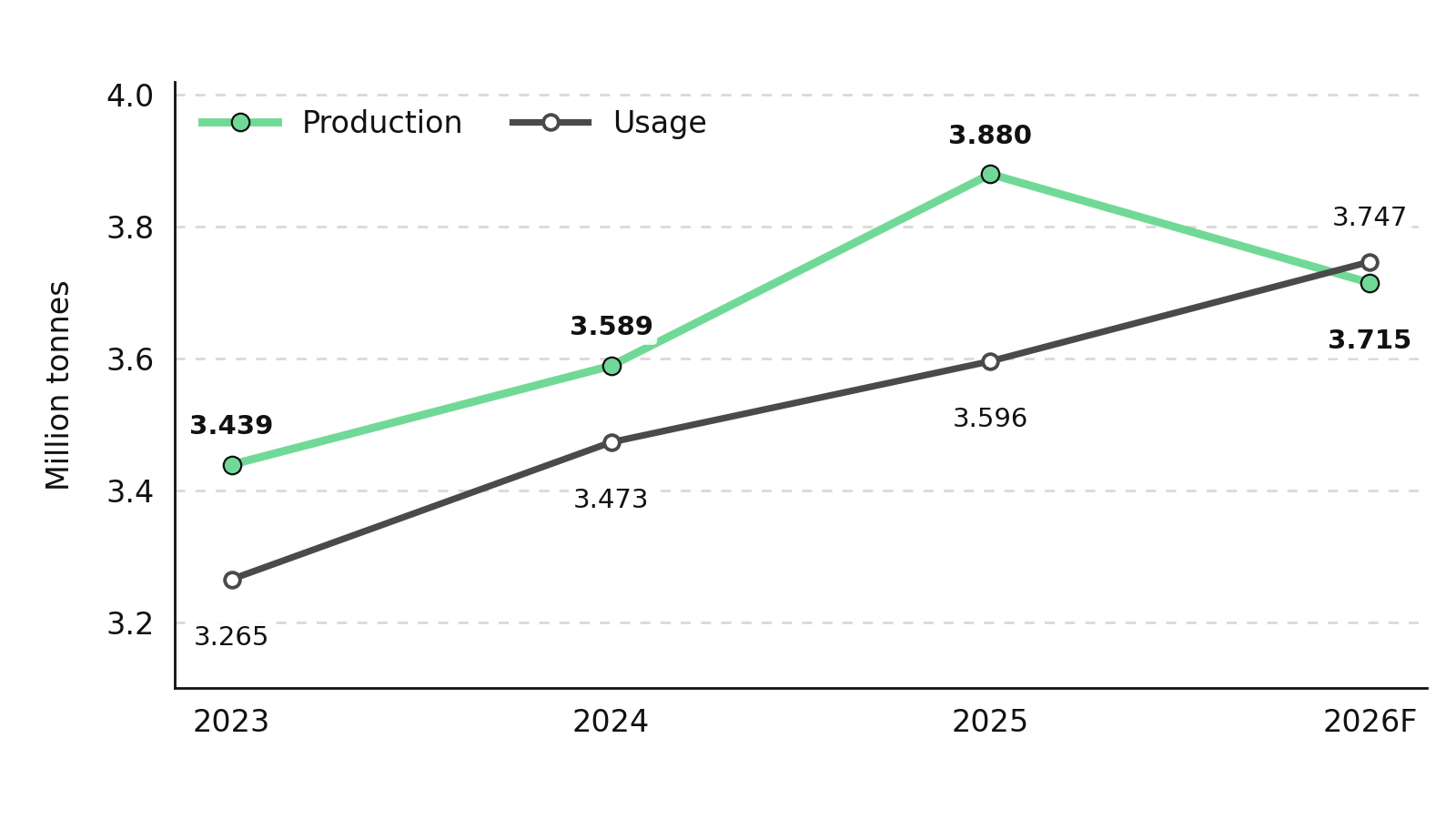
Mark Selby, Chief Executive Officer of Canada Nickel, explains why constrained supply supports non-China nickel projects:
“The reality is, with Indonesia basically limiting supply going forward and nickel demand growing at 5% plus a year, which is another almost 200,000 tons of nickel per year, we’re in great shape. People want supply from somewhere other than Chinese-controlled entities.”
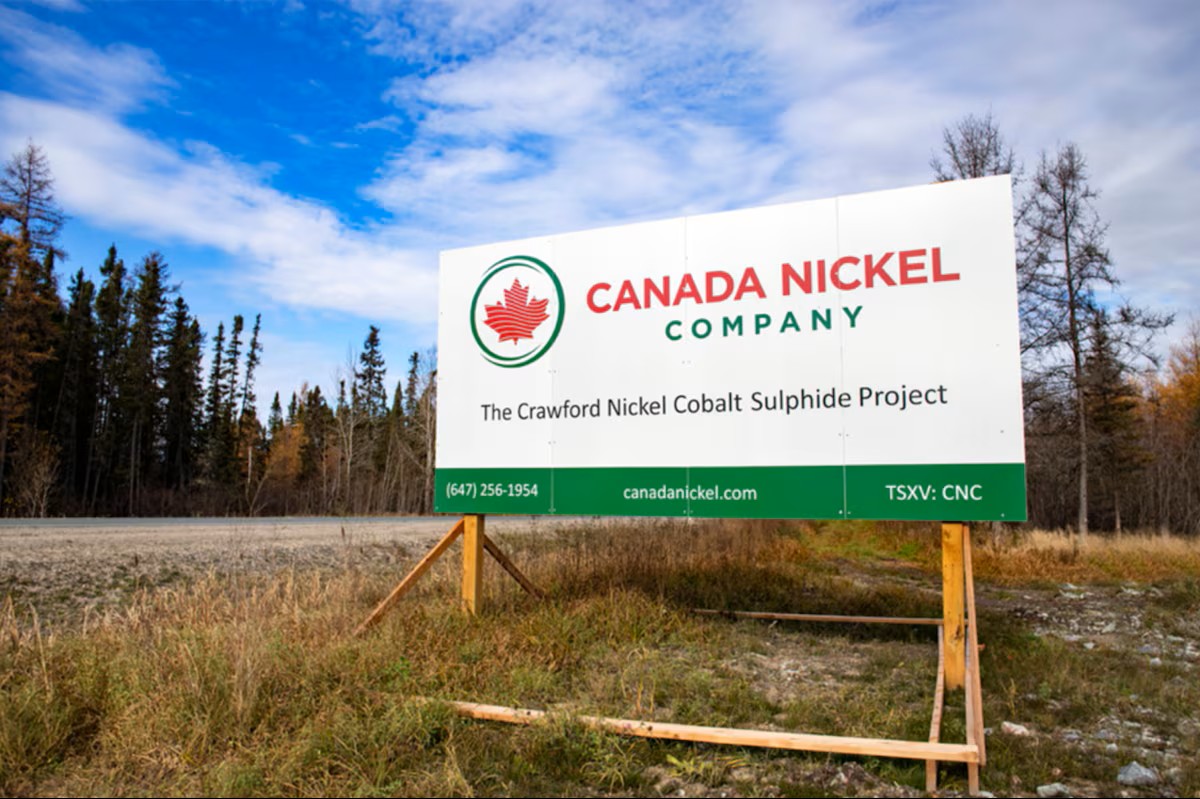
Canada Nickel expects to finalize the equipment and fleet-financing arrangements in the first quarter of 2027, strengthening construction readiness and Crawford’s potential as a long-term source of non-China nickel.
China’s Battery Dominance Raises the Value of Diversified Supply
Global lithium-ion battery nameplate capacity, the rated maximum output of manufacturing plants, exceeded 4 TWh at the end of 2025, approximately 30% above 2024. China controlled more than 80% of that capacity and produced more than 80% of global battery output, while the European Union and US each held 6% to 7% of capacity. Chinese manufacturers also supplied almost 75% of batteries deployed in electric cars in 2025. This concentration means jurisdiction, customer qualification, processing access, and trade policy can determine market access and financing alongside grade and operating cost.
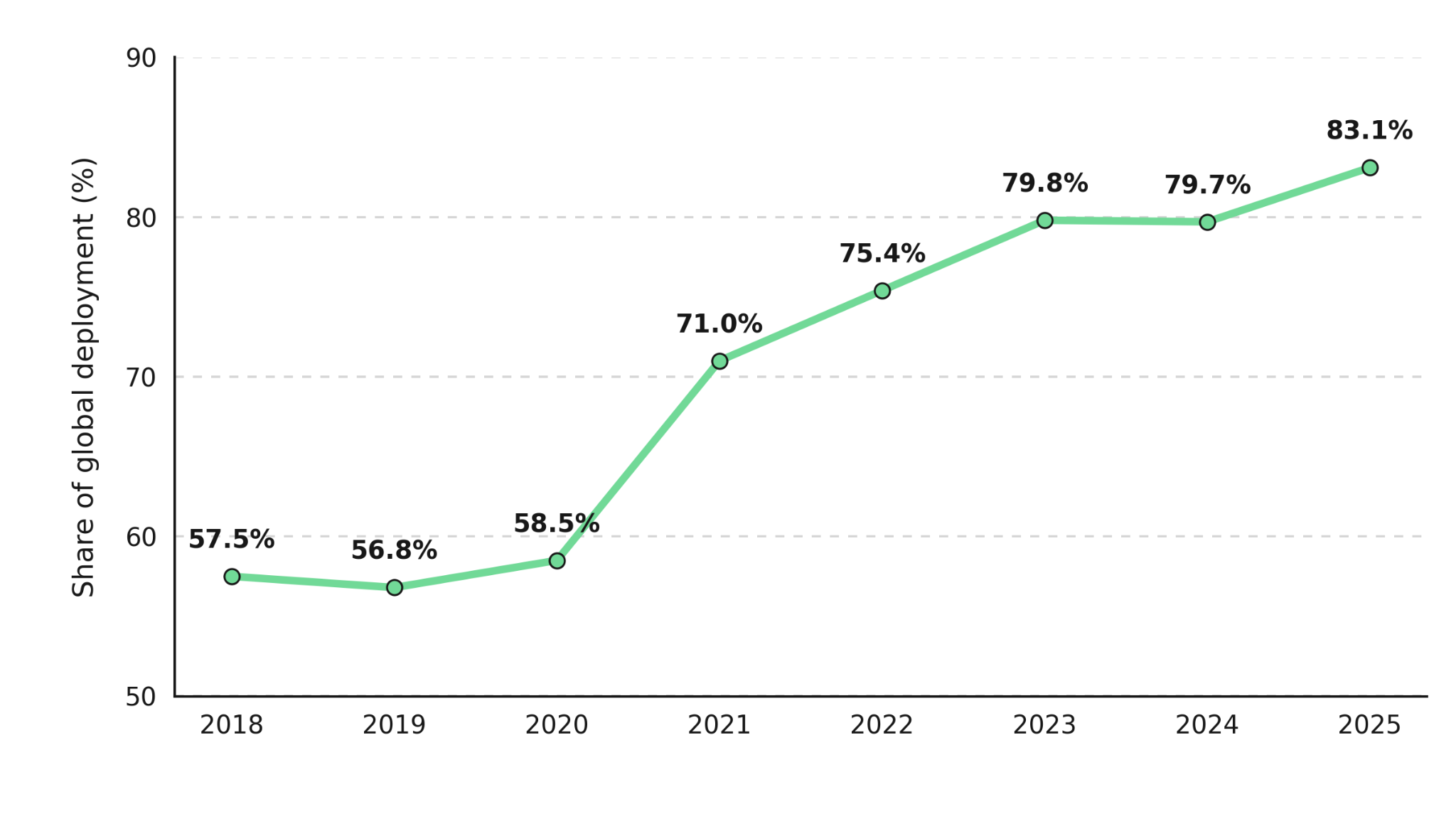
Manufacturing Concentration Raises Non-China Costs & Financing Needs
Europe and the US have built cell plants, but cell capacity alone does not create an independent supply chain. Cathode precursors, LFP materials, graphite anodes, machinery, and technical expertise remain concentrated in China, leaving new plants dependent on Chinese inputs. The IEA estimated that battery-production costs in Europe and the US were as much as 50% higher than in China before public support. New facilities can take more than 5 years after opening to approach rated capacity, while profitable operation generally requires production yields above 90%.
Procurement & Financing Advance Hydrometallurgical Nickel Supply
Hydrometallurgical processing can expand non-China nickel supply by converting mined feedstock into customer-qualified products without conventional smelting. Once consistent recovery and product quality establish the processing route, the investment focus moves to construction readiness. Detailed engineering defines the build, while procurement advances the required equipment and services. Financing progress then supports a final investment decision. These milestones move proposed capacity toward construction and establish a clear pathway for diversifying nickel supply.
Lifezone Metals advanced the Kabanga Nickel Project into large-scale procurement, releasing approximately US$854 million of contracts to market while targeting a final investment decision in the first quarter of 2027. Pre-construction work is supported by US$21.7 million drawn from the Taurus facility and a US$25 million equity raise, while multiple strategic equity offers and indications of liquidity from development finance institutions and export credit agencies provide additional financing pathways.
8% Battery Price Decline Compresses Producer Margins & Tightens Financing
Average battery prices fell 8% in 2025 as manufacturing became more efficient and competition increased. Shifts toward lower-cost chemistries and cheaper mineral inputs reinforced the decline. Lower pack prices support deployment but compress margins from raw materials through cathodes and cells. Many cathode active material producers continued adding capacity despite operating losses, prolonging margin pressure. This pressure favors projects that remain profitable at lower prices and secure contracted revenue before construction. Controlling capital costs and meeting development milestones further improve access to financing.
Offtake Floors & Prepayments Strengthen Lithium Project Financing
Lower battery prices transmit pressure upstream, making lithium project financing more selective. Project economics must remain viable under conservative spodumene-price assumptions, and a lower initial capital requirement reduces the funding burden.
Lithium Ionic targets average production of 177,000 tonnes of spodumene concentrate annually over 18.5 years. Five-year offtakes covering approximately 170,000 tonnes annually, supported by market-linked pricing and a US$20 million prepayment facility, provide commercial validation and financing progress.
Blake Hylands, Chief Executive Officer of Lithium Ionic, explains why project timing matters for lithium supply:
“There aren’t many projects that are staged to push forward, but it’s really important to keep the pace and become a producer when this material is needed. There aren’t that many projects coming online to supply it.”
Battery Growth Expands Demand While Project Execution Determines New Supply
EV battery deployment grew almost 30% to 1.2 TWh in 2025, but China still controlled more than 80% of manufacturing capacity and produced more than 80% of global battery output. China’s lower production costs and control of essential components mean alternative suppliers must compete on cost and reliability rather than jurisdiction alone. Projects convert demand growth into saleable material only after securing permits and financing. They must also demonstrate consistent recovery and qualify products with customers.
Annual EV battery deployment above the 1.2 TWh 2025 base would confirm continued volume growth. Electric-truck and emerging-market deployment will show whether demand is broadening beyond passenger cars and China. The global LFP share and the nickel-containing share outside China will show how additional deployment affects lithium intensity and nickel demand. The spread between battery-pack prices and lithium or nickel input costs will reveal whether raw-material inflation is compressing margins or raising consumer prices. A decline in China’s share of battery output and component manufacturing would confirm that announced capacity elsewhere is reaching commercial operation.
The Investment Thesis for Battery Metals
- Electric vehicle battery deployment reached 1.2 terawatt-hours in 2025, giving lithium and nickel demand a measurable installed-volume base rather than relying only on long-term adoption forecasts.
- Lithium participates across lithium iron phosphate and nickel-containing batteries, giving low-cost lithium projects exposure to battery growth even when manufacturers alter cathode chemistry.
- Nearly 80% of batteries deployed outside China used nickel-containing chemistries, preserving a regional market for nickel projects capable of satisfying non-China customer requirements.
- Jurisdictions with established infrastructure, predictable permitting, and access to low-carbon power can reduce schedule or operating risk.
- Binding offtakes, price floors, advanced engineering, and disciplined capital requirements improve financing visibility by reducing revenue, cost, or schedule uncertainty.
- Large-scale procurement and funded pre-construction work move non-China nickel projects beyond planning, improving visibility toward final investment decisions and construction.
EV battery deployment increased almost 30% in 2025, expanding lithium demand across leading chemistries and preserving a large nickel market outside China for projects that pair competitive costs with contracted sales and proven processing. With battery manufacturing concentrated in China, alternative suppliers have a defined commercial opportunity if they meet customer requirements for product quality and reliable delivery.
TL;DR
EV battery deployment reached 1.2 TWh in 2025, almost 30% above 2024, widening lithium demand across LFP and nickel-containing chemistries. LFP exceeded 55% of global deployment, yet nearly 80% of batteries installed outside China still used nickel-containing chemistries. China retained more than 80% of manufacturing capacity and a major cost advantage, so diversified supply must compete on economics as well as jurisdiction. An 8% decline in average battery prices increased margin pressure across the supply chain, placing greater weight on competitive costs and binding offtakes. Engineering and procurement progress then show which projects are moving toward financing, construction, and production.
FAQs (AI-Generated)
Analyst's Notes





Subscribe to Our Channel




Stay Informed


