85% December Rate-Hike Odds & Gold Price Resistance Create a Selective Opportunity in Dollar-Linked Assets


Fed rate-hike odds rose to 85%, limiting gold's upside despite a US-Iran ceasefire, while dollar-linked assets gain relative appeal.
- Spot gold rose 1.4% to $4,316.42/oz after a 1.7% decline as lower oil prices triggered short covering.
- A 14-point US-Iran interim agreement extended an April ceasefire by 60 days, reducing immediate inflation concerns through lower energy prices.
- Gold faces pressure after the Fed held rates at 3.50%-3.75% and 9 of 19 policymakers projected at least one additional rate hike this year.
- The US-Iran agreement remains provisional, and renewed military action could lift oil prices and inflation expectations.
- Gold could gain support if the ceasefire collapses, oil prices rise, and markets reassess inflation and Fed policy expectations.
Lower Oil Prices Trigger Gold Rebound Despite Rate-Hike Risks
Spot gold rose 1.4% to $4,316.42/oz after a 1.7% decline as lower oil prices triggered short covering. Spot gold later traded near $4,329/oz as investors weighed lower oil prices against rising Fed rate expectations.
The rebound reflects lower inflation expectations rather than a change in Fed policy. Lower oil prices reduce inflation expectations, supporting gold prices. Gold remains under pressure because higher inflation can lead to higher interest rates, increasing the cost of holding non-yielding assets.
US-Iran Ceasefire Lowers Inflation Risks as Fed Signals More Tightening
A 14-point US-Iran agreement extended a ceasefire by 60 days and reduced immediate supply disruption concerns. The agreement includes talks on a permanent settlement, possible sanctions relief for Iranian oil exports, and the reopening of regional shipping routes. Lower geopolitical risk premiums pushed oil prices lower and reduced inflation expectations.
Gold remains primarily driven by interest-rate expectations. The Fed held rates at 3.50%-3.75%, while 9 of 19 policymakers projected at least one additional rate hike this year. Fed Chair Kevin Warsh's comments reinforced expectations that policymakers could raise rates again if economic growth and inflation remain strong.
December Rate-Hike Odds Rise & Cap Gold's Rally
The relief rally could fade if Fed rate-hike expectations continue rising. Gold faces resistance because markets have increased expectations for another Fed rate hike, with the probability of a December move rising 24 percentage points in a single session.
Gold remains driven by changes in Fed rate expectations. Markets now assign an 85% probability to a December rate hike, up from 61% before the Fed meeting. Changes in rate-hike expectations are likely to have a greater impact on gold than short-term geopolitical developments.
Stronger US Dollar Pressures Gold & Precious Metals
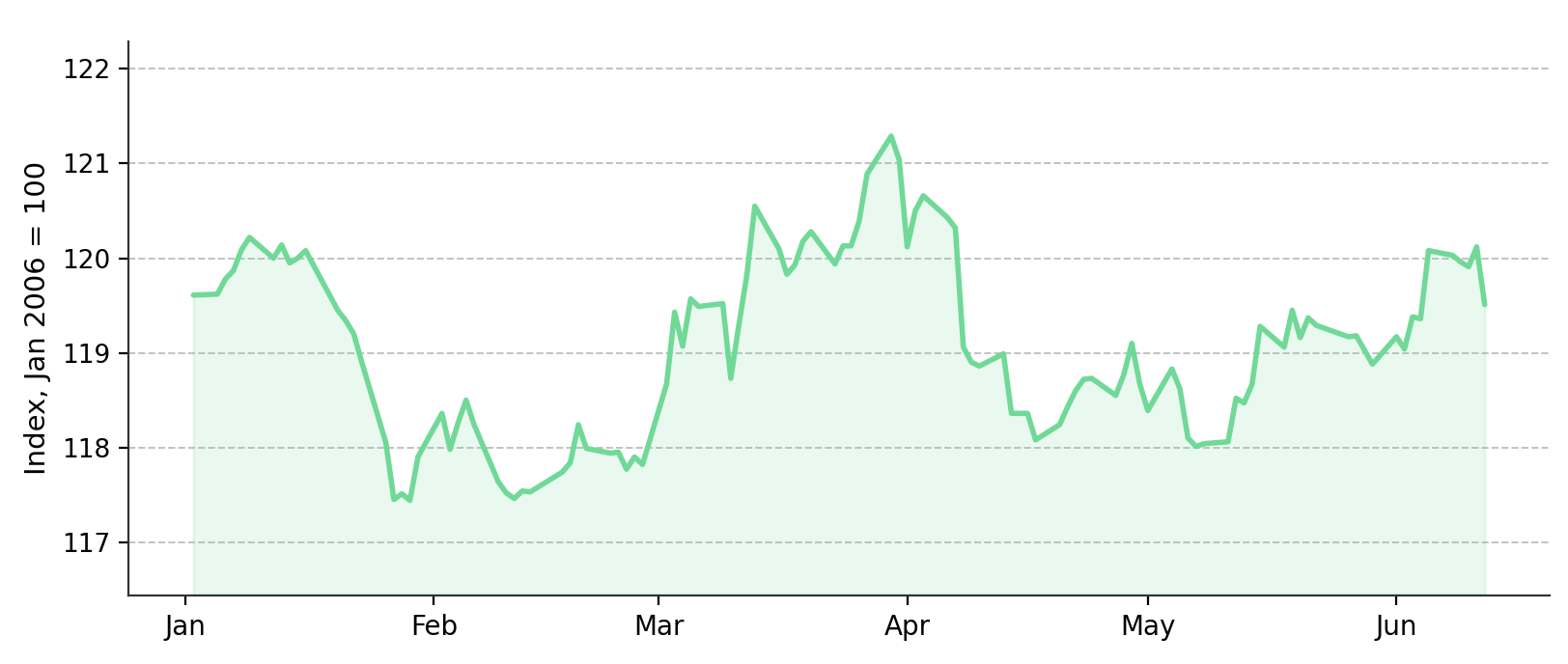
A stronger US dollar increases pressure on precious metals prices. The Federal Reserve Board's broad trade-weighted dollar index closed at 119.51 on June 12, roughly 1.5% below its late-March peak of 121.29 and essentially flat against where it started the year at 119.61 on January 2.
Investors increasingly expect the Fed to prioritize inflation control over supporting economic growth. That expectation supports higher interest-rate forecasts and increases pressure on gold and other precious metals.
Trading the outcome of the 60-day diplomatic window is difficult because oil prices, inflation expectations, and Fed policy could change quickly. Investors should focus on whether portfolios can withstand additional rate hikes and renewed commodity price volatility.
Rate-Hike Expectations & Oil Prices Will Drive Gold's Direction
Gold faces pressure while the Fed keeps rates at 3.50%-3.75% and markets continue pricing another rate hike. Under that scenario, dollar-linked assets and cash-generating sectors remain more attractive than non-yielding commodities.
Gold would likely strengthen if markets reduce rate-hike expectations or if geopolitical developments push oil prices higher. Investors are also watching whether regional trade routes reopen because that could affect oil prices and the US dollar.
Changes in December rate-hike expectations alongside developments in the US-Iran negotiations should be monitored. A decline from the current 85% probability of a December rate hike would indicate lower interest-rate expectations and could support gold prices.
Analyst's Notes





Subscribe to Our Channel

.jpg)
Stay Informed