




$91 Brent Defies Forecasts & Tests Mining Costs


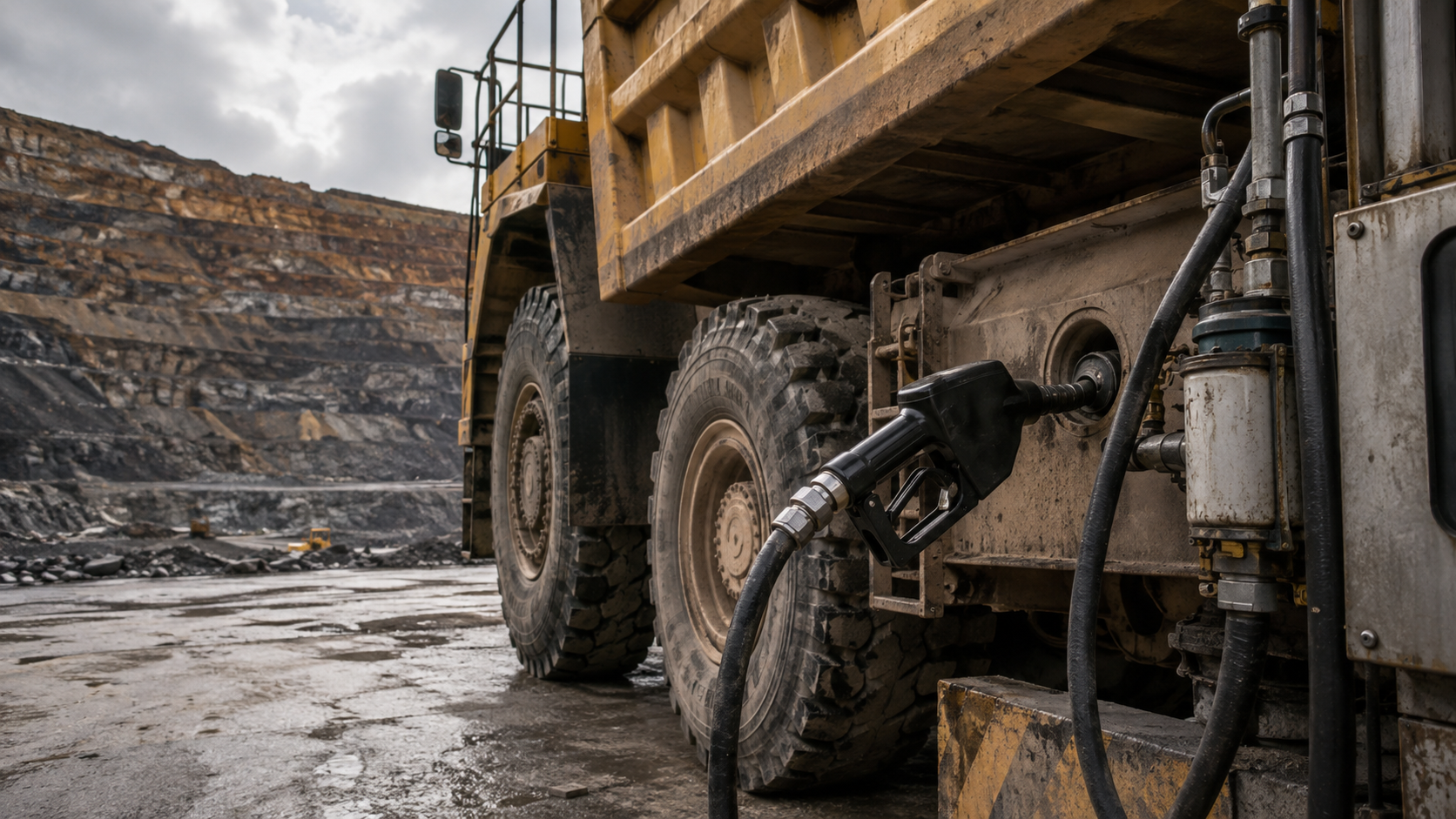
Brent at $91 challenges a $76 year-end forecast as Hormuz risk, high yields, and fuel costs favor near-term mining producers.
- Brent rose 0.2% to $91.04 per barrel on August 18, 2026, while West Texas Intermediate (WTI) rose 0.5% to $84.95.
- Bank of America's August global fund manager survey put the weighted-average year-end Brent forecast at $76 per barrel on August 18, 2026, up $5 from July's $71 forecast.
- The 30-year Treasury yield reached 5.322% on August 18, 2026, near its highest level since 2002, while the 10-year yield reached 4.736%.
- The June memorandum of understanding (MOU) expired on August 17, 2026, and President Donald Trump said he was in no hurry to resolve the US-Iran conflict after threatening to bomb Oman if it interfered with US efforts, leaving the Hormuz disruption unresolved.
- A verified Hormuz reopening would restore transit flows and could pull $91 spot Brent toward the $76 consensus.
Rising Brent Outpaces Forecast Revisions & Leaves a 16% Year-End Gap
Brent rose 0.1% to $91.04 per barrel, while WTI gained 0.5% to $84.95. The third consecutive gain left Brent 1.96% higher over one month and 38.27% above a year earlier, with spot about $15 above the $76 year-end consensus.
Bank of America's August global fund manager survey put the weighted-average year-end Brent forecast at $76 per barrel, up from $71 in July. That forecast implies a roughly 16% decline from $91.04 spot by year-end, even after a $5 upward revision from July.
Hormuz Deadlock & Red Sea Attacks Increase Oil Upside Risk
The June MOU expired after its 60-day negotiation window, while President Donald Trump said he was in no hurry to resolve the US-Iran conflict. Trump also threatened to bomb Oman if it interfered with US efforts, raising the risk that mediation and shipping negotiations would stall. Iranian negotiators have discussed a provisional shipping arrangement with Oman, but no agreement has been reached, leaving Hormuz transit risk unresolved.
Houthi attacks along Yemen's Red Sea coast are moving closer to the Bab al-Mandeb Strait, putting a second oil chokepoint at risk. A $76 year-end Brent forecast requires shipping disruption to recede, while pressure at Bab al-Mandeb alongside constrained Hormuz flows increases upside risk to oil prices.
5.322% Treasury Yield & High Oil Costs Pressure Long-Dated Mining Projects
The 30-year Treasury yield held near 5.322%, close to its highest level since 2002, while the 10-year yield reached 4.736%. Elevated long-term yields raise discount rates while $91 Brent increases energy costs, challenging a $76 year-end oil assumption from both financing and operating-cost channels. Soojin Kim of Mitsubishi UFJ Financial Group (MUFG) said major differences remain over Hormuz, keeping the reopening needed to support the $76 forecast unresolved.
$16 Brent Gap Tests Mining Cost Assumptions & Favors Near-Term Producers
Barrick Mining's second-quarter results state that 2026 guidance assumes $70 WTI and $75 Brent, within $1 of Bank of America's $76 year-end survey forecast. At $91.04, Brent is about $16 above that guidance assumption. The company states that each $10 per barrel oil move changes diesel-related costs by $12 per ounce for gold and $0.04 per pound for copper, making oil prices a direct margin variable.
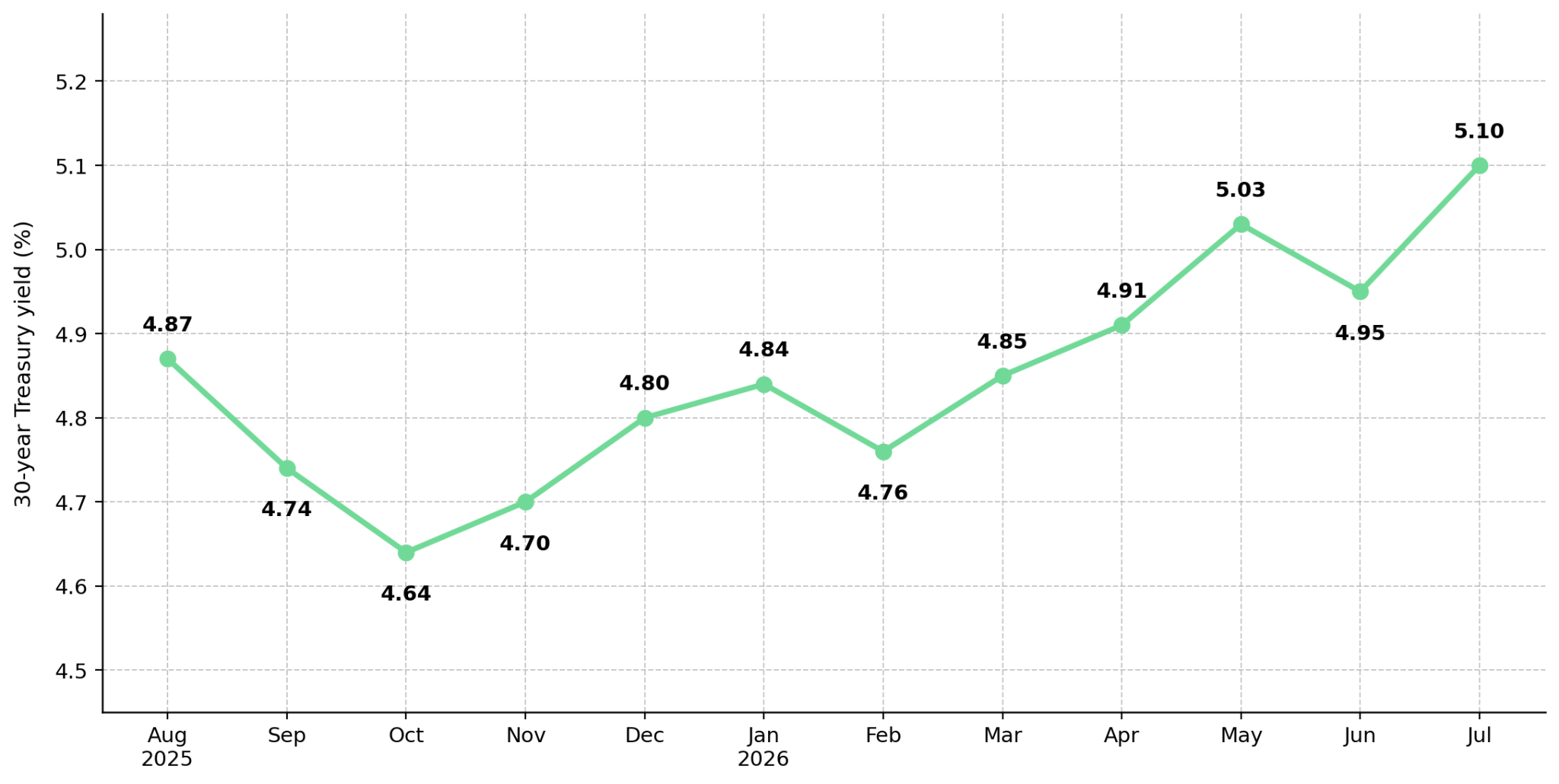
The 30-year Treasury yield averaged 5.10% in July 2026, up 46 basis points from 4.64% in October 2025. Higher long-term yields reduce the present value of distant cash flows more heavily, putting greater valuation pressure on long-dated mining projects than near-term producers.
Producing operations with fuel hedges or gas-linked consumables are less exposed to Brent above the $76 cost deck. Long-dated development assets face higher discount rates and financing hurdles as long-term yields rise. Resource-size screens alone can miss the advantage of near-term producers with protected fuel costs over long-dated projects.
Watch $80 Brent & Rising Distillate Stocks as Oil Upside Fades
US distillate inventories stand at 107.1 million barrels, about 12% below the five-year average despite 96.2% refinery utilization, leaving limited product cover if crude supply remains constrained. Low inventories therefore keep refined-product margins supported even with refineries running near capacity.
Brent below $80 for two consecutive weeks alongside distillate inventories rebuilding toward their five-year average would signal that supply pressure is receding and bring EIA's $69 per barrel 2027 average forecast closer to prevailing prices.
Bank of America's September global fund manager survey will show whether the recent upward oil-price revision continues, while EIA's Weekly Petroleum Status Report will show whether product cover is rebuilding. Reassess positioning when both price and inventory data confirm that the current supply premium is fading.
Analyst's Notes





Subscribe to Our Channel






Stay Informed


