




Chinese Fuel Export Ban Lifts Brent Past $100 Despite Crude Recovery



US distillate stocks remain 14% below the five-year average as constrained refinery throughput supports elevated diesel margins.
- Brent December futures rose 2.4% to $100.36 per barrel on October 1, while West Texas Intermediate (WTI) November futures gained 2.5% to $92.70 after Chinese refiners suspended refined-product exports beyond Hong Kong and Macau.
- Middle East crude exports recovered to 17.5 million barrels per day, 98% of prewar levels, on October 1, while US distillate inventories remained 14% below the five-year average in the week ending September 25.
- A Wall Street Journal survey of Goldman Sachs, J.P. Morgan, and Morgan Stanley put fourth quarter Brent at $90.22 and WTI at $85.47, up from $78.92 and $74.62, respectively.
- European diesel refinery margins held near $80.05 per barrel after reaching a record $95 on September 23, while China’s refined-product export suspension has no stated end date.
- A US Gulf Coast ultra-low sulfur diesel (ULSD) crack spread below $60 per barrel would reverse the refining-margin case.
China Fuel Export Suspension Pushes Brent Above $100
Brent December futures reversed a 1% intraday decline to trade 2.4% higher at $100.36 per barrel, while WTI November futures rose 2.5% to $92.70 after Chinese refiners suspended refined-product exports beyond Hong Kong and Macau until further notice. The expiring November Brent contract settled at $103.50, capping a roughly 14% September gain.
The suspension removes refined products, not crude, as US distillate inventories fell 2.3 million barrels to 105.2 million, 14% below the five-year average, while commercial crude stocks rose 900,000 barrels to 427.3 million, 2% above average.
Capacity Losses Keep Refined Fuel Supply Tight Despite Crude Recovery
Saudi Arabia restarted its East-West Pipeline and tanker loadings at Yanbu, lifting Middle East crude exports to 17.5 million barrels per day, 98% of prewar levels on a 10-day average. Kpler recorded at least 16.5 million barrels per day leaving the Middle East Gulf excluding Iran, with 40% of cargoes routed around the Strait of Hormuz, up from 17% before the war.
US refining capacity remained below year-earlier levels, with operable capacity at 18.027 million barrels per day versus 18.160 million, while utilization fell to 92.5% from 94.0%. Product export restrictions further reduce the refined fuel available to importing markets. Giovanni Staunovo, Analyst at UBS, says the export suspension signals concern over domestic product availability.
Lower Refinery Throughput Holds Diesel Margins Near $80
Restored crude exports do not increase fuel supply when refinery throughput remains constrained. Goldman Sachs put Gulf exports at 23.3 million barrels per day, in line with the 2025 average, while European diesel refinery margins held near $80.05 per barrel after reaching a record $95. David Morrison, Senior Market Analyst at Trade Nation, says the restarted Saudi pipeline remains well below full capacity.
Near-Record Crack Spreads Shift Returns Toward Refining
Refiners with complex, distillate-weighted capacity and export access can capture product shortages through higher crack spreads, while crude-focused exploration and production exposure has less support from supply scarcity as Middle East exports recover to 98% of prewar volumes.
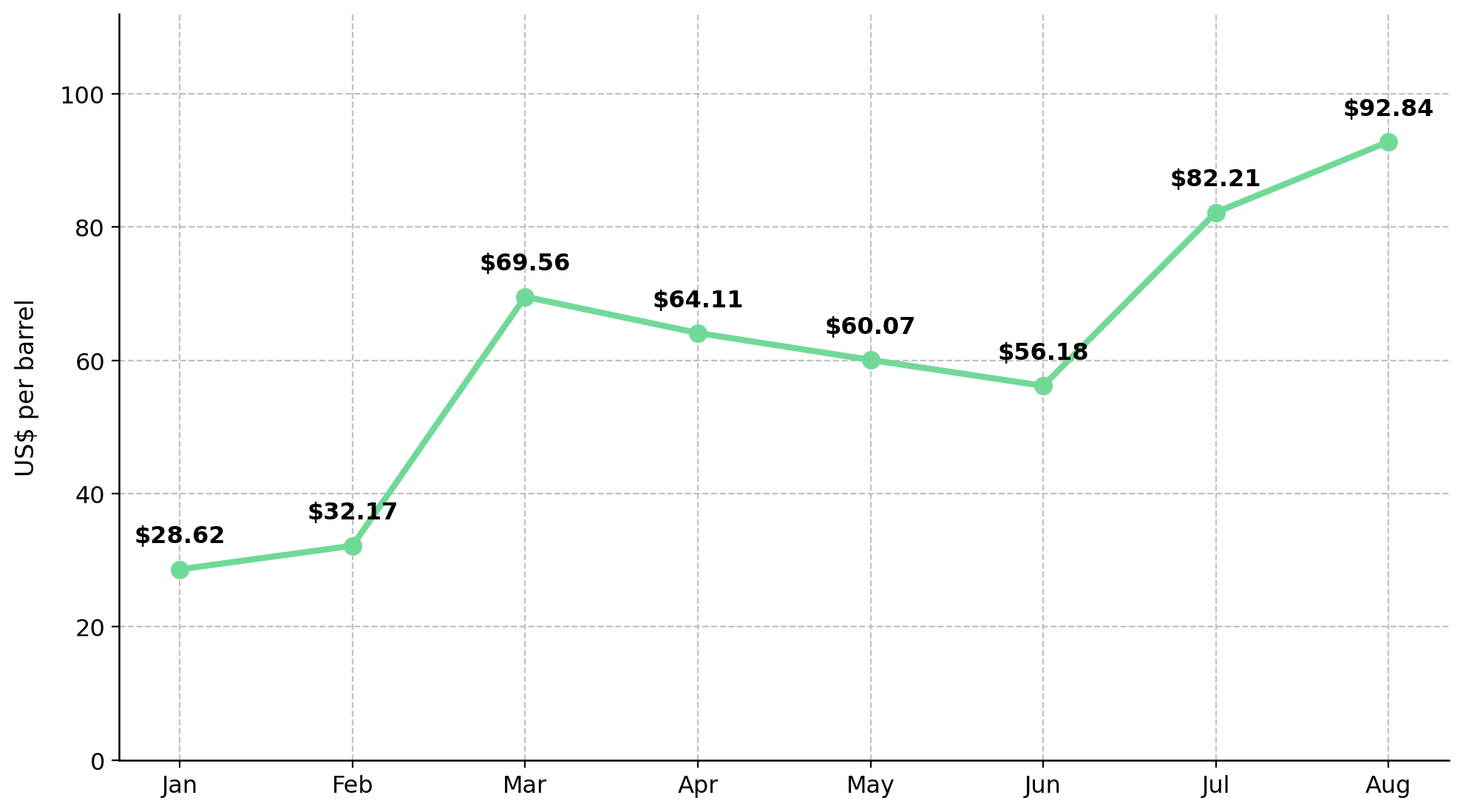
The key distinction is whether an asset earns from refined-product margins or crude prices. Middle East crude flows are nearing prewar levels while fuel supplies, particularly gasoline, remain lower. Capacity that cannot increase distillate yield within a maintenance cycle has less exposure to elevated crack spreads.
The Chinese suspension has no stated end date, while European emergency stock releases remain uncertain. Without a public policy timeline, refining exposure tied to a specific date risks losing the margin premium if either policy changes unexpectedly.
What Sustains Crack Spreads
Oil’s supply constraint has shifted downstream as crude availability recovers while refined-product supply remains tight, leaving refined-fuel prices and margins less dependent on crude prices.
For refiners with complex, distillate-weighted capacity, refining margins warrant greater weight in valuation as crude prices become a less complete measure of earnings.
Refinery closures that lifted margins also discouraged replacement investment, leaving a smaller pipeline of new refining capacity into the next decade and supporting crack spreads for remaining operators.
Analyst's Notes





Subscribe to Our Channel





.jpg)


.jpg)

Stay Informed


