




97.2% Refinery Runs Leave Diesel Tight as Brent Hits $93


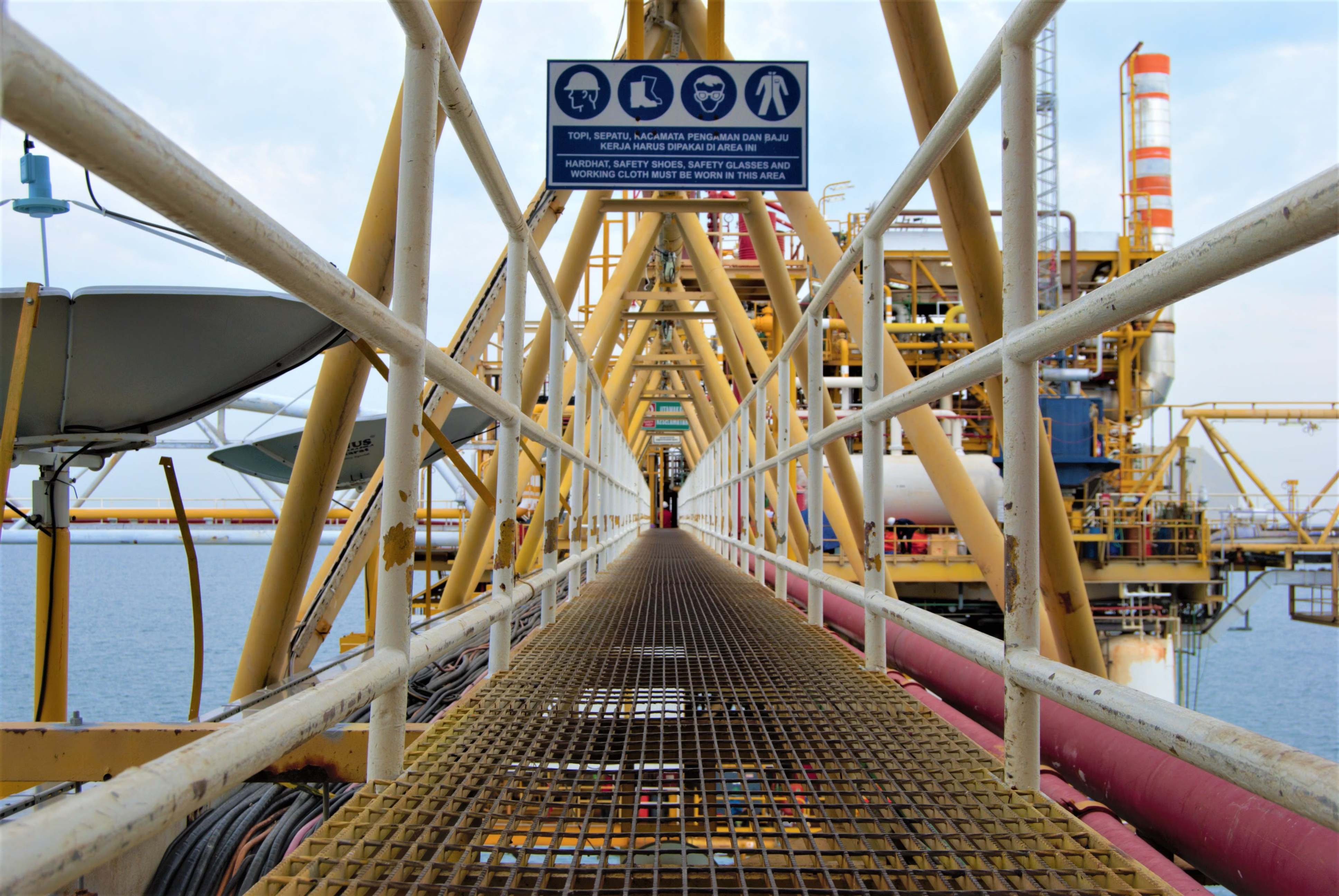
Brent hit $93 as US refineries ran at 97.2%, yet diesel stayed tight, lifting mine fuel costs and keeping distillate supply in focus.
- US refineries ran at 97.2% of capacity in the week ending August 14, 2026, while distillate output fell to 5.2 million barrels per day and gasoline output rose to 9.7 million, according to the US Energy Information Administration (EIA), showing output shifted toward gasoline.
- US crude inventories rose 4.4 million barrels to 428.8 million in the week ending August 14, 2026, matching the five-year average, while distillate stocks fell to 105.6 million, about 13% below average.
- US retail diesel rose 19.7 cents to $5.454 per gallon on August 17, 2026, up $1.741 year over year and increasing fuel costs for diesel-intensive mining operations.
- New York Harbor ultra-low sulfur diesel rose to $4.332 per gallon on August 14, 2026, from $3.910 a week earlier and $2.280 a year earlier, confirming tighter wholesale diesel pricing.
- A distillate inventory build while refinery utilization remains above 96% would be the first sign of improving diesel supply and lower fuel-cost pressure.
Brent Above $92 & Tight Diesel Raises Fuel-Cost Risk
Brent rose 1.52% to $93.01 per barrel, 37.45% above a year earlier, while WTI reached $83.99. Elevated crude prices raise energy costs, but tighter diesel supply creates the greater cost risk for fuel-intensive operations.
Commercial crude stocks rose 4.4 million barrels to 428.8 million, matching the five-year average, while distillate stocks fell 1.5 million to 105.6 million, about 13% below average. Crude supply has normalized, but tight diesel inventories continue to support higher fuel costs.
97.2% Refinery Runs & Higher Gasoline Output Tighten Diesel
US refineries ran at 97.2% of capacity, the highest weekly rate of 2026, as crude inputs rose 215 thousand barrels per day to 17.4 million. Gasoline output rose to 9.7 million barrels per day while distillate output fell to 5.2 million, showing product yield rather than refinery capacity constrained diesel supply.
Distillate product supplied rose from 3.458 million to 3.953 million barrels per day, while exports fell from 1.935 million to 1.601 million. Despite fewer exports, East Coast stocks fell from 23.9 million to 22.2 million barrels, showing stronger domestic demand and lower output outweighed the additional supply retained in the US.
Gasoline Stocks 5% Below Average Delay Diesel Relief
Refiners set product yields weeks ahead based on margins and crude quality, so one week of higher diesel prices is unlikely to lift distillate output immediately. Gasoline inventories remain 5% below the five-year average, supporting gasoline production through summer driving demand and delaying relief for tight diesel supply.
Diesel Jumps 19.7 Cents & WTI Budgets Understate Mine Costs
Diesel is a major energy input at open pit and remote mining operations, so higher prices directly raise operating costs. US retail diesel rose 19.7 cents to $5.454 per gallon, $1.741 above a year earlier, while New York Harbor ultra-low sulfur diesel climbed from $3.910 to $4.332 in one week and remained well above $2.280 a year ago.
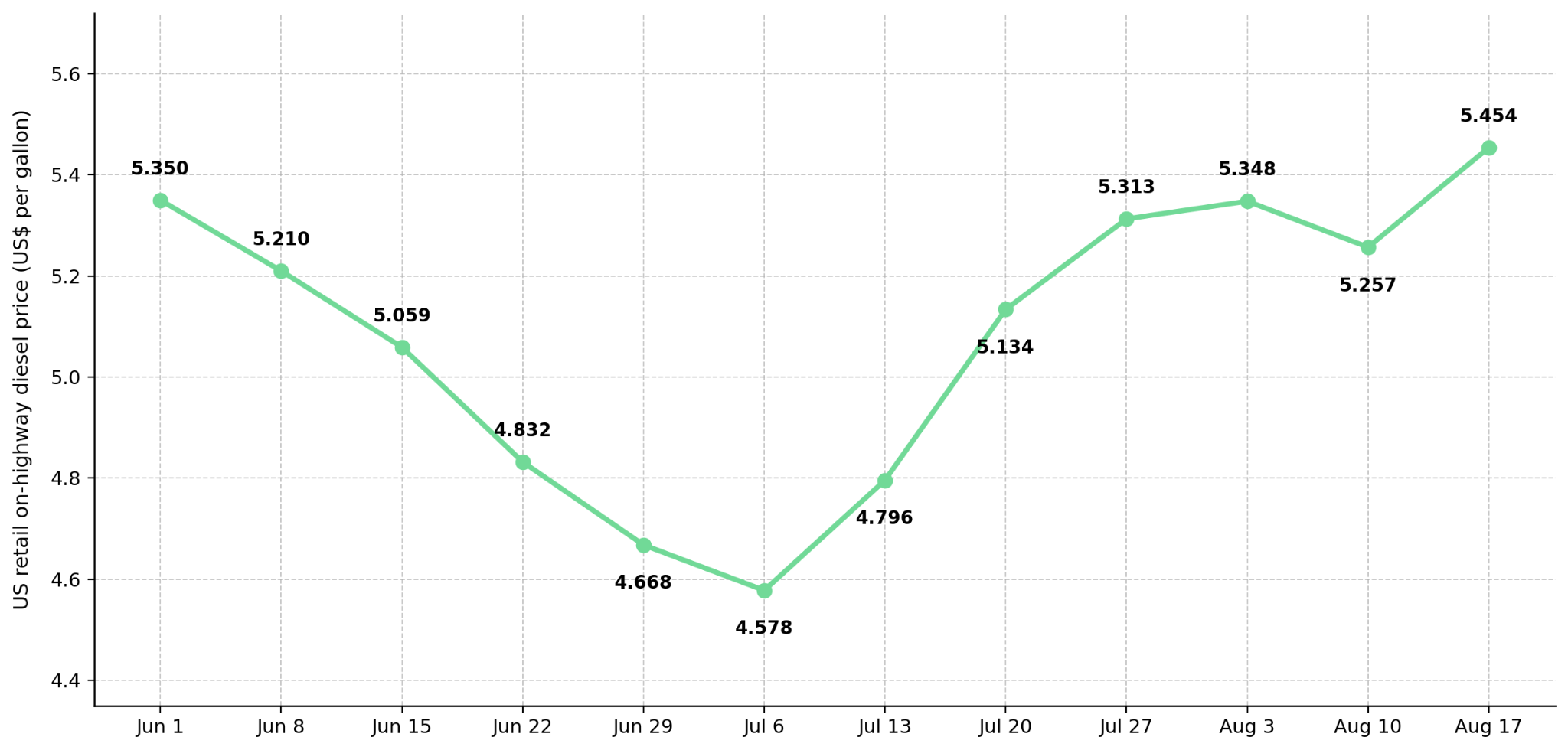
Fuel budgets tied only to crude prices can understate actual diesel costs. WTI rose $4.22 for the week, while diesel prices increased faster, and regional retail prices ranged from $5.237 per gallon on the Gulf Coast to $6.785 in California, making location-specific diesel pricing more accurate for mine cost assumptions.
The timing of a refinery shift back toward distillate remains uncertain. Mine cost assumptions should therefore use regional ultra-low sulfur diesel prices rather than crude benchmarks and account for whether fuel costs are fixed or move with market prices.
5.3M bpd Distillate Output Signals Fuel-Cost Relief
Refinery utilization at 97.2% while output favors other products over distillate has left stocks at 105.6 million barrels, about 13% below the five-year average, supporting elevated diesel prices and fuel costs.
A distillate inventory build while refinery utilization remains above 96% would show product yield, not capacity, was limiting diesel supply. Two consecutive weeks would confirm improving supply and signal lower diesel price and fuel-cost pressure.
Check the August 26, 2026 EIA report for distillate production and inventories, not just crude stocks. Reassess fuel budgets only if distillate output rises above 5.3 million barrels per day and inventories build in the same week, signaling improving diesel supply.
Analyst's Notes





Subscribe to Our Channel




Stay Informed


