




A 12-Million-Tonne Sulfide Mill Now Leads the Gabbs Plan From Year 3


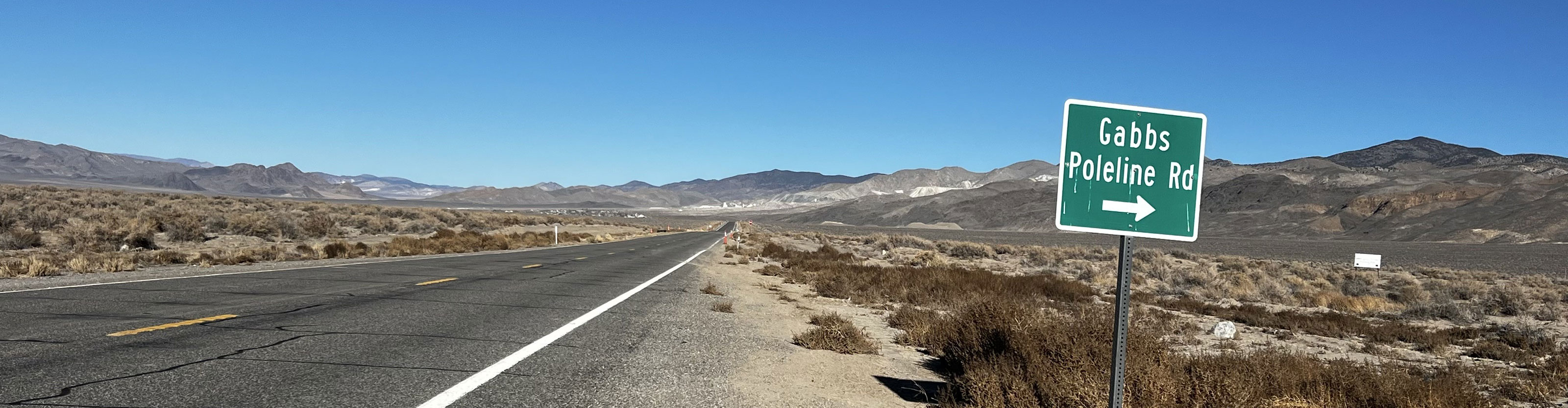
P2 Gold's Gabbs feasibility study now plans a 12-million-tonne-per-year sulfide mill from year 3, with the heap leach limited to oxide mined to reach it.
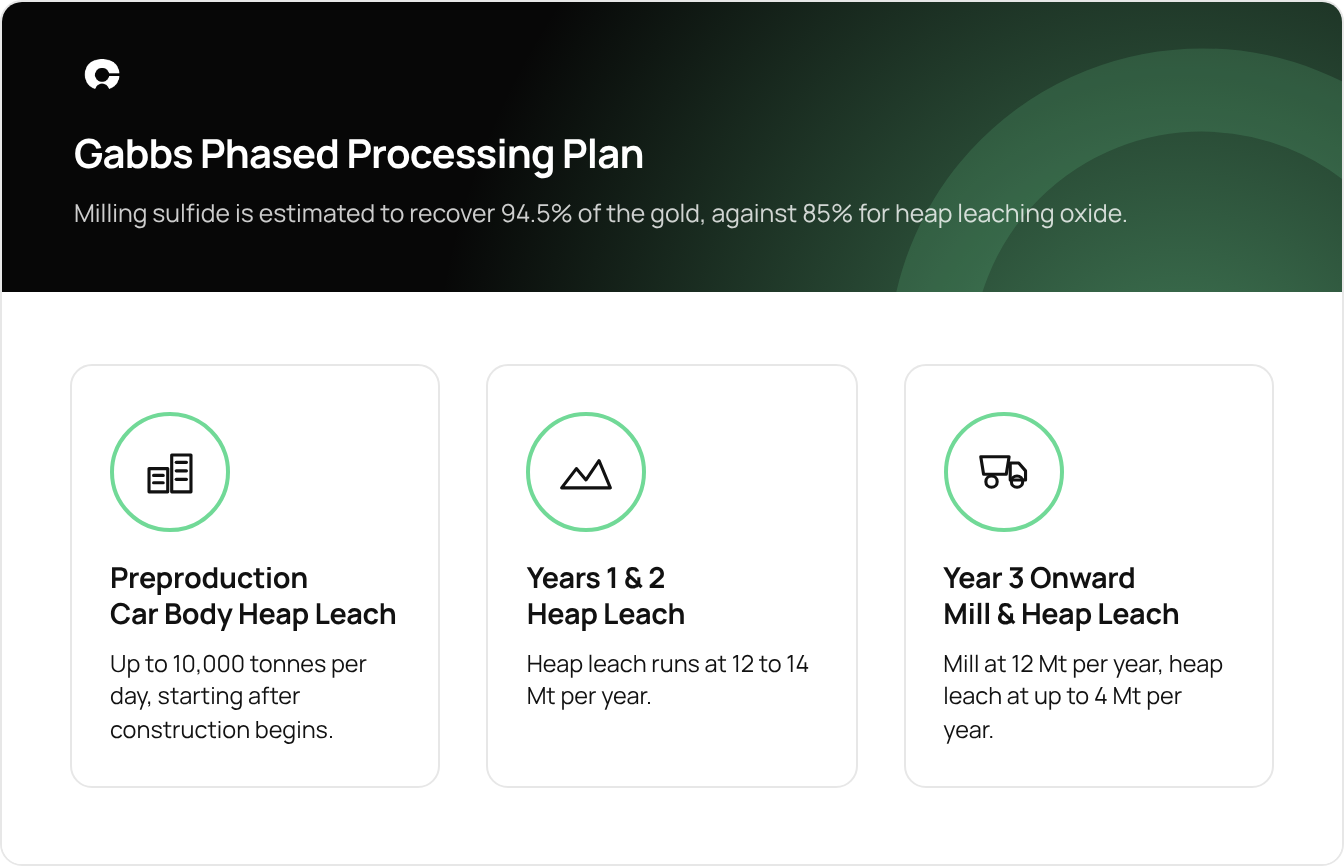
- The feasibility study (FS) for Gabbs now plans for a mill to run at 12 million tonnes per year from year 3.
- Drilling and analysis completed to date indicate that Lucky Strike mineralization is predominantly sulfide.
- From year 3, the heap leach will take only the oxide mined to reach the sulfide, which is expected to vary from 2 to 4 million tonnes per year.
- Milling sulfide ore is estimated to recover 94.5% of the gold, compared with 85% for heap leaching of oxide ore.
- An updated mineral resource estimate (MRE) is due in the fourth quarter of 2026, ahead of the FS in the first quarter of 2027.
What Has Happened
P2 Gold (TSXV: PGLD | OTCQB: PGLDF) has changed the processing plan behind the feasibility study (FS) for its 100%-owned Gabbs gold-copper project on the Walker Lane Trend in Nevada. The FS will now proceed with a mill that starts up in year 3 and runs at 12 million tonnes per year, alongside a heap leach that scales back once the mill is running.
The FS is due in the first quarter of 2027. An updated mineral resource estimate (MRE) incorporating all drilling to date is due in the fourth quarter of 2026. The study is advancing on a production rate of at least 12 million tonnes per year, targeting average annual production of 150,000 ounces (oz) of gold and 45 to 50 million pounds (lb) of copper.
Lucky Strike Sulfide Tonnage & the 12-Million-Tonne Mill
Drilling and analysis completed to date indicate that the Lucky Strike gold-copper mineralization is predominantly sulfide, and the FS mill plan proceeds accordingly. Management says that infill and expansion drilling since the 2025 preliminary economic assessment (PEA) has consistently returned more sulfide than oxide.
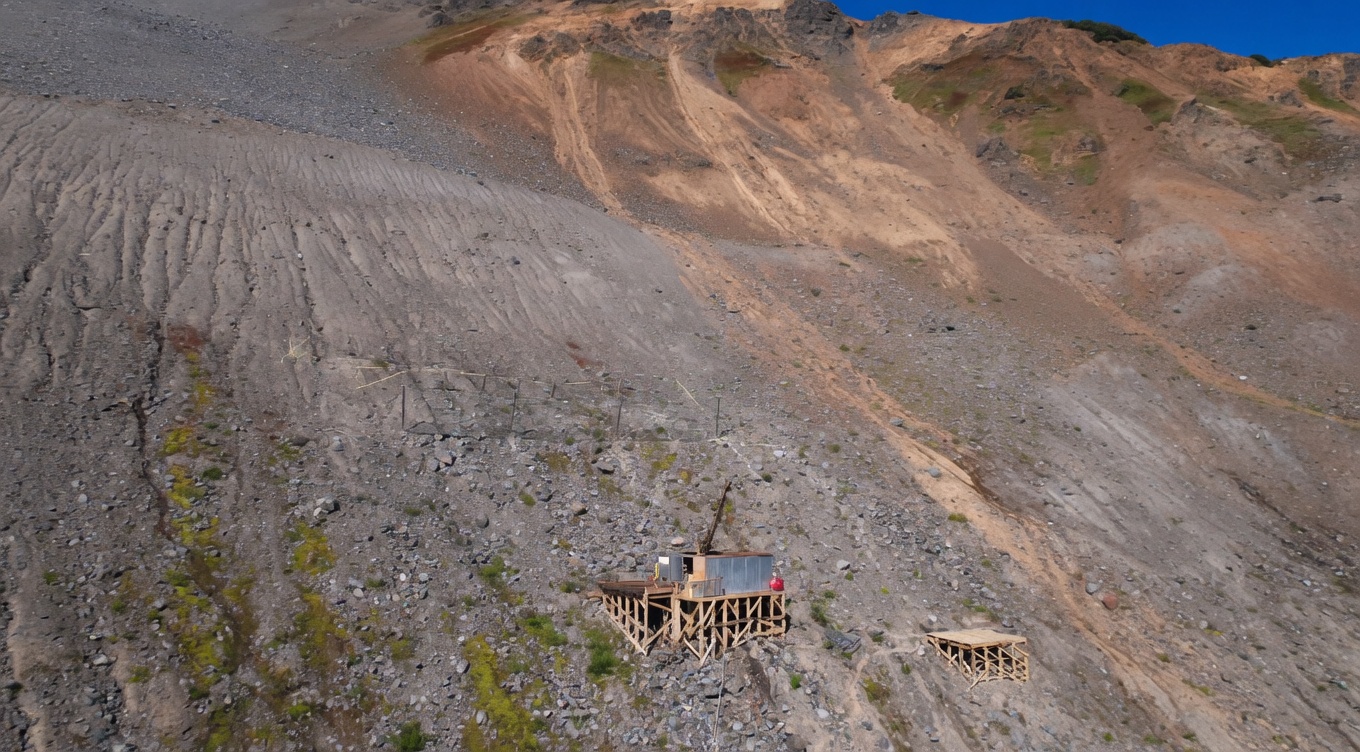
The program running since October 2025 has completed 96 reverse circulation holes, 34 at Sullivan and 62 at Lucky Strike, plus 39 diamond holes for geotechnical, metallurgical, and exploration work. It has also defined a new higher-grade corridor of gold-copper mineralization at Lucky Strike, where the zone remains open in all directions. As of September 21, 2026, 2 drills were still working: the first extending the corridor to the southwest, and the second extending Sullivan down-dip, deeper along the zone's incline. From year 3 through the remainder of the mine life, mining will prioritize delivering sulfide mineralization to the mill at 12 million tonnes per year. President and Chief Executive Officer of P2 Gold, Joe Ovsenek, places the mill at the center of the mine life once the oxide years pass:
"Then in year 3, a mill comes on at 12 million tons a year. And that's just going to stay for the rest of the mine life as we get through the sulfides."
The FS is targeting a mine life of at least 12 years.
The Heap Leach in the Revised Sequence
The heap leach, in which crushed ore is stacked on lined pads and irrigated with a leach solution, has a different job in each phase of the revised plan. Copper is recovered from the heap solution in a sulfidization, acidification, recycling, and thickening (SART) plant, a process that removes copper from the cyanide leach solution so the cyanide can be reused.
Before production, the Car Body gold-silver mineralization is planned for delivery to the heap leach at up to 10,000 tonnes per day, starting as soon as reasonably possible after construction begins. Car Body is a low-sulfidation epithermal gold deposit, a type formed by hot fluids at shallow depth, with minimal copper, and the SART plant is not required to treat its solution. Using contract mining, crushing, and stacking, and off-site gold recovery, Car Body may deliver cash flow in roughly 6 months from the start of construction. Ovsenek ties Car Body's start to the build period of the main mine:
"Let's bring it out on its own. And the way we're looking at that is we'll bring it on while we're still building the mine."
In years 1 and 2, the heap leach runs at 12 to 14 million tonnes per year. From year 3, it runs at a variable rate of up to 4 million tonnes per year in parallel with the mill, taking only the oxide that must be mined to reach the sulfide, which is expected to range from 2 to 4 million tonnes per year. In Phase Three Metallurgy, 98% of gold and 85% of copper were recovered in the first 58 days of leaching, with total recoveries achieved in 110 days, compared with the 150-day leach cycle used in the 2025 PEA.
Mill & Heap Leach Recoveries
Moving tonnes from the heap leach to the mill raises the estimated recovery of both metals. Milling the sulfide mineralization is estimated to recover 94.5% of the gold and 79.9% of the copper. Heap leaching of the oxide mineralization is estimated to recover 85% of the gold and 67% of the copper.
In the mill, sulfide ore goes to a flotation circuit, a process that separates mineral particles from waste using air bubbles, producing a copper-gold concentrate. Leaching of the flotation tails, the material left after flotation, yields gold-silver doré, an unrefined bar of the 2 metals. On the heap leach side, the SART plant produces a copper-silver concentrate, and the gold and silver are recovered as doré.
Feasibility-level test work on both circuits is still in progress. Comminution testing, which measures how ore breaks during crushing and grinding, is complete on Sullivan and Lucky Strike. Flotation testing is underway for all zones. Column testing, which simulates heap leaching in tall columns of ore, is at various stages on 22 columns of Sullivan and Lucky Strike oxide, and the 3 Car Body columns are complete.
Changes From the 2025 PEA
The FS plan reverses the weighting of the 2025 PEA. The PEA ran the heap leach alone in years 1 to 5 at 9 million tonnes per year, then a heap leach at 4 million tonnes per year alongside a mill at 5 million tonnes per year from year 6 to the end of a 14.2-year mine life. It outlined average annual production of 109,000 oz of gold and 33 million lb of copper. The recovery estimates for both circuits date from the October 2025 PEA update.
The April 2024 MRE predates the current drill program. It classified Lucky Strike as inferred oxide and inferred sulfide material of 35.9 million and 33.3 million tonnes (t) respectively. Sullivan carried 33.7 million t of indicated oxide and 16.1 million t of indicated sulfide. The drilling that moved the mill to 12 million tonnes per year will be included in the updated MRE. Management says the FS is likely to set the operating plan, and that it may be updated if further drilling expands the resource.
Broader Context
The SART process for recovering copper from the Gabbs heap solution is either in production or in design elsewhere. SART plants are in use at Newmont's Yanacocha Mine in Peru and at the Çöpler mine in Türkiye. In Nevada, Kinross's Redbird 2 Project at Bald Mountain has a SART plant at the procurement and engineering design stage.
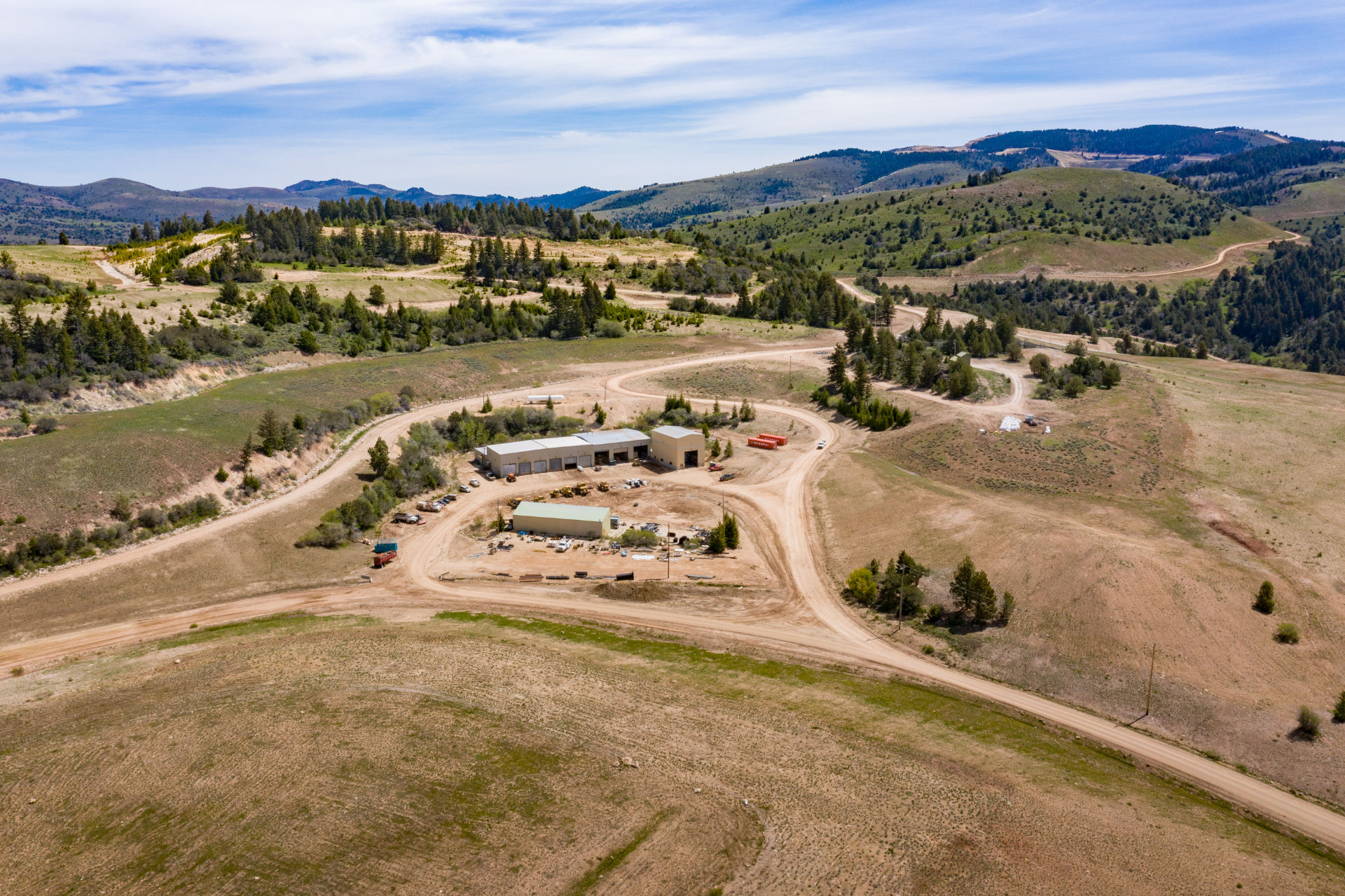
Heap leaching at Gabbs predates P2 Gold. A heap leach bulk sample was completed at Gabbs in 1989, and a pre-feasibility study and a mining plan of operations followed in 1995. The SART process was developed in 1998, and the first SART plant entered production at the Telfer Mine in 2006. P2 Gold acquired Gabbs in 2021, and the project has paved access via Highway 361, with power and water on site.
What to Watch Next
The mill-led plan meets its next tests in the fourth quarter of 2026 and the first quarter of 2027. Locked-cycle flotation tests, repeated flotation runs that recycle intermediate products to imitate a continuous plant, were due to finish in the month after the September 21, 2026, update. Metallurgical test results and the updated MRE are due in the fourth quarter of 2026, and further drill results will be reported over the coming months.
The FS is due in the first quarter of 2027. With the planned increase in mill throughput, P2 Gold is targeting the same quarter to file a detailed mining plan of operations with the Bureau of Land Management. As of September 21, 2026, the change-of-use approval for the 2,500 acre-feet-per-year water rights that P2 Gold has agreed to acquire was anticipated in 3 to 6 months, coinciding with the projected completion of the FS. Readers can track the mill-led plan through the sulfide tonnes in the updated MRE and the recoveries from the locked-cycle flotation tests.
FAQs (AI-Generated)
Analyst's Notes





Subscribe to Our Channel





Stay Informed






















