Feasibility Engineering Is Quietly Rewriting the Economics at P2 Gold's Gabbs Project



P2 Gold's Gabbs project sees feasibility engineering & new drilling both point to a bigger mine than the original PEA outlined in Nevada.
- P2 Gold's feasibility study is targeting 12 million tonnes per year of processing at Gabbs, up from the 9 million tonnes per year modeled in the October 7, 2025 preliminary economic assessment (PEA), with the mill brought forward from year 6 to year 3.
- The revised plan is targeting average annual production of 150,000 ounces of gold and 45 to 50 million pounds of copper, up from the PEA's 109,000 ounces of gold and 33 million pounds of copper.
- Drill holes placed specifically to support mine engineering, rather than to search for new ore, still returned gold-copper mineralization at the edge of the planned pit, indicating the Lucky Strike zone continues to grow in every direction tested.
- Gabbs already has paved highway access, an on-site power substation, secured water rights, and an extensive network of historical drill roads, cutting both permitting exposure and construction costs.
- The company is targeting a feasibility study by year end 2026, full permitting by the end of 2027, and first production in 2029, alongside an updated mineral resource estimate of 3.0 million ounces gold indicated and 1.5 billion pounds copper indicated, and a longer term target of over 5 million ounces gold equivalent.
P2 Gold (TSX-V:PGLD), and its chief exploration officer, Ken McNaughton, stood in the middle of the company's Gabbs project in Nevada and pointed out something that had nothing to do with drilling. The mine plan itself, still being finalized for a year-end feasibility study, had already changed twice.
That is not typical. Feasibility engineering is usually the stage where a project's numbers get confirmed, not where they get bigger. At Gabbs, the opposite has happened. What began as a routine exercise to firm up the 2025 PEA has instead become the source of the project's most significant upgrades this year, alongside fresh drilling that is adding to the story in its own right.
A Deposit That Needed 2 Technologies to Work
Gabbs is a gold-copper porphyry system in Nevada's Walker Lane trend, 150 miles from Reno. Operators worked the district as far back as the late 1800s, and modern-era companies drilled it again in the 1980s and 1990s. None of them made the combined ore economic, because none of them had a process that could recover both gold and copper from the same ore at once.
McNaughton described Gabbs as an unusual copper-gold porphyry system for the region, one whose geology gives the project genuine scale and economic potential. The addition of Sulphidization, Acidification, Recycling and Thickening (SART) processing, a method used at operations including Newmont's Yanacocha mine, and currently under construction at Kinross's Redbird 2 Project at Bald Mountain, is what finally lets P2 Gold extract both metals from the same ore stream. Without it, Gabbs stays what it always was: 2 deposits that historically didn't work economically on their own. The 2 known zones, Sullivan and Lucky Strike, were drilled separately and to different depths by prior operators, and neither was tested through its full thickness, since neither owner had reason to look past whichever single metal they were chasing.
The Feasibility Study Is Already Rewriting the Plan
The October 7, 2025 PEA modeled a 9 million tonnes per year heap leach operation with the mill starting in year 6. McNaughton was candid that this was a starting point, not a ceiling, describing the PEA as effectively a scoping study the company is now actively optimizing. Rather than waiting until year 6 to bring the mill online, the company has determined it makes more sense to do so in year 3, and rather than processing 9 million tonnes per year, management now believes 12 million tonnes per year is achievable.
That single throughput change, paired with the accelerated mill timeline, is targeting average annual production of 150,000 ounces of gold and 45 to 50 million pounds of copper, up from the PEA's 109,000 ounces of gold and 33 million pounds of copper, according to the company's May 11, 2026 update. McNaughton flagged additional upside beyond even that figure, since recent infill grades at Lucky Strike have been running higher than the historical drilling implied. That distinction matters for how investors should read the project: the throughput and timing changes alone, without any new tonnes or ounces added to the resource base, already point toward a materially larger production profile.
Drilling Is Finding the Same Story Twice
That upside is not coming from infill drilling alone. In early July 2026, the company reported results from a separate set of holes drilled specifically to support mine engineering work rather than to search for new ore, holes placed right at the edge of the pit boundary outlined in the PEA. Every one of them came back with gold-copper mineralization. Ground that was only meant to confirm slope and engineering assumptions turned out to still be mineralized, telling the company the Lucky Strike zone keeps growing in every direction tested. Those results will be folded into the updated resource estimate feeding this year's feasibility study, rather than sitting apart from it. For a project already being re-sized upward through engineering alone, that is a second, independent signal pointing the same direction.
Grade Confirms Itself Underground
That upside also showed up directly in recent exploration drill results. At the core shack, P2 Gold's Joy Lester walked through a hole drilled into the Lucky Strike zone's quartz monzonite host rock. Within a broader mineralized interval, Lester pointed to a more enriched sub-section running nearly 2 grams of gold and 0.35% copper over 65 feet, and within that, a narrower 5 foot interval of exceptionally high-grade material grading 183 grams of gold and 4% copper. Lester also noted that Gabbs sits in Jurassic rocks from an old island arc intruded by a monzonite porphyry system, geologically distinct from the tertiary epithermal deposits at neighboring historic mines, drawing a regional comparison to the Ann Mason copper deposit near Yerington.
Infrastructure & Permitting Cut the Clock
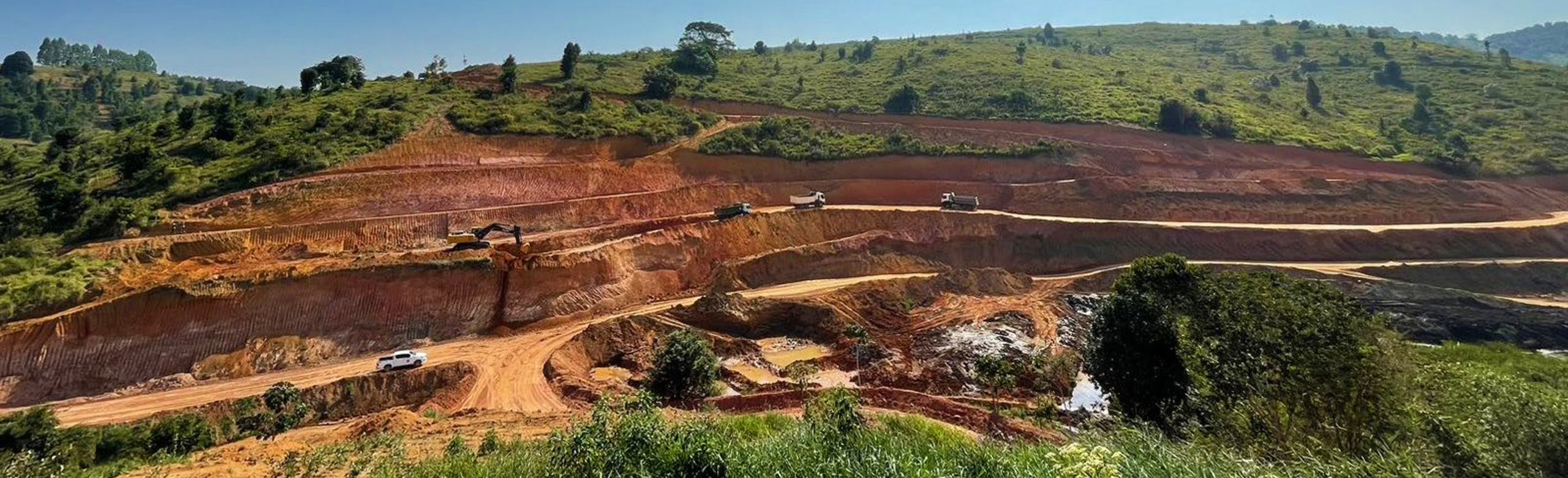
Gabbs is reached by paved highway, has a power substation and transmission line on the claim block, and has secured water rights. The property's dense network of historical drill roads also reduces new ground disturbance that would otherwise need separate permitting review.
The company is managing 2 permits concurrently, 1 for Sullivan and 1 for Lucky Strike, which under current rules must stay at least 1 mile apart, temporarily limiting exploration of the Gold Ledge zone between them. Baseline studies, engineering, and metallurgical test work are largely advanced, positioning the company to target a feasibility study by year end 2026, full permitting by the end of 2027, and first production in 2029 through a staged, lower cost heap leach start.
Where the Project Stands Now
None of this depends on a single new discovery. It depends on engineers finishing arithmetic already sitting in the data, and on drilling that was never meant to expand the resource doing exactly that anyway. If the year-end feasibility study confirms what management is now targeting, Gabbs will look like a materially larger project in early 2027 than it did in its own PEA a year earlier.
Analyst's Notes





Subscribe to Our Channel





Stay Informed