Astra Exploration: Expanding High-Grade Discovery in Argentina's Emerging Mining District


.webp)
Astra advances high-grade La Manchuria gold-silver discovery in Argentina; 10K-meter Phase 2 drilling demonstrates system expansion; assays pending on surface footprint extension.
- Astra Exploration completed its inaugural drill program at La Manchuria in early 2025, intersecting high-grade gold and silver near surface with grades reaching "ounces of gold and kilograms of silver"
- Phase 2 drilling program of 10,000 meters initiated in October 2025, with first half focused on extending surface footprint and second half targeting deeper zones starting March
- The system has been demonstrated to extend beyond previous geological interpretations, opening up in multiple dimensions with new parallel zones identified
- Company is exploring dual development scenarios: bulk tonnage open pit transitioning to underground high-grade mining versus purely high-grade vein approach
- Management actively seeking to add projects to portfolio, anticipating producers will need quality exploration assets to replenish depleted pipelines in current cycle
Astra Exploration (TSXV:ASTR) is advancing its flagship La Manchuria precious metals project in Argentina, where the company is pursuing an aggressive exploration strategy following encouraging initial drilling results. CEO Brian Miller outlined the company's progress and 2026 plans in a comprehensive discussion covering exploration results, geological interpretation, capital allocation, and the improving investment climate in Argentina.
Securing La Manchuria and Initial Success
The company's most significant achievement in 2024-2025 was securing the deal on La Manchuria in mid-2024, followed by the inaugural drill program in early 2025. The results validated management's thesis about targeting high-grade feeder zones rather than the bulk tonnage approach taken by previous explorers. Miller emphasised the quality of mineralisation encountered:
"The grades that we've intersected there, they're not common to get repeat grades because I'm literally talking about ounces of gold and kilograms of silver in open drill intercepts near surface. And they're not one-offs. We've repeated several of those."
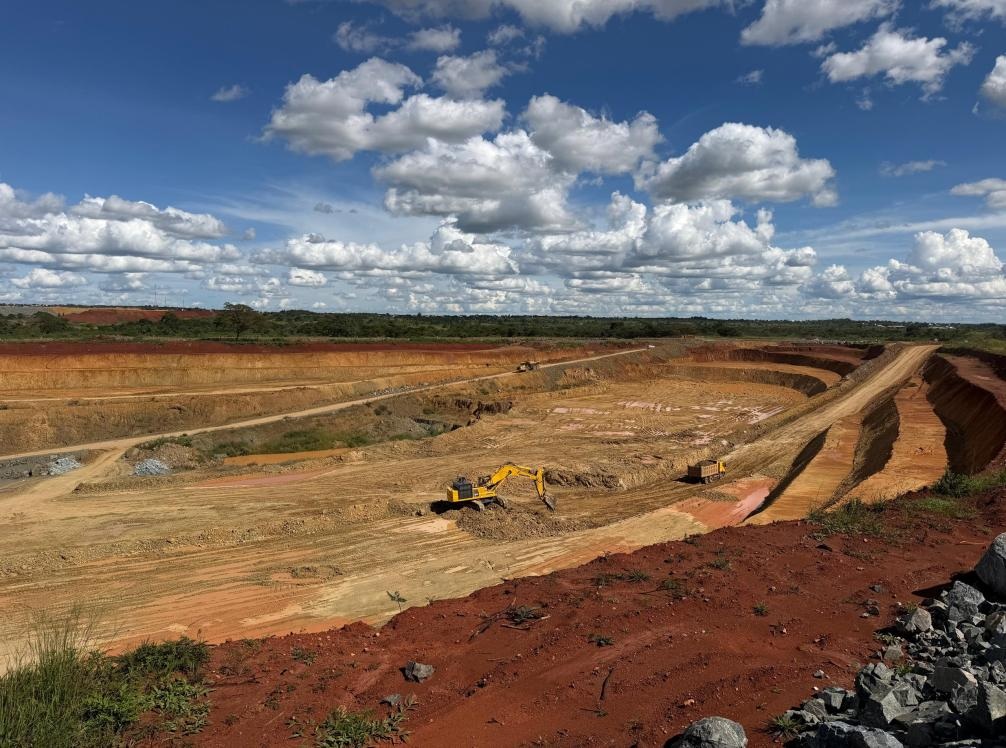
The near-surface nature of these high-grade intercepts represents a significant exploration advantage, potentially reducing future development costs and technical complexity. Previous exploration had focused on the project as a low-grade disseminated bulk tonnage resource, but Astra's approach of targeting high-grade feeder zones has opened new possibilities for the deposit's characterisation.
Geological Model Evolution
One of the most important discoveries from the Phase 1 program was that the mineralised system extends well beyond previous geological interpretations. Miller explained:
"The system is not constrained as was previously interpreted. It was thought to have been faulted off on both ends along strike. We have demonstrated that indeed the system does continue along strike in both directions. We've identified new parallel zones, so we're really expanding that near surface footprint and we've also identified additional potential at depth."
This expansion fundamentally changes the scale potential of La Manchuria. The project is now opening up in multiple dimensions - along strike in both directions, with new parallel zones, and at depth - all representing unexplored territory beyond previous drilling boundaries. The company's geophysical surveys have proven particularly effective at targeting veins beneath volcanic cover, which conceals much of the prospective area.
Phase 2 Drilling Program Strategy
Astra initiated a 10,000-meter Phase 2 drill program in October 2025, designed to be completed in two stages. The first half, was targeted for completion by year-end 2025, focused on extending the surface footprint with shallow drill holes to maximise the number of intercepts. The second half, scheduled to commence in March 2026, will target deeper zones and larger step-outs to demonstrate system scale.
Results from the first half are currently pending, with assays expected to provide critical information about lateral continuity and the effectiveness of the geophysical targeting methodology. Success with the geophysical approach will enable expansion of this technique prior to recommencing drilling in March, potentially identifying regional targets that could demonstrate significant scale.
Interview with Chief Executive Officer, Brian Miller
Dual Development Scenarios Under Evaluation
Management is actively evaluating two potential development scenarios as exploration data accumulates. The original thesis envisioned a bulk tonnage open pit operation transitioning to underground mining of high-grade zones. However, the ongoing discovery of both high-grade veins and broader zones of lower-grade disseminated mineralisation means the company is assessing multiple pathways forward.
Internal work is underway to compare tonnage and grade potential under both a bulk tonnage model and a high-grade vein model. Miller acknowledged the company remains in a "learning stage" as drilling continues to refine geological understanding. Preliminary metallurgical testing has shown favourable results with gold recoveries in the 90% range and silver recoveries in the 80s, though additional work is needed on more representative samples if a low-grade open pit scenario emerges as preferred.
Resource Development Timeline
Rather than rushing toward formal resource estimation, management is prioritising demonstration of scale and continuity. Miller explained that astute, technically knowledgeable investors don't need an official resource to recognise a pathway to a sizeable deposit. The company believes this approach delivers the most marginal value for the least capital, as dense infill drilling for resource definition is capital-intensive and dilutive. By proving system scale first through step-out drilling, Astra aims to create shareholder value before requiring the significant capital raises that formal resource programs demand.
This strategy reflects disciplined capital allocation, focusing on step-out drilling that expands the system rather than infill drilling for resource definition. Once the company demonstrates that mineralisation extends significantly beyond previously explored boundaries and into regional targets, the pathway to a substantial resource becomes clearer, potentially attracting strategic interest before significant dilution is required.
The company maintains its original thesis that La Manchuria has potential for a multi-million-ounce deposit, though management emphasises that timeline to formal resource estimation will depend on successfully demonstrating scalability through continued exploration success.
Argentina's Improving Investment Climate
Argentina has undergone significant political and economic reforms under the current administration, creating what Miller characterised as "without a doubt the best and fastest change that we've seen in a generation." Major mining companies including Lundin, BHP, Kinross, and Barrick are actively investing in Argentine projects, with actions speaking louder than policy statements. Miller noted this institutional validation:
"We are seeing a lot of money being invested in Argentina particularly in the mining sector if you look at the Vicuña district for example, Lundin and BHP - some of the largest and best mining companies in the world are developing those terrific world class assets."
This improved investment climate has attracted sophisticated investors to Astra, including Michael Gentile's participation in a recent financing, providing additional credibility to the jurisdiction.
Chilean Portfolio Optionality
Beyond La Manchuria, Astra holds two Chilean projects - Pampa Paciencia and Cerro Bayo. Management describes Cerro Bayo as the company's "favourite technical target" in Chile, comparing it to a "Salares Norte type target" in the Maricunga belt where Rio2 is bringing the Fenix project online and other operators are advancing developments. However, the high-elevation location makes exploration more expensive, so these assets remain on hold while management focuses capital on La Manchuria.
Notably, Miller indicated the company is actively evaluating additional project acquisitions. He explained the strategic rationale:
"If this cycle continues to develop into what we think it will, producers and mining companies are going to be one of the most important sources of capital for exploration companies, they will need to fill their pipelines that have been, depleted for decades now."
Building a portfolio of high-quality projects positions Astra to potentially capture value from producers seeking to replenish exploration pipelines.
Financial Position Through 2026
The company's current treasury is sufficient to complete the second half of Phase 2 drilling and fund operations well into late 2026. Like all junior explorers, additional capital will eventually be required, though the form and timing remain flexible given the company's strong shareholder register and improving market conditions for precious metals explorers.
Management views 2026 as having potential to match or exceed 2025's success, contingent on assay results from the first half of Phase 2 drilling demonstrating continued high-grade mineralisation and system expansion. Miller acknowledged that near-term valuation depends heavily on pending assay results:
"Everything's kind of hanging on assays right now. We've demonstrated that the system is larger...and now it's just a matter of how much metal is there."
The Investment Thesis for Astra Exploration
- High-grade near-surface mineralisation: Repeated intercepts of "ounces of gold and kilograms of silver" in shallow drilling, significantly reducing potential development complexity and capital requirements compared to deeper deposits
- System expansion in multiple dimensions: Mineralisation extends beyond previous geological constraints along strike in both directions, with new parallel zones and depth potential - all representing untested targets outside historical drilling
- Dual optionality: Project demonstrates both high-grade vein potential and broader bulk tonnage mineralisation, providing multiple development pathways and flexibility in optimisation studies
- De-risked jurisdiction: Argentina's unprecedented political and economic reforms attracting major mining companies (Lundin, BHP, Kinross, Barrick) validates jurisdiction and reduces country risk previously associated with Argentine mining investments
- Capital-efficient exploration strategy: Management prioritising step-out drilling to demonstrate scale before expensive infill programs, maximising value creation per dollar spent and minimising dilution
- Proven geophysical targeting: Successful use of geophysics to target veins beneath volcanic cover enables systematic exploration of concealed prospective areas, potentially unlocking regional-scale opportunities
- Multi-million-ounce target: Original thesis of multi-million-ounce potential remains valid, with exploration results consistently expanding rather than constraining system scale
- Strengthening precious metals macro: Gold and silver prices providing strong tailwinds, with management anticipating producers will need quality exploration assets to replenish depleted project pipelines
- Portfolio expansion strategy: Management actively evaluating additional project acquisitions to build diversified portfolio attractive to producers seeking exploration assets
Macro Thematic Analysis
The precious metals exploration sector is entering a transformative phase driven by sustained high gold and silver prices coinciding with critically depleted project pipelines at major producers. Astra Exploration's positioning in Argentina - a jurisdiction experiencing unprecedented mining-friendly reforms - places the company at the intersection of favorable metal prices, improved political risk profiles, and increasing producer appetite for quality exploration assets.
This dynamic creates potential for significant revaluation of successful exploration stories, particularly those demonstrating high-grade mineralisation in near-surface settings within improving jurisdictions backed by major mining company validation through substantial capital deployments.
"If this cycle continues to develop into what we think it will, producers and mining companies are going to be one of the most important sources of capital for exploration companies, they will need to fill their pipelines that have been depleted for decades now."
TL;DR
Astra Exploration is advancing its high-grade La Manchuria gold-silver discovery in Argentina through a 10,000-meter Phase 2 drill program focused on demonstrating system scale beyond historical boundaries. Initial drilling intersected exceptional near-surface grades (ounces of gold, kilograms of silver) in a system now proven to extend in multiple dimensions, with pending assays from shallow step-out holes expected to further validate expansion potential. Management is pursuing a capital-efficient strategy prioritising scale demonstration over resource definition, positioning for value creation in a strengthening precious metals market where producers increasingly need quality exploration assets.
FAQs (AI Generated)
Management believes demonstrating system scale creates more shareholder value per dollar spent than dense infill drilling. Resource definition is capital-intensive and dilutive; proving larger system extent first attracts strategic interest before requiring significant additional capital.
The project has delivered repeated near-surface intercepts containing ounces of gold and kilograms of silver - uncommon grades that demonstrate system fertility. These aren't isolated occurrences but have been replicated multiple times in both Astra's and previous drilling programs.
Originally interpreted as faulted off at both ends, the system now demonstrates strike extension in both directions with new parallel zones and depth potential, fundamentally expanding the project's scale potential beyond previously drilled areas.
Two pathways are under assessment: bulk tonnage open pit transitioning to underground high-grade mining, versus a primarily high-grade vein approach. Ongoing drilling continues refining which scenario best optimises the mineralisation style being encountered.
The current administration has implemented unprecedented reforms, attracting major operators like Lundin, BHP, Kinross, and Barrick to deploy significant capital in Argentine projects - validation through action rather than just policy statements.
Analyst's Notes





Subscribe to Our Channel




Stay Informed