ATHA's Uranium Continuity More Than Doubles, Higher Grades & System Extent Remains Open


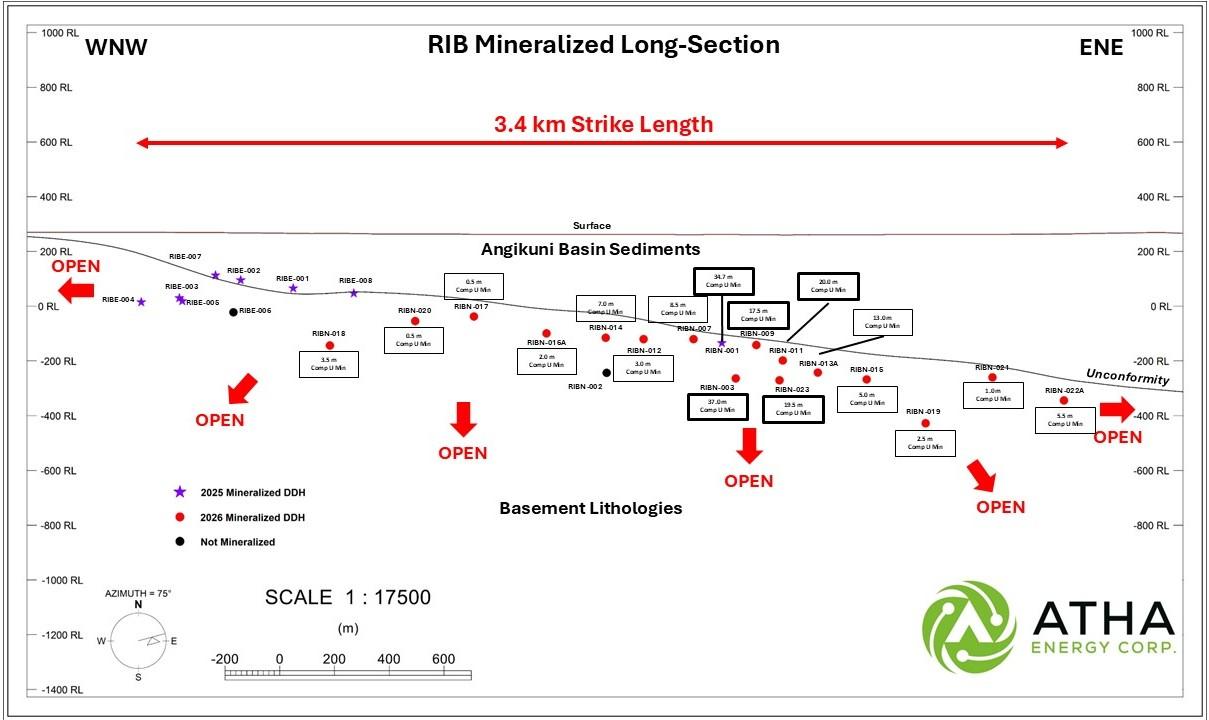
ATHA Energy's 2026 drilling links RIB North and East, extending uranium continuity to 3.4 km at Angilak, with a higher-grade sub-zone and the system still open.
- ATHA's 2026 drilling extended continuous uranium mineralisation on the MRC's Eastern Limb from 1.45 km to 3.4 km, connecting the RIB North and RIB East discoveries.
- Twenty-one of 23 holes drilled at the MRC in 2026 intersected uranium including all seven of the final holes reported on October 2026.
- A thicker, higher-grade sub-zone of roughly 300 m by 300 m has been identified near the RIB North discovery hole and the system remains open.
- The C$63 million raised in Q1 2026 funds ATHA through the 2027 programme.
- Results remain preliminary probe data, with Saskatchewan Research Council (SRC) assays, the orogenic model release and Lac 50 Corridor results as the next catalysts.
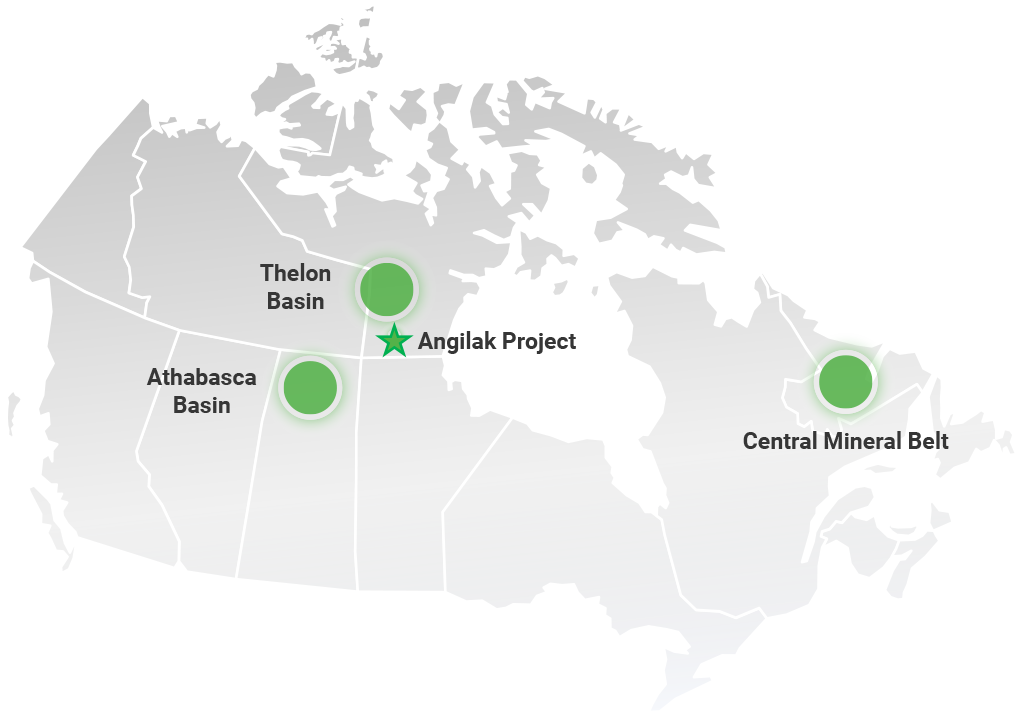
Uranium explorers have had a difficult year in the equity market, even as the case for new supply has strengthened. Investors increasingly want evidence that a discovery can grow into something large enough to matter. ATHA Energy Corp. (TSXV:SASK) has now completed its 2026 diamond drilling programme at the 100%-owned Angilak Uranium Project in Nunavut. Drilling on the Mineralized RIB Corridor (MRC) has more than doubled the continuous mineralised strike length on the corridor's Eastern Limb, from 1.45 km to 3.4 km. In an interview with Crux Investor, CEO Troy Boisjoli explained how ATHA targets mineralisation, why he believes the system remains open and why the company intends to keep advancing Angilak without a partner.
RIB North & RIB East Now Connected
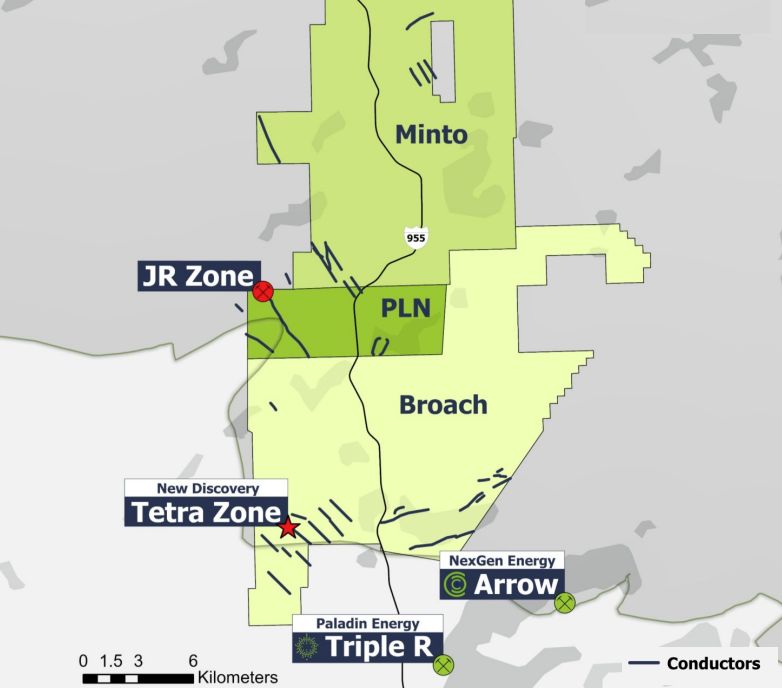
The final seven holes of the 2026 programme all intersected uranium mineralisation. Across the full 2026 MRC campaign, 21 of 23 diamond holes were mineralised. The results connect the RIB North and RIB East discoveries along the same mineralised shear zone complex.
Boisjoli said last year's widely spaced drilling outlined a large area in which every hole hit mineralisation. The 2026 objective was different. The aim was to define continuity within a strike length, using drill fences spaced 150 to 300 m apart.
Drilling also identified a thicker, higher-grade sub-zone close to the RIB North discovery hole with sub-zone currently measures roughly 300 m along strike and 300 m down-dip. Five holes define it, with total composite mineralisation ranging from 17.5 m to 37.5 m. Boisjoli does not view the sub-zone as the edge of the opportunity. He described it as one area of greater thickness and grade within the 3.4 km and ATHA expects to find more areas like it as drill density increases.
Targeting With Precision
Boisjoli said ATHA has moved from assumption to modelling. The work began with geophysics, followed by drill data within the resolution of those surveys. It has now progressed to litho-structural mineralisation models. Mineralisation sits around a large-scale graphitic fault zone, in both the hanging wall and footwall, and continues up and down dip. Boisjoli compared the style of multiple stacked veins to other basement-hosted uranium deposits, including Cameco's Eagle Point and NexGen Energy's Arrow deposit.
He added that every conductive target ATHA has drilled from its geophysics has been mineralised. Asked what currently limits the system, he pointed to the drill programme rather than the rocks. Boisjoli also stressed that missed holes carry information: each hole tests a hypothesis, and ATHA feeds misses into its model alongside hits.
Interview with Troy Boisjoli, CEO of ATHA Energy Corp.
The Orogenic Hypothesis & District-Scale Ambition
ATHA is working with subject matter experts on an interpretation that Angilak's uranium formed under what the company calls an orogenic uranium-rich deposit model. The company describes this as the first of its kind identified globally. Boisjoli said it implies a large, structurally controlled system with deep roots. ATHA plans to publish the technical basis for the interpretation in the coming weeks.
Boisjoli said mineralisation has been traced over about 17 km around the RIB structural trend. The company anticipates that trend extends along the entire edge of the Angikuni Basin. He compared that footprint to the stretch of the eastern Athabasca Basin from Cigar Lake to Rabbit Lake, which hosts most of that district's production. He framed the potential as tens of kilometres of strike, and possibly more than 50 km. These are management interpretations, not defined resources.
ATHA's three main Angikuni Basin corridors sit along a 31 km trend. The MRC's Western Limb adds a second horizon, traced so far over about 220 m. Early indications suggest it may connect to the RIB West discovery over a possible 3.0 km.
Elsewhere at Angilak, the Lac 50 Deposit Corridor carries a conceptual exploration target of 60.8 million to 98.2 million lbs U3O8 at average grades of 0.37% to 0.48%. That target is conceptual and is not a mineral resource. Results from the Lac 50 Corridor, including the Lac 50 NW discovery area, are expected in the coming weeks.
Probe Data, Assays & True Width
All 2026 results are preliminary and based on downhole gamma probe readings. Assay samples have been submitted to the Saskatchewan Research Council (SRC) laboratories. ATHA lowered its reporting threshold from 500 CPS to 300 CPS after 2024 and 2025 assays showed that readings above 300 CPS typically return grades above 0.01% U3O8. Intervals above 10,000 CPS are classed as high grade.
Boisjoli acknowledged that probe and assay data can correlate poorly across the sector. He said ATHA calibrates its probes carefully and expects reported thicknesses to be very representative of assay results. He pointed to RIB North in 2025, where probe peaks of around 50,000 CPS returned grades of around 8% U3O8 locally. The discovery hole's assays included 0.5 m at 8.16% U3O8.
True width has not yet been determined. ATHA collects oriented core on every hole, which gives a direct measurement of each mineralised structure's orientation. Boisjoli said true widths will emerge from detailed 3D interpretation as infill drilling increases resolution. He noted that in a typical metal deposit roughly 85% of the metal sits in about 15% of the volume. Plunging high-grade trends of that kind have not yet been resolved at RIB North.
Funding, Valuation & Strategic Independence
ATHA raised C$63 million in Q1 2026. Boisjoli said this funds the company well beyond the 2026 programme and through the 2027 programme. He described it as a 24-month runway intended to insulate ATHA from quarterly market volatility.
As of 5 October 2026, ATHA had 353.5 million basic shares outstanding at C$1.01.That gives a basic market capitalisation of C$357.0 million and an enterprise value of C$349.5 million. The company also holds 10% carried interests in parts of the NexGen Energy and IsoEnergy exploration land in the Athabasca Basin.
Asked whether ATHA might bring in a strategic investor, Boisjoli said pausing to attract a strategic or corporate partner is not something the company is entertaining. ATHA intends to advance Angilak aggressively on its own. The next phase combines high-confidence delineation at RIB with a portion of spending on discovery along the additional trends.
Investment Thesis for ATHA Energy
- ATHA has turned a single 2025 discovery hole into a continuous mineralisation with 21 of 23 holes in 2026 intersecting uranium.
- A higher-grade sub-zone of about 300 m by 300 m near the discovery hole gives delineation drilling an early focus.
- The Eastern Limb remains open in all directions, and management sees no geological limit on the current strike.
- The C$63 million raised in Q1 2026 funds work through the 2027 programme, which reduces near-term financing risk.
- Investors should monitor SRC assay results from the 2026 holes, which will test how well probe thicknesses convert to grade.
- The forthcoming orogenic model release and Lac 50 Corridor results are the next near-term catalysts to watch.
- All 2026 MRC results remain preliminary, and no resource has yet been defined on the corridor.
Macro Thematic Analysis
Boisjoli believes the nuclear energy business is in the strongest uranium cycle it has ever seen and argued the market is not rewarding presentation, it is rewarding scale:
"I think it's clear to me what the market is looking for, and it's what the industry needs. It is large scalable assets that [can] become a meaningful component to help solve what is nearly an existential supply deficit going into the 2030 decade."
He said that outside companies already advancing discoveries made in the 2010s into development, very few assets carry that kind of scale potential. That scarcity matters because new uranium mines typically take well over a decade to move from discovery to production. Utilities planning for the 2030s therefore depend on discoveries being made and delineated now.
Jurisdiction adds to the argument. Canada's Athabasca Basin hosts the world's highest-grade uranium mines. ATHA presents the Angikuni Basin as a geological analogue to the Athabasca in a pro-mining territory. If the company's district-scale interpretation holds, Angilak would offer the size that Boisjoli says the market wants, in a jurisdiction that has historically supported uranium development.
The counterpoint is timing. Exploration-stage scale is not yet bankable supply, and the market has shown it will discount early-stage stories until resources are defined. ATHA's 2027 delineation work is what will turn the macro argument into measurable pounds.
TL;DR
ATHA Energy has completed its 2026 drilling at the Angilak Uranium Project in Nunavut, connecting the RIB North and RIB East discoveries and extending continuous mineralisation on the MRC's Eastern Limb from 1.45 km to 3.4 km. Twenty-one of 23 holes intersected uranium, and a thicker, higher-grade sub-zone of roughly 300 m by 300 m sits near the discovery hole. CEO Troy Boisjoli says the system is limited only by drilling to date. Results remain preliminary probe data, with SRC assays pending. ATHA raised C$63 million in Q1 2026, is funded through the 2027 programme and is not seeking a strategic partner. Assays, the orogenic model release and Lac 50 results are the next catalysts.
FAQs (AI Generated)
Analyst's Notes





Subscribe to Our Channel


Stay Informed