




Atlas Salt Begins Construction with Early Works at Great Atlantic : 7 Things You Need to Know



Atlas Salt begins construction at Great Atlantic after approvals; strong UFS economics highlight value, with project financing the key remaining catalyst.
- Atlas Salt Inc. satisfied all applicable Environmental Assessment conditions, executed a Benefits Agreement with the Province of Newfoundland and Labrador, and received a formal Letter of Release in February 2026, authorising the commencement of Early Works construction at the Great Atlantic Salt Project.
- The 2025 Updated Feasibility Study (UFS) returned an after-tax net present value at an 8% discount rate (NPV8%) of C$920 million, an after-tax internal rate of return (IRR) of 21.3%, and average annual post-tax free cash flow of C$188 million over a 24.3-year mine life.
- North America imports 8.0 to 10.0 million tonnes per annum of de-icing salt, with no comparable new mine currently under development on the continent, positioning Great Atlantic as the only advanced-stage project addressing that supply gap.
- Early Works represent approximately C$100.0 million of a C$589 million total pre-production capital program. To fund the overall build, the company is actively targeting a 60% debt-weighted project financing package through Endeavour Financial.
- The company's current enterprise value of approximately C$95.5 million implies a substantial discount to the UFS NPV8% of C$920.0 million, with comparable salt asset transactions having been valued at 8.7x to 16.5x EBITDA.
Construction Begins as North American Salt Markets Face Documented Supply Pressure
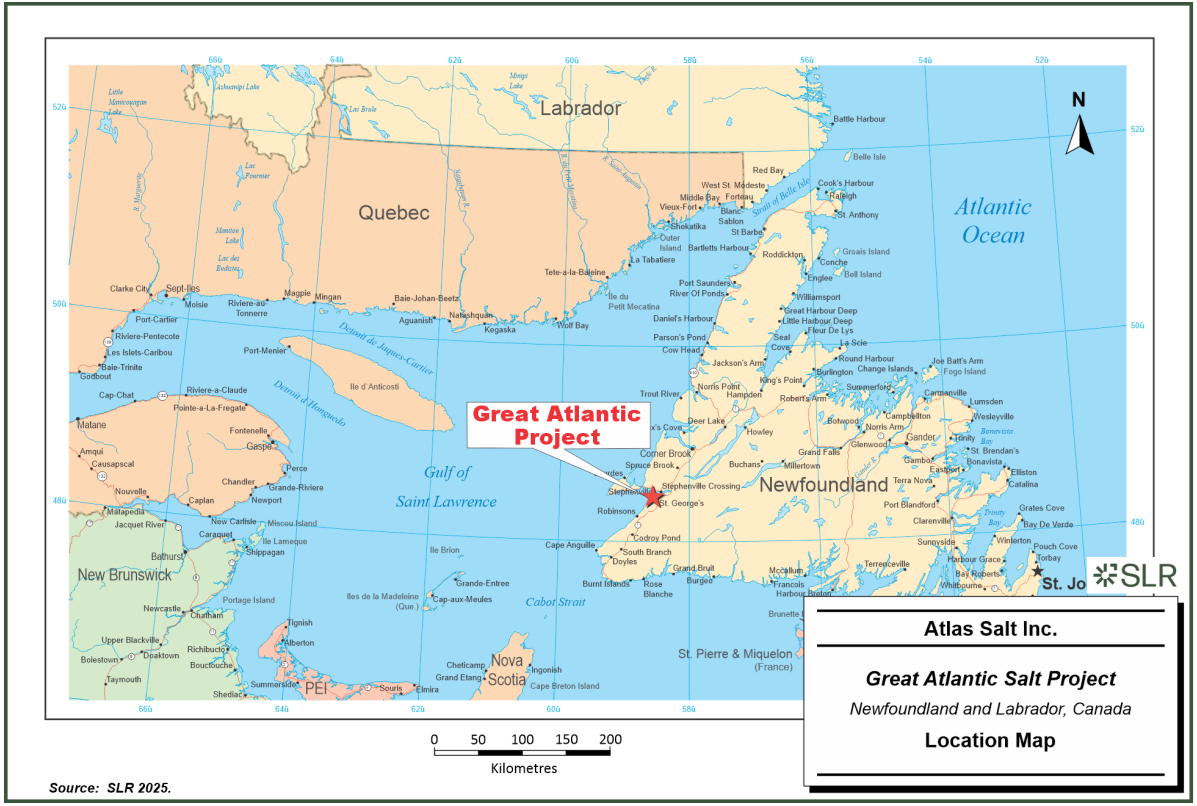
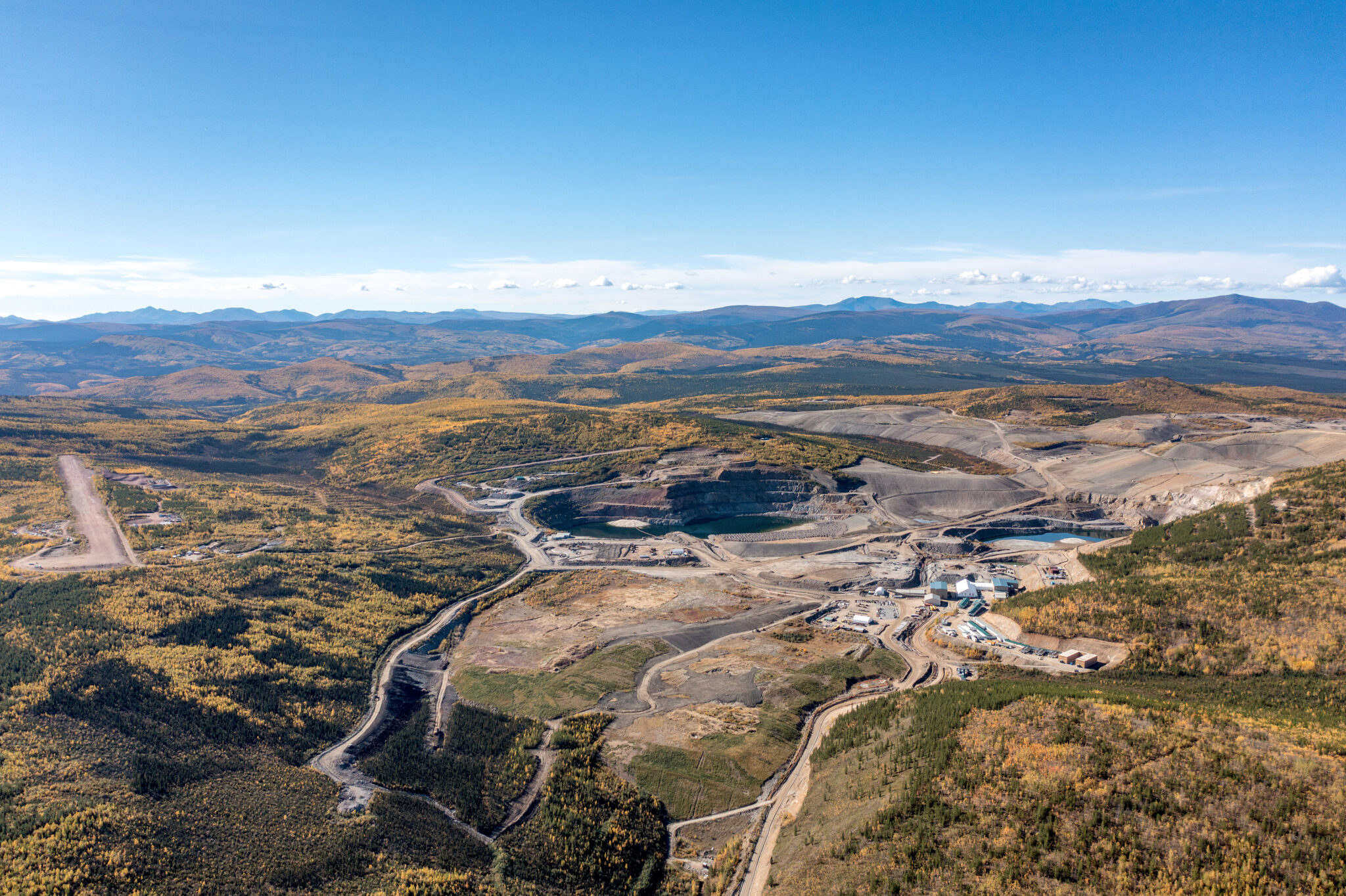
Physical site work has officially begun near St. George's, Newfoundland for Atlas Salt Inc (TSXV:SALT). With construction underway, the Great Atlantic Salt Project is moving from developer to builder. This transition coincides with documented supply pressures in North American road salt markets, marked by shortages and price spikes recently reported across Ontario and the northeastern United States.
1. All Regulatory Conditions Were Met Before Starting Site Work
With primary regulatory hurdles cleared, the project's risk profile now shifts primarily toward financing and construction.
Three discrete legal requirements had to be satisfied before site work could begin: approval of the Early Works Development Plan and associated Environmental Management Plans by the Government of Newfoundland and Labrador; Cabinet approval and execution of the Benefits Agreement between Atlas Salt and the province; and receipt of a formal Letter of Release from the provincial Environmental Assessment process. The environmental assessment itself was completed in approximately two months following submission, with the province releasing the project in April 2024. Remaining permits are procedural, consistent with a project that has already cleared its primary regulatory review.
2. Early Works Are Approximately C$100.0 Million of a C$589 Million Capital Program
Construction has started, but the majority of capital deployment depends on closing the project financing package.
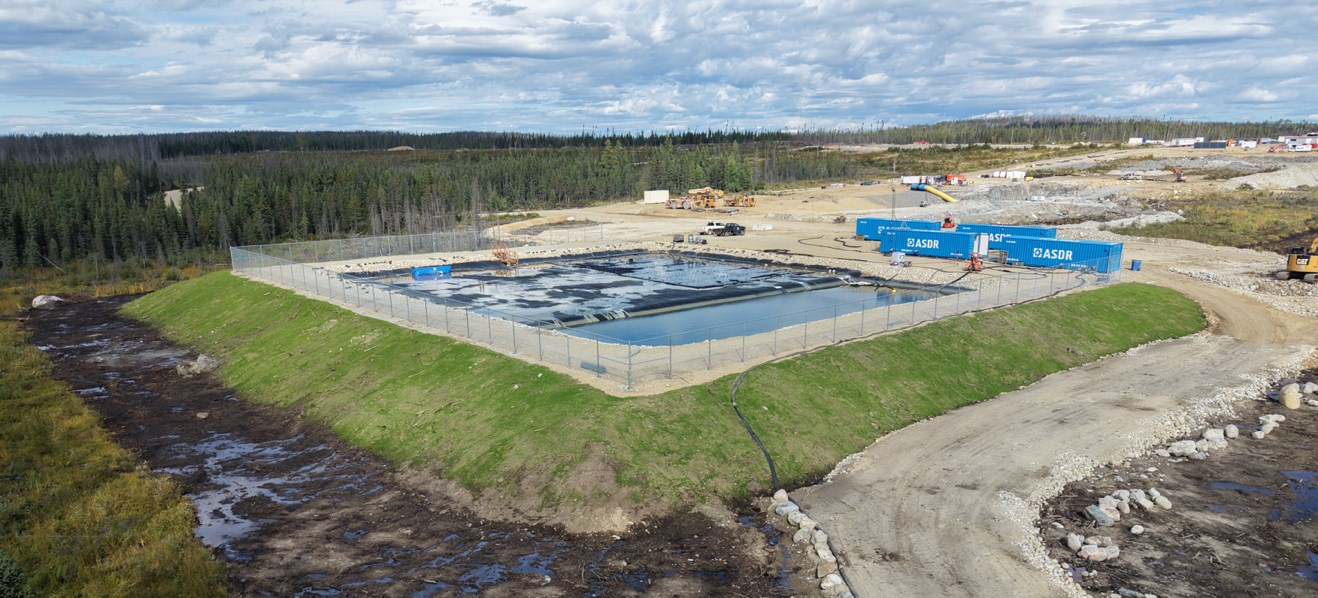
Initial activities include land clearing, grubbing, site preparation, road access, power line and substation work, and box cut preparation for underground drift development. These Early Works represent approximately C$100.0 million of the C$589 million total pre-production capital expenditure outlined in the 2025 Updated Feasibility Study (UFS). The remaining capital will primarily be funded by the main financing package. The company is targeting a 60% debt-weighted structure, with Endeavour Financial engaged as debt adviser. While management is exploring strategic partnerships to accelerate capital deployment, securing this main package remains the central funding objective.
President and Chief Executive Officer Nolan Peterson commented on the company's financing momentum:
"We see the opportunity to actually accelerate the project by attracting financing sooner than expected."
Peterson added:
"People are coming to us earlier and saying, 'Hey, is there an opportunity here to accelerate what you're doing to get some money into the company and start building and advancing it even sooner than that main PF package?' "
The company estimates first salt production by 2030 if financing and construction execution is successful.
3. The 2025 Updated Feasibility Study Materially Upgraded the Project's Economics & Scale
Every key economic metric improved in the UFS, and production scale increased by 63.0%.
The project’s economic profile strengthened across all major return indicators. The after-tax net present value at an 8% discount rate (NPV8%) increased by 66% to C$920 million from C$553 million, while the internal rate of return (IRR) rose from 18.5% to 21.3%. The payback period shortened to 4.2 years from 4.8 years, based on a base-case salt price of C$81.67 per tonne.
These returns are underpinned by a larger and more efficient operating profile. Average life-of-mine production capacity increased from 2.5 million tonnes per annum (Mtpa) to 4.0 Mtpa, while all-in sustaining costs (AISC) declined by 18% to C$34.9 per tonne (FOB Turf Point). The project is expected to generate average annual revenue of C$407 million, with pre-tax operating cash flow of C$325 million and post-tax free cash flow of C$188 million. Over the 24.3-year mine life, cumulative post-tax operating cash flow is projected at approximately C$4.6 billion.
4. The Deposit Carries Structural Cost Advantages Over Legacy North American Mines
A shallow, high-purity, logistically proximate deposit supports the AISC of C$34.9 per tonne and differentiates Great Atlantic from most operating North American salt mines.
The deposit sits at approximately 180 metres below surface, accessed via decline rather than shaft, reducing development time and capital cost relative to deeper operations. For comparison, operating North American salt mines regularly range from 250 metres to 1,000 metres deep, with the Goderich mine in Ontario operating at approximately 600 metres below Lake Huron. The scale and grade of the deposit are highly uniform. The project currently holds 95.0 million tonnes of Probable Reserves at 95.9% purity. Beyond that, it carries an extensive expansion runway, with 383 million tonnes in Indicated Resources and a further 868 million tonnes in Inferred Resources, all maintaining similarly high grades above 95.0% NaCl. Average deposit thickness is 200 metres, and the resource remains open in all directions.
On logistics, the Turf Point deep-water marine terminal is approximately 2.0 kilometres from the mine site. The St. George's substation sits 1.4 kilometres away. Shipping time to Boston is under three days versus more than 14 days from Egypt or Chile. Because the C$34.9 per tonne AISC is calculated Free On Board at Turf Point, this shipping advantage provides an additional margin benefit, lowering the final delivered cost to East Coast customers relative to international imports.
5. The North American Salt Market Is Structurally Undersupplied, With No Other Development Project on the Horizon
Current demand is driven by documented, observable market shortages rather than forward-looking projections.
North America currently imports 8 to 10 Mtpa of de-icing salt. Between 2020 and 2023, the US imported 67.5 Mt from Egypt, Chile, Mexico, and the Caribbean and others. In January and February 2026, Ontario municipalities reported road salt stockouts, with wholesale prices rising from approximately C$65-$70 per tonne to nearly C$190 per tonne. New York State cited supply shortages in its 2025 procurement review.
Supply-side constraints compound the picture. Cargill's Avery Island mine in Louisiana closed, removing 2.5 Mtpa of domestic supply. Cargill's remaining New York and Cleveland assets have been unsold since 2023 due to environmental liabilities, with potential closure removing a further approximately 2.0 Mtpa. The last new salt mine to open in North America was American Rock Salt in New York in 2001. The Atlantic Canada, Quebec, and US East Coast corridor consumes an estimated 11 to 16 Mtpa annually, well above regional domestic supply capacity. The Great Atlantic Salt Project's planned 4.0 Mtpa output targets a portion of the import displacement opportunity in those markets.
6. Three Commercial Agreements Reduce Execution Risk Across Key Dependency Areas
Offtake, equipment supply, and engineering delivery are each covered by a signed agreement, reducing three distinct categories of construction and market risk.
Scotwood Industries, described as the largest distributor of packaged retail de-icing salt in the US, has signed a memorandum of understanding (MOU) targeting offtake volumes of 1.25 to 1.5 Mtpa. Sandvik Mining has signed a C$132.0 million MOU covering equipment supply and engineering support. Hatch Ltd. has been engaged as Lead Engineering Partner and Integrated Project Delivery Partner, with an existing presence in Newfoundland and a track record in large-scale soft-rock mine delivery. All three agreements are MOUs, not binding contracts, and the distinction is relevant for assessing the firmness of each commitment. While these MOUs are non-binding, securing named, credible counterparties across offtake, equipment, and engineering strengthens the project's profile as it enters debt financing discussions.
7. The Current Enterprise Value Implies a Significant Discount to Comparable Salt Asset Transactions
At C$95.5 million enterprise value against a UFS NPV8% of C$920 million, the stock is priced at the development-stage trough. Financing closure is what closes that gap.
K+S's sale of its Americas salt assets, including Morton and Windsor Salt, to Stone Canyon Industries in 2020 was valued at US$3.2 billion at 12.5x 2019 EBITDA. A private transaction involving US Salt implied approximately 16.5x EBITDA. Compass Minerals, the only publicly listed salt pure-play, trades at approximately 8.7x EBITDA. The 2025 UFS projects average annual EBITDA of C$325 million over the mine life.
Atlas Salt's current enterprise value of C$95.5 million implies a fraction of those multiples, reflecting a standard development-stage discount. Atlas Salt attributes this valuation gap to the traditional development-stage discount.
Peterson commented on this trajectory:
"As you get through project financing and advance and de-risk the project, it follows that the project eventually gets to the second bump, and then that's where it finds its level in value."
The Bottom Line
With Early Works now underway, the Great Atlantic Salt Project has transitioned from a fully permitted, feasibility-complete development asset to an active construction site. Primary technical and regulatory risks have been largely addressed, leaving project financing as the key gating factor for full-scale construction.
The 2025 UFS strengthened the economic case. The key near-term developments to monitor are the timing and structure of the main project financing, conversion of MOUs into binding agreements, and the ongoing progress of Early Works toward first production, currently anticipated around 2030.
FAQs (AI-Generated)
Analyst's Notes





Subscribe to Our Channel


Stay Informed


