




Atlas Salt's Non-Core Black Bay Nepheline Asset Advances Toward Drilling Beside Great Atlantic Salt Project


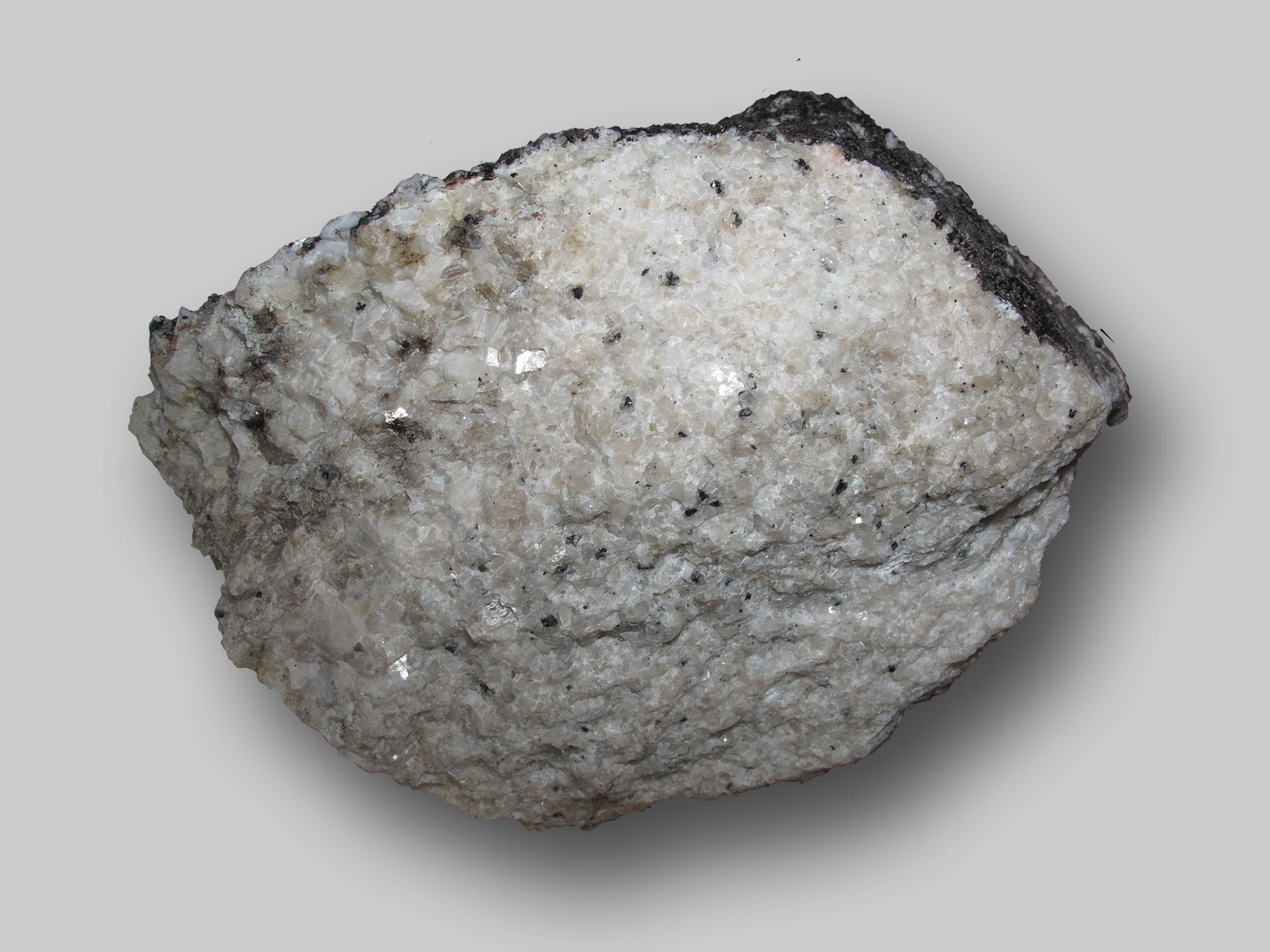
Atlas Salt's non-core Black Bay nepheline syenite cut iron oxide to 0.01 to 0.03 wt.% in testwork and heads to drilling beside the Great Atlantic Salt Project.
- Bench-scale magnetic separation cut iron oxide in a Black Bay nepheline syenite sample from 2.84 wt.% in the feed to between 0.01 and 0.03 wt.% in product, at 87.7 wt.% combined mass recovery.
- This result comes from a single surface bulk sample, and Black Bay has no mineral resource estimate, economic study, or drilling.
- A maiden diamond drilling program of up to 1,500 meters, targeting a start in the fourth quarter of 2026, will test whether surface grades and mineralogy continue at depth.
- Black Bay drilling is funded by a C$1.25 million flow-through placement completed in May 2026, plus provincial Junior Exploration Assistance 2026 funding.
- Great Atlantic's C$589 million of pre-production capital is financed separately, with letters of interest above C$300 million.
What Has Happened
Atlas Salt Inc. (TSXV: SALT | OTCQX: SALQF | FSE: 9D00) reported on September 29, 2026, that magnetic separation cut iron oxide in a Black Bay nepheline syenite sample from 2.84 wt.% in the feed to between 0.01 and 0.03 wt.% in product. Dorfner Anzaplan GmbH (Anzaplan) of Hirschau, Germany ran the bench-scale program on a bulk sample from the company's Black Bay property in southern Labrador. Combined mass recovery was 87.7 wt.%.
The company also has Exploration Approval from the Department of Energy and Mines for a maiden diamond drilling program of up to 1,500 meters at Black Bay, and has engaged a drilling contractor. Atlas Salt is targeting a start in the fourth quarter of 2026. Black Bay has never been drilled, and the company staked the ground in 2016 based on a surface showing.
Atlas Salt calls Black Bay a non-core but high-potential asset and says its primary focus and management attention remain on the Great Atlantic Salt Project in western Newfoundland. The Black Bay program has its own dedicated exploration funding. That arrangement determines how the iron result reads against a C$589 million financing task at Great Atlantic.
What the Testwork Shows & What It Does Not
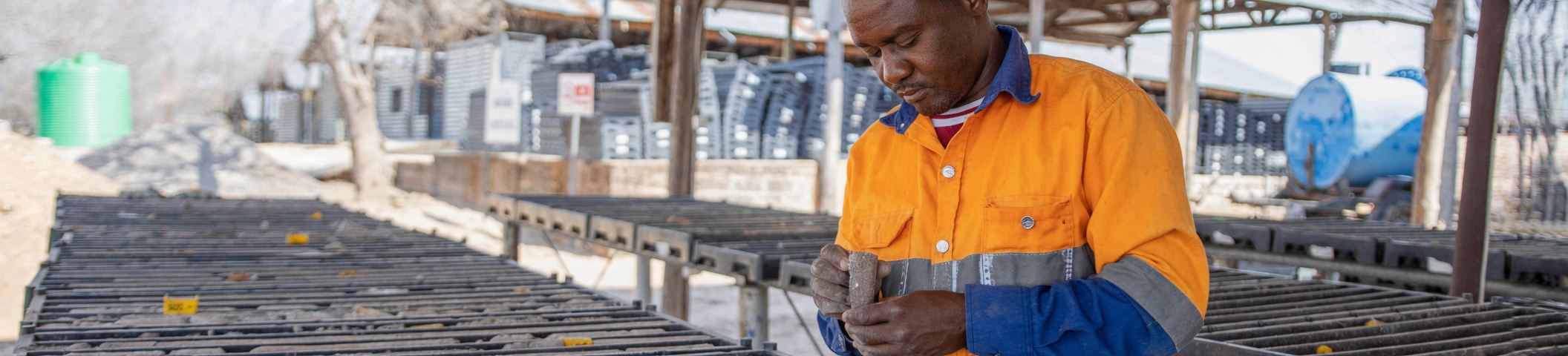
Anzaplan tested about 105 kilograms drawn from a 3.5-tonne bulk sample collected during a 2017 outcrop channel sampling program, and the company retained the firm on June 8, 2026. The feed assayed 58.3 wt.% silica, 22.6 wt.% alumina, 9.82 wt.% sodium oxide, and 4.72 wt.% potassium oxide, with iron oxide at 2.84 wt.% as the main impurity to remove. In glass applications, elevated iron can cause unwanted discoloration, reduce optical quality, and limit a product's suitability for demanding uses.
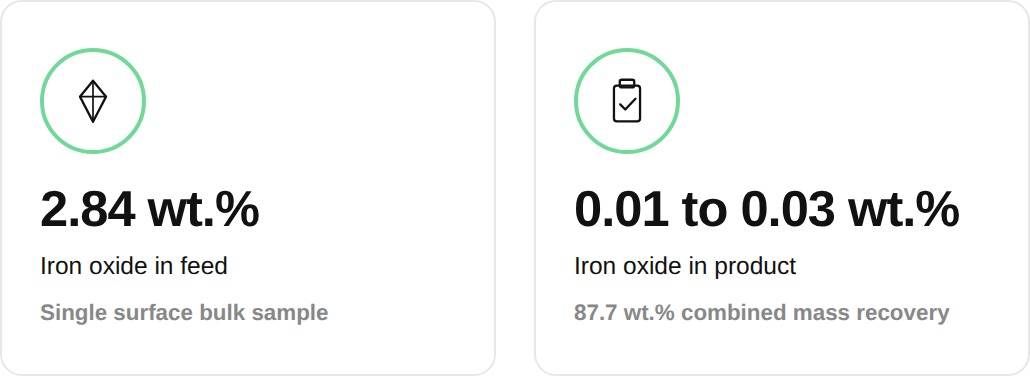
Dry and wet magnetic separation reduced iron oxide to 0.01 wt.% in the coarse product and 0.03 wt.% in the fine product. An optimized dry test held iron oxide at 0.03 wt.% and lifted stage mass recovery to 90.0 wt.%. Combined overall mass recovery was 87.7 wt.% of the feed. Anzaplan identified dry magnetic separation as the preferred method because the coarse fraction can be treated strictly dry with belt magnetic separators and the circuit is less complex than flotation. The combined product was ground to 2 filler grades with brightness of 84.6% and 87.4%, with the finer grade above the typical industry specification of 85%.
The work was bench-scale on a single bulk sample collected from the surface, and the results may not be representative of the occurrence as a whole. No mineral resource estimate (MRE) or mineral reserve estimate has been completed, no economic study has been completed, and nothing establishes that the occurrence is economically viable. Anzaplan recommends variability testwork, a heavy mineral identification program and a market study before process design advances.
How Black Bay Is Funded Against the Great Atlantic Build
The Black Bay drilling is funded by the C$1.25 million flow-through private placement the company completed in May 2026, along with funding approved under the Province of Newfoundland and Labrador's Junior Exploration Assistance 2026 program. The placement, priced at C$1.30 per share, funded non-core nepheline exploration and preserved capital for Great Atlantic.
Great Atlantic needs C$589 million of pre-production capital. Atlas Salt holds letters of interest (LOIs) above C$300 million: up to C$225 million of senior debt, made up of up to C$150 million from Export Development Canada and up to C$75 million from a second export credit agency wholly owned by its national government, plus a Sandvik LOI for mining equipment valued at C$79 million, including C$45 million for capital equipment. Equity raises of C$8.7 million at C$0.80 per share in October 2025 and C$15.2 million at C$1.20 per share in June 2026 funded civil engineering work and early planning and development at the salt project.
Chief Executive Officer of Atlas Salt, Nolan Peterson, described the LOIs as the base of the financing:
"So the LOIs established the pillars, as I like to call them. You go to the market, and you show this is where the bulk is going to come from."
Peterson said a commercial bank is the capstone, with discussions under way, and that the letters are meant to coalesce into a final financing package.
What the Drill Program Has to Test
All results to date rest on material collected from the surface. The drilling is meant to establish whether the grades and mineralogy measured at surface continue at depth, to collect data for a possible future MRE, and to provide material from across the occurrence for the variability and customer qualification testwork Anzaplan has recommended. Core will be logged and transported to the company's facility at St. George's, Newfoundland for sampling.
Peterson said the iron fell to a tenth of the maximum limits that glass and ceramic markets accept, and called the outcome the one the company hoped for when it shipped the sample to Germany. Site access work is underway. The company has engaged the NunatuKavut Community Council and Nunacor Development Corporation on the proposed drilling and intends to continue that engagement. Atlas Salt lists a previous deferral of the program among its risk factors, and its assumptions include receipt of remaining permits and site access as scheduled.
Broader Context
Nepheline syenite supplies alumina and alkalis to glass, ceramics and functional fillers. Atlas Salt says commercial deposits are uncommon and that North America has 1 mine in production. Black Bay lies about 6 kilometers from tidewater on the Trans Labrador Highway.
Anzaplan reports that alumina above 23 wt.% and total alkali content of 15 wt.% allow lower melting temperatures and reduced energy consumption in glass melting and ceramic firing. The company calls the low iron content a potential competitive advantage. Atlas Salt gives no market size, pricing, or offtake for nepheline syenite and lists the lack of an established market or offtake among its risks.
Great Atlantic remains the project that sets Atlas Salt's valuation case. Its 2P reserves are 95.0 million tonnes at 95.9% sodium chloride, with an after-tax net present value at an 8% discount rate of C$920 million, a 21.3% after-tax internal rate of return and a 4.2-year payback, and the company estimates production by 2030. Black Bay has no economic study, so none of those figures reflect it.
What to Watch Next
At Black Bay, the fourth quarter 2026 drilling start is the first checkpoint, and core results will show whether surface grades and mineralogy continue at depth. Anzaplan's 3 recommendations: variability testwork, heavy mineral identification, and a market study, define the work needed before process design advances.
At Great Atlantic, the checkpoint is conversion of the LOIs into a final financing package with a commercial bank. Peterson said site preparation (clearing, leveling and ditching) was in progress, funded from working capital raised in the last year. Portal collaring, mine drift development, underground construction of the crushing plant, surface infrastructure and port upgrades follow over the next 3 to 4 years.
FAQs (AI-Generated)
Analyst's Notes





Subscribe to Our Channel



Stay Informed


