




Atlas Salt Enters Financing With a Low-Emission Mine Design & Approved Environmental Plans


Atlas Salt's all-electric Great Atlantic salt mine uses a hydropower grid, has minimal land use, and holds approved environmental plans ahead of financing.
- The provincial environment minister released Atlas Salt's Great Atlantic Salt Project in Newfoundland and Labrador from environmental assessment in April 2024 after about 2 months of review.
- The mine is designed to be all-electric, with extensive use of battery-electric vehicles, on a provincial grid that emits 17 grams of carbon dioxide equivalent per kilowatt-hour, compared with a Canadian average of 110 grams.
- Scope 1 emissions of 79 tonnes per year are comparable to 4 Newfoundland households, and the company describes its projected emissions intensity as among the lowest in global mining.
- All mining and processing will take place underground with minimal land use, no tailings, and no chemicals.
- The company's approved permits list holds 9 items, and the remaining permits and a financing package are the next milestone priorities ahead of production, estimated by 2030.
Atlas Salt Inc. (TSXV: SALT | OTCQX: SALQF | FSE: 9D00) has built the environmental case for its Great Atlantic Salt Project in Newfoundland and Labrador into the mine design, from power source to conveyor to shipping route. The provincial environmental assessment is complete, and the company's next milestones are the remaining permits and a financing package.
Provincial Review & Approved Plans
Newfoundland and Labrador's environment minister released the project from the provincial environmental assessment process in April 2024 after about 2 months of review, with conditions under the Environmental Protection Act.
The company's approved permits list holds 9 items: the environmental assessment, the early works development plan, the environmental protection plan (construction-phase mitigations), the waste management plan, the water resource management plan, the wetland conservation plan, the bat preventative measures plan, the gender, diversity, equity and inclusion plan, and the benefits plan. The company estimates production by 2030.
Electric Operation & Hydropower Supply
The mine is designed as an all-electric operation, with extensive use of battery-electric vehicles, especially underground, which the company says improves safety through cleaner air quality and minimizes its carbon footprint. Newfoundland and Labrador supplies its provincial grid almost completely from hydroelectricity, and the site has access to established electricity infrastructure.
Stantec's January 2024 inventory puts the provincial grid at 17 grams of carbon dioxide equivalent per kilowatt-hour, against a Canadian average of 110 grams. The company's greenhouse gas emissions study projects Scope 1 emissions of 79 tonnes per year, comparable to 4 Newfoundland households.
Independent consultant BWB Consulting Services projects emissions per million tonnes of ore to be a fraction of those from other evaporites and much lower than base metal and gold mining. The company describes the project's projected emissions intensity as among the lowest in global mining. Both the Scope 1 and intensity figures are based on the 2023 feasibility study.
Underground Footprint & Physical Processing
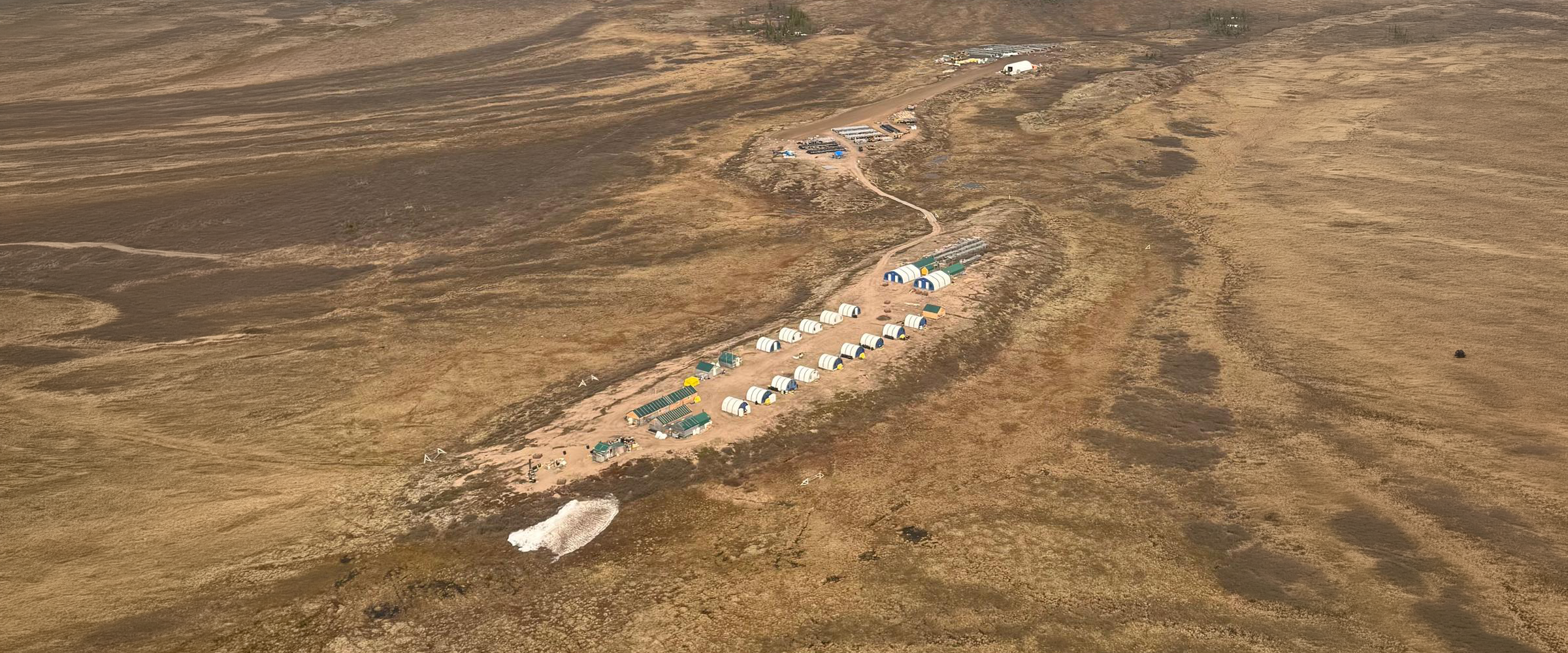
All mining and processing will take place underground, and the company describes the project as having minimal land use. The project will generate no tailings, and its physical processing uses no chemicals. Production grade is above 95% sodium chloride.
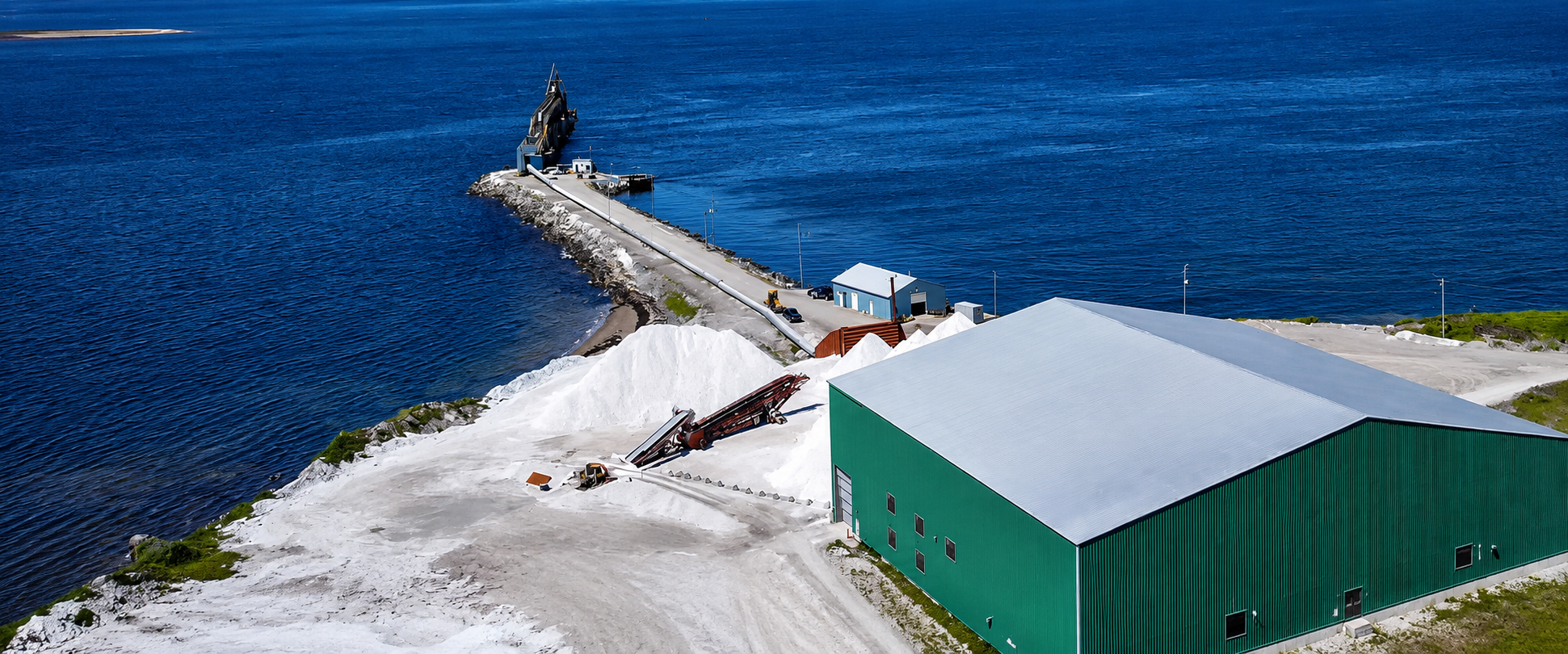
The mine site sits about 2 kilometers from the Turf Point Marine Terminal, and an enclosed conveyor will carry the salt there. The enclosure is designed to minimize dust, noise, and other environmental disturbances, and the company says it incorporated local feedback into the mine design through the enclosed conveyor. The site layout avoids environmentally sensitive areas, and access routes avoid vehicle traffic through the town.
Shipping Emissions & Supply Chain
Most of the project's emissions are indirect Scope 3 emissions from shipping the product. The company plans to replace international suppliers with salt shipped over shorter distances and expects its supply-chain emissions to be lower than those of the product it replaces. Shipping from the site to Boston takes under 3 days, against more than 14 days from Egypt or Chile, and the company says the shorter distance and time reduce the carbon footprint.
Chief Executive Officer and Director of Atlas Salt, Nolan Peterson, described how the site fits the project's economics:
"It met every characteristic that makes sense economically, and it happens to be close to a deep-water port, Turf Point."
The company positions local supply as a way to displace some overseas imports and de-risk supply security for the North American market.
FAQs (AI-Generated)
Analyst's Notes





Subscribe to Our Channel




Stay Informed


