




Atlas Salt: Positioning for Market Entry as Europe's Salt Demand Signals Long-Term Stability


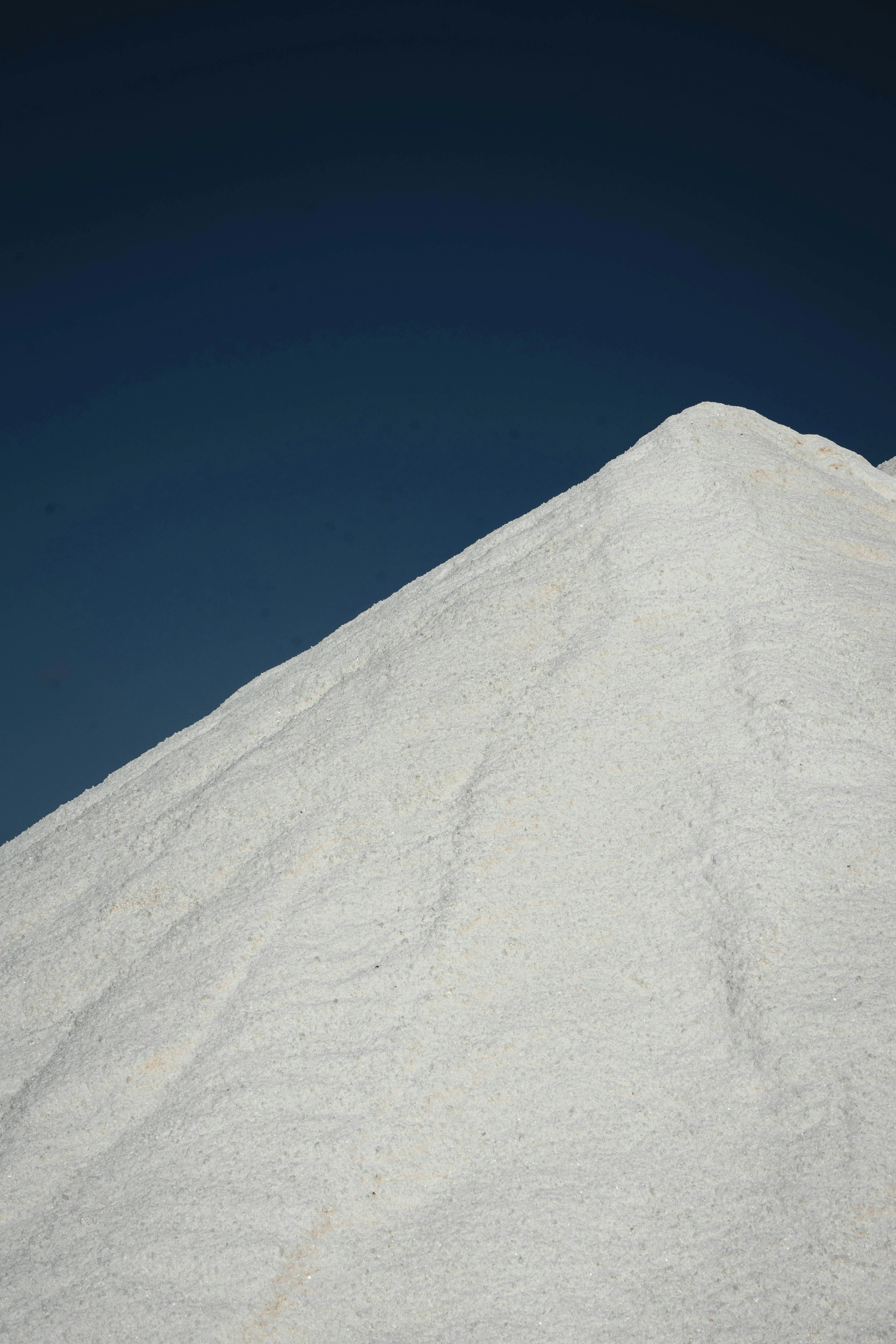
Atlas Salt advances North America's first new salt mine in 30 years with $920M NPV targeting import-reliant markets. Development-stage opportunity at 0.06x NAV.
- Atlas Salt is developing the Great Atlantic Salt Project in Newfoundland, Canada, North America's first new salt mine in nearly three decades, with 4 Mtpa nameplate capacity and a 24.3-year mine life.
- The project boasts compelling economics: $920M after-tax NPV8, 21.3% IRR, and $188M average annual post-tax cash flow, strategically positioned to serve the import-reliant North American de-icing market.
- Europe's salt market, valued at $10.1B in 2024 with 61M tons consumed annually, is forecast to grow steadily to 63M tons by 2035, demonstrating the essential, recession-resistant nature of salt demand globally.
- North America imports 8-10 Mtpa of de-icing salt annually, primarily from distant sources, creating a significant opportunity for Atlas Salt's proximity advantage to Atlantic Canada and U.S. East Coast markets.
- With environmental assessment completed, strategic agreements secured with Scotwood Industries, Sandvik, and Hatch, and $589M in pre-production capital identified, Atlas Salt is advancing toward production targeted by 2030.
Atlas Salt Emerges as Strategic North American Producer Amid Global Salt Market Growth
The global salt industry represents a multi-billion-dollar essential commodity market with steady, predictable demand patterns. Europe's salt market alone consumed approximately 61 million tons valued at $10.1 billion in 2024, according to IndexBox's latest market analysis. This massive consumption base, forecast to reach 63 million tons by 2035, underscores the fundamental, non-cyclical nature of salt demand across industrial, de-icing, chemical processing, and food applications.
Against this backdrop, Atlas Salt Inc. (TSXV: SALT) is advancing North America's first new salt mine in nearly three decades. The Great Atlantic Salt Project in Newfoundland represents a rare greenfield development opportunity in a mature industry characterized by aging infrastructure and challenging operating conditions at legacy mines.
The convergence of North America's 8-10 Mtpa import dependency, aging legacy mine infrastructure, recent mine closures, including Cargill's Avery Island facility, and growing demand for domestically-sourced materials creates a compelling investment thesis as the company advances toward production.
Company Overview: Developing a World-Class Salt Resource
Atlas Salt is a Canadian mineral development company focused on advancing the Great Atlantic Salt Project near St. George's, Newfoundland and Labrador. The project hosts 95 million tons of probable reserves grading 95.9% NaCl, plus 383 million tons of indicated resources and 868 million tons of inferred resources. This world-class deposit exhibits exceptional characteristics: shallow depth approximately 180 meters from surface versus 600 plus meters for major competitors, high purity, remarkable thickness averaging 200 meters, and homogeneous geology.
The company completed an updated feasibility study in September 2025 that significantly de-risked the project and improved economics. The study optimized production to achieve 4 million tons per annum nameplate capacity over a 24.3-year mine life, shortened from the previous 34-year plan. Key financial metrics include after-tax NPV8 of $920 million, after-tax IRR of 21.3%, and a 4.2-year payback period.
Nolan Peterson, CEO of Atlas Salt said:
"We've systematically de-risked this project through strategic partnerships, optimized engineering, and comprehensive permitting. The Great Atlantic Salt Project represents a generational opportunity to establish modern, sustainable salt production serving North American markets that currently depend heavily on imports from thousands of miles away."
Led by CEO Nolan Peterson with over 20 years of mining finance and operations experience, Atlas Salt has secured critical partnerships, including a memorandum of understanding with Scotwood Industries for 1.25-1.5 Mtpa offtake, a $73 million equipment supply and financing agreement with Sandvik, and an integrated project delivery partnership with Hatch.
The Salt Market Landscape: Essential, Stable, & Growing
Salt represents one of the world's most essential industrial commodities, with applications spanning de-icing for road safety, chemical processing, food preservation, water treatment, agriculture, and industrial processes. The European market exemplifies the commodity's characteristics: steady consumption growth, resilient demand through economic cycles, and concentrated production among established players.
IndexBox's Europe salt market analysis reveals 2024 consumption of approximately 61 million tons valued at $10.1 billion, with forecasts projecting volume growth to 63 million tons by 2035 at 0.4% CAGR and value expansion to $11.8 billion at 1.5% CAGR. This modest but consistent growth reflects salt's essential nature, with demand correlating primarily with population, industrial activity, and weather patterns rather than discretionary economic factors.
The global salt industry exhibits significant trade flows, with Europe both importing and exporting substantial volumes. Major exporting nations include Germany, the Netherlands, and Spain, which leverage coastal evaporation facilities and established underground mines.
North American Market Dynamics: Import Dependency Creates Opportunity
North America presents a distinct supply-demand profile that informs Atlas Salt’s investment thesis. The continent, particularly the United States and Eastern Canada, relies heavily on imports to meet de-icing salt requirements. Atlas Salt’s feasibility study identifies total North American de-icing salt imports of 8 to 10 million tons annually, sourced primarily from Chile, Egypt, Mexico, and the Caribbean. This import dependence indicates a structural shortfall in domestic production capacity. Atlas Salt CEO Nolan Peterson stated that:
“There is a salt shortage year-over-year when you’re balancing domestic production versus domestic needs.” Domestically, I’m grouping Canada and the United States as one market."
Legacy North American salt mines face operational challenges, including extreme depths, with the Goderich mine operating at approximately 600 meters below Lake Huron, aging infrastructure dating to the early to mid 20th century, and environmental complications. Cargill’s Avery Island mine in Louisiana ceased production in 2021, removing approximately 2.5 million tons per year of domestic supply. Cargill’s remaining New York and Cleveland assets have remained unsold since 2023 due to environmental risks. These factors constrain the ability of existing producers to expand output and contribute to continued reliance on imports.
According to Atlas Salt’s market analysis, Atlantic Canada, Quebec, and the U.S. East Coast consume 11 to 16 million tons per annum of road salt. The Great Atlantic Salt Project is located within approximately three days of shipping time to Boston, compared with more than 14 days for shipments from Egypt or Chile. This proximity affects transportation costs, emissions, and supply reliability, and may influence procurement preferences under Buy Canadian or Buy North American policies. Peterson stated that “we can deliver product to the same markets served by foreign producers in 15 to 20% less time and cost.” He also described the project’s anticipated revenue profile, stating that “we have steady stable cash flow year after year, kind of like a dividend or a bond once you get over that initial hurdle.”
Strategic Advantages: Location, Cost, & Sustainability
Atlas Salt's competitive positioning extends beyond proximity to markets. The project benefits from established infrastructure, including the Trans-Canada Highway, a deep-water marine terminal at Turf Point just 2 kilometers from the mine site, and access to abundant, clean hydroelectric power. These existing assets significantly reduce capital requirements and operating costs.
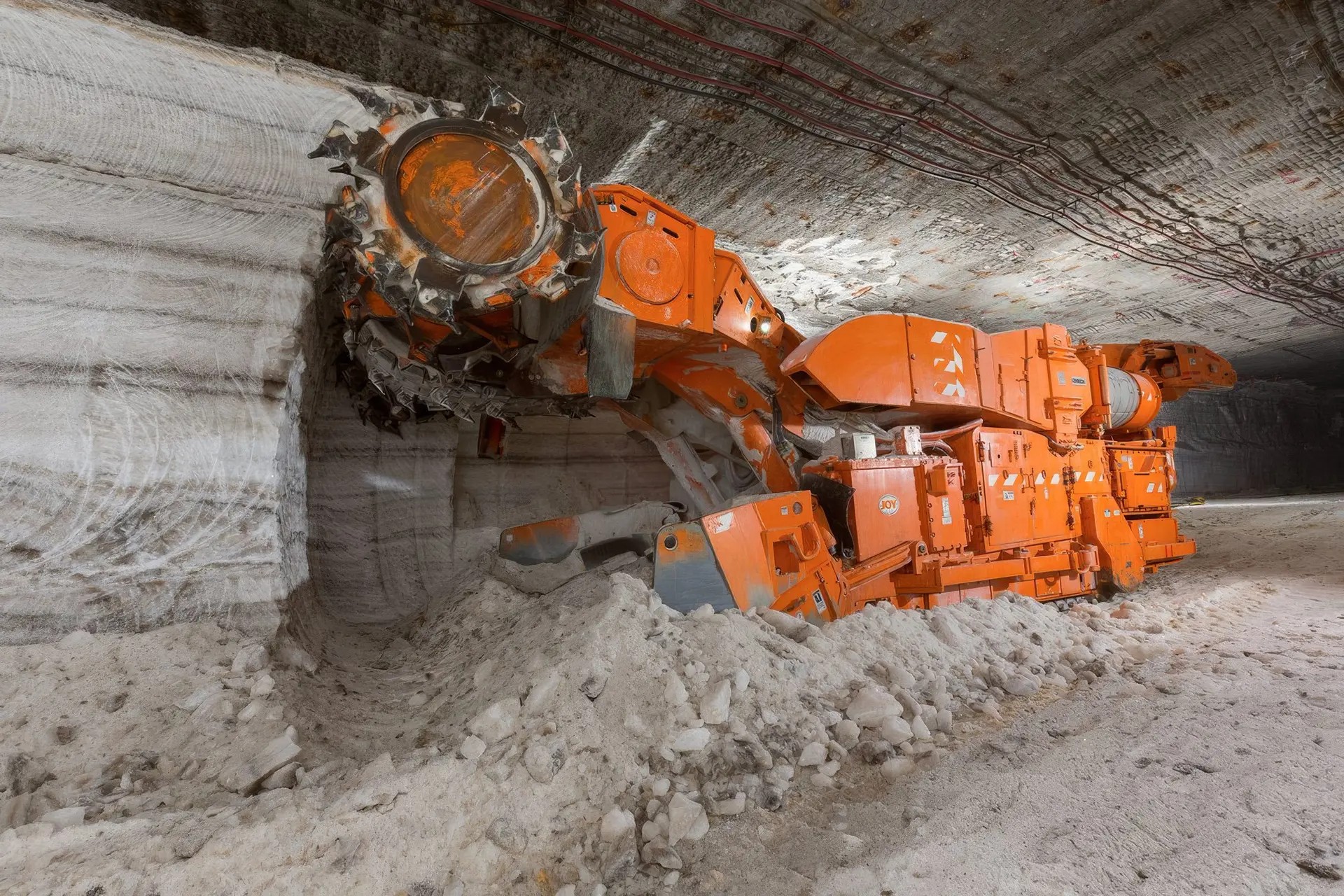
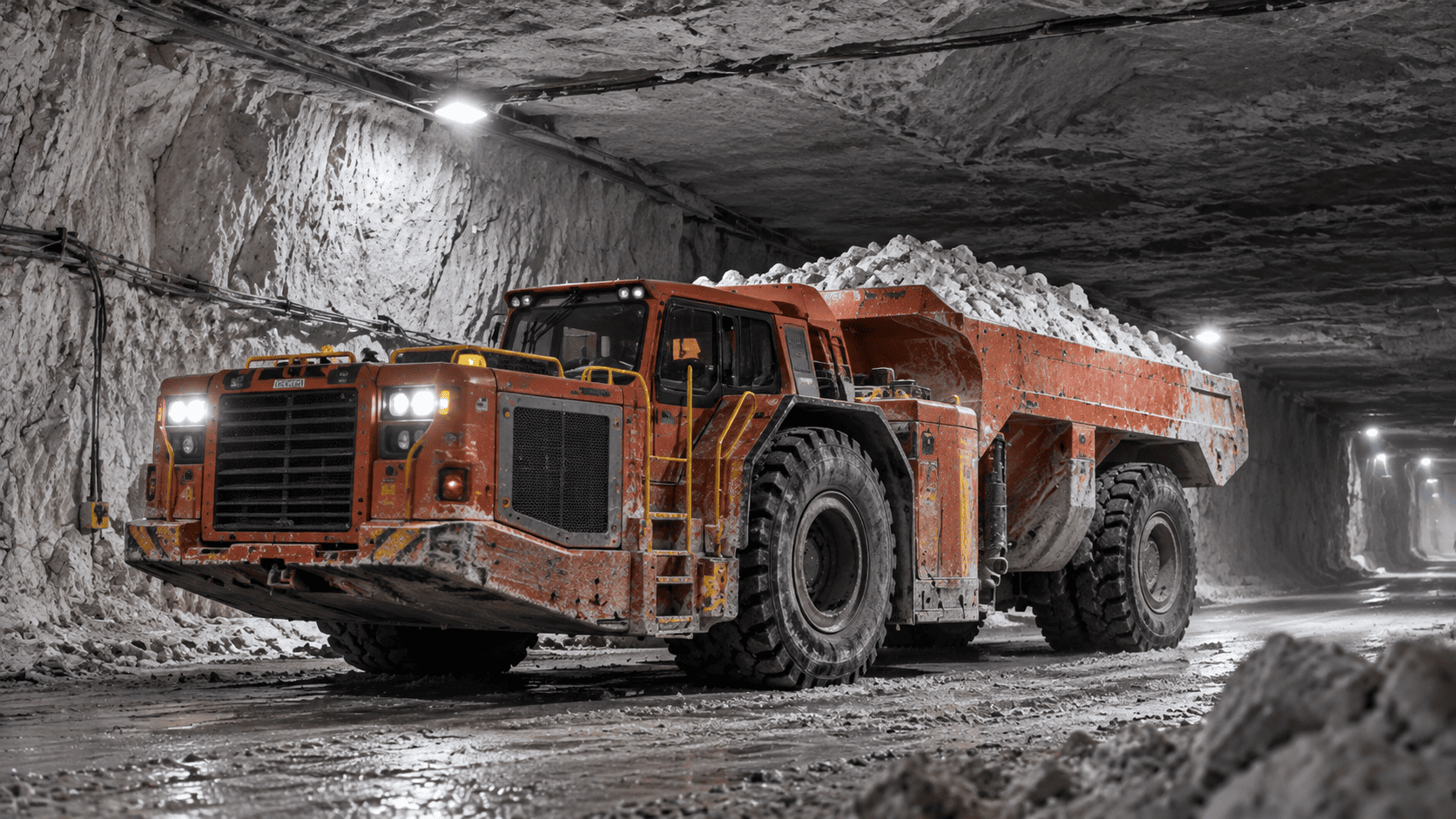
The mine design incorporates innovations supporting cost efficiency and environmental performance. The shallow deposit depth enables development via decline access rather than expensive shaft sinking, dramatically reducing pre-production capital and timeline. The project will utilize an all-electric mining fleet powered by Newfoundland's 95% plus hydroelectric grid, delivering improved underground air quality, minimal Scope 1 greenhouse gas emissions of just 79 tonnes per year, and industry-leading GHG intensity of approximately 950 tonnes CO2-equivalent per million tonnes of production.
Processing will employ purely physical methods including crushing, screening, and sizing, without chemicals or tailings generation. Atlas Salt's comprehensive ESG report quantifies substantial economic impact: $2.7 billion in tax revenue, $1.9 billion in household spending across Newfoundland and Labrador, $90 million to municipalities, and creation of 170 plus long-term jobs paying $2.5 billion in wages over mine life.
Project Economics: Robust Returns & Strong Cash Generation
The September 2025 feasibility study update significantly improved the project's economics. By shortening mine life from 34 to 24.3 years while increasing average annual production from 2.5 to 4.0 million tons, Atlas Salt pulled forward cash flow realization. After-tax NPV8 increased 66% to $920 million, after-tax IRR improved from 18.5% to 21.3%, and payback period shortened from 4.8 to 4.2 years.
Initial capital expenditure is estimated at $589 million, with life-of-mine sustaining capital totaling $609 million. Operating costs are projected at $28.20 per tonne shipped on FOB Turf Point basis, with all-in sustaining costs of $34.90 per tonne. The base case selling price of $81.67 per tonne generates average net revenue of $109.40 per tonne, yielding a margin of $74.50 per tonne after AISC.
Life-of-mine average annual pre-tax operating cash flow is projected at $325 million, translating to $188 million in average annual post-tax free cash flow. Cumulative post-tax cash flow over mine life totals $4.6 billion. Sensitivity analysis shows the project remains robust: at $73.50 per tonne, after-tax NPV8 is $516 million with 16.9% IRR; at $89.84 per tonne, NPV8 expands to $1.5 billion with 25.0% IRR.
Development Progress: Permits, Partnerships, & Path to Production
Atlas Salt has systematically de-risked the project through permitting achievements and strategic partnerships. Environmental assessment concluded in April 2024 when Newfoundland's Environment Minister released the project from provincial review with conditions after only approximately two months, reflecting the project's low environmental impact profile.
The company has secured nine critical permits, including the Early Works Development Plan, Environmental Protection Plan, Waste Management Plan, Water Resource Management Plan, Wetland Conservation Plan, and Benefits Plan. The memorandum of understanding with Scotwood Industries establishes a framework for offtake of 1.25-1.5 million tons per annum, representing 31-38% of planned production.
Sandvik has committed through an MOU to provide mining equipment and engineering support valued at $73 million, with financing provisions reducing upfront capital requirements. Hatch has been designated as Lead Engineering Partner and Integrated Project Delivery Partner through a November 2025 MOU. The company engaged Endeavour Financial for project finance structuring and targets production commencement by 2030.
Recent Salt Industry Transaction: Validation of Sector Value
The salt industry received significant validation in December 2025 when ContextLogic announced the acquisition of US Salt from Emerald Lake Capital Management for $907.5 million USD. US Salt, a vertically integrated producer in Watkins Glen, New York founded in 1893, generated $131 million in LTM revenue with approximately 42% EBITDA margins and maintains over 100 years of remaining reserves.
The transaction valued US Salt at approximately 16.5x LTM EBITDA, reflecting strategic value of established salt production, stable cash flows, and long reserve life. Blue-chip investors, including Blackstone, BC Partners, and Abrams Capital participated, underscoring institutional interest in salt assets.
The transaction highlights recession-resilient and stable growth characteristics that make salt attractive to investors. Salt demand correlates primarily with population, industrial activity, and weather patterns rather than discretionary economic cycles, providing downside protection during recessions while participating in long-term growth trends.
The Investment Thesis for Atlas Salt
- North America's first new salt mine in 30 years addresses structural import dependency and aging infrastructure in a consolidated, essential commodity sector.
- After-tax NPV8 of $920M and 21.3% IRR with 4.2-year payback provide attractive project-level economics relative to pre-production capital of $589M.
- Proximity to Atlantic Canada and U.S. East Coast markets, 3 days vs 14 plus days from overseas, delivers cost, carbon, and supply security benefits versus imports.
- Environmental approval, strategic partnerships with Scotwood, Sandvik, and Hatch, and equipment financing progressively reduce development risk toward construction financing.
- Current 0.07x P/NPV valuation offers multiple expansion opportunities as the project advances through typical Lassonde Curve inflection points toward production.
- December 2025 US Salt acquisition at 16.5x EBITDA by blue-chip investors confirms strategic and financial value of salt assets in current market environment.
Atlas Salt represents a differentiated investment opportunity: a development-stage company advancing a world-class salt resource with compelling economics, strategic market positioning, and significant re-rating potential. The convergence of North American import dependency of 8-10 Mtpa, recent supply disruptions including mine closures, and decades-old legacy infrastructure creates favorable supply-demand dynamics for a modern, cost-efficient, sustainably-designed new entrant.
The updated feasibility study significantly de-risked project economics through optimized production planning. With an after-tax NPV of $920 million, 21.3% IRR, and strong free cash flow generation of $188M annually, the project offers institutional-quality returns. Strategic partnerships with Scotwood Industries, Sandvik, and Hatch provide commercial validation, equipment financing, and engineering execution capability.
For investors, Atlas Salt offers leveraged exposure to salt's essential, recession-resistant demand characteristics through a rare greenfield development opportunity. The current enterprise value of approximately $59 million, representing approximately 6% of after-tax NPV, prices in substantial execution risk but offers significant upside as the company advances toward construction financing and production.
TL;DR
Atlas Salt is developing North America's first new salt mine in 30 years in Newfoundland with 4 Mtpa capacity, $920M NPV, and strategic location to serve import-dependent eastern markets; current enterprise value represents 0.06x project NPV, offering significant re-rating potential as development milestones de-risk the project toward 2030 production target.
FAQs (AI-Generated)
Shallow depth of 180m vs 600m plus for competitors, high-grade deposit at 95.9% NaCl, proximity to markets reducing transportation costs, and all-electric design deliver $920M after-tax NPV8 with 21.3% IRR.
North America imports 8-10 million tons annually of de-icing salt while Atlantic Canada, Quebec, and the U.S. East Coast consume 11-16 million tons per year; Atlas Salt's 4 Mtpa represents 25-40% of current import volumes.
Construction execution risk including $589M capital requirement and potential cost overruns, salt price volatility affecting revenue assumptions, operational challenges during mine ramp-up, and competition from established producers and imports.
Secure project financing package as the company has engaged Endeavour Financial, complete remaining permits, finalize engineering and procurement, commence mine construction, and ramp up to 4 Mtpa capacity by approximately 2030.
The $907.5M transaction at 16.5x EBITDA with blue-chip investor participation validates salt assets' strategic value and demonstrates institutional interest, providing valuation context for Atlas Salt as it advances toward production.
Analyst's Notes





Subscribe to Our Channel





Stay Informed


