Atomic Eagle Expands High-Grade Uranium Zone at Chisebuka, Zambia, With 13 of First 15 Holes Hitting Mineralisation Outside Existing Resource


.webp)
Atomic Eagle's first 2026 drill results at Zambia's Chisebuka target confirm a new high-grade uranium zone outside the existing 9.7 million pound resource.
- Atomic Eagle has reported initial results from its 2026 drilling programme at the 100%-owned Muntanga Uranium Project in Zambia, with the majority of the first holes drilled striking uranium mineralisation in areas not yet counted in the existing resource.
- The results confirm a new, distinct zone of higher-grade uranium at the Chisebuka target - now drilled densely enough to support a formal resource estimate.
- The strongest single intercept returned 12.7 metres at 673 parts per million equivalent uranium oxide, one of the highest grades recorded at Chisebuka to date.
- Two drill rigs remain active at Chisebuka, with more results expected in the coming weeks.
- Ground surveys are underway at two additional targets - Namakande and Muntanga North - ahead of drilling expected later this quarter.
Company Overview
Atomic Eagle (ASX: AEU | OTCQB: AEUXF) is an ASX-listed mineral resource company focused on the exploration and development of uranium assets in Africa. Its core asset is the 100%-owned, district-scale Muntanga Uranium Project in Zambia, spanning four mining licences and two exploration licences across a 146-kilometre strike length covering 1,136 square kilometres, adjacent to Lake Kariba. The project's total uranium resource stands at 58.8 million pounds of uranium oxide at 309 parts per million. Muntanga has sealed road access to Chirundu, Siavonga, and Lusaka, with export routes accessible via Namibia's Port of Walvis Bay through Livingstone, approximately 560 kilometres to the west.
First 2026 Drill Results
Atomic Eagle has released the first batch of drill results from its 2026 programme at the Muntanga Uranium Project in Zambia. The results show that uranium mineralisation is growing beyond the boundaries of the deposit the company has already measured and formally reported - a positive early sign for the company's stated goal of increasing the size of Muntanga's uranium resource this year.
Phil Hoskins, Chief Executive Officer of Atomic Eagle, said the programme is tracking in line with the company's objectives:
"Our 2026 goal of increasing Muntanga's Mineral Resource is off to a great start. These initial results from Chisebuka build directly on the Company's early success, which saw a 9.7Mlb uranium resource defined at Chisebuka in a matter of months."
What Is Muntanga & Why Does Chisebuka Matter?
Muntanga is Atomic Eagle's flagship project - a large uranium exploration and development asset in southern Zambia. The project already holds a substantial uranium resource across several targets, and the company's focus in 2026 is on expanding that resource further.
Chisebuka is one of the key targets within Muntanga. A drilling campaign completed in 2025 led to the definition of a maiden Mineral Resource - the company's first official estimate of how much uranium sits in the ground at that location - containing a total of 9.7 million pounds of uranium oxide. The 2026 programme is now drilling beyond the boundaries of that existing estimate to test whether the deposit extends further.
What the Latest Drilling Shows
The majority of the first holes completed in 2026 struck uranium mineralisation in areas that sit outside the boundaries of the existing resource. That result matters because it suggests the deposit is larger than what has already been formally counted. Hoskins described the south-west zone as the next meaningful addition to the resource:
"Chisebuka's SW zone is now emerging as the next key addition with near-surface higher-grade results outside of the previous resource area and we've only scratched the surface of the planned holes into Chisebuka this year."
The drilling has defined a new zone of higher-grade uranium in the south-west portion of Chisebuka, now drilled at sufficient density to support a formal resource estimate. The strongest intercepts include 12.7 metres at 673 parts per million uranium oxide and 24.0 metres at 448 parts per million, among others. Several of the higher-grade results come from shallow depth, which is practically significant - mineralisation closer to the surface is generally less expensive to extract.
The uranium at Chisebuka sits in stacked layers within sandstone formations, extending from near the surface to considerable depth in places. Fractures in the rock appear to have played a role in concentrating uranium in certain areas of the deposit.
How Uranium Grade Is Measured Here
Rather than collecting physical rock samples for laboratory analysis - the approach used in many other types of mining - Atomic Eagle measures uranium grades at Chisebuka using a specialised tool lowered into each drill hole. The tool detects natural radiation emitted by uranium in the surrounding rock and converts those readings into a grade estimate.
The tool is regularly checked for accuracy and its readings have been cross-referenced against historical data from independent contractor Terratec, with a further calibration factor applied to ensure consistency with the older dataset. Physical rock samples from future drilling will be used to further verify the results.
Next Steps
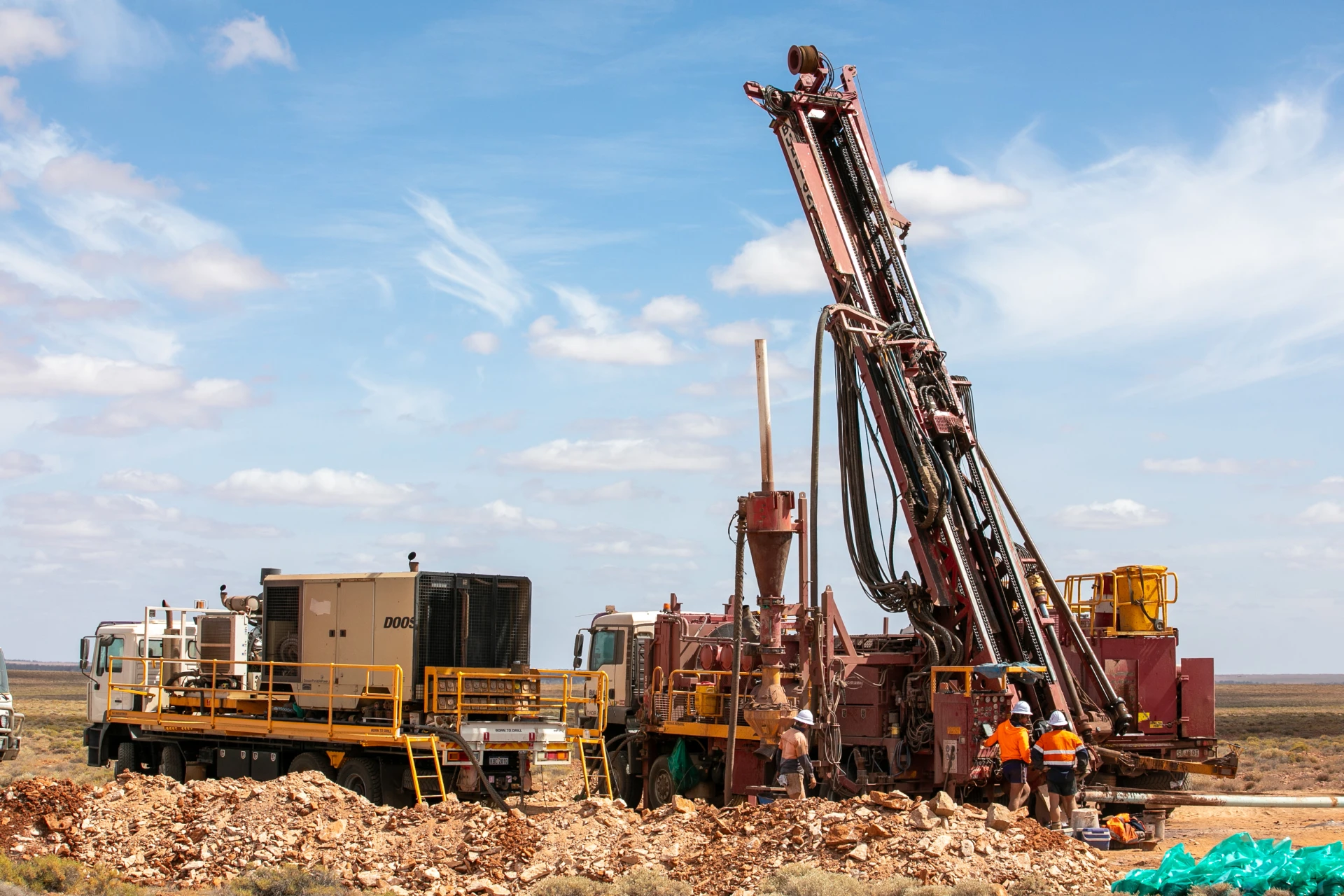
Drilling at Chisebuka will continue with two rigs targeting further expansion of the higher-grade mineralised zones, with additional results expected in the coming weeks. In parallel, ground-based radiometric surveys - detailed measurements of natural radiation at surface level - have commenced at the Namakande and Muntanga North targets. The surveys are designed to refine the company's understanding of where uranium may be concentrated before committing to drill holes.
Both Namakande and Muntanga North exhibit geophysical and geochemical characteristics similar to areas where uranium has already been found elsewhere on Atomic Eagle's licence. Hoskins confirmed the dual-track approach currently underway:
"Drilling is continuing with two rigs aiming to expand the higher-grade zones at Chisebuka whilst at the same time, we are conducting ground radiometric surveys to refine the exciting Namakande and Muntanga North targets."
FAQs (AI-Generated)
Analyst's Notes





Subscribe to Our Channel





Stay Informed