Australia's Rare Earths Need Signed Contracts as Chinese Prices Slide



Australia’s new refining strategy can’t lift NdPr prices set in China. Projects with a signed buyer or state funding carry the least price risk.
- Australia will rework its critical minerals strategy to focus on refining, Resources Minister Madeleine King said on 27 October, but the shift does not change what refined rare earths sell for.
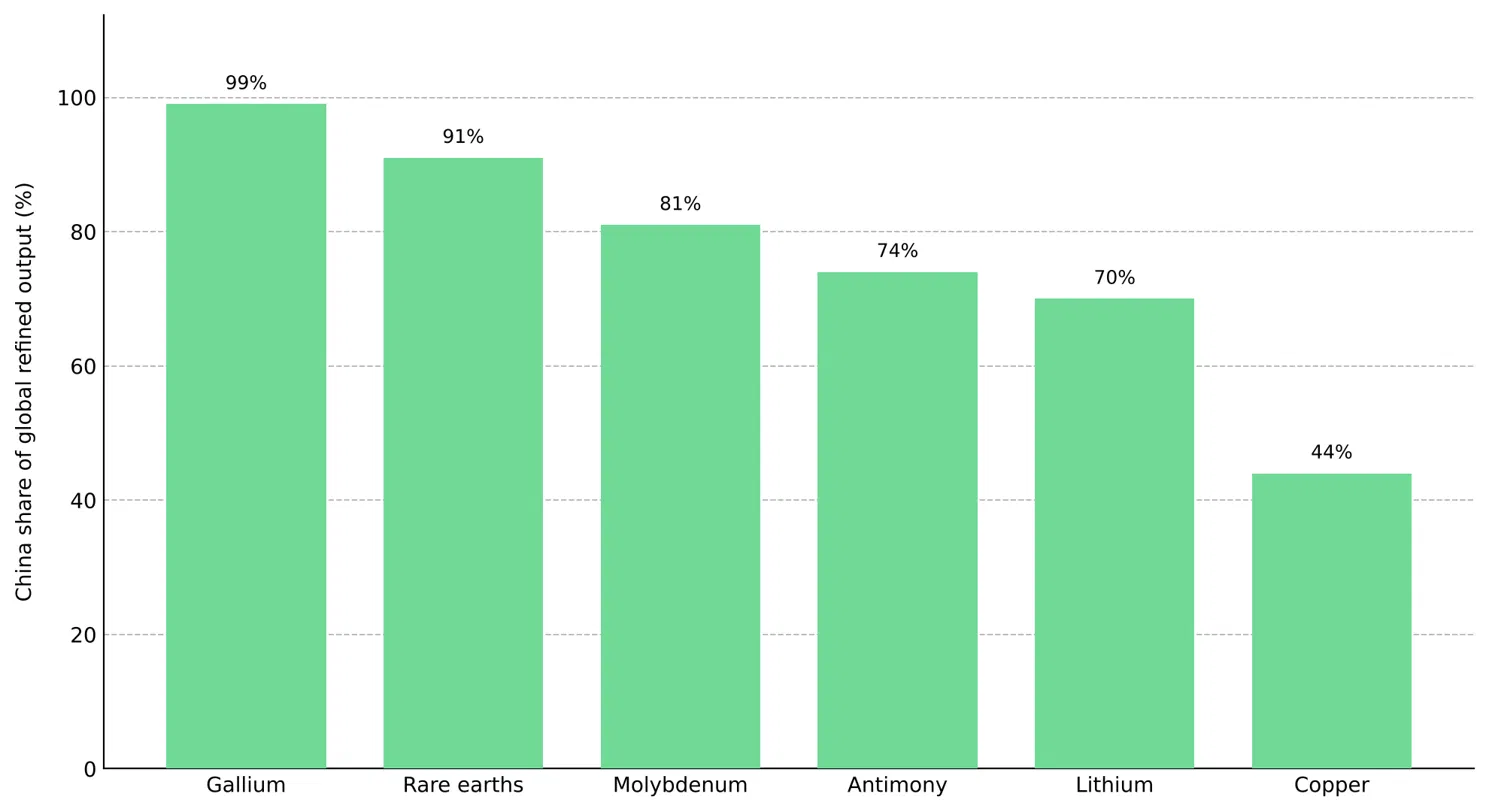
- China refines 91% of the world’s rare earths, so Chinese prices anchor what Australian refiners can charge, even as buyers outside China pay a premium.
- Chinese NdPr oxide sold for $103 to $106 per kilogram in October, below the US$110 floor the US Department of Defense guarantees MP Materials, the leading US producer.
- Developers with a guaranteed price, a signed sales contract or government funding carry far less risk than those relying on Chinese prices.
- A Chinese price above $110 per kilogram would let developers raise money on market prices alone. Until then, government purchase deals and state lending, including Australia’s A$1.2 billion reserve, decide which projects get funded.
Australia Backs Refining as Chinese Rare Earth Prices Fall Below the US Minimum
Australia will rework its critical minerals strategy to put more weight on processing and refining, Resources Minister Madeleine King said on 27 October 2026, perReuters. A day later, prices moved the other way in China, where Shanghai Metals Market (SMM) reported lower selling offers for NdPr oxide and few completed deals.
For would-be refiners outside China, the price matters more than the policy. NdPr oxide, a blend of neodymium and praseodymium used in magnets for electric motors, wind turbines and defense systems, averaged 721,500 yuan per tonne on 26 October, SMM data show. Rare Earth Exchanges put the Chinese price at $103 to $106 per kilogram for October, below the $110 minimum the US guarantees its own producers. A refinery outside China selling at Chinese prices earns less than a US producer is promised.
China's Grip on Rare Earth Refining Leaves Western Projects Hard to Finance
China refines 91% of the world's rare earths, according to Visual Capitalist data cited by Reuters on 28 October, so Chinese plants set the price everyone else sells at. Australian refiners start behind on cost, because high wages, expensive energy and strict environmental approvals all weigh on processing. Higher costs and a price set in China leave the thinnest margins at the very stage Australia now wants to build.
Banks have traditionally lent to mining projects with costs below the expected selling price, or to projects with long-term sales contracts that lock in revenue. Rare earth refiners struggle on both counts while subsidized Chinese plants set the price, since China can absorb years of losses at state-owned companies. At the International Mining and Resources Conference (IMARC) in Sydney, the US and EU acted more like rivals for supply than partners, splitting Western demand instead of pooling it into contracts large enough to finance a refinery.
Government Purchase Deals Decide Which Rare Earth Projects Get Funded
Australia's A$1.2 billion strategic reserve will rely on long-term purchase deals, forward contracts and pooled orders from allied buyers, Angus Campbell, Australia's ambassador to the EU, told Reuters. Such deals take months to negotiate.
The outcome matters most for rare earth developers outside China with no guaranteed price, sales contract or government partner. If Canberra signs fixed-price purchase deals through the reserve, developers who win them can borrow against a known price. If the reserve buys near market prices, the same developers sell $4 to $7 per kilogram below the US minimum. They may then need a government stake instead, which dilutes existing shareholders.
The price to watch is $110 per kilogram. Chinese NdPr oxide above it in SMM's daily assessment would let developers without contracts raise money on market prices alone. Until then, the first reserve deals decide who gets support. Financing decisions are likely over the next 12 to 18 months.
Developers Without Sales Contracts Carry the Most Price Risk
Developers without contracts are squeezed from both sides. Their revenue follows a Chinese price, which fell on 28 October, while their costs carry Australian wages, energy bills and approval expenses. Retail shareholders in early-stage developers face the bigger risk, since a junior miner's share price often assumes a selling price the company cannot guarantee.
The question is whether a project's revenue is protected before construction. Australia approved A$180 million in conditional loans for the Donald rare earth project in Victoria, owned by Astron and Energy Fuels, SMM reported. Government loans make Donald cheaper to finance, but its planned 9,000 tonnes a year of rare earth concentrate goes to Energy Fuels’ mill in Utah at market prices, which still track Chinese pricing. Only a price guarantee removes exposure to China.
No reserve deal terms have been published, so nobody outside government knows which projects will be supported. A share price lifted by policy headlines can fall back if a project is passed over. Position size, and whether a company has signed a sales contract or secured government funding, remain the factors a retail shareholder controls.
What Drives Value in Western Refining
Australia has chosen a direction for Western refining, but China still sets the price. Canberra named processing a priority, and Chinese prices fell the next day. Outside China, the value in refining now lies with projects whose sales a government has secured, not with the deposit in the ground.
A signed government contract counts for more in a developer's worth than grade or tonnage. Plans depending on prices recovering on their own rest on the one thing Chinese producers control, and Western buyers are still competing with each other rather than working together.
Low Chinese prices keep private money away today, leaving fewer competitors for Western demand later. Projects able to win government contracts in the current round stand to face a smaller field once demand arrives.
Analyst's Notes





Subscribe to Our Channel





Stay Informed