Poland’s 123-Tonne Gold Buying Reinforces Long-Term Official Demand



Central-bank reserve diversification supports gold demand as limited supply growth highlights the need for future mine production.
- Poland increased its gold reserves by approximately 123 tonnes during the first nine months of 2026, making it a leading central-bank buyer and contributing to global physical gold demand.
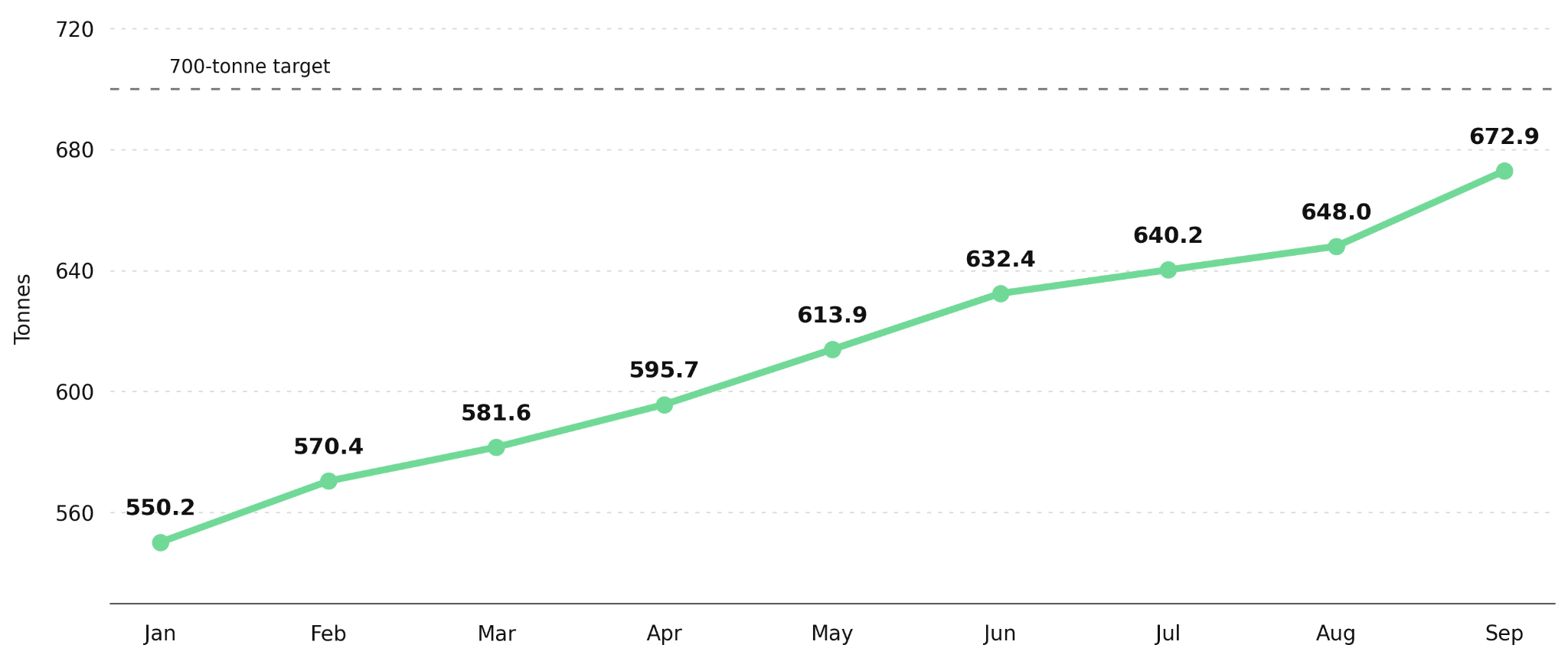
- The National Bank of Poland (NBP) held 672.9 tonnes of gold at the end of September 2026, leaving 27.1 tonnes to reach its announced 700-tonne target.
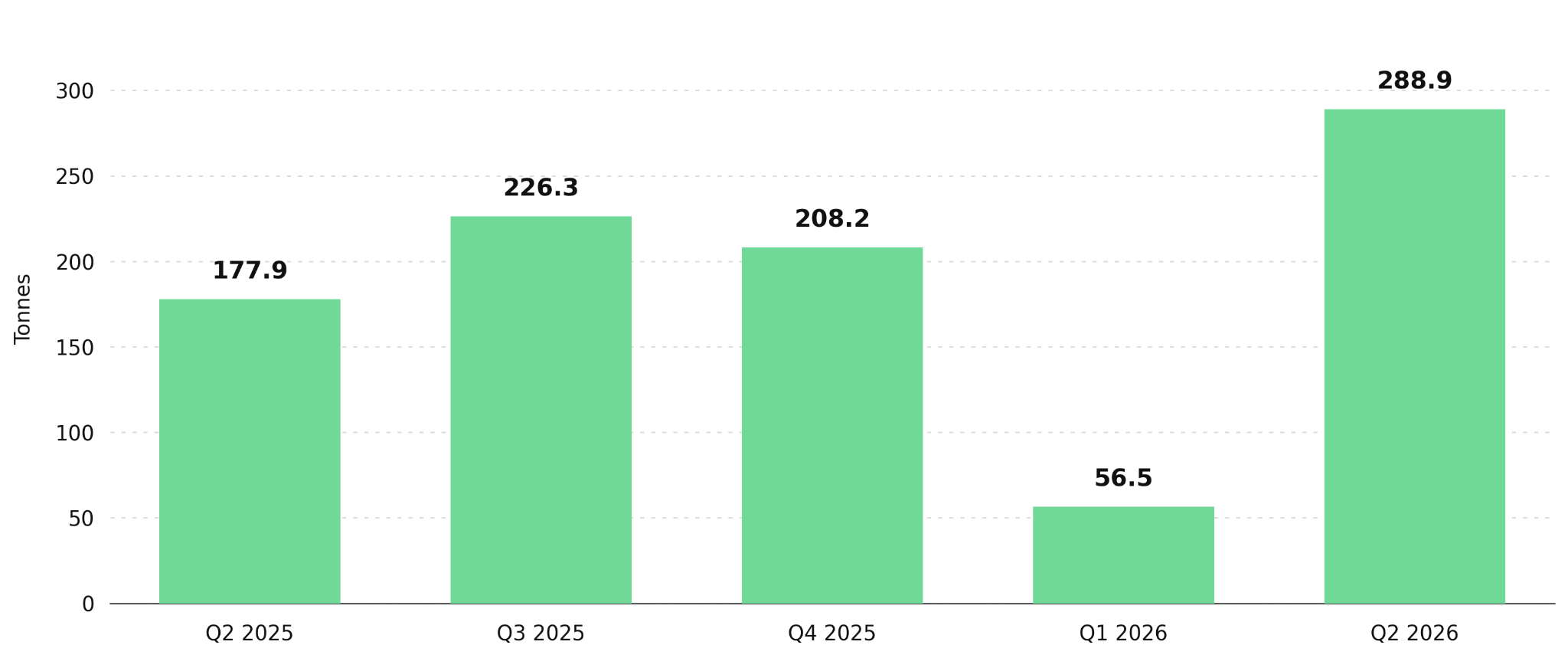
- Global central banks purchased an estimated 289 tonnes of gold in the second quarter of 2026, while 89% of respondents to the World Gold Council (WGC) survey anticipated higher global central-bank gold reserves over the following 12 months.
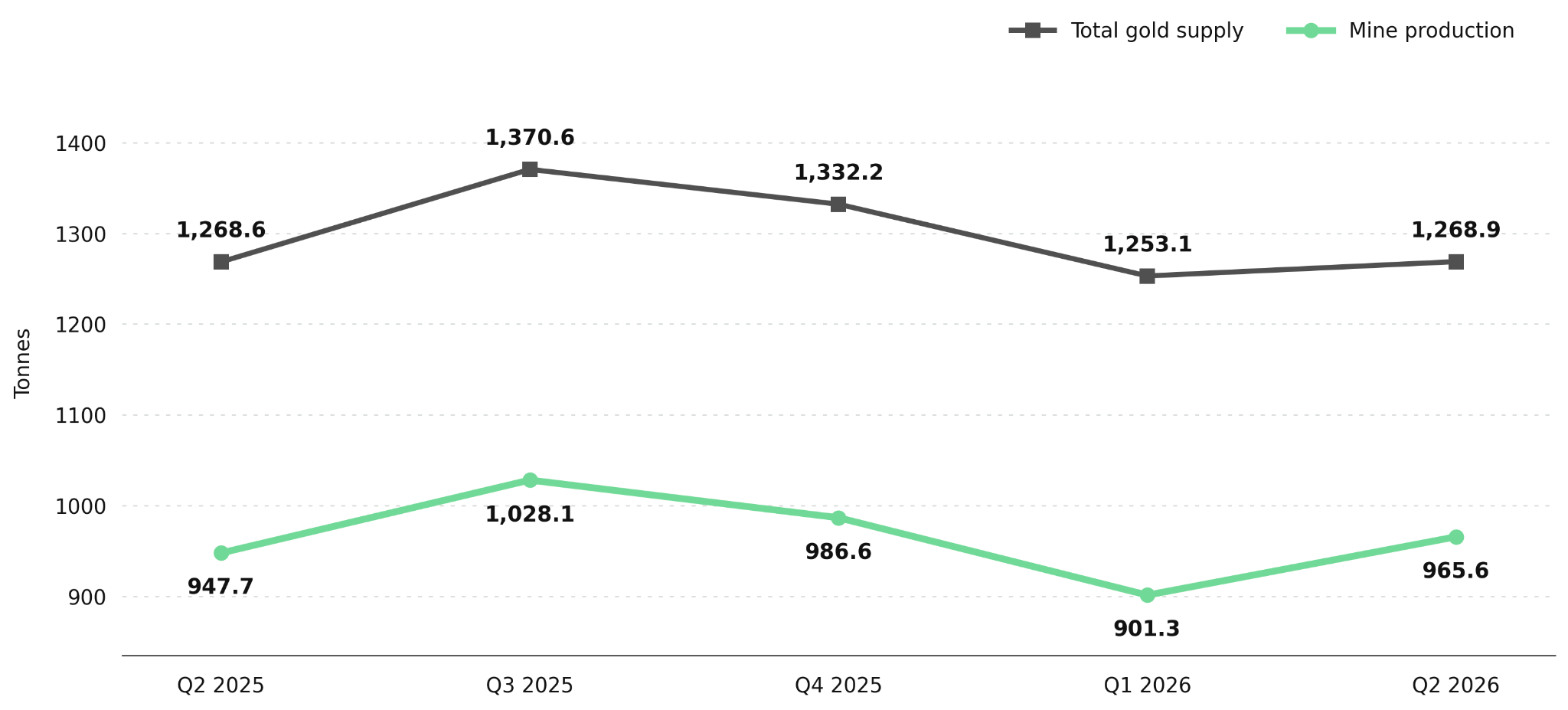
- Gold mine production increased 2% year over year in the second quarter of 2026, while total gold supply remained unchanged, highlighting the need to assess future mine supply against longer-term physical demand.
- WGC found that higher gold prices have historically coincided with increased mining capital expenditure, with additional mine production generally following at least six years later.
Poland’s Reserve Target Drives Central-Bank Gold Buying
NBP reports that Poland's gold reserves increased by approximately 122.7 tonnes during the first nine months of 2026, reaching 672.9 tonnes. This accumulation advances Poland's long-term reserve diversification strategy and contributes to physical gold demand beyond short-term investment flows.
September purchases of approximately 24.9 tonnes of gold left the NBP 27.1 tonnes short of its 700-tonne reserve target established in January 2026. Poland's purchases through September exceeded China's reported 103-tonne increase over the same period, placing Poland ahead of China in disclosed central-bank buying. Further purchases could moderate as the NBP approaches its stated target.
Reserve Diversification Sustains Higher Official Gold Demand
WGC reports that central banks purchased approximately 1,000 tonnes of gold annually over the preceding four years, double the roughly 500-tonne annual average during the previous decade. This increase places Poland's accumulation within a broader rise in physical gold demand driven by central-bank reserve diversification.
WGC's June 2026 Central Bank Gold Reserves Survey, based on responses from 76 institutions, found that 89% anticipated higher global central-bank gold holdings over the following 12 months and 45% planned to increase their own reserves. Another 83% anticipated gold accounting for a larger share of global reserves over five years. The survey also found that 90% cited gold's performance during crises and 84% its long-term store-of-value characteristics as reasons for holding gold.
Central-Bank Buying Rebound Sets Second-Quarter Record
Central-bank net gold purchases reached an estimated 288.9 tonnes in the second quarter of 2026, up 62% year over year and the highest second-quarter total in the WGC's series. This marked a sharp rebound from the revised first-quarter total of 56.5 tonnes, although first-half purchases of approximately 345 tonnes remained the lowest since 2022. Sales by some monetary authorities offset purchases elsewhere, reflecting differences in national reserve policies and liquidity requirements.
Reported central-bank net gold purchases reached approximately 39 tonnes in August, bringing the WGC's disclosed total to roughly 170 tonnes through the first eight months of 2026. These figures cover only publicly reported transactions, whereas the quarterly estimates also account for undisclosed central-bank activity.
Limited Gold Supply Growth Reinforces Future Mine Investment
Gold mine production increased 2% year over year to 965.6 tonnes in the second quarter of 2026, according to WGC. Recycling declined 6% to 326.1 tonnes, leaving total gold supply largely unchanged at 1,268.9 tonnes from a year earlier. Limited supply growth highlights the importance of advancing new mining projects to meet potential long-term gold demand.
WGC found that higher gold prices have historically coincided with increased mining capital expenditure, with additional mine production generally following price increases after at least six years. The analysis also indicated that global mine production could gradually plateau as aging operations and development requirements constrain growth. This production lag supports a longer-term investment case for developers advancing economic studies and explorers defining mineral resources.
Portfolio Growth Puts Gold Project Economics in Focus
Sustained central-bank gold demand provides a supportive long-term market backdrop for undeveloped gold projects. Assessing their investment potential requires examining long-term gold price assumptions, capital requirements, and projected returns.
U.S. Gold Corp's feasibility study for its CK Gold Project in Wyoming outlines an 11-year mine life supported by approximately 1.015 million ounces of Proven and Probable gold reserves. The study estimates US$632 million in after-tax Net Present Value at a 5% discount rate (NPV5%) and a 27% Internal Rate of Return (IRR), against US$394 million in initial capital costs. Based on the study's assumed metal prices, these results provide a defined economic foundation for advancing project financing and construction planning.
George Bee, President and Chief Executive Officer of U.S. Gold Corp., highlights portfolio expansion among junior and mid-tier miners:
"We see that there are lots of junior, mid-tier companies that really need to add to their portfolio. If you don't grow, you fall behind.”
Resource Expansion Builds Future Gold Mine Supply Potential
S&P Global identified 258 initial gold resource announcements between 2020 and 2025, representing 189 million ounces of gold. Only 45% came from greenfield assets, with the remainder involving new deposits or zones within existing projects. This highlights the role of resource expansion and economic assessments in determining which undeveloped gold projects could contribute to future mine supply.
Preliminary Economic Studies Test Future Gold Mine Potential
Newly defined gold resources expand the pool of deposits available for future mine development, placing greater importance on evaluating their economic potential. For large deposits, preliminary economic assessments examine whether higher-grade mineralization, proposed mining methods, and development costs could support economically viable production.
Tudor Gold reported further expansion of the Perfectstorm gold-copper system at its 80%-owned Treaty Creek Project in British Columbia's Golden Triangle, highlighting potential for additional resource growth. The project also hosts Goldstorm, which contains 24.9 million ounces of Indicated gold resources. A preliminary economic assessment (PEA) of a potential higher-grade underground mine is nearing completion, providing an opportunity to evaluate the project's economic potential.
Expansion Drilling Builds Gold Resource Growth Potential
Preliminary data from S&P Global shows gold exploration budgets increased 38% to US$8.5 billion in 2026, the second-highest nominal total on record. Higher exploration allocations provide additional funding capacity for expansion drilling and updated mineral resource estimates, supporting the advancement of potential gold deposits toward future development.
P2 Gold's latest drilling results extended gold-copper mineralization south and southwest of the Lucky Strike zone at its Gabbs Project in Nevada, building on 114 drill holes completed since October 2025. An updated mineral resource estimate is targeted for the fourth quarter of 2026, followed by a feasibility study in the first quarter of 2027 to evaluate the potential scale and economics of a larger mining operation.
How Does Official Demand Shape Mine Investment
Poland's gold accumulation demonstrates how national reserve targets can generate substantial physical demand beyond short-term investment flows. The WGC's survey findings indicate broader central-bank interest in increasing gold holdings, extending the long-term demand outlook beyond Poland's accumulation program. Together, these developments highlight the growing role of reserve diversification in supporting physical gold demand.
With additional production historically lagging higher gold prices by several years, developers advancing economic studies and explorers defining mineral resources play an important role in the future supply pipeline. Projects supported by credible economics, defined resources, and continued technical progress provide a basis for evaluating potential future gold production.
The Investment Thesis for Gold
- National reserve accumulation programs provide a source of physical gold demand that can extend across multiple years, supporting the longer-term market outlook.
- Broader central-bank interest in reserve diversification reinforces the potential for continued official-sector gold demand beyond individual national buying programs.
- Limited growth in total gold supply strengthens the relevance of new mining projects capable of contributing additional production over the longer term.
- Long development timelines create opportunities for gold projects advancing toward commercial production as the industry's response to higher prices takes years to materialize.
- Developers with defined project economics offer exposure to potential future production, with capital requirements and projected returns providing a basis for assessing financing potential.
- Explorers advancing mineral resources contribute to the future supply pipeline, with drilling results and geological confidence informing their potential progression toward development.
Central-bank reserve diversification supports a longer-term foundation for physical gold demand, while the time required to expand mine production reinforces the importance of future supply. This creates investment opportunities beyond existing producers, particularly for developers advancing project economics and explorers expanding mineral resources. As official-sector demand continues to shape the gold market, resource growth and progress toward commercial production remain central to the industry's long-term investment outlook.
TL;DR
Poland's gold accumulation reflects broader central-bank efforts to diversify national reserves, supporting long-term physical gold demand. The World Gold Council reports stronger official-sector purchases, with survey findings indicating continued interest in expanding gold holdings. Meanwhile, mine production growth remains limited, and higher gold prices have historically taken years to translate into additional output. Preliminary 2026 exploration budgets also increased, reflecting greater capital allocation toward identifying future deposits. This demand and supply outlook highlights the investment potential of gold developers advancing economic studies and explorers expanding mineral resources, particularly as the industry works to establish economically viable sources of future production.
FAQs (AI-Generated)
Analyst's Notes





Subscribe to Our Channel







Stay Informed