




Brent Drops 2.6% as Hormuz Reopening Hopes Outrun Oil Flows



Brent falls 2.6% on Hormuz reopening hopes, but weak vessel flows and tight distillates keep oil supply risks elevated.
- On August 26, 2026, Brent crude futures fell $2.30, or 2.6%, to $86.28 a barrel, while West Texas Intermediate (WTI) fell $2.08, or 2.53%, to $80.29 as renewed hopes of a Hormuz reopening reduced the war-risk premium.
- Only five commodity vessels transited the Strait of Hormuz on August 25, 2026, 67% below the 10-day average of 15, showing physical flows remain well behind reopening expectations.
- On August 26, 2026, about 40 ships were reported to have transited Hormuz over the weekend, while traffic through the Omani route was also increasing, suggesting shipping may be recovering before a formal corridor is operational.
- US crude inventories rose about 4.2 million barrels in the week ended August 21, roughly seven times the 600,000-barrel estimate, adding near-term pressure to crude prices despite tight distillate supply.
- US distillate inventories stood at 105.6 million barrels in the week ending August 14, 2026, about 13% below the five-year average, keeping refined-product supply tight despite falling crude prices.
Brent Falls $2.30 on Iran-Oman Talks While Distillates Stay Tight
Oil prices fell more than $2 a barrel as Iran-Oman talks raised expectations that the Strait of Hormuz could reopen. Brent fell $2.30, or 2.6%, to $86.28, while WTI dropped $2.08, or 2.53%, to $80.29. The proposed temporary navigation corridor and mine-clearance plan reduced immediate supply-risk concerns, pushing both benchmarks toward mid-August lows.
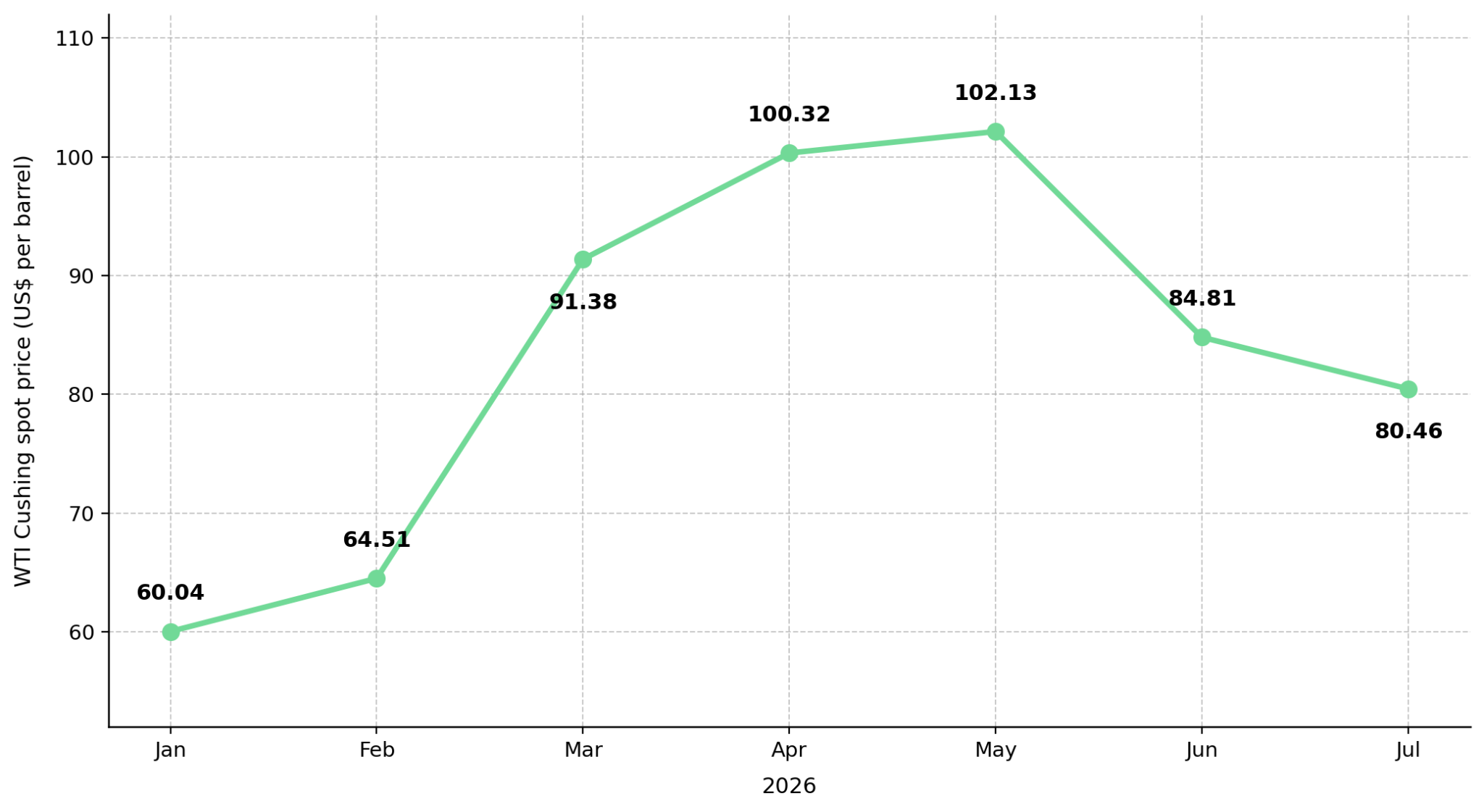
WTI at $80.78 has returned near its July average of $80.46 and is 21% below May's $102.13 average, showing the escalation premium has largely reversed. Distillate inventories remain 13% below the five-year average, leaving refined-product supply tight despite the crude selloff.
Five Commodity Transits Show Crude Supply Still Lags Reopening Optimism
The market is pricing a recovery in Hormuz traffic before commodity flows confirm it. Only five commodity vessels transited the strait on Tuesday, 67% below the 10-day average of 15. Separate reports of about 40 total ships crossing over the weekend and rising traffic through the Omani route suggest broader movement is improving, but the counts are not directly comparable. If commodity flows remain constrained, crude prices retain upside despite reopening optimism.
The proposed framework would create a temporary maritime corridor and clear mines from the waterway, but no cleared lane has been reported. Until mine clearance is completed and commodity traffic rises, the oil selloff may be pricing in a faster reopening than physical conditions support.
Diplomatic Progress Pressures Oil Before Barrels Return, Preserving Upside Risk
Diplomatic progress can pressure oil prices before physical flows recover, allowing selling to run ahead of supply. Mitsuru Muraishi, Analyst at Fujitomi Securities, said hopes for progress in the Iran-Oman talks triggered the selloff and could keep prices range-bound until the outlook becomes clearer.
Qatari Gas Return Could Lower European Metals Processing Costs
A Hormuz reopening matters more through gas costs than crude prices. The strait carried about one-fifth of global oil and liquefied natural gas (LNG) shipments before the war, so reopening would allow Qatari LNG supply to return to Europe and reduce energy-cost pressure on power-intensive metals processing.
European metals processing is more exposed to gas-linked electricity costs than to crude prices. Aluminum smelting, zinc refining, silicon and ferroalloy production therefore benefit when lower gas prices reduce power costs. A Hormuz reopening could pressure crude prices while improving margins for energy-intensive metals processors.
The pace of Qatari LNG recovery will depend on both production restarts and shipping availability. Metals processors with floating power exposure would capture lower gas prices first, while fixed-price contracts would delay the cost benefit.
Track Distillate Draws & Hormuz Traffic Before Repositioning
Distillate inventories remain tight at 105.6 million barrels, 13% below the five-year average, while refineries are operating at 97.2% of capacity. Crude inventories at 428.8 million barrels match the five-year average, so a Hormuz reopening would improve crude supply without directly rebuilding diesel stocks. With little spare refining capacity, distillate tightness can persist even as crude prices fall.
Refinery utilization above 96% alongside a distillate inventory build would show supply improving despite limited spare capacity. That would reduce pressure on retail diesel prices, which stood at $5.454 per gallon, and weaken the case that refined-product tightness can outlast the crude selloff.
Weekly Hormuz traffic and the 105.6 million-barrel distillate level are the two key signals to watch. Fuel-supply pressure remains while vessel traffic stays weak or inventories remain below that threshold. A rise in both during the same week would signal improving conditions and justify reassessing exposure to companies benefiting from higher energy prices.
Analyst's Notes





Subscribe to Our Channel





Stay Informed


