




Gunnison Copper Lists on NYSE American, Nears Full Production, and Readies Partner Search


Gunnison Copper lists on NYSE American as Johnson Camp nears full output and CEO Craig Hallworth turns down capital to protect valuation.
- Gunnison Copper began trading on NYSE American and CEO Craig Hallworth reported more than 27 million shares traded on the first day.
- Johnson Camp is targeting full production of more than 2 million lbs of cathode a month by the end of Q4 2026, with the Nuton sulfide circuit supplying at least 60% of output.
- Around $20 million is available to fund drilling at the Gunnison Project, and Hallworth is turning away investors offering $25-50 million to avoid raising at the current valuation.
- Sulfuric acid prices are the largest cost pressure at Johnson Camp, and the Gunnison Project PEA includes a $300 million acid plant designed to address it.
- Hallworth expects metallurgical results and permit amendments to position Gunnison to attract a mid-tier partner for the $1.56 billion project build.
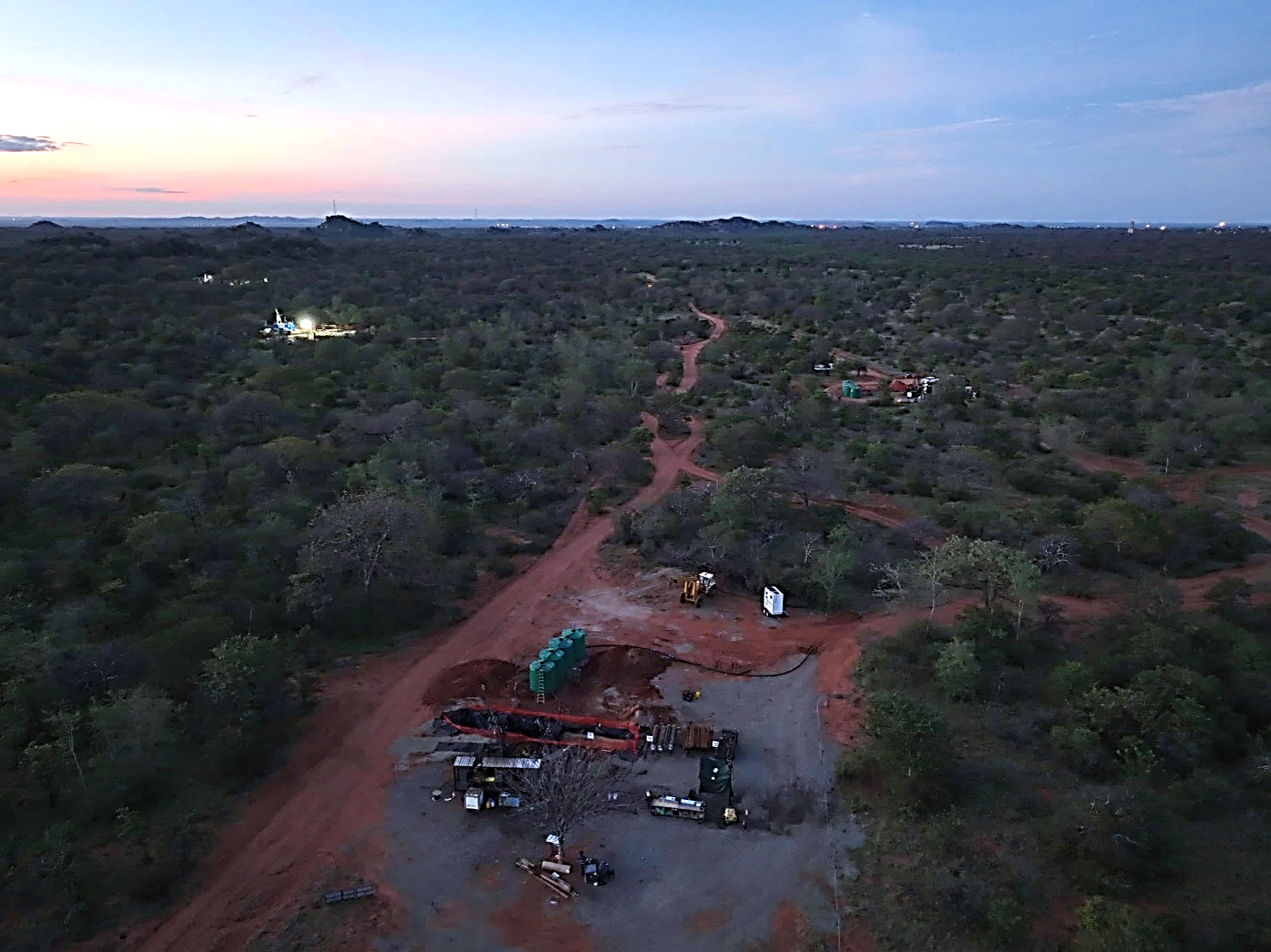
Domestic copper supply has become a policy question in the United States as much as a commodity one. Data centres, munitions and grid investment all draw on the same metal, while permitting reform has shortened the path to production. Gunnison Copper Corp. (TSX:GCU, NYSE American:GUNN) sits on both sides of that shift. It produces cathode at the Johnson Camp Mine in Cochise County, Arizona, and is advancing the much larger Gunnison Project about 1.5 miles away. Speaking with Crux Investor after the company's New York debut, President and CEO Craig Hallworth discussed the listing, funding, the Johnson Camp ramp-up and the route to a strategic partner.
NYSE American Listing Widens the Shareholder Base
Gunnison began trading on NYSE American under the ticker GUNN alongside its TSX listing. Hallworth said comparable companies that made the same move generally saw higher trading volumes and market capitalisations. The aim is to reach US retail investors and institutions whose mandates set minimum thresholds for liquidity and market value.
By Hallworth's account, more than 27 million shares traded across regular and after-hours sessions on the first day. He said that was over 10 times the 30-day average daily volume, and that the shares traded more than 25% above the opening price.
The listing followed a visit to Johnson Camp by US Secretary of the Interior Doug Burgum and Congressman Juan Ciscomani. Hallworth credited the administration's permitting reforms with helping Gunnison amend Johnson Camp's permits in under 12 months and build the mine in under 18 months. The company also said in a press release that it intends to award restricted share units to 115 eligible permanent employees to mark the listing.
Capital Discipline & Funding Optionality
Gunnison elected not to proceed with a US Department of Energy Section 48C tax credit. Hallworth said the company replaced that funding with $8 million of non-dilutive capital from Nuton, a Rio Tinto venture, in return for adding ore to the Johnson Camp mine plan. The move keeps open potentially more lucrative incentives linked to Johnson Camp's construction.
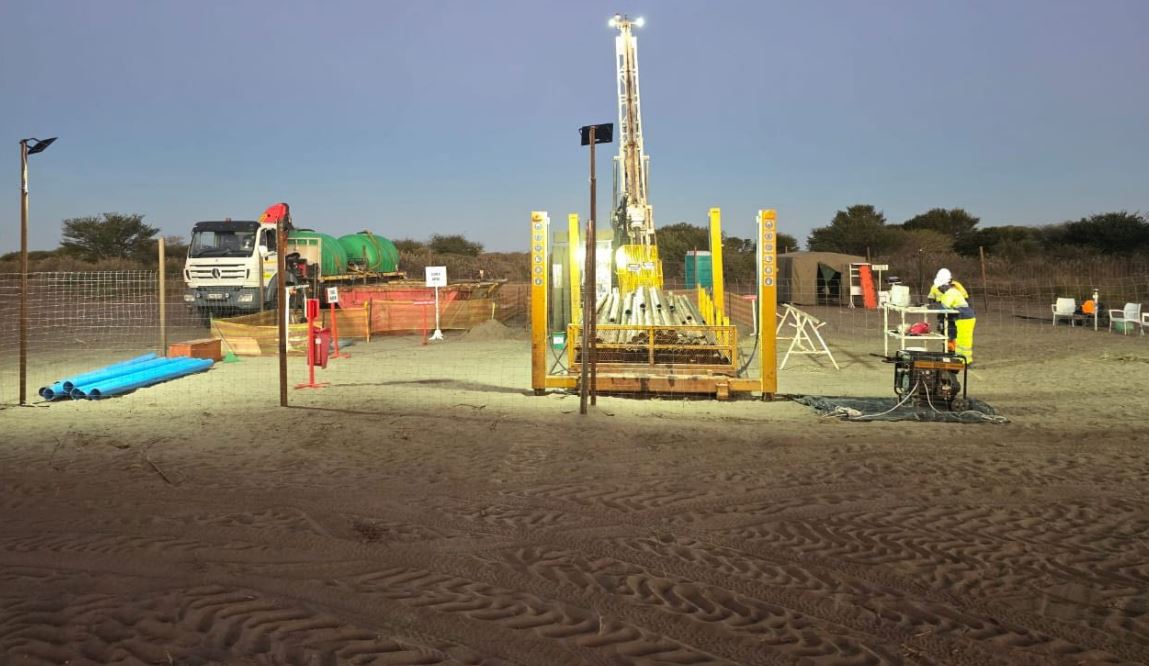
He estimated that around $20 million is available to spend on the Gunnison Project, more than enough to fund the current drill programme. About six rigs are operating. Metallurgical drilling is complete at the main pit and nearly complete at the Strong & Harris satellite deposit, with resource expansion and infill drilling now under way. Hallworth expects results to start arriving over the next three to nine months.
Asked whether he worried about access to capital after the next economic study, Hallworth described the reverse problem.
"I've got investors today that are trying to give me money. They want to give me $25 million, they want to give me $50 millio, and there's more than one of them. And I'm saying no because I'm being disciplined here."
The last raise was a bought deal led by Canaccord, with Paradigm, Ventum and CIBC in the syndicate. Hallworth said Gunnison took only the C$34.5 million it sought, despite the deal being 60% oversubscribed. His aim is for any future round to come at a higher valuation than the last. The company puts its price-to-net-asset-value (P/NAV) multiple at 0.22x, based on Ventum and Paradigm estimates.
Gunnison is also seeking a partnership with the US government, pitching its copper for defence applications such as munitions replenishment and for the data centre build-out behind artificial intelligence. Hallworth said there is nothing to announce yet.
Johnson Camp Nears Full Production
Johnson Camp declared commercial production in Q3 2026. Hallworth expects full production by the end of Q4 2026, which he defines as more than 2 million lbs of cathode a month, in line with nameplate capacity of 25 million lbs a year. When Crux last spoke with Hallworth in September, output was about 1.3 million lbs a month.
He declined to give recovery rates or leach times while the company is not issuing guidance, pointing instead to the forthcoming Q3 financial statements. He did say recovery curves are running faster than expected in some cases.
Johnson Camp runs two circuits. One is a conventional run-of-mine (ROM) acid leach for oxide ore. The other uses Nuton's sulfide leach technology. Production started in August 2025 on ROM alone, and the first Nuton copper followed in December 2025. Hallworth said the Nuton circuit now supplies at least 60% of total output.
Interview with Craig Hallworth, President & CEO of Gunnison Copper
Why Johnson Camp Runs Sulfides First
That sulfide share is deliberate. Under the mine plan agreed with Nuton, the purpose of Stage 2, which runs to mid-2030, is to prove Nuton's technology at commercial scale. That requires mining sulfide ore as quickly as possible. Hallworth was candid about the trade-off.
"[It's] not first optimized for profit. It's first optimized for sulfide [ore] production and then secondly for profit."
The sequencing and stripping ratio this requires lift mining costs, as do the mine's modest scale and 100-ton trucks. Hallworth said profit remains a close second priority.
Rio Tinto paid for Johnson Camp's construction and ramp-up in full. Johnson Camp's profits repay that funding, and any balance still outstanding in mid-2030 falls away. Hallworth expects positive profit and cash flow per unit in Q4 2026.
After Stage 2, he expects the sulfide share to fall to around 17%, with the remaining 10 or more years of mine life weighted to oxide ore. At that point Nuton has a one-time right to form a joint venture as a 49% minority partner, which would give Gunnison a licence to use the technology at no additional cost. If Nuton declines, Gunnison remains 100% owner and would need a separate licensing deal for the remaining sulfide ore. Hallworth said it is too early to say which route will be taken.
The Acid Problem & the Gunnison Solution
Sulfuric acid is the largest cost pressure across both circuits. Hallworth said global prices are three to four times their level of a year or two ago. Arizona spot prices are around $400 a ton or more, he said, compared with the $150 to $160 a ton assumed in many large project studies.
The solution sits within the Gunnison Project. Its March 2026 preliminary economic assessment (PEA) includes an acid plant accounting for $300 million of the $1.56 billion initial capital estimate. The plant would use molten sulfur, a by-product of oil and gas refining available from West Texas. Each ton of sulfur shipped in yields three tons of acid, which Hallworth said cuts total freight by two-thirds. The plant should also have capacity to supply Johnson Camp, removing the mine's exposure to the acid price cycle within the next few years.
The Gunnison Project & the Path to a Partner
Hallworth said the Gunnison Project could produce up to eight times or more Johnson Camp's current output. The PEA outlines an open-pit, heap leach and solvent extraction and electrowinning (SXEW) operation producing about 174 million lbs of cathode a year over a 21-year mine life. At $4.60/lb copper, it shows an after-tax net present value at an 8% discount rate (NPV8%) of $1.96 billion, an IRR of 22.5% and all-in sustaining costs (AISC) of $2.05/lb. At $6.50/lb, the company's presentation puts the NPV8% at $4.0 billion. The PEA is preliminary and includes Inferred resources.
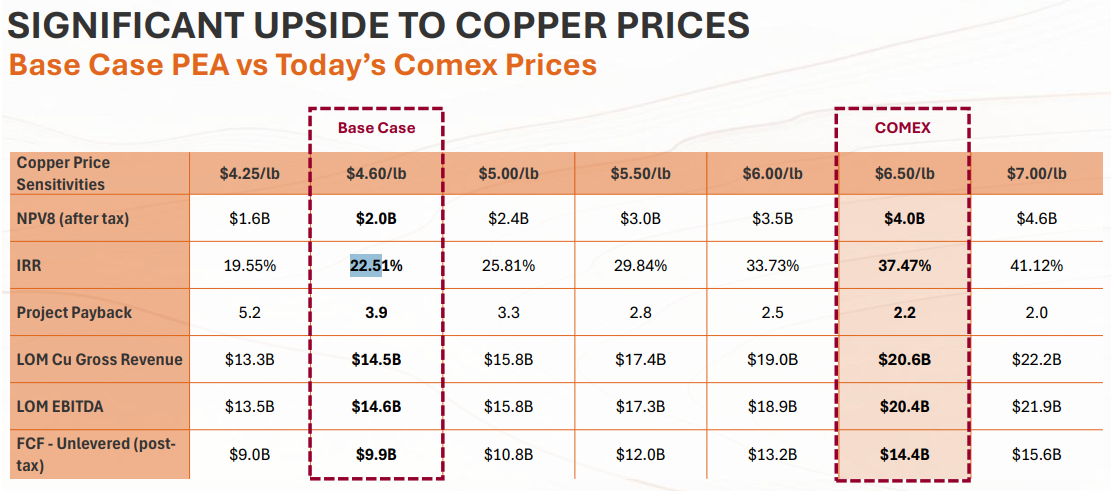
Hallworth is not counting on Johnson Camp cash flow to fund construction and said Gunnison will need a partner. Rio Tinto could fill that role, but he sees a mid-tier copper producer and mine builder as more likely given the project's current scale.
He named two catalysts. The first is metallurgical test work, with column leach, bottle roll and flask tests under way and full results expected by mid-2027. The second is permit amendments, which prospective partners want in hand rather than in progress. Hallworth believes that with both delivered, which he expects by early to mid-2027, Gunnison would have a realistic chance of attracting a partner. The company's presentation targets approval of the amended Mined Land Reclamation Plan (MLRP) in December 2026, with the remaining major permits targeted through 2028.
Roughly two miles of Interstate 10 crosses the north-west corner of the main pit. Gunnison plans to build and pay for a new segment about half a mile away, through a process run by the Arizona Department of Transportation (ADOT). Hallworth noted the existing segment is around 45 to 46 years old, close to its typical 50-year life.
Gunnison will also spend about $1 million this year on geophysics across 80% of its controlled property. Hallworth said the district's known near-surface deposits point to a possible porphyry source.
Investment Thesis for Gunnison Copper
- Gunnison is a pure-play copper company with a producing US mine, and Johnson Camp is targeting more than 2 million lbs a month by the end of Q4 2026.
- The Gunnison Project PEA shows an after-tax NPV8% of $1.96 billion at $4.60/lb copper, against a market capitalisation the company put at US$166.8 million on 30 September 2026.
- Management's refusal to raise at current valuations limits near-term dilution, but it makes the re-rating case dependent on delivering technical milestones.
- Johnson Camp's cash flow is committed to repaying Rio Tinto until mid-2030 at the latest, and Nuton's 49% joint venture option leaves long-term ownership uncertain.
- Investors should monitor the Q3 and Q4 2026 financial statements for the first recovery and unit cost disclosures from Johnson Camp.
- Investors should also watch the MLRP decision targeted for December 2026 and metallurgical results due through mid-2027, as both feed directly into the partner search.
Macro Thematic Analysis
Copper's investment case in the United States is increasingly framed around security of supply rather than price alone. Hallworth tied Gunnison's output to three end markets that federal policy treats as strategic: defence, data centres and the power infrastructure that serves them.
The more consequential shift may be in processing. The United States has limited smelting capacity, and sulfide ore is typically concentrated and shipped elsewhere for refining. Nuton's technology leaches sulfides into finished cathode on site. Hallworth argued that proving it at Johnson Camp matters well beyond Gunnison.
"The promise is that future projects don't need smelters... if we can prove this works and we are proving it works but we need to do some more proving still before the industry will accept it."
Acid supply is the second theme. Leach operations across the Americas are absorbing acid prices well above study assumptions. Hallworth suggested this may be curtailing output at higher-cost mines and supporting copper prices. Producers that control their own acid supply would hold a cost advantage through that cycle.
Capital markets form the final piece. The NYSE American listing is a deliberate effort to reach US investors at a time when domestic supply has become a selling point in its own right. The challenge for developers is turning policy interest into financing on terms that preserve shareholder value.
TL;DR
Gunnison Copper began trading in New York on 26 October 2026, with CEO Craig Hallworth reporting first-day volume of more than 27 million shares. Johnson Camp is targeting full production of more than 2 million lbs of cathode a month by end-Q4 2026, and the Nuton sulfide circuit now supplies at least 60% of output. Around $20 million funds drilling at the Gunnison Project, whose PEA shows a $1.96 billion after-tax NPV8%. Hallworth is turning away investors offering $25-50 million to avoid raising at current valuations. Metallurgical results and permit amendments are the catalysts he expects to attract a mid-tier partner. A planned acid plant targets Johnson Camp's largest cost pressure.
FAQ (AI-Generated)
Analyst's Notes





Subscribe to Our Channel





Stay Informed


