




Chemical Capacity Migration & Aging Infrastructure Drive a Structural Supply Gap in Global Salt Markets


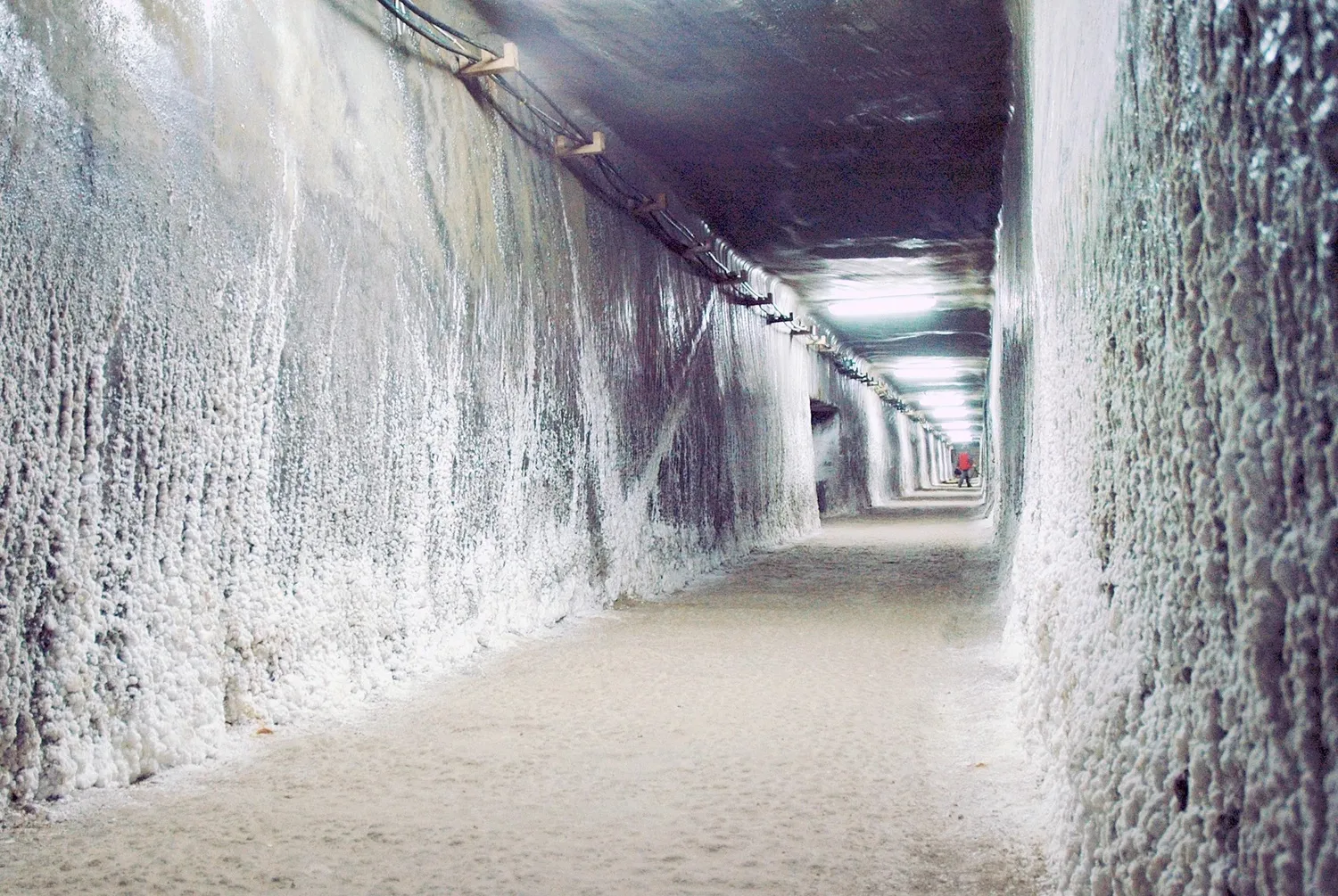
Asian chlor-alkali growth and aging North American mines are creating a structural salt deficit. Atlas Salt targets capacity in a $26.9B market.
- Global salt demand is increasingly shaped by non-cyclical infrastructure safety spending and chemical manufacturing growth, moving well beyond its traditional association with food consumption.
- The relocation of chlor-alkali and soda ash production capacity from Europe to Asia is forecast to add more than 10 million tonnes per annum of incremental industrial salt demand through the late 2020s.
- North America faces structural supply constraints driven by aging underground mines and a dependence on imports that currently cover 30 to 40 percent of regional de-icing demand, equivalent to 8 to 10 million tonnes annually.
- Governments across Southeast Asia, including Indonesia and the Philippines, are pursuing domestic salt self-sufficiency strategies, exposing industrial-grade purity as the critical bottleneck rather than resource scarcity.
- Development-stage projects such as Atlas Salt's Great Atlantic Project illustrate how new regional supply capacity, when structured with shallow-access geometry, coastal logistics, and electrified fleets, may capture stable infrastructure-linked cash flows tied to municipal procurement cycles.
Structural Demand Is Moving Beyond the Dinner Table
Salt has historically been viewed as a low-volatility industrial mineral tied to food consumption and seasonal road maintenance. That characterization is increasingly outdated. Industrial demand from chemical production, infrastructure resilience spending, and water treatment is reshaping the market into something closer to a utility-like infrastructure commodity than a traditional extractive resource.
The global salt market was valued at approximately USD 26.9 billion in 2025 and is projected to reach USD 39.4 billion by 2034, representing a 4.4% CAGR, according to Fortune Business Insights. Asia Pacific accounts for roughly 46% of global demand, driven primarily by chemical manufacturing. The United States alone consumes about 20 million tonnes of de-icing salt annually, making it one of the largest concentrated demand centers worldwide.
This shift is creating a more predictable demand profile. Unlike metals such as copper or gold, de-icing salt is procured through public infrastructure budgets, where municipalities are legally required to maintain road safety during winter, producing recurring demand largely independent of economic cycles.
Industrial Chemicals as the Primary Volume Driver
The chlor-alkali sector is the largest industrial consumer of sodium chloride globally. Salt is the primary feedstock for chlorine, caustic soda (sodium hydroxide), and soda ash (sodium carbonate), chemicals used across plastics, detergents, paper, textiles, and pharmaceuticals. Demand in this segment broadly tracks GDP growth and construction activity, providing a stable long-term volume outlook.
Industrial salt pricing also differs from spot-traded metals. Contract-based procurement by chemical producers seeking consistent supply creates multi-year revenue visibility. As a result, investors typically evaluate projects using metrics such as Net Present Value (NPV), Internal Rate of Return (IRR), and EBITDA, which emphasize long-duration cash flow rather than short-term price movements.
Infrastructure Safety Budgets Create Defensive Demand
Road de-icing accounts for one of the most structurally stable demand segments within the salt market. In the United States alone, approximately 20 million tonnes of de-icing salt are consumed annually, with state and municipal governments procuring through regional contracts that prioritize supply reliability over marginal price differences. In Canada, provinces such as Ontario and Quebec represent major consumption centers given their extended winter seasons.
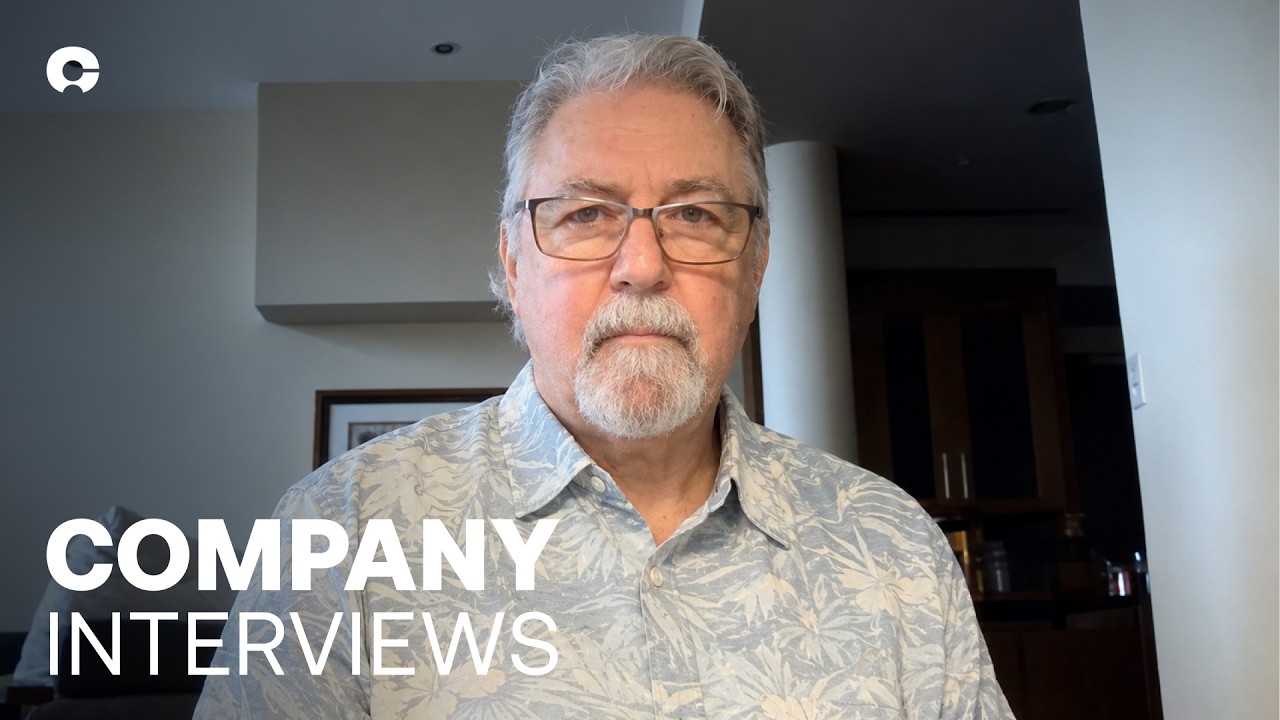
Nolan Peterson, President and Chief Executive Officer of Atlas Salt, has framed the product's demand profile in terms that institutional investors in infrastructure assets would recognize. On the non-discretionary nature of procurement:
"It's a road safety issue. It's a critical infrastructure issue. They're legally required to salt roads and sidewalks."
Weather volatility introduces some variability in annual volumes, but this operates asymmetrically. Severe winters increase procurement above baseline levels, while mild winters rarely reduce procurement below contractual floor volumes as municipalities maintain strategic inventory reserves.
Asia's Chemical Expansion Is Changing Industrial Mineral Trade Flows
Chemical capacity migration refers to the relocation of energy-intensive chemical manufacturing from high-cost regions to lower-cost production hubs. In the chlor-alkali sector, high electricity prices and stricter environmental regulations have forced closures across Europe, while new capacity is being built in India, China, and Indonesia where power, land, and industrial infrastructure are more competitive. Because sodium chloride is the primary feedstock for chlorine and caustic soda production, this shift directly redirects global salt demand toward the regions where new chemical plants are being constructed.
This relocation represents one of the most significant structural shifts in industrial minerals in recent decades. As Western European chlor-alkali capacity declines, Asia’s expanding chemical sector is reshaping global salt trade flows.
BCI Minerals CFO Steve Fewster notes that sixteen new chlor-alkali and soda ash plants under construction across India, China, and Indonesia through 2028 are expected to add 10.2 million tonnes per annum of high-grade industrial salt demand. Much of this replaces shuttered European capacity, making the demand structural rather than cyclical.
India historically exported up to 28 million tonnes of lower-grade salt annually to China but is now building two major chlor-alkali plants led by Adani and Reliance. As domestic demand rises, roughly 8 million tonnes per year of export volumes may be absorbed internally, tightening global high-grade supply.
Self-Sufficiency Policies Reveal Quality Constraints
Indonesia and the Philippines highlight a key issue in salt markets: the constraint is not resource scarcity, but purity. Chlor-alkali processing requires at least 97% sodium chloride, while most Southeast Asian salt averages only around 94%, below industrial standards.
Indonesia is targeting salt self-sufficiency by 2027 under Presidential Regulation No. 17 of 2025, and the Philippines has launched the Accelerating Salt Research and Innovation Center with PHP 43 million in funding. These initiatives underscore that the bottleneck is technological, positioning high-purity producers with a structural advantage over the medium term.
Weather Volatility & Climate Risk Affect Production Yields
Solar evaporation-based salt production, which represents a significant portion of global capacity across India, Australia, and Southeast Asia, carries an inherent exposure to weather variability. Extended rainfall reduces net evaporation rates and directly compresses output volumes. In India's Gujarat region, annual rainfall has been increasing steadily, progressively reducing the net evaporation rate and thus constraining the yield available for export.
BCI Minerals' Mardie Salt Operation in Western Australia, currently 77 percent complete and targeting first shipment in the December 2026 quarter, has incorporated 45 years of actual weather data into its production model to quantify cyclone and rainfall risk within the ramp-up schedule. This data-driven approach to weather risk management reflects the increasing sophistication required to underwrite solar salt projects in a climate-volatile environment.
North America's Aging Mines Create Replacement Capacity Risk
While Asia is building new chemical capacity at scale, North America faces the opposite challenge: managing the decline of legacy salt infrastructure without new domestic supply entering the market. The majority of the continent's major underground salt operations were developed several decades ago. As these mines deepen, ventilation costs rise, hoisting distances increase, and maintenance requirements compound. The economics of expansion at existing sites are often less favorable than developing new shallow-access deposits in logistically advantaged locations.
The supply gap created by this structural aging has been filled primarily through imports. North America currently imports between 8 and 10 million tonnes of de-icing salt annually, sourced largely from Egypt and Chile. These imports carry logistics costs that structurally disadvantage offshore supply relative to domestically produced alternatives, particularly for markets in Eastern Canada and the northeastern United States where transportation distances from export ports are longest.
Peterson quantifies the continental supply deficit and its origins. On the absence of new domestic supply development:
"We haven't built, as a continent, a new salt mine in 25 years. By the time we're in operations, it'll be close to 30 years. That's why there hasn't been a new mine built in 25 years. We've had to import it, and that's what's created this structural deficit."
Atlas Salt & the Case for Replacement Capacity
Atlas Salt is advancing the Great Atlantic Project near St. George’s, Newfoundland and Labrador, targeting structural replacement demand in North America. The project contains 95.0 million tonnes of Proven and Probable reserves grading 95.9% sodium chloride and benefits from shallow depths (200-250 meters), enabling decline access that lowers capital and operating complexity.
A September 2025 feasibility study reported a post-tax NPV8 of CAD 920 million, a 21.3% IRR, and a 4.2-year payback. The mine plan targets 4.0 million tonnes per year over a 24.3-year life, with average annual EBITDA of CAD 325 million and operating costs of CAD 28.17 per tonne FOB, supported by simple processing and direct marine access.
Peterson explains the fundamental economics of salt logistics and why coastal proximity is the defining competitive variable:
"If you had a mine in the middle of Nebraska and you could pull salt out of the ground for free, you would still be bound by logistics. That's what fundamentally drives whether a salt mine will be economic or not."
Electrification & the Sandvik Partnership
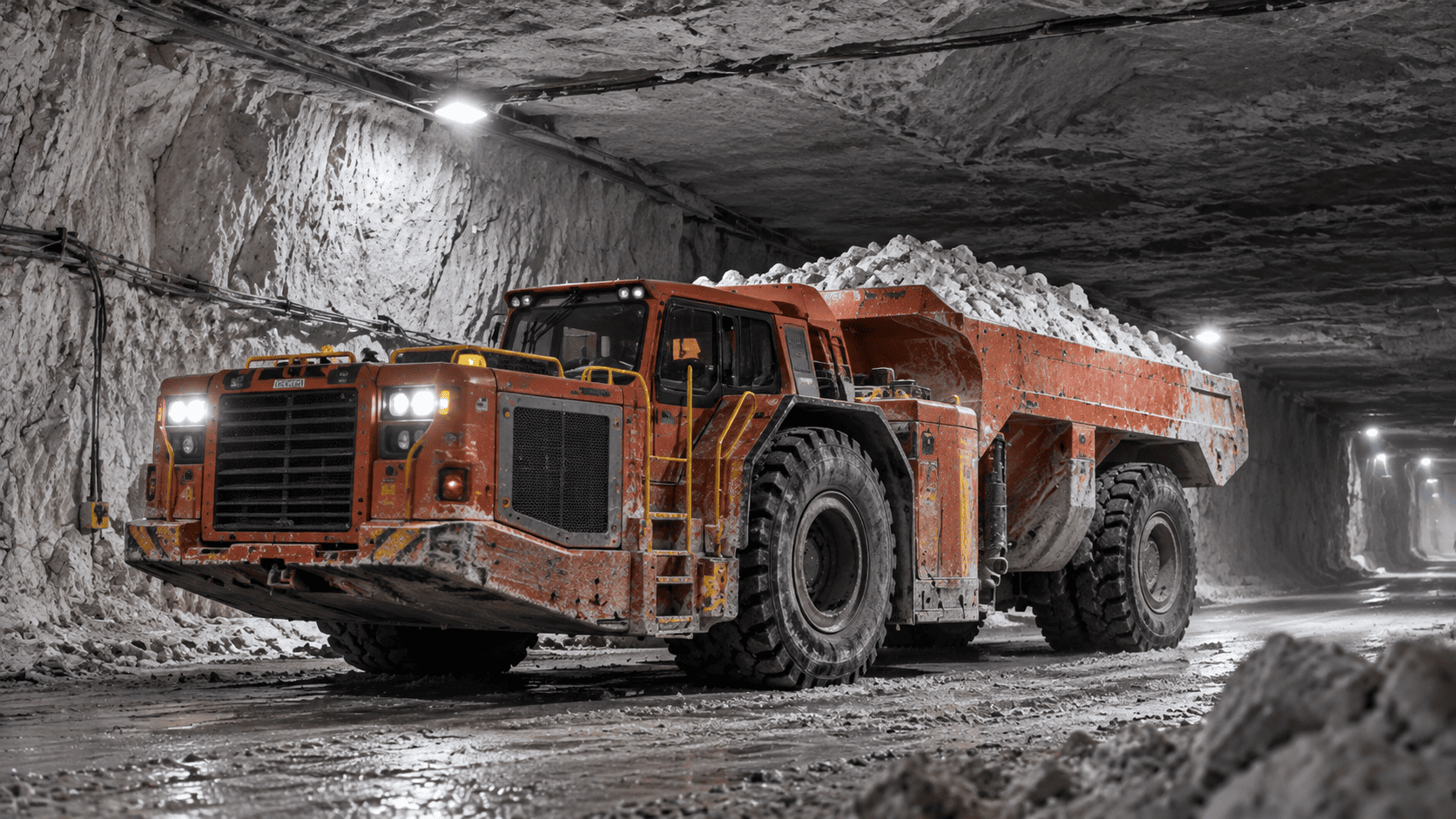
The Great Atlantic Project's updated feasibility study contemplates a predominantly electric and battery-electric underground fleet as the core operational strategy. Atlas Salt has expanded its strategic collaboration with Sandvik Mining, with the total scope of the memorandum of understanding now reaching approximately CAD 132 million in equipment, technology, and associated services, up from CAD 73 million in the original agreement. Sandvik will supply underground mobile mining equipment including battery-electric haul trucks, loaders, and bolters, alongside automation systems such as AutoMine and digital fleet management tools.
The operational rationale for electrification is cost-driven as well as environmental. Battery-electric fleets reduce underground heat load, lowering ventilation power demand substantially. Reduced ventilation intensity translates into lower energy costs per tonne and improved working conditions. From an ESG standpoint, the project has also secured CAD 1 million in conditionally repayable financing from the Atlantic Canada Opportunities Agency under the Regional Economic Growth through Innovation program, supporting the low-emission mine design and optimization initiative.
The Investment Thesis for Salt
- Infrastructure safety budgets create recession-resistant demand, as municipalities and state transportation agencies are legally obligated to procure de-icing salt regardless of economic conditions, providing producers with contract-driven revenue visibility.
- Chemical capacity migration across Asia is adding an estimated 10.2 million tonnes per annum of incremental industrial salt demand through 2028, with the structural shift driven by chlor-alkali and soda ash plant construction in India, China, and Indonesia replacing production capacity closing in Europe.
- Aging Western mine infrastructure requires replacement capacity, with North America having developed no new underground salt mines in nearly three decades, creating a growing import dependency that structurally advantages new domestic supply with coastal logistics positioning.
- Shallow underground geometry and electrified fleet design lower the all-in sustaining cost profile and capital intensity relative to deep-shaft legacy operations, improving project economics and ESG positioning simultaneously.
- Logistics proximity is the primary margin driver in bulk commodity salt production, and projects with marine access adjacent to Eastern North American demand centers hold a structural cost advantage over imports sourced from Egypt and Chile.
- Government self-sufficiency policies across Indonesia and the Philippines reinforce pricing stability for high-purity industrial salt producers, as domestic production gaps in Southeast Asia cannot be filled quickly and premium-grade supply commands durable pricing.
- Development timelines aligned with the 2028 Asian chemical capacity buildout, as in the case of Atlas Salt's production target of approximately 2030, provide structural entry into a market experiencing its largest single demand increment in decades.
The combination of Asian chemical capacity migration, climate-driven yield compression in solar evaporation regions, North American mine aging, and government self-sufficiency policies across Southeast Asia is producing a market dynamic that more closely resembles infrastructure commodity investing than traditional cyclical mining.
Industrial salt sits at the intersection of road safety, chemical manufacturing, and water treatment, three sectors with non-discretionary procurement dynamics. The demand increment arriving through 2028 from new Asian chlor-alkali and soda ash plants is not speculative; these facilities are under construction with committed capital. The supply response, constrained by long permitting timelines, shallow-deposit scarcity, and logistics requirements, is materially smaller than the demand addition.
The combination of predictable long-duration cash flows, infrastructure-linked demand, and contract-based pricing represents a fundamentally different risk profile than base or precious metals. Projects that can demonstrate shallow-access geometry, coastal logistics, high-purity reserves, and electrified operating strategies are positioned at the intersection of where capital efficiency meets structural market need. Execution risk remains the primary consideration, but the macro framework supporting new salt supply development is among the more clearly defined in the industrial minerals sector today.
TL;DR
The global salt market is undergoing a structural transformation driven by the migration of chlor-alkali and soda ash chemical capacity from Europe to Asia, North America's three-decade absence of new underground salt mine development, and Southeast Asian governments confronting industrial-grade purity gaps rather than resource scarcity. With 16 new chemical plants under construction across India, China, and Indonesia set to add 10.2 million tonnes per annum of demand by 2028, and North America importing 30 to 40 percent of its annual de-icing salt requirements, the supply-demand equation increasingly favors producers with shallow-access deposits, high-purity reserves, and marine logistics proximity to Eastern North American markets. Atlas Salt's Great Atlantic Project, which commenced site preparation in February 2026 under an approved environmental assessment, represents development-stage exposure to this replacement capacity requirement, underpinned by a post-tax NPV8 of CAD 920 million, a 21.3 percent internal rate of return, and a 4.2-year payback.
FAQs (AI Generated)
The shortage is logistical and structural, not geological. North America has not built a new underground salt mine in nearly three decades. Existing mines are deepening with rising maintenance and ventilation costs, while demand, particularly for road de-icing, has grown steadily with urbanization and highway expansion. The gap between domestic production and domestic need is currently filled by 8 to 10 million tonnes of annual imports from Egypt and Chile.
Sixteen new chlor-alkali and soda ash plants under construction across India, China, and Indonesia are expected to add 10.2 million tonnes per annum of industrial salt demand through 2028. This new demand is largely structural rather than cyclical, as it replaces capacity closing in Europe due to energy costs and environmental regulations. The timing of this demand increment coincides with constrained new supply, tightening the industrial salt market materially.
De-icing salt is procured through public infrastructure budgets by municipalities legally obligated to maintain road safety. Procurement is non-discretionary, contract-based, and not directly correlated with financial markets or industrial output cycles. This creates a more stable revenue profile for producers, with price volatility historically biased to the upside during severe winters rather than to the downside during economic contractions.
Chlor-alkali processing requires sodium chloride content of at least 97 percent. Most domestically produced salt across Indonesia and the Philippines contains maximum sodium chloride content of approximately 94 percent, below industrial thresholds. This purity gap cannot be addressed simply by producing more salt. It requires either technology investment to upgrade existing production or sourcing from high-purity deposits elsewhere, structurally advancing producers with naturally high-grade resources.
Key risks include construction cost inflation, financing access, permitting timeline variability, and operational ramp-up performance. Weather dependency introduces annual volume variability, particularly for solar evaporation operations. For underground mines, depth of deposit, ventilation requirements, and logistics infrastructure availability are the primary determinants of all-in sustaining cost competitiveness. Environmental assessment approval, benefits agreements with provincial governments, and equipment supply partnerships materially de-risk execution risk prior to construction commencement.
Analyst's Notes





Subscribe to Our Channel






Stay Informed


